
BuddhistCatholicContemplativeEvangelicalGeneral ChristianHinduJewishLatter-day SaintMuslimNew VisionsProgressive Christian
Beliefs
- Buddhist
- Catholic
- Contemplative
- Evangelical
- General Christian
- Hindu
- Jewish
- Latter-day Saint
- More Voices
- Muslim
- New Visions
- Pagan
- Progressive Christian
Topics
- Religion News
- Food and Religion
- Sports and Religion
- Religious Art
- Religious Music and Entertainment
- Religious Events
- History and Religion
- Style and Religion
- Politics and Religion
- Women in Religion
- Recreation Outdoors and Religion
- Business Finance and Religion
- Careers Workplace and Religion
- Education and Religion
- Family Parenting and Religion
- Health Fitness and Religion
- Home and Religion
- Relationships and Religion
- Technology and Religion
- Travel and Religion
Columnists
- Buddhist Columnists
- Business Finance and Religion Columnists
- Careers Workplace and Religion Columnists
- Catholic Columnists
- Contemplative Columnists
- Education and Religion Columnists
- Evangelists Columnists
- Family Parenting and Religion Columnists
- General Christian Columnists
- Health Fitness and Religion Columnists
- Hindu Columnists
- History and Religion Columnists
- Home and Religion Columnists
- Jewish Columnists
- More Voices Columnists
- Latter Day Columnists
- Muslim Columnists
- New Visions Columnists
- Nonreligious Columnists
- Pagan Columnists
- Politics and Religion Columnists
- Progressive Columnists
- Recreation Outdoors and Religion Columnists
- Relationships and Religion Columnists
- Religion News Columnists
- Religious Art Columnists
- Religious Events Columnists
- Religious Music and Entertainment Columnists
- Sports and Religion Columnists
- Style and Religion Columnists
- Technology and Religion Columnists
- Travel and Religion Columnists
- Women in Religion Columnists
Resource Library
- 2026 Calendar
- Library of World Religions
- The 100 Most Holy Places on Earth
- Patheos Answers
- Podcasts
- Videos
- Faith Leaders Database
- Anglican Episcopalian
- Bahai
- Baptist
- Buddhism
- Christianity
- Confucianism
- Eastern Orthodoxy
- Hinduism
- Holiness and Pentecostal
- ISKCON
- Islam
- Judaism
- Lutheran
- Methodist
- The Church of Jesus Christ of Latter-day Saints
- New Age
- Paganism
- Presbytarian and Reformed
- Protestantism
- Religion Behind the Scenes
- Roman Catholic
- Scientology
- Shia Islam
- Sikhism
- Sufism
- Sunni Islam
- Taoism
- Zen
- See all religions
Research Tools
 Ad-Free & Subscriber Log-In Subscription Support
Ad-Free & Subscriber Log-In Subscription Support
Follow Patheos 

- Trending:
- Forgiveness
- |
- Marriage
- |
- Consciousness
- |
- Death Penalty
- |
- Election
- |
- Halloween

- Home
- Evangelical
- Questions are not the Problem: Finding Yourself and not Endless Sorrow (Hamlet 1/3)
Questions are not the Problem: Finding Yourself and not Endless Sorrow (Hamlet 1/3)
Last updated on: April 26, 2016 at 6:01 pm by John Mark N. Reynolds
Questions are not the Problem: Finding Yourself and not Endless Sorrow (Hamlet 1/3) 2016-04-26T18:01:37-04:00 John Mark N. Reynolds
Patheos Explore the world's faith through different perspectives on religion and spirituality! Patheos has the views of the prevalent religions and spiritualities of the world.
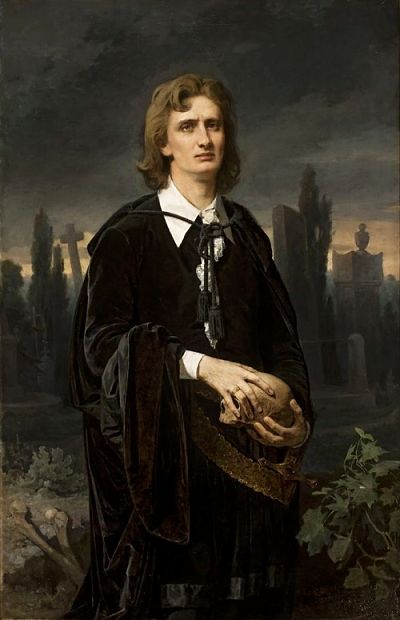
Look at this man. Do not become like this man.
Higher education begins in learning to form and ask good questions. A good professor challenges our deepest ideas and helps us see the world in a new way. The result of this education will be an ability to act. The best questions challenge the intellect, move the heart, and motivate action.
Socrates called his students to know themselves. This did not mean endless self-introspection. One of the hardest ways to know myself is to focus on myself. The best way to learn who I am is in a community. When we question each other and seek the truth, then we see ourselves in the eyes of the people in our group. When the time comes to get up and act on what we have seen, we will be humble and careful, because we know that all our conclusions are tentative, but we will act.
Some students resist taking the time to talk, ask questions, and probe assumptions. They just want to “do something” about the problems they see. Others of us like talking and thinking so much that we never get around to acting or when we do act, we are dragged down by self-doubt. Of course, many of us have family or social situations that add to our hesitation.
As usual Shakespeare understands the balance between self-knowledge and Socratic questioning and action. His great tragedy Hamlet contains enough wisdom for a lifetime of study, but the first time I watched the play being performed (in the park!) I was struck by the first line: Who’s there?
I don’t think anyone knows who Hamlet is, because Hamlet doesn’t know who he is. Why?
Hamlet’s family is a mess.
Dad’s dead. Uncle killed Dad. Mom married Uncle.
Hamlet’s country has a rottenness he can smell.
The county is ruled by the same murdering usperers.
Hamlet was failed by his university education.
He seemed to have gone to the University of Maybe where sophistical question mongering has replaced Socratic education. He knows enough to doubt the old truths, but not enough to do anything with the modern ways.
Hamlet is so worried about getting it wrong, he ends up getting it wrong.
Most of what has harmed Hamlet wasn’t his fault: he has a dead father, murdered by his mother and his uncle, and now his uncle is his step-dad. Hamlet should be king, but isn’t . . . somehow Uncle Claudius gets the job with the Queen. This is all very bad, but not tragic. Courts are constantly playing a game of thrones. What is tragic is that Hamlet has greatness in him, but his potential never actualizes. Instead, he dies.
So what do you do if you are in Hamlet’s position?
Find some friends and trust them.
Hamlet is mourned when he is dead, but he seems incapable of telling anyone in his life the whole truth. He certainly uses and abuses Ophelia, his beloved. Hamlet needs to listen and not just monologue. The obvious corollary to this principle is that you cannot use your friends as props to solve your problems.
Don’t stick around the court.
Hard to see anything good coming of life with your regicidal Uncle and wretched Mother. Hamlet can honor his one decent parent (now dead) by getting out of Elsinore. In the same way, we all wish the family, ministry, workplace would be healthy, but if it isn’t and the rotten state of affairs is getting to you . . . get out.
Dead people are bad guides.
Hamlet has a “spiritual experience” at the start of the play. His dead Dad (maybe) tells him a story that might be true . . . and Hamlet decides to act on it even if the ghost is just a devil. Here is a rule: ghosts are bad guides. There is a reason they are doomed to wander the earth and it generally isn’t their virtue.
Most of us don’t see ghosts, but we can be tempted to poke around in spiritual funny corners when we are in trouble. Hamlet seeks out conversation with a damned spirit when a wise man runs from ghosts or rebukes them. Stay out of spiritual weirdness when in doubt.
Get a priest.
Hamlet talks about God constantly, but he never bothers to get some spiritual guidance. He acts as if part of the job of being Prince of Denmark is also to be Bishop of Denmark and determine the spiritual health of the nation. Hamlet has an underlying arrogance about his own wisdom that is part of the problem.
There is not a promise from God that if Hamlet does all the “right things” that his problems will vanish. It is a complex cosmos and Hamlet may not have a “happy ending” as an option in his life. However, he could be decent, honorable, and help those near him instead of driving them to madness, death, and frustration.
Socratic questioning is not a monologue and Hamlet loves to monologue. Socratic questioning is finding a mentor and learning . . . not finding an empty room and talking to oneself. Socratic dialogue helps us to determine how we should live, and does not push us out of life into meaningless discussion. Let’s not be Hamlet and so live.
—————————————-
William Shakespeare went to God four hundred years ago. To recollect his death, I am writing a personal reflection on a few of his plays. The Winter’s Tale started things off, followed by As You Like It. Romeo and Juliet still matter, Lady Macbeth rebukes the lust for power, and Henry V is a hero. Richard II shows us not to presume on the grace of God or rebel against authority too easily. Coriolanus reminds us that our leaders need integrity and humility. Our life can be joyful if we realize that it is, at best, A Comedy of Errors. Hamlet needs to know himself better and talks to himself less.
Previous Post

April 24, 2016
The Comedy of Errors (Or How To Win a Trade War)
Next Post
April 26, 2016 No Exit: Theism is not for the Fearful (Hamlet 2/3)
Browse Our Archives
Select a Category Apologetics Art Culture Education On Books On Education Philosophy Politics Pop Culture Spiritual Reflections Uncategorized
Select a Month October 2026 September 2026 August 2026 July 2026 July 2025 June 2025 September 2024 July 2024 June 2024 December 2023 June 2023 September 2022 May 2022 April 2022 March 2022 February 2022 July 2021 June 2021 May 2021 April 2021 March 2021 February 2021 January 2021 December 2020 November 2020 October 2020 September 2020 August 2020 July 2020 June 2020 May 2020 April 2020 March 2020 February 2020 January 2020 December 2019 November 2019 October 2019 September 2019 August 2019 July 2019 June 2019 May 2019 April 2019 March 2019 February 2019 January 2019 December 2018 November 2018 October 2018 September 2018 August 2018 July 2018 June 2018 May 2018 April 2018 March 2018 February 2018 January 2018 December 2017 November 2017 October 2017 September 2017 August 2017 July 2017 June 2017 May 2017 April 2017 March 2017 February 2017 January 2017 December 2016 November 2016 October 2016 September 2016 August 2016 July 2016 June 2016 May 2016 April 2016 March 2016 February 2016 January 2016 December 2015 November 2015 October 2015 September 2015 August 2015 July 2015 June 2015 May 2015 April 2015 March 2015 February 2015 January 2015 November 2014 October 2014 September 2014 August 2014 July 2014 June 2014 May 2014 April 2014 March 2014 February 2014 January 2014 December 2013 November 2013 October 2013 September 2013 August 2013 July 2013 June 2013 May 2013 April 2013 March 2013 February 2013 January 2013 December 2012 November 2012 October 2012 September 2012 August 2012 July 2012 June 2012 May 2012
Follow Us!
TAKE THE
Religious Wisdom Quiz
What sign did God give Hezekiah to show he would be healed?
Select your answer to see how you score.
A river turned to blood The sun's shadow went backward Fire from heaven Rain in drought
Books by This Author John Mark Reynolds
Related posts from Eidos

Classical Education Must Teach Us to Make the...

Yet I Love Her: History and the Church


The Iceberg is There: Verbosity Cannot Defeat Reality
TRENDING AT PATHEOS Evangelical

The REST of Your Life: A Creative Wrestles...
This week I had a conversation with a good friend from church....

How the author of the world's best hymn...
I've been working with John Newton for a while now. This makes...

Long before this Lectio Divina, Psalm 130 - the song - started...

What About the Trees? Another Living Parable
After I finished writing the last article about falling leaves as a...

Why Classical Education Is a Conversation, Not a...
Come and Read: Joy in Classical Education When I was a little...

Cornell University has received a great deal of negative publicity and intense...
view all Evangelical blogs
Ad-Free & Subscriber Log-In Subscription Support
- About Us
- 2026 Calendar
- Videos
- Podcasts
- Library of World Religions
- Faith In Media Tracker
- Advertise With Us
- Write for Us
- Privacy Policy
- Terms of Service
- Do Not Sell My Data
- Contact Us
- Radiant Digital
- Manage Newsletter Subscriptions
- Unsubscribe From Notifications
- Sitemap
Copyright 2008-2026, Patheos. All rights reserved.
Subscription Support Ad-Free & Subscriber Log-In
Follow Patheos