
BuddhistCatholicContemplativeEvangelicalGeneral ChristianHinduJewishLatter-day SaintMuslimNew VisionsProgressive Christian
Beliefs
- Buddhist
- Catholic
- Contemplative
- Evangelical
- General Christian
- Hindu
- Jewish
- Latter-day Saint
- More Voices
- Muslim
- New Visions
- Pagan
- Progressive Christian
Topics
- Religion News
- Food and Religion
- Sports and Religion
- Religious Art
- Religious Music and Entertainment
- Religious Events
- History and Religion
- Style and Religion
- Politics and Religion
- Women in Religion
- Recreation Outdoors and Religion
- Business Finance and Religion
- Careers Workplace and Religion
- Education and Religion
- Family Parenting and Religion
- Health Fitness and Religion
- Home and Religion
- Relationships and Religion
- Technology and Religion
- Travel and Religion
Columnists
- Buddhist Columnists
- Business Finance and Religion Columnists
- Careers Workplace and Religion Columnists
- Catholic Columnists
- Contemplative Columnists
- Education and Religion Columnists
- Evangelists Columnists
- Family Parenting and Religion Columnists
- General Christian Columnists
- Health Fitness and Religion Columnists
- Hindu Columnists
- History and Religion Columnists
- Home and Religion Columnists
- Jewish Columnists
- More Voices Columnists
- Latter Day Columnists
- Muslim Columnists
- New Visions Columnists
- Nonreligious Columnists
- Pagan Columnists
- Politics and Religion Columnists
- Progressive Columnists
- Recreation Outdoors and Religion Columnists
- Relationships and Religion Columnists
- Religion News Columnists
- Religious Art Columnists
- Religious Events Columnists
- Religious Music and Entertainment Columnists
- Sports and Religion Columnists
- Style and Religion Columnists
- Technology and Religion Columnists
- Travel and Religion Columnists
- Women in Religion Columnists
Resource Library
- 2026 Calendar
- Library of World Religions
- The 100 Most Holy Places on Earth
- Patheos Answers
- Podcasts
- Videos
- Faith Leaders Database
- Anglican Episcopalian
- Bahai
- Baptist
- Buddhism
- Christianity
- Confucianism
- Eastern Orthodoxy
- Hinduism
- Holiness and Pentecostal
- ISKCON
- Islam
- Judaism
- Lutheran
- Methodist
- The Church of Jesus Christ of Latter-day Saints
- New Age
- Paganism
- Presbytarian and Reformed
- Protestantism
- Religion Behind the Scenes
- Roman Catholic
- Scientology
- Shia Islam
- Sikhism
- Sufism
- Sunni Islam
- Taoism
- Zen
- See all religions
Research Tools
 Ad-Free & Subscriber Log-In Subscription Support
Ad-Free & Subscriber Log-In Subscription Support
Follow Patheos 

- Trending:
- Forgiveness
- |
- Marriage
- |
- Consciousness
- |
- Death Penalty
- |
- Election
- |
- Halloween

- Home
- Evangelical
- Our Duty: Find our Place, Do Our Duty (Shakespeare’s Coriolanus)
Our Duty: Find our Place, Do Our Duty (Shakespeare’s Coriolanus)
Last updated on: April 26, 2016 at 12:35 am by John Mark N. Reynolds
Our Duty: Find our Place, Do Our Duty (Shakespeare’s Coriolanus) 2016-04-26T00:35:57-04:00 John Mark N. Reynolds
Patheos Explore the world's faith through different perspectives on religion and spirituality! Patheos has the views of the prevalent religions and spiritualities of the world.
 Nothing is worse than when the rich oppress the poor except, perhaps, when the poor revolt and murder for justice. Oppression and revolution are both ugly. America has a ruling oligarchy too content in power, but also a rising underclass full of envy and ill considered anger. Nobody is right and everybody is wrong.
We are in a dangerous moment.
The poor are restrained by the state, eaten up by our wars, corrupted by the libertine morals of the upper class. They deserve better than they receive, but are incapable of knowing what they need. The rich and powerful are smart enough to contain a diversity of answers, but moderation is too little too late for the put upone poor.
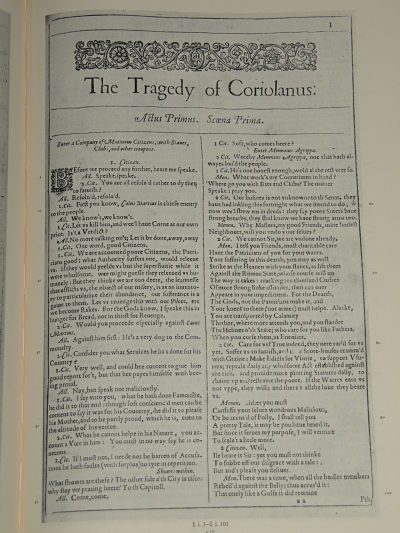
Shakespeare foresaw all of this in his tragedy Coriolanus. The rich in this imaginary Rome that Shakespeare creates are starving the poor, but the poor are ignorant and so harm their own good by their rebellion. Coriolanus defends Rome in battle, but is upset with the people, because he knows they have do not merely want what is due but:
who desires most that Which would increase his evil.
Coriolanus is a great man in battle, but not a loving man. The danger to a republic is when love and competence, integrity and the multitude are separated. He is no grifter, refusing cash prizes for his service in war:
I thank you, general;
But cannot make my heart consent to take
A bribe to pay my sword: I do refuse it;
And stand upon my common part with those
That have beheld the doing. . He loves Rome and wins great honor for his state. He has courage and honor, but not tact or love for his people.
He loves Rome, but not Romans. He has tools to be a great leader, but not the personality. He needs to be bear to the enemies of Rome, but a lamb to her people Instead, he is a bear to everyone. The people turn to demagogues with less integrity, but more facile tongues. The great danger to a republic is when people love flattery more than integrity. In Christian ministry this happens when the leader tells the people what they wish to hear (“tickling ears“) rather than the Word of God. The Christian leader who will not speak the truth in difficult days will leave his people sheep for the slaughter by the wolves of this age.
Coriolanus has integrity, but in their pain the people no longer want integrity. They want what they want and Coriolanus tells his mother:
Know, good mother,
I had rather be their servant in my way,
Than sway with them in theirs.
The demagogues and the corrupt leaders know that integrity cannot last if it lacks humility. The elite plan Corilolanus downfall so they can keep exploiting the people:
This, as you say, suggested
At some time when his soaring insolence
Shall touch the people—which time shall not want,
If he be put upon ‘t; and that’s as easy
As to set dogs on sheep—will be his fire 1205
To kindle their dry stubble; and their blaze
Shall darken him for ever
Coriolanus will not flatter the people, even to win office.
I will counterfeit the
bewitchment of some popular man and give it
bountiful to the desirers. Therefore, beseech you,
I may be consul.
A man of accomplishments can forget humanity:
You speak o’ the people,
As if you were a god to punish, not
A man of their infirmity
Politics cannot survive when the mob are manipulated by smooth talking and the best men cannot win them.
This double worship,
Where one part does disdain with cause, the other
Insult without all reason, where gentry, title, wisdom, 1905
Cannot conclude but by the yea and no
Of general ignorance,—it must omit
Real necessities, and give way the while
To unstable slightness: purpose so barr’d,
it follows, 1910
Nothing is done to purpose.
Almost as bad is when the good men cannot speak kindly to the people:
His nature is too noble for the world: 2055
He would not flatter Neptune for his trident,
Or Jove for’s power to thunder. His heart’s his mouth:
What his breast forges, that his tongue must vent;
And, being angry, does forget that ever
He heard the name of death.
Parties in a Republic can become vehicles for demagoguery. Washington feared political parties, because he understood the dangers:
Proceed by process;
Lest parties, as he is beloved, break out,
And sack great Rome with Romans.
Shakespeare fears a condition in a country where the best men cannot win, because the people long for flattery, entertainment, and lies more than deeds and integrity. Coriolanus understands that honor and tact must go together in a republic (ancient or modern:
You are too absolute;
Though therein you can never be too noble,
But when extremities speak. I have heard you say,
Honour and policy, like unsever’d friends,
I’ the war do grow together: grant that, and tell me,
In peace what each of them by the other lose,
That they combine not there.
Yet Coriolanus will not play the game. He will not show his wounds or defend his record. Arrogance destroys him.
Revenge is one of the worst things any human can seek. Coriolanus is banished by the foolish Romans, but he is worse in his reactio. He seeks out the enemies of Rome to get revenge and dies far from home..
We cannot create who we are or defy our duty to God, our family, the church, or our community. Corialanus warns those in the leadership class to listen, learn, and evolve. For the rest of us, we must choose the best man and not the man who tells what we long to hear.
———————————————–
William Shakespeare went to God four hundred years ago. To recollect his death, I am writing a personal reflection on a few of his plays. The Winter’s Tale started things off, followed by As You Like It. Romeo and Juliet still matter, Lady Macbeth rebukes the lust for power, and Henry V is a hero. Richard II shows us not to presume on the grace of God or rebel against authority too easily. Coriolanus reminds us that our leaders need integrity and humility.
Previous Post

April 22, 2016
Worse things than Losing, Better things than Winning: Richard II
Next Post
April 24, 2016 The Comedy of Errors (Or How To Win a Trade War)
Browse Our Archives
Select a Category Apologetics Art Culture Education On Books On Education Philosophy Politics Pop Culture Spiritual Reflections Uncategorized
Select a Month October 2026 September 2026 August 2026 July 2026 July 2025 June 2025 September 2024 July 2024 June 2024 December 2023 June 2023 September 2022 May 2022 April 2022 March 2022 February 2022 July 2021 June 2021 May 2021 April 2021 March 2021 February 2021 January 2021 December 2020 November 2020 October 2020 September 2020 August 2020 July 2020 June 2020 May 2020 April 2020 March 2020 February 2020 January 2020 December 2019 November 2019 October 2019 September 2019 August 2019 July 2019 June 2019 May 2019 April 2019 March 2019 February 2019 January 2019 December 2018 November 2018 October 2018 September 2018 August 2018 July 2018 June 2018 May 2018 April 2018 March 2018 February 2018 January 2018 December 2017 November 2017 October 2017 September 2017 August 2017 July 2017 June 2017 May 2017 April 2017 March 2017 February 2017 January 2017 December 2016 November 2016 October 2016 September 2016 August 2016 July 2016 June 2016 May 2016 April 2016 March 2016 February 2016 January 2016 December 2015 November 2015 October 2015 September 2015 August 2015 July 2015 June 2015 May 2015 April 2015 March 2015 February 2015 January 2015 November 2014 October 2014 September 2014 August 2014 July 2014 June 2014 May 2014 April 2014 March 2014 February 2014 January 2014 December 2013 November 2013 October 2013 September 2013 August 2013 July 2013 June 2013 May 2013 April 2013 March 2013 February 2013 January 2013 December 2012 November 2012 October 2012 September 2012 August 2012 July 2012 June 2012 May 2012
Follow Us!
TAKE THE
Religious Wisdom Quiz
What does God question Job about, showing His wisdom in creation?
Select your answer to see how you score.
Kingdoms Animals and nature Religious rituals Battles
Books by This Author John Mark Reynolds
Related posts from Eidos

Classical Education Must Teach Us to Make the...

Classical Education and the Art of Dying Well

Golden, Golden, Golden: My Mother's Last Lesson

TRENDING AT PATHEOS Evangelical

The REST of Your Life: A Creative Wrestles...
This week I had a conversation with a good friend from church....

How the author of the world's best hymn...
I've been working with John Newton for a while now. This makes...

Long before this Lectio Divina, Psalm 130 - the song - started...

What About the Trees? Another Living Parable
After I finished writing the last article about falling leaves as a...

Why Classical Education Is a Conversation, Not a...
Come and Read: Joy in Classical Education When I was a little...

Cornell University has received a great deal of negative publicity and intense...
view all Evangelical blogs
Ad-Free & Subscriber Log-In Subscription Support
- About Us
- 2026 Calendar
- Videos
- Podcasts
- Library of World Religions
- Faith In Media Tracker
- Advertise With Us
- Write for Us
- Privacy Policy
- Terms of Service
- Do Not Sell My Data
- Contact Us
- Radiant Digital
- Manage Newsletter Subscriptions
- Unsubscribe From Notifications
- Sitemap
Copyright 2008-2026, Patheos. All rights reserved.
Subscription Support Ad-Free & Subscriber Log-In
Follow Patheos