
BuddhistCatholicContemplativeEvangelicalGeneral ChristianHinduJewishLatter-day SaintMuslimNew VisionsProgressive Christian
Beliefs
- Buddhist
- Catholic
- Contemplative
- Evangelical
- General Christian
- Hindu
- Jewish
- Latter-day Saint
- More Voices
- Muslim
- New Visions
- Pagan
- Progressive Christian
Topics
- Religion News
- Food and Religion
- Sports and Religion
- Religious Art
- Religious Music and Entertainment
- Religious Events
- History and Religion
- Style and Religion
- Politics and Religion
- Women in Religion
- Recreation Outdoors and Religion
- Business Finance and Religion
- Careers Workplace and Religion
- Education and Religion
- Family Parenting and Religion
- Health Fitness and Religion
- Home and Religion
- Relationships and Religion
- Technology and Religion
- Travel and Religion
Columnists
- Buddhist Columnists
- Business Finance and Religion Columnists
- Careers Workplace and Religion Columnists
- Catholic Columnists
- Contemplative Columnists
- Education and Religion Columnists
- Evangelists Columnists
- Family Parenting and Religion Columnists
- General Christian Columnists
- Health Fitness and Religion Columnists
- Hindu Columnists
- History and Religion Columnists
- Home and Religion Columnists
- Jewish Columnists
- More Voices Columnists
- Latter Day Columnists
- Muslim Columnists
- New Visions Columnists
- Nonreligious Columnists
- Pagan Columnists
- Politics and Religion Columnists
- Progressive Columnists
- Recreation Outdoors and Religion Columnists
- Relationships and Religion Columnists
- Religion News Columnists
- Religious Art Columnists
- Religious Events Columnists
- Religious Music and Entertainment Columnists
- Sports and Religion Columnists
- Style and Religion Columnists
- Technology and Religion Columnists
- Travel and Religion Columnists
- Women in Religion Columnists
Resource Library
- 2026 Calendar
- Library of World Religions
- The 100 Most Holy Places on Earth
- Patheos Answers
- Podcasts
- Videos
- Faith Leaders Database
- Anglican Episcopalian
- Bahai
- Baptist
- Buddhism
- Christianity
- Confucianism
- Eastern Orthodoxy
- Hinduism
- Holiness and Pentecostal
- ISKCON
- Islam
- Judaism
- Lutheran
- Methodist
- The Church of Jesus Christ of Latter-day Saints
- New Age
- Paganism
- Presbytarian and Reformed
- Protestantism
- Religion Behind the Scenes
- Roman Catholic
- Scientology
- Shia Islam
- Sikhism
- Sufism
- Sunni Islam
- Taoism
- Zen
- See all religions
Research Tools
 Ad-Free & Subscriber Log-In Subscription Support
Ad-Free & Subscriber Log-In Subscription Support
Follow Patheos 

- Trending:
- Forgiveness
- |
- Marriage
- |
- Consciousness
- |
- Death Penalty
- |
- Election
- |
- Halloween

- Home
- Evangelical
- No Exit: Theism is not for the Fearful (Hamlet 2/3)
No Exit: Theism is not for the Fearful (Hamlet 2/3)
Last updated on: April 26, 2016 at 7:26 pm by John Mark N. Reynolds
No Exit: Theism is not for the Fearful (Hamlet 2/3) 2016-04-26T19:26:51-04:00 John Mark N. Reynolds
Patheos Explore the world's faith through different perspectives on religion and spirituality! Patheos has the views of the prevalent religions and spiritualities of the world.
 There is no escape from this life, what we have done, and the person we become. Those are facts and the sooner we start to deal with them, the happier we shall be. This will come as bad news to many, I am sure I don’t like it (at first.)
Atheists sometimes claim that theists adopt belief in God out of fear of death. Somebody may have done this, but as CS Lewis pointed out in Surprised by Joy, many fewer than one might think. Why?
Belief in God is only comforting if God is good. Forget the polytheistic “gods” of ancient times . . .they have nothing in common with the God of the philosophers other than the English name “god.” They are super heroes . . . blown up men and they could exist or not exist without saying anything about the existence of God. Unicorns and rhinoceroses are animals with a single prominent horn, but unicorns do not exist and rhinos do.
If we assume God is good and just, then we have a second problem: we are not good and just. Why would God “love” us and tolerate our errors? Forget the ones we cannot help (assume most of our “sins” are like this kind) and look at what we do choose to do that we know is cold, curt, or cruel. It isn’t as if our good deeds can simply outweigh the bad ones and so get us into God’s good graces. Instead, if God exists, then He is a perfect being with no stain of evil. He simply cannot tolerate a blemish in Paradise because such a mark would be horrific.
If we close a giant pool for a bit of poo, imagine what our stench would do to the high courts of Heaven. There is something rotten in our character and Heaven is scent sensitive to the least whiff of injustice or corruption.
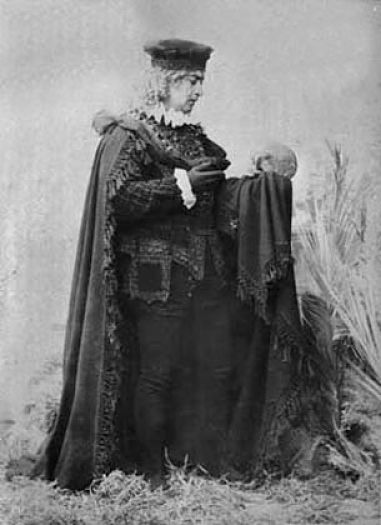
Life can grow, as one grandparent put it, tedious. We long to escape our troubles and who could blame us? Many of the burdens we bear are not of our making. Why not quit? Shakespeare, a Christian wise man, understood the temptation to quit and his tragic hero Hamlet wonders about finding the exit stage life.
Hamlet says:
To be, or not to be- that is the question:
Whether ’tis nobler in the mind to suffer
The slings and arrows of outrageous fortune
Or to take arms against a sea of troubles,
And by opposing end them. To die- to sleep-
No more; and by a sleep to say we end
The heartache, and the thousand natural shocks
That flesh is heir to. ‘Tis a consummation
Devoutly to be wish’d. To die- to sleep.
To sleep- perchance to dream: ay, there’s the rub!
For in that sleep of death what dreams may come
When we have shuffled off this mortal coil, 1760
Must give us pause. There’s the respect
That makes calamity of so long life.
For who would bear the whips and scorns of time,
Th’ oppressor’s wrong, the proud man’s contumely,
The pangs of despis’d love, the law’s delay,
The insolence of office, and the spurns
That patient merit of th’ unworthy takes,
When he himself might his quietus make
With a bare bodkin? Who would these fardels bear,
To grunt and sweat under a weary life,
But that the dread of something after death-
The undiscover’d country, from whose bourn
No traveller returns- puzzles the will,
And makes us rather bear those ills we have
Than fly to others that we know not of?
Thus conscience does make cowards of us all,
And thus the native hue of resolution
Is sicklied o’er with the pale cast of thought,
And enterprises of great pith and moment
With this regard their currents turn awry 1780
And lose the name of action.- Soft you now!
The fair Ophelia!- Nymph, in thy orisons
Be all my sins rememb’red.
This is a passage so well known that even starting the soliloquy can be a nightmare for an actor . . . as a recent experiment with an actual Prince showed.
Hamlet is unsure what to do, tormented by his family, and overloaded with guilt. He would gladly kill himself, but two considerations stand in his way. What is on the other side of death? What if the dreams that come are worse than the real life Hamlet is fleeing? Second, Hamlet has a conscience that makes him cowardly. Christians believe suicide is a serious sin because there is no chance to repent. A dead man can be sorry, but is out of time to make amends. As a result, Hamlet is stuck with life.
If God cares about our suicide, then we should not kill ourselves. If God does not care, then God is uncaring and the potential afterlife is too potentially frightening. The belief that it cannot “get worse” is foolish. Achilles is a gibbering shade in Hades who manages to communicate this message to a visitor to Hades: any life on Earth is better than what he experiences. Remember: the Greek Hades is not nearly so loathsome as Hell. If you believe in the probability of an afterlife, then the day of death is a day of doom.
This is also true for a Christian. We think we are right and that God is love. We affirm, reasonably, that He will accept us into Paradise. Yet only a saint or a fool has total confidence when facing the final challenge. Biblical faith is a rational and experiential belief in the truth of something uncertain. When a man faces the undiscovered country, he wishes for certainty, but no certainty is available.
Is there a God?
If so, is God good?
If there is a God, is there an afterlife?
If so, is it good?
Will it be good for me?
God revealed His existence and the answer to these questions in Jesus. We believe, but someday our belief will face the ultimate test. This should concentrate our minds wonderfully.
—————————————-
William Shakespeare went to God four hundred years ago. To recollect his death, I am writing a personal reflection on a few of his plays. The Winter’s Tale started things off, followed by As You Like It. Romeo and Juliet still matter, Lady Macbeth rebukes the lust for power, and Henry V is a hero. Richard II shows us not to presume on the grace of God or rebel against authority too easily. Coriolanus reminds us that our leaders need integrity and humility. Our life can be joyful if we realize that it is, at best, A Comedy of Errors. Hamlet needs to know himself better and talks to himself less. He is stuck with himself so he had better make his peace with God quickly.
Next Post

April 27, 2016 Empowering Ophelia: How to Know You are Dating Hamlet (Hamlet 3/3)
Browse Our Archives
Select a Category Apologetics Art Culture Education On Books On Education Philosophy Politics Pop Culture Spiritual Reflections Uncategorized
Select a Month October 2026 September 2026 August 2026 July 2026 July 2025 June 2025 September 2024 July 2024 June 2024 December 2023 June 2023 September 2022 May 2022 April 2022 March 2022 February 2022 July 2021 June 2021 May 2021 April 2021 March 2021 February 2021 January 2021 December 2020 November 2020 October 2020 September 2020 August 2020 July 2020 June 2020 May 2020 April 2020 March 2020 February 2020 January 2020 December 2019 November 2019 October 2019 September 2019 August 2019 July 2019 June 2019 May 2019 April 2019 March 2019 February 2019 January 2019 December 2018 November 2018 October 2018 September 2018 August 2018 July 2018 June 2018 May 2018 April 2018 March 2018 February 2018 January 2018 December 2017 November 2017 October 2017 September 2017 August 2017 July 2017 June 2017 May 2017 April 2017 March 2017 February 2017 January 2017 December 2016 November 2016 October 2016 September 2016 August 2016 July 2016 June 2016 May 2016 April 2016 March 2016 February 2016 January 2016 December 2015 November 2015 October 2015 September 2015 August 2015 July 2015 June 2015 May 2015 April 2015 March 2015 February 2015 January 2015 November 2014 October 2014 September 2014 August 2014 July 2014 June 2014 May 2014 April 2014 March 2014 February 2014 January 2014 December 2013 November 2013 October 2013 September 2013 August 2013 July 2013 June 2013 May 2013 April 2013 March 2013 February 2013 January 2013 December 2012 November 2012 October 2012 September 2012 August 2012 July 2012 June 2012 May 2012
Follow Us!
TAKE THE
Religious Wisdom Quiz
Which king of Judah destroyed Nehushtan, the bronze serpent?
Select your answer to see how you score.
Uzziah Josiah Manasseh Hezekiah
Books by This Author John Mark Reynolds
Related posts from Eidos

Classical Education Must Teach Us to Make the...

Yet I Love Her: History and the Church


The Iceberg is There: Verbosity Cannot Defeat Reality
TRENDING AT PATHEOS Evangelical

The REST of Your Life: A Creative Wrestles...
This week I had a conversation with a good friend from church....

How the author of the world's best hymn...
I've been working with John Newton for a while now. This makes...

Long before this Lectio Divina, Psalm 130 - the song - started...

What About the Trees? Another Living Parable
After I finished writing the last article about falling leaves as a...

Why Classical Education Is a Conversation, Not a...
Come and Read: Joy in Classical Education When I was a little...

Cornell University has received a great deal of negative publicity and intense...
view all Evangelical blogs
Ad-Free & Subscriber Log-In Subscription Support
- About Us
- 2026 Calendar
- Videos
- Podcasts
- Library of World Religions
- Faith In Media Tracker
- Advertise With Us
- Write for Us
- Privacy Policy
- Terms of Service
- Do Not Sell My Data
- Contact Us
- Radiant Digital
- Manage Newsletter Subscriptions
- Unsubscribe From Notifications
- Sitemap
Copyright 2008-2026, Patheos. All rights reserved.
Subscription Support Ad-Free & Subscriber Log-In
Follow Patheos