
BuddhistCatholicContemplativeEvangelicalGeneral ChristianHinduJewishLatter-day SaintMuslimNew VisionsProgressive Christian
Beliefs
- Buddhist
- Catholic
- Contemplative
- Evangelical
- General Christian
- Hindu
- Jewish
- Latter-day Saint
- More Voices
- Muslim
- New Visions
- Pagan
- Progressive Christian
Topics
- Religion News
- Food and Religion
- Sports and Religion
- Religious Art
- Religious Music and Entertainment
- Religious Events
- History and Religion
- Style and Religion
- Politics and Religion
- Women in Religion
- Recreation Outdoors and Religion
- Business Finance and Religion
- Careers Workplace and Religion
- Education and Religion
- Family Parenting and Religion
- Health Fitness and Religion
- Home and Religion
- Relationships and Religion
- Technology and Religion
- Travel and Religion
Columnists
- Buddhist Columnists
- Business Finance and Religion Columnists
- Careers Workplace and Religion Columnists
- Catholic Columnists
- Contemplative Columnists
- Education and Religion Columnists
- Evangelists Columnists
- Family Parenting and Religion Columnists
- General Christian Columnists
- Health Fitness and Religion Columnists
- Hindu Columnists
- History and Religion Columnists
- Home and Religion Columnists
- Jewish Columnists
- More Voices Columnists
- Latter Day Columnists
- Muslim Columnists
- New Visions Columnists
- Nonreligious Columnists
- Pagan Columnists
- Politics and Religion Columnists
- Progressive Columnists
- Recreation Outdoors and Religion Columnists
- Relationships and Religion Columnists
- Religion News Columnists
- Religious Art Columnists
- Religious Events Columnists
- Religious Music and Entertainment Columnists
- Sports and Religion Columnists
- Style and Religion Columnists
- Technology and Religion Columnists
- Travel and Religion Columnists
- Women in Religion Columnists
Resource Library
- 2026 Calendar
- Library of World Religions
- The 100 Most Holy Places on Earth
- Patheos Answers
- Podcasts
- Videos
- Faith Leaders Database
- Anglican Episcopalian
- Bahai
- Baptist
- Buddhism
- Christianity
- Confucianism
- Eastern Orthodoxy
- Hinduism
- Holiness and Pentecostal
- ISKCON
- Islam
- Judaism
- Lutheran
- Methodist
- The Church of Jesus Christ of Latter-day Saints
- New Age
- Paganism
- Presbytarian and Reformed
- Protestantism
- Religion Behind the Scenes
- Roman Catholic
- Scientology
- Shia Islam
- Sikhism
- Sufism
- Sunni Islam
- Taoism
- Zen
- See all religions
Research Tools
 Ad-Free & Subscriber Log-In Subscription Support
Ad-Free & Subscriber Log-In Subscription Support
Follow Patheos 

- Trending:
- Forgiveness
- |
- Marriage
- |
- Consciousness
- |
- Death Penalty
- |
- Election
- |
- Halloween

- Home
- Evangelical
- Ending Envy and Revenge in Redemption (Learning from The Winter’s Tale)
Ending Envy and Revenge in Redemption (Learning from The Winter’s Tale)
Last updated on: April 17, 2016 at 10:08 pm by John Mark N. Reynolds
Ending Envy and Revenge in Redemption (Learning from The Winter’s Tale) 2016-04-17T22:08:53-04:00 John Mark N. Reynolds
Patheos Explore the world's faith through different perspectives on religion and spirituality! Patheos has the views of the prevalent religions and spiritualities of the world.
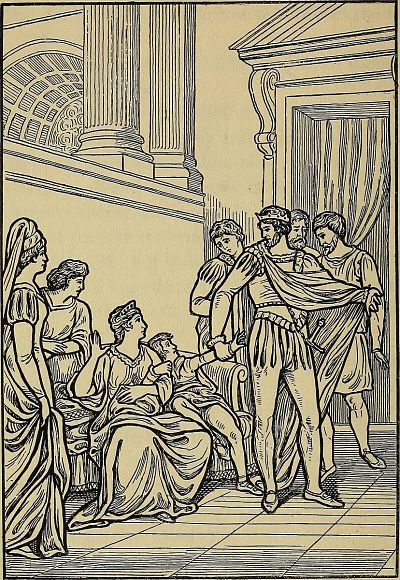 It should be a tragedy, because envy and revenge always end in tragedy. They are the work of devils and Satan always comes to steal and destroy. The Winter’s Tale does not end in death, but in marriages, the mark of a classical comedy, and so the author, William Shakespeare, reminds his audience that all tragedy in this life is (eventually) made whole in the Wedding of God and man.
This is very practical, because very true.
It is very easy for jealous men to stir up envy and resentment. When these snakes, these wormtongues, do this then the happiest situation can become horrible fast. Envy and jealousy cannot be defeated (it would seem), because every victory stirs up more envy and jealousy. The better things go, the more resentment is bred. Of course, eventually the object of the envy and jealousy strikes back and then the original suspicions are seemingly confirmed.
Revenge breeds death and winter comes and blasts all the hopes of happiness.
This is how the play begins, but it is not how it ends. Without spoiling the play, let me merely say that toward the end someone says: “were it but told you should be hooted at like an old tale.” Redemption is always possible, because life comes as surely as Spring.
Sin sits in the heart and breeds cynicism and dark thoughts. As a result some foolish modern people cannot find unity in the play. Vengeance is ended and loves wins, but this is “cheesy” and is just a Hallmark movie . . . an old tale that they wish to mock.
Yet this I know, because I have seen it: vengeance cannot win, nothing born of envy need triump. Love can defeat all of it. Love is strong. It will not submit to evil, but it also will not play games but the rules that the whispering accuser sets. Love sees the best, forgives as much as is possible, and then withdraws when it can stand no more.
Love endures until redemption is possible. Love bets on healing, hope, and wholeness and love wins. One of the greatest characters in all of Shakespeare, Hermione, simply will not play hatred’s game. She does not lose, because she does not accept the rules set by the whispering wormtongue, the satan in the ear of the King, who tries to pull apart her happiness.
She loves, forgives, and destroys envy. Love’s revenge is that the unhappy are forced to be happy.
Can this happen? It cannot happen quickly. Hope is deferred and our hearts are made sick. We find it hard to endure, but if we do, then we can and will be saved, even if the greatest healing comes in the next generation. Shakespeare understood that the “wise guys” of this age are always rolling their eyes at innocence, holiness, and purity, but virtue is stainless. Nothing can touch virtue. Envy virtue and she will pity, become jealous and she will invite you to share in holiness. You cannot stop spring . . . and you can hoot . . . but love is alive and is creeping up on you if you will just allow her to do so.
The first time I saw this play, over a decade ago, I could not stop crying at the end. Hope springs eternal. Hermione was right and love is alive. Give up on revenge, envy, jealousy and death. The passion that God brings us, the hope, the joy, is so overwhelming when we get even a glimpse of it, that like the old king we are tempted to ask to be led “hastily away” so we can lose ourselves in love: of the good creation, of each other, and of Him.
———————————-
I am writing (briefly) on several of Shakespeare’s plays this month to celebrate 400 years since this pious man went to God. He sees even more clearly now.
Previous Post

April 16, 2016
Hail to Baseball!
Next Post
April 18, 2016 Lovers Win, Wise Guys Lose (Living "As You Like It")
Browse Our Archives
Select a Category Apologetics Art Culture Education On Books On Education Philosophy Politics Pop Culture Spiritual Reflections Uncategorized
Select a Month October 2026 September 2026 August 2026 July 2026 July 2025 June 2025 September 2024 July 2024 June 2024 December 2023 June 2023 September 2022 May 2022 April 2022 March 2022 February 2022 July 2021 June 2021 May 2021 April 2021 March 2021 February 2021 January 2021 December 2020 November 2020 October 2020 September 2020 August 2020 July 2020 June 2020 May 2020 April 2020 March 2020 February 2020 January 2020 December 2019 November 2019 October 2019 September 2019 August 2019 July 2019 June 2019 May 2019 April 2019 March 2019 February 2019 January 2019 December 2018 November 2018 October 2018 September 2018 August 2018 July 2018 June 2018 May 2018 April 2018 March 2018 February 2018 January 2018 December 2017 November 2017 October 2017 September 2017 August 2017 July 2017 June 2017 May 2017 April 2017 March 2017 February 2017 January 2017 December 2016 November 2016 October 2016 September 2016 August 2016 July 2016 June 2016 May 2016 April 2016 March 2016 February 2016 January 2016 December 2015 November 2015 October 2015 September 2015 August 2015 July 2015 June 2015 May 2015 April 2015 March 2015 February 2015 January 2015 November 2014 October 2014 September 2014 August 2014 July 2014 June 2014 May 2014 April 2014 March 2014 February 2014 January 2014 December 2013 November 2013 October 2013 September 2013 August 2013 July 2013 June 2013 May 2013 April 2013 March 2013 February 2013 January 2013 December 2012 November 2012 October 2012 September 2012 August 2012 July 2012 June 2012 May 2012
Follow Us!
TAKE THE
Religious Wisdom Quiz
Who wrote many letters (epistles) in the New Testament?
Select your answer to see how you score.
John Jude Peter Paul
Books by This Author John Mark Reynolds
Related posts from Eidos

Classical Education Must Teach Us to Make the...


The Man of All Talents: the Extraordinary Life...

TRENDING AT PATHEOS Evangelical

The REST of Your Life: A Creative Wrestles...
This week I had a conversation with a good friend from church....

How the author of the world's best hymn...
I've been working with John Newton for a while now. This makes...

Long before this Lectio Divina, Psalm 130 - the song - started...

What About the Trees? Another Living Parable
After I finished writing the last article about falling leaves as a...

Why Classical Education Is a Conversation, Not a...
Come and Read: Joy in Classical Education When I was a little...

Cornell University has received a great deal of negative publicity and intense...
view all Evangelical blogs
Ad-Free & Subscriber Log-In Subscription Support
- About Us
- 2026 Calendar
- Videos
- Podcasts
- Library of World Religions
- Faith In Media Tracker
- Advertise With Us
- Write for Us
- Privacy Policy
- Terms of Service
- Do Not Sell My Data
- Contact Us
- Radiant Digital
- Manage Newsletter Subscriptions
- Unsubscribe From Notifications
- Sitemap
Copyright 2008-2026, Patheos. All rights reserved.
Subscription Support Ad-Free & Subscriber Log-In
Follow Patheos