
BuddhistCatholicContemplativeEvangelicalGeneral ChristianHinduJewishLatter-day SaintMuslimNew VisionsProgressive Christian
Beliefs
- Buddhist
- Catholic
- Contemplative
- Evangelical
- General Christian
- Hindu
- Jewish
- Latter-day Saint
- More Voices
- Muslim
- New Visions
- Pagan
- Progressive Christian
Topics
- Religion News
- Food and Religion
- Sports and Religion
- Religious Art
- Religious Music and Entertainment
- Religious Events
- History and Religion
- Style and Religion
- Politics and Religion
- Women in Religion
- Recreation Outdoors and Religion
- Business Finance and Religion
- Careers Workplace and Religion
- Education and Religion
- Family Parenting and Religion
- Health Fitness and Religion
- Home and Religion
- Relationships and Religion
- Technology and Religion
- Travel and Religion
Columnists
- Buddhist Columnists
- Business Finance and Religion Columnists
- Careers Workplace and Religion Columnists
- Catholic Columnists
- Contemplative Columnists
- Education and Religion Columnists
- Evangelists Columnists
- Family Parenting and Religion Columnists
- General Christian Columnists
- Health Fitness and Religion Columnists
- Hindu Columnists
- History and Religion Columnists
- Home and Religion Columnists
- Jewish Columnists
- More Voices Columnists
- Latter Day Columnists
- Muslim Columnists
- New Visions Columnists
- Nonreligious Columnists
- Pagan Columnists
- Politics and Religion Columnists
- Progressive Columnists
- Recreation Outdoors and Religion Columnists
- Relationships and Religion Columnists
- Religion News Columnists
- Religious Art Columnists
- Religious Events Columnists
- Religious Music and Entertainment Columnists
- Sports and Religion Columnists
- Style and Religion Columnists
- Technology and Religion Columnists
- Travel and Religion Columnists
- Women in Religion Columnists
Resource Library
- 2026 Calendar
- Library of World Religions
- The 100 Most Holy Places on Earth
- Patheos Answers
- Podcasts
- Videos
- Faith Leaders Database
- Anglican Episcopalian
- Bahai
- Baptist
- Buddhism
- Christianity
- Confucianism
- Eastern Orthodoxy
- Hinduism
- Holiness and Pentecostal
- ISKCON
- Islam
- Judaism
- Lutheran
- Methodist
- The Church of Jesus Christ of Latter-day Saints
- New Age
- Paganism
- Presbytarian and Reformed
- Protestantism
- Religion Behind the Scenes
- Roman Catholic
- Scientology
- Shia Islam
- Sikhism
- Sufism
- Sunni Islam
- Taoism
- Zen
- See all religions
Research Tools
 Ad-Free & Subscriber Log-In Subscription Support
Ad-Free & Subscriber Log-In Subscription Support
Follow Patheos 

- Trending:
- Forgiveness
- |
- Marriage
- |
- Consciousness
- |
- Death Penalty
- |
- Election
- |
- Halloween

- Home
- Evangelical
- On Locke This Presidential Year
On Locke This Presidential Year
Last updated on: February 28, 2016 at 2:37 am by John Mark N. Reynolds
On Locke This Presidential Year 2016-02-28T02:37:30-04:00 John Mark N. Reynolds
Patheos Explore the world's faith through different perspectives on religion and spirituality! Patheos has the views of the prevalent religions and spiritualities of the world.
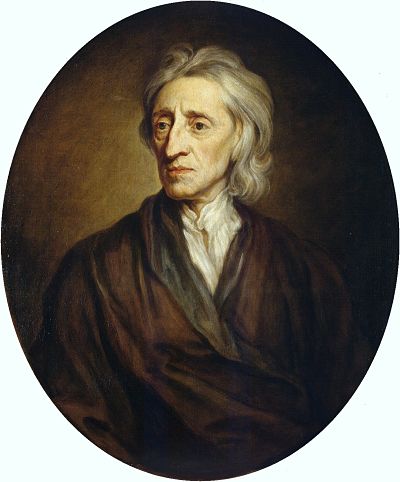 America exists because of John Locke. There are reasons, of course, but this Republic
owes the larger part of the ideas behind it to the English philosopher. The Founders
depended so much on Locke’s ideas and philosophic vocabulary that it is almost
more interesting to note where they deviated from him than where they agreed
with him. When the Declaration says that “we hold these truths to be self-evident”
and that humans have a right to “life, liberty, and pursuit of happiness” they were
channeling Locke.
Understanding Locke goes a long ways in answering the popular question, “Is
America a Christian nation?”
If by that one means that United States is Christendom, then answer is “of course
not.” Christendom is bigger than any particular nation or people. If it means that
only Christians (in some strong sense of the term) formed this nation, then the
answer is “don’t be ridiculous.” The Byzantine Empire, as overtly Christian a state as
has ever existed, could not claim this. The Founders of the United States created a
nation that assumed a Christian majority, but did not demand that individuals be
Christian.
In two ways, Christianity is essential to understanding America. The vast majority of
the population has always been Christian, so in that sense it has always been a
nation of Christians. Second, the founding philosopher of America, John Locke, was
very much a Christian. John Locke’s language is permeated with the Bible, his
arguments assume the truth of the Gospel, and the he supports Christian ethics. He
engaged in Christian apologetics, was intent of showing his Anglican bishop his
ideas were orthodox, and quoted the Bible continuously. Locke depends on Biblical
history to make his case. He simply assumes that the population of England is
Christian in his political work and could defend the right to revolution based on that
idea.
The “Second Treatise on Government” implies to the not-even-careful reader that
there must be a “First Treatise.” This earlier work by Locke was a devastating
critique of the argument for an absolute monarch based mostly on Biblical history.
Locke is careful to show that nothing in the Bible or in Christianity denies humans
the right to revolt against a bad government or gives the king absolute power. Locke
finished off serious defense of “divine right” in the English-speaking world, showing
not only that philosophy can make progress, but that normal citizens can notice that
progress.
Of course, the fact that Locke meant to build a Christian political philosophy does
not mean he succeeded. Read Lock and ask yourself if he did? Or did he
inadvertently bring on the toxic secularism of our own time?
_____________________
A version of this appeared in my A Great Books Reader
Previous Post

February 26, 2016
Plato and Jesus
Next Post
February 28, 2016 Who is buried in Grant's Tomb?
Browse Our Archives
Select a Category Apologetics Art Culture Education On Books On Education Philosophy Politics Pop Culture Spiritual Reflections Uncategorized
Select a Month October 2026 September 2026 August 2026 July 2026 July 2025 June 2025 September 2024 July 2024 June 2024 December 2023 June 2023 September 2022 May 2022 April 2022 March 2022 February 2022 July 2021 June 2021 May 2021 April 2021 March 2021 February 2021 January 2021 December 2020 November 2020 October 2020 September 2020 August 2020 July 2020 June 2020 May 2020 April 2020 March 2020 February 2020 January 2020 December 2019 November 2019 October 2019 September 2019 August 2019 July 2019 June 2019 May 2019 April 2019 March 2019 February 2019 January 2019 December 2018 November 2018 October 2018 September 2018 August 2018 July 2018 June 2018 May 2018 April 2018 March 2018 February 2018 January 2018 December 2017 November 2017 October 2017 September 2017 August 2017 July 2017 June 2017 May 2017 April 2017 March 2017 February 2017 January 2017 December 2016 November 2016 October 2016 September 2016 August 2016 July 2016 June 2016 May 2016 April 2016 March 2016 February 2016 January 2016 December 2015 November 2015 October 2015 September 2015 August 2015 July 2015 June 2015 May 2015 April 2015 March 2015 February 2015 January 2015 November 2014 October 2014 September 2014 August 2014 July 2014 June 2014 May 2014 April 2014 March 2014 February 2014 January 2014 December 2013 November 2013 October 2013 September 2013 August 2013 July 2013 June 2013 May 2013 April 2013 March 2013 February 2013 January 2013 December 2012 November 2012 October 2012 September 2012 August 2012 July 2012 June 2012 May 2012
Follow Us!
TAKE THE
Religious Wisdom Quiz
What is the ecumenical council where Roman Catholicism addressed modernization in the 1960s?
Select your answer to see how you score.
Council of Nicaea Ephesus Trent Vatican II
Books by This Author John Mark Reynolds
Related posts from Eidos

Yet I Love Her: History and the Church


The Iceberg is There: Verbosity Cannot Defeat Reality
TRENDING AT PATHEOS Evangelical

The REST of Your Life: A Creative Wrestles...
This week I had a conversation with a good friend from church....

How the author of the world's best hymn...
I've been working with John Newton for a while now. This makes...

Long before this Lectio Divina, Psalm 130 - the song - started...

What About the Trees? Another Living Parable
After I finished writing the last article about falling leaves as a...

Why Classical Education Is a Conversation, Not a...
Come and Read: Joy in Classical Education When I was a little...

Cornell University has received a great deal of negative publicity and intense...
view all Evangelical blogs
Ad-Free & Subscriber Log-In Subscription Support
- About Us
- 2026 Calendar
- Videos
- Podcasts
- Library of World Religions
- Faith In Media Tracker
- Advertise With Us
- Write for Us
- Privacy Policy
- Terms of Service
- Do Not Sell My Data
- Contact Us
- Radiant Digital
- Manage Newsletter Subscriptions
- Unsubscribe From Notifications
- Sitemap
Copyright 2008-2026, Patheos. All rights reserved.
Subscription Support Ad-Free & Subscriber Log-In
Follow Patheos