
BuddhistCatholicContemplativeEvangelicalGeneral ChristianHinduJewishLatter-day SaintMuslimNew VisionsProgressive Christian
Beliefs
- Buddhist
- Catholic
- Contemplative
- Evangelical
- General Christian
- Hindu
- Jewish
- Latter-day Saint
- More Voices
- Muslim
- New Visions
- Pagan
- Progressive Christian
Topics
- Religion News
- Food and Religion
- Sports and Religion
- Religious Art
- Religious Music and Entertainment
- Religious Events
- History and Religion
- Style and Religion
- Politics and Religion
- Women in Religion
- Recreation Outdoors and Religion
- Business Finance and Religion
- Careers Workplace and Religion
- Education and Religion
- Family Parenting and Religion
- Health Fitness and Religion
- Home and Religion
- Relationships and Religion
- Technology and Religion
- Travel and Religion
Columnists
- Buddhist Columnists
- Business Finance and Religion Columnists
- Careers Workplace and Religion Columnists
- Catholic Columnists
- Contemplative Columnists
- Education and Religion Columnists
- Evangelists Columnists
- Family Parenting and Religion Columnists
- General Christian Columnists
- Health Fitness and Religion Columnists
- Hindu Columnists
- History and Religion Columnists
- Home and Religion Columnists
- Jewish Columnists
- More Voices Columnists
- Latter Day Columnists
- Muslim Columnists
- New Visions Columnists
- Nonreligious Columnists
- Pagan Columnists
- Politics and Religion Columnists
- Progressive Columnists
- Recreation Outdoors and Religion Columnists
- Relationships and Religion Columnists
- Religion News Columnists
- Religious Art Columnists
- Religious Events Columnists
- Religious Music and Entertainment Columnists
- Sports and Religion Columnists
- Style and Religion Columnists
- Technology and Religion Columnists
- Travel and Religion Columnists
- Women in Religion Columnists
Resource Library
- 2026 Calendar
- Library of World Religions
- The 100 Most Holy Places on Earth
- Patheos Answers
- Podcasts
- Videos
- Faith Leaders Database
- Anglican Episcopalian
- Bahai
- Baptist
- Buddhism
- Christianity
- Confucianism
- Eastern Orthodoxy
- Hinduism
- Holiness and Pentecostal
- ISKCON
- Islam
- Judaism
- Lutheran
- Methodist
- The Church of Jesus Christ of Latter-day Saints
- New Age
- Paganism
- Presbytarian and Reformed
- Protestantism
- Religion Behind the Scenes
- Roman Catholic
- Scientology
- Shia Islam
- Sikhism
- Sufism
- Sunni Islam
- Taoism
- Zen
- See all religions
Research Tools
 Ad-Free & Subscriber Log-In Subscription Support
Ad-Free & Subscriber Log-In Subscription Support
Follow Patheos 

- Trending:
- Forgiveness
- |
- Marriage
- |
- Consciousness
- |
- Death Penalty
- |
- Election
- |
- Halloween

- Home
- Evangelical
- Reason is Not Skepticism.
Reason is Not Skepticism.
Last updated on: January 21, 2016 at 10:53 am by John Mark N. Reynolds
Reason is Not Skepticism. 2016-01-21T10:53:14-04:00 John Mark N. Reynolds
Patheos Explore the world's faith through different perspectives on religion and spirituality! Patheos has the views of the prevalent religions and spiritualities of the world.
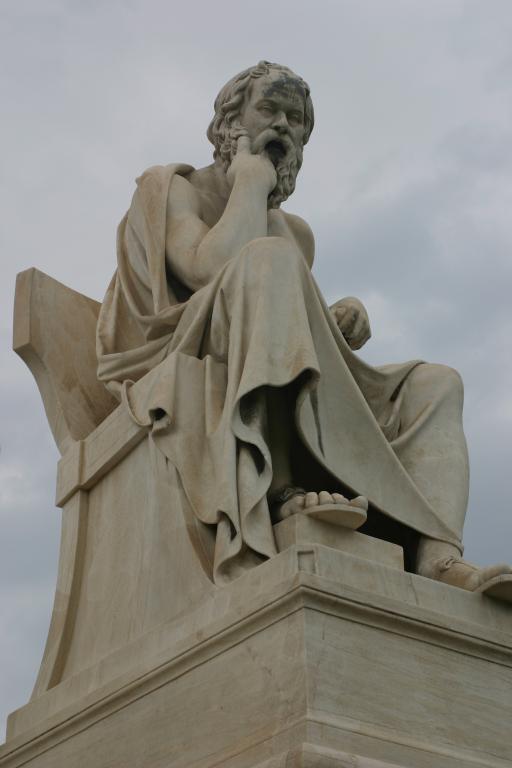 Sometimes atheists and agnostics who are non-academics* call themselves skeptics, but they really should not. They are not generally skeptical, but reserve their skepticism for supernatural or religious claims. Like anybody else, they believe a great many things provisionally that might be wrong: ideas about the world, their neighbor, or even their fantasy football team!
In fact, skepticism is good. Everyone, including religious people, should be skeptical. After the twentieth century and our experiences in the twenty-first century, the Orthodox are right to be skeptical about claims that a good society can be based on atheism!
An atheist, remember we are talking about the “street-level” atheist, often will make four basic assumptions about knowledge:
Assumption 1: Reason is primarily about skepticism.
Assumption 2: History shows that strong religion hurts science.
Assumption 3: “Extraordinary Claims Need Extraordinary Evidence.”
Assumption 4: Religious Faith is not based on or even cannot be based on evidence.
These assumptions are wrong, but without them, much of the atheist attack on belief would be silenced.
The Problem with Assumption 1: Reason is NOT Skepticism
Few people want to be unreasonable. If religion is contrary to reason, not just the appearance of reason, but reason, then it is unworthy of belief. Atheists often will attempt to define faith for Christians as “belief in the absurd!” It is not, but repeat an error often enough and it starts to get an aura of seriousness it does not deserve.
Sadly, many believers do not understand that faith is deeply reasonable. Of course, the wisdom of God may appear to be folly at first glance, just as a student told that a table contains mostly empty space thinks this foolish. Hard ideas or different ideas are not irrational, just hard or different! Even when a fool for Christ, the jester of an ancient court, uses folly, it is to demonstrate the deeper folly around the fool! He or she demonstrates absurdity in others by pushing their materialism or social rules to absurdity.
Jesus Christ is the Divine Logos of God and the Word of God is not just reasonable, but Reason incarnate. Orthodoxy may appear irrational to those who accept theories alien to reality, but to those who embrace all of reality, Orthodoxy will not just seem reasonable, but lead a man to reason!
Skepticism is a tool in the rational man’s arsenal, but not reason. No one lives like a skeptic most of the time. A rational man begins in belief and only begins to doubt for sufficient reasons. This is true of all our experiences unless we warp our thinking with the preconceptions that some experiences must be treated differently. It is certainly true that if we go to a used car lot we have experiences or have had true stories that will increase our skepticism. I see no reason to approach my own religious experiences at Saint Paul’s with the same degree of skepticism!
In most cases, we do not doubt what seems true even without very good reasons. If we do not take this approach, skepticism will consume itself leading to total doubt. I once heard an excellent epistemologist confronted by a freshman who wanted to know how this philosopher knew he was not a brain in a vat controlled by an evil scientist. He forcefully replied, “Why the (insert strong word here) would anyone believe that?”
The philosopher was right. If we require proof for everything, or begin to doubt even our most basic experiences, we will end up in an unproductive place or go mad! We accept our experiences, take most of our explanations from the wise people around us, and only when we must (and sometimes we must!) do we examine them.
The unexamined life is not worth living, but endless examination of everything will prevent us from living! A properly functioning human will be skeptical, but only for good reason. The default position is faith: believing an idea because there is no good reason to doubt it.
Whenever I explain this to an atheist, his first thought is of things that appear true, but are not. “What of the flat earth?” The reply is: “What of it?” The earth superficially appears flat and as the center of the cosmos. Earth is not flat, the Sun certainly does not go around the Earth, and yet we can live good lives speaking as if both things are true. When I say “sunrise,” only a pendent would rebuke me, because the Sun does appear to rise! We do not discover that our experience is unreal; the sun appears to rise, but that our first explanation for the phenomena, geocentrism, is false.
In fact, we stopped believing in a perfectly flat earth very quickly as our experience showed humans the Earth could not be flat. Ships sink below the horizon as they sail away from the observer and a perfectly flat Earth could not explain this experience.
Science is as much a product of belief as skepticism. To make progress, scientists are conservative. They will accept a theory, even with some contrary data, if it works best and has worked well in the past. They will revise their ideas or thinking only when pressed by a better explanation that fits more of the data.
—–
*The atheist I am addressing is “street level” or lacks academic sophistication in his or her training. Philosophically trained atheists make much more nuanced and sophisticated claims and require more nuanced and sophisticated responses!
Previous Post

January 11, 2016
Bing and Bowie: the Old Order Changes
Next Post
January 13, 2016 All the Truth is Out There: A Lesson for Voters
Browse Our Archives
Select a Category Apologetics Art Culture Education On Books On Education Philosophy Politics Pop Culture Spiritual Reflections Uncategorized
Select a Month October 2026 September 2026 August 2026 July 2026 July 2025 June 2025 September 2024 July 2024 June 2024 December 2023 June 2023 September 2022 May 2022 April 2022 March 2022 February 2022 July 2021 June 2021 May 2021 April 2021 March 2021 February 2021 January 2021 December 2020 November 2020 October 2020 September 2020 August 2020 July 2020 June 2020 May 2020 April 2020 March 2020 February 2020 January 2020 December 2019 November 2019 October 2019 September 2019 August 2019 July 2019 June 2019 May 2019 April 2019 March 2019 February 2019 January 2019 December 2018 November 2018 October 2018 September 2018 August 2018 July 2018 June 2018 May 2018 April 2018 March 2018 February 2018 January 2018 December 2017 November 2017 October 2017 September 2017 August 2017 July 2017 June 2017 May 2017 April 2017 March 2017 February 2017 January 2017 December 2016 November 2016 October 2016 September 2016 August 2016 July 2016 June 2016 May 2016 April 2016 March 2016 February 2016 January 2016 December 2015 November 2015 October 2015 September 2015 August 2015 July 2015 June 2015 May 2015 April 2015 March 2015 February 2015 January 2015 November 2014 October 2014 September 2014 August 2014 July 2014 June 2014 May 2014 April 2014 March 2014 February 2014 January 2014 December 2013 November 2013 October 2013 September 2013 August 2013 July 2013 June 2013 May 2013 April 2013 March 2013 February 2013 January 2013 December 2012 November 2012 October 2012 September 2012 August 2012 July 2012 June 2012 May 2012
Follow Us!
TAKE THE
Religious Wisdom Quiz
What Christian group uses "Meeting Houses" instead of traditional churches?
Select your answer to see how you score.
Quakers Methodists Lutherans Baptists
Books by This Author John Mark Reynolds
Related posts from Eidos

The Iceberg is There: Verbosity Cannot Defeat Reality

One Weeping Icon at Christmas is Enough

The Power of Dissenting Societies: A Thought

TRENDING AT PATHEOS Evangelical

The REST of Your Life: A Creative Wrestles...
This week I had a conversation with a good friend from church....

How the author of the world's best hymn...
I've been working with John Newton for a while now. This makes...

Long before this Lectio Divina, Psalm 130 - the song - started...

What About the Trees? Another Living Parable
After I finished writing the last article about falling leaves as a...

Why Classical Education Is a Conversation, Not a...
Come and Read: Joy in Classical Education When I was a little...

Cornell University has received a great deal of negative publicity and intense...
view all Evangelical blogs
Ad-Free & Subscriber Log-In Subscription Support
- About Us
- 2026 Calendar
- Videos
- Podcasts
- Library of World Religions
- Faith In Media Tracker
- Advertise With Us
- Write for Us
- Privacy Policy
- Terms of Service
- Do Not Sell My Data
- Contact Us
- Radiant Digital
- Manage Newsletter Subscriptions
- Unsubscribe From Notifications
- Sitemap
Copyright 2008-2026, Patheos. All rights reserved.
Subscription Support Ad-Free & Subscriber Log-In
Follow Patheos