
BuddhistCatholicContemplativeEvangelicalGeneral ChristianHinduJewishLatter-day SaintMuslimNew VisionsProgressive Christian
Beliefs
- Buddhist
- Catholic
- Contemplative
- Evangelical
- General Christian
- Hindu
- Jewish
- Latter-day Saint
- More Voices
- Muslim
- New Visions
- Pagan
- Progressive Christian
Topics
- Religion News
- Food and Religion
- Sports and Religion
- Religious Art
- Religious Music and Entertainment
- Religious Events
- History and Religion
- Style and Religion
- Politics and Religion
- Women in Religion
- Recreation Outdoors and Religion
- Business Finance and Religion
- Careers Workplace and Religion
- Education and Religion
- Family Parenting and Religion
- Health Fitness and Religion
- Home and Religion
- Relationships and Religion
- Technology and Religion
- Travel and Religion
Columnists
- Buddhist Columnists
- Business Finance and Religion Columnists
- Careers Workplace and Religion Columnists
- Catholic Columnists
- Contemplative Columnists
- Education and Religion Columnists
- Evangelists Columnists
- Family Parenting and Religion Columnists
- General Christian Columnists
- Health Fitness and Religion Columnists
- Hindu Columnists
- History and Religion Columnists
- Home and Religion Columnists
- Jewish Columnists
- More Voices Columnists
- Latter Day Columnists
- Muslim Columnists
- New Visions Columnists
- Nonreligious Columnists
- Pagan Columnists
- Politics and Religion Columnists
- Progressive Columnists
- Recreation Outdoors and Religion Columnists
- Relationships and Religion Columnists
- Religion News Columnists
- Religious Art Columnists
- Religious Events Columnists
- Religious Music and Entertainment Columnists
- Sports and Religion Columnists
- Style and Religion Columnists
- Technology and Religion Columnists
- Travel and Religion Columnists
- Women in Religion Columnists
Resource Library
- 2026 Calendar
- Library of World Religions
- The 100 Most Holy Places on Earth
- Patheos Answers
- Podcasts
- Videos
- Faith Leaders Database
- Anglican Episcopalian
- Bahai
- Baptist
- Buddhism
- Christianity
- Confucianism
- Eastern Orthodoxy
- Hinduism
- Holiness and Pentecostal
- ISKCON
- Islam
- Judaism
- Lutheran
- Methodist
- The Church of Jesus Christ of Latter-day Saints
- New Age
- Paganism
- Presbytarian and Reformed
- Protestantism
- Religion Behind the Scenes
- Roman Catholic
- Scientology
- Shia Islam
- Sikhism
- Sufism
- Sunni Islam
- Taoism
- Zen
- See all religions
Research Tools
 Ad-Free & Subscriber Log-In Subscription Support
Ad-Free & Subscriber Log-In Subscription Support
Follow Patheos 

- Trending:
- Forgiveness
- |
- Marriage
- |
- Consciousness
- |
- Death Penalty
- |
- Election
- |
- Halloween

- Home
- Evangelical
- Why Do Smart Atheists Believe Dumb Things?
Why Do Smart Atheists Believe Dumb Things?
Last updated on: October 14, 2015 at 11:03 pm by John Mark N. Reynolds
Why Do Smart Atheists Believe Dumb Things? 2015-10-14T23:03:00-04:00 John Mark N. Reynolds
Patheos Explore the world's faith through different perspectives on religion and spirituality! Patheos has the views of the prevalent religions and spiritualities of the world.
At least read this.
At any point when I engage with village atheists (not professional philosophers) my students will often respond: what is wrong with these people? A simple way to get philosophy students who are religious to relax about “all powerful” atheists is to have them attempt dialogue with Internet (or village) atheists.
It goes about as well as if philosophically acute atheists tried to go to a fringe church and talk to laypeople. Students if they are not careful will dismiss atheism out of hand.
The usual strategy in dealing with “smart people” who believe dumb things (or things I think are dumb) is to explain away their “dumb” beliefs in a variety of ways. I am sure that some of these are even true of some people sometimes. Atheism or anti-religious views are popular in certain fields and there is peer pressure to accept them. Traditional religious belief is unpopular in fields where people know little about philosophy, but a great deal of science. I have personally known people who rejected religious truths, because they conflicted with certain desires and then looked for intellectual reasons to justify those immoral decisions.
I don’t think that covers most thoughtful atheists.
Internet atheists, most of them anyway, remain atheists even though their arguments are mostly ad hominem mixed with tu toque, almost total ignorance of philosophy of religion, and Richard Dawkins’ talking points, because atheism is fundamentally plausible. Christians should never dismiss atheism, even the most popular sort, or other religious traditions by assuming they are obviously wrong.
They are not. When large numbers of smart people believe a thing, the obviousness of the error should be questioned. Assuming some sociological answer to “why my smart neighbor doesn’t see the world they way I do” is insulting and intellectually lazy. Let’s be plain: atheism is an old (Lucretius!) and important intellectual tradition. It might be the way to go. I don’t think so, but this is not so self-evident intellectually that all opponents are obviously stupid or lazy or controlled by immorality or smart in one area and not in another.
When something that seems obvious to me isn’t to a person who seems to care about truth, charity commands me to take them at their word. They don’t agree with me: that doesn’t mean they are stupid, deceived, immoral, groomed, or even wrong. I must always consider the idea I might be wrong.
We can see why we should do this when “outsiders” make the same uncharitable and foolish mistake in talking to us. They assume they know what we believe better than we do!
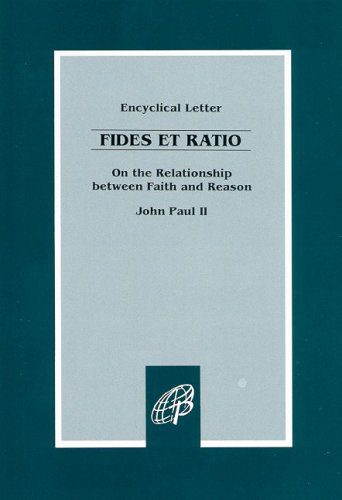
Nothing is more frustrating than when the opponents of Christianity will insist on defining our terms for us in ways that are unrecognizable. For example, I meet atheists all the time that think for a Christian, “faith” is believing something against the evidence or despite the evidence. Now since one can simply look up the Catechism of the Catholic Church (I am not Catholic, but most of the world’s Christians are), or the writings of John Calvin or an Orthodox discussion of faith and reason and see this wrong, it is odd this isn’t done. Shouldn’t one at least take the definitions of Saint John Paul II in a document on faith and reason as a starting point?
Instead, one will get someone with no Biblical training using a Bible verse to define what he thinks we think faith is. If that seems foolish, it is. Let’s not do the same. Should we then move from this epic fail to our own wrong idea about atheism? By no means! One could just assume the atheist is a dullard, hiding something, or deceived. I think not. I think they are getting intellectual strength from the best reasons for atheism (the problem of pain and an all perfect God, the hiddenness of God, and other issues). People are atheists because atheism might be true, just as I think so many people are Muslims because it is plausible.
I think both Islam and atheism false, but am not arrogant enough (or should not be) to say they are obviously false or smart people who are atheist or Muslim are in denial. Thinking a person wrong, even seriously wrong, is not the same as knowing their views are foolish and mine are not. When I am sure that all my opponents, even the nice ones, are naïve, arrogant, or fools, then I am almost surely naïve, arrogant, or a fool.
Instead, we recognize the limits of argument. As far as it goes, a man can be rational and be an atheist. A man can be rational and be a Muslim. I have yet to meet a rational man that is “flat earth” so this is not saying every view meets this standard! Some religious views merit and have received serious philosophic defense . . . Santa . . . not so much. Some secular views have active and noble defenders. . . . Lucretius . . . not so much.
So what should a Christian assume? A Christian should assume that their neighbor with another view is wrong and dialogue with him or her. We should not assume they are always immoral, perverse, stupid, or deceiving themselves. We are all wrong about something. Instead, charity demands we look first to ourselves (where are we cocksure?) and then to our neighbor?
One good way of looking at Biblical faith is: my belief, based on evidence of experience, revelation, and reason, of things not yet seen. I believe that something I cannot know for certain is probable enough to base my life on it. This gives an opening for reasonable people to read the evidence (and their own experience) differently. I must accept this and pray God to reveal Himself to those people. We can dialogue and argue in good faith.
Usually at this point, my secular (or more liberal religious friends) will say that this is all well and good, but I assert their mistake will damn them. If I did assert a sincere intellectual mistake would damn them, this would be bad. I do not assert this. Since God is just and loving, I assume that every person will have the truth made plain to them, at the very least at the moment of death, and that this truth will be accepted or denied. Nobody will be damned for a calculative error or a sincere mistake in epistemology.
We must be born again and Jesus is the only way to Paradise, but any individual is complicated and I have no way to judge the state of their soul, what will happen to them at the moment of death, and what they have or have not heard. My own soul is enough work for me!
And so I reject any foolish Christian belief that those who are not Christians are just smart people believing stupid things. That isn’t just stupid, it is un-Christian. The just will live by faith . . . not Cartesian certainty and so we must allow that all of us make mistakes . . . and that the one making the mistake may be me and not my neighbor!
Previous Post

October 12, 2015
President Obama is Blowing It in Syria
Next Post
October 14, 2015 The World Can Change Quickly
Browse Our Archives
Select a Category Apologetics Art Culture Education On Books On Education Philosophy Politics Pop Culture Spiritual Reflections Uncategorized
Select a Month October 2026 September 2026 August 2026 July 2026 July 2025 June 2025 September 2024 July 2024 June 2024 December 2023 June 2023 September 2022 May 2022 April 2022 March 2022 February 2022 July 2021 June 2021 May 2021 April 2021 March 2021 February 2021 January 2021 December 2020 November 2020 October 2020 September 2020 August 2020 July 2020 June 2020 May 2020 April 2020 March 2020 February 2020 January 2020 December 2019 November 2019 October 2019 September 2019 August 2019 July 2019 June 2019 May 2019 April 2019 March 2019 February 2019 January 2019 December 2018 November 2018 October 2018 September 2018 August 2018 July 2018 June 2018 May 2018 April 2018 March 2018 February 2018 January 2018 December 2017 November 2017 October 2017 September 2017 August 2017 July 2017 June 2017 May 2017 April 2017 March 2017 February 2017 January 2017 December 2016 November 2016 October 2016 September 2016 August 2016 July 2016 June 2016 May 2016 April 2016 March 2016 February 2016 January 2016 December 2015 November 2015 October 2015 September 2015 August 2015 July 2015 June 2015 May 2015 April 2015 March 2015 February 2015 January 2015 November 2014 October 2014 September 2014 August 2014 July 2014 June 2014 May 2014 April 2014 March 2014 February 2014 January 2014 December 2013 November 2013 October 2013 September 2013 August 2013 July 2013 June 2013 May 2013 April 2013 March 2013 February 2013 January 2013 December 2012 November 2012 October 2012 September 2012 August 2012 July 2012 June 2012 May 2012
Follow Us!
TAKE THE
Religious Wisdom Quiz
What does "Messiah" mean in Hebrew?
Select your answer to see how you score.
Servant Redeemer Anointed one Blessed
Books by This Author John Mark Reynolds
Related posts from Eidos

The Iceberg is There: Verbosity Cannot Defeat Reality

One Weeping Icon at Christmas is Enough

The Power of Dissenting Societies: A Thought

TRENDING AT PATHEOS Evangelical

The REST of Your Life: A Creative Wrestles...
This week I had a conversation with a good friend from church....

How the author of the world's best hymn...
I've been working with John Newton for a while now. This makes...

Long before this Lectio Divina, Psalm 130 - the song - started...

What About the Trees? Another Living Parable
After I finished writing the last article about falling leaves as a...

Why Classical Education Is a Conversation, Not a...
Come and Read: Joy in Classical Education When I was a little...

Cornell University has received a great deal of negative publicity and intense...
view all Evangelical blogs
Ad-Free & Subscriber Log-In Subscription Support
- About Us
- 2026 Calendar
- Videos
- Podcasts
- Library of World Religions
- Faith In Media Tracker
- Advertise With Us
- Write for Us
- Privacy Policy
- Terms of Service
- Do Not Sell My Data
- Contact Us
- Radiant Digital
- Manage Newsletter Subscriptions
- Unsubscribe From Notifications
- Sitemap
Copyright 2008-2026, Patheos. All rights reserved.
Subscription Support Ad-Free & Subscriber Log-In
Follow Patheos