
BuddhistCatholicContemplativeEvangelicalGeneral ChristianHinduJewishLatter-day SaintMuslimNew VisionsProgressive Christian
Beliefs
- Buddhist
- Catholic
- Contemplative
- Evangelical
- General Christian
- Hindu
- Jewish
- Latter-day Saint
- More Voices
- Muslim
- New Visions
- Pagan
- Progressive Christian
Topics
- Religion News
- Food and Religion
- Sports and Religion
- Religious Art
- Religious Music and Entertainment
- Religious Events
- History and Religion
- Style and Religion
- Politics and Religion
- Women in Religion
- Recreation Outdoors and Religion
- Business Finance and Religion
- Careers Workplace and Religion
- Education and Religion
- Family Parenting and Religion
- Health Fitness and Religion
- Home and Religion
- Relationships and Religion
- Technology and Religion
- Travel and Religion
Columnists
- Buddhist Columnists
- Business Finance and Religion Columnists
- Careers Workplace and Religion Columnists
- Catholic Columnists
- Contemplative Columnists
- Education and Religion Columnists
- Evangelists Columnists
- Family Parenting and Religion Columnists
- General Christian Columnists
- Health Fitness and Religion Columnists
- Hindu Columnists
- History and Religion Columnists
- Home and Religion Columnists
- Jewish Columnists
- More Voices Columnists
- Latter Day Columnists
- Muslim Columnists
- New Visions Columnists
- Nonreligious Columnists
- Pagan Columnists
- Politics and Religion Columnists
- Progressive Columnists
- Recreation Outdoors and Religion Columnists
- Relationships and Religion Columnists
- Religion News Columnists
- Religious Art Columnists
- Religious Events Columnists
- Religious Music and Entertainment Columnists
- Sports and Religion Columnists
- Style and Religion Columnists
- Technology and Religion Columnists
- Travel and Religion Columnists
- Women in Religion Columnists
Resource Library
- 2026 Calendar
- Library of World Religions
- The 100 Most Holy Places on Earth
- Patheos Answers
- Podcasts
- Videos
- Faith Leaders Database
- Anglican Episcopalian
- Bahai
- Baptist
- Buddhism
- Christianity
- Confucianism
- Eastern Orthodoxy
- Hinduism
- Holiness and Pentecostal
- ISKCON
- Islam
- Judaism
- Lutheran
- Methodist
- The Church of Jesus Christ of Latter-day Saints
- New Age
- Paganism
- Presbytarian and Reformed
- Protestantism
- Religion Behind the Scenes
- Roman Catholic
- Scientology
- Shia Islam
- Sikhism
- Sufism
- Sunni Islam
- Taoism
- Zen
- See all religions
Research Tools
 Ad-Free & Subscriber Log-In Subscription Support
Ad-Free & Subscriber Log-In Subscription Support
Follow Patheos 

- Trending:
- Forgiveness
- |
- Marriage
- |
- Consciousness
- |
- Death Penalty
- |
- Election
- |
- Halloween

- Home
- Evangelical
- Waiting for Constantine
Waiting for Constantine
Last updated on: November 30, 2015 at 2:33 pm by John Mark N. Reynolds
Waiting for Constantine 2015-11-30T14:33:32-04:00 John Mark N. Reynolds
Patheos Explore the world's faith through different perspectives on religion and spirituality! Patheos has the views of the prevalent religions and spiritualities of the world.
Restore the Cross
Today is the feast of Constantine: one of those rare heroes that certain people love to hate and blame for everything.
Left-wing Christians blame him for bringing Imperial power to a more pure Christianity as if the three hundred years between the death of Jesus and Constantine’s rule never happened. Evidently, the Church should have rejected the Emperor’s conversion and urged him to return to state persecution of the Church so they could remain “pure.” The advocates of such views rarely move to countries in the world (North Korea, Iran, and Syria are available) where such purity is easily possible. Secularists pretend Constantine invented Christianity, wrote the Bible, and established Orthodoxy. The theological controversies and lively Church debates, formation of the canon of Scripture, and development of the Faith for over three hundreds years before Constantine are missing for these people, too. My favorite example is a right wing Christian text book which manages to be wrong in two different ways in one sentence. It claims: Constantine made Christianity the “official” religion of the Roman Empire (that was later with Theodosius) and that Constantine introduced pagan practices to the Church. There is no evidence he did any such thing.
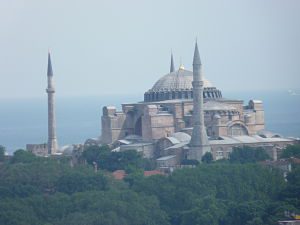
What Constantine did do was end the second class status of Christians that led to their periodic persecution by imperial authorities. With his mother, Helena, he favored the Christian faith, but did not end religious freedom for pagans. He was no theologian, but he encouraged rigorous intellectual debate in the Church. He was no “saint” as a ruler, he lived in perilous times, but he acted boldly and saved civilization. He left dying Rome for a new defensible capital, Constantinople, the Minas Tirith of the ancient world: the great city protecting European culture from extinction. This city defied most aggression for one thousand years and kept a secular and Christian university tradition alive from beginning to end. Eventually, Constantine’s city would establish a great Greco-Roman commonwealth that would flower in civilizations like Russia, Romania, and Bulgaria.
If you like reading ancient Greek manuscripts, thank Constantine.
Constantine presented the Church with a problem. What happens if you win? Christianity is true and eventually the competitors run out of excuses. They become gods that have obviously failed. Constantine saw the light, perhaps in a miraculous vision, and moved in our direction. Was he perfect? He was not. Like George Washington as President, Constantine had no precedent to follow and no example. He was an Emperor who suddenly faced moral restraints from a Law higher than Caesar.
What happens when you win?
Civilization is saved for one thousand years. Those who reject Constantine rarely have a way of governing. Until Jesus returns, they dare not win or persuade a majority because then they would have to govern. To govern is to move from martyr and victim, to ruler and decision maker and mistakes multiply. The martyr most merely die well, the Christian ruler must govern well. Nobody has done this perfectly and Constantine did not even do it very well. But Constantine tried and fused the truth of Christianity to the best of Greek and Roman civilization and so saved both.
If we can honor the slave holding Washington for what he did right, and we should and can, then we should honor Constantine on his day for being a man who saved us all. He built a wall against barbarism that served Christendom well for a millennium. He began (so imperfectly) the process of dealing with the relationship of Church and state. Constantine did not subordinate the Church to the state: later Emperors faced rebukes from powerful patriarchs. He did give the Church the chance to save half the Empire. The West was not so lucky.
Constantine lived in times where it seemed his nation, Rome, was doomed. Rome faced enemies from within and without. Rome was broke. Rome was morally broken. Constantine (all too dimly!) saw that Jesus was the answer. He made Christ King as much as he could . . . his failures were real, but his triumph saved philosophy, science, and high culture for better days. He built an Eastern Roman Empire (Byzantium) and this Empire saved much that would otherwise have been lost and remembered much that was elsewhere forgotten. The flowering of the Byzantine (Eastern Roman) Renaissance would produce the Western Renaissance and the entire world is blessed as a result.
Constantine’s particular solutions would not be appropriate to this age. We have learned a thing or two since his time thanks in part to the time he bought us and the texts he saved for us. Still this patriot, this man who tried and succeeded, is an example of possibility.
In these difficult days, surely there is hope in the life of Constantine. There is the hope that some city in the hinterlands can arise as a new center for American renewal. Some people can unite and save classical education and culture. We need no single leader to see visions and raise the standard . . . the seeds Constantine planted are rooted in all Christian men and women with hopes for something better than a twilight defeat. Instead, we need a community and not just a single man who on a day of doom can look up to Heaven and see the Cross and know that in this sign we can conquer.
Conquer? We will not conquer like the old Emperor still half in paganism’s darkness. No. We will conquer, if the Spirit is willing, hearts and minds by better arguments, greater cities, stronger charity, and profound service. We will build a new city and wait there for the better city to come and the divine Emperor.

The next American City?
God help us. We wait for the Constantine spirit: the Spirit of renewal, hope, victory, and of King Jesus.
Previous Post

May 20, 2015
Ida: An Idea Film
Next Post
May 22, 2015 The Constantine Strategy
Browse Our Archives
Select a Category Apologetics Art Culture Education On Books On Education Philosophy Politics Pop Culture Spiritual Reflections Uncategorized
Select a Month October 2026 September 2026 August 2026 July 2026 July 2025 June 2025 September 2024 July 2024 June 2024 December 2023 June 2023 September 2022 May 2022 April 2022 March 2022 February 2022 July 2021 June 2021 May 2021 April 2021 March 2021 February 2021 January 2021 December 2020 November 2020 October 2020 September 2020 August 2020 July 2020 June 2020 May 2020 April 2020 March 2020 February 2020 January 2020 December 2019 November 2019 October 2019 September 2019 August 2019 July 2019 June 2019 May 2019 April 2019 March 2019 February 2019 January 2019 December 2018 November 2018 October 2018 September 2018 August 2018 July 2018 June 2018 May 2018 April 2018 March 2018 February 2018 January 2018 December 2017 November 2017 October 2017 September 2017 August 2017 July 2017 June 2017 May 2017 April 2017 March 2017 February 2017 January 2017 December 2016 November 2016 October 2016 September 2016 August 2016 July 2016 June 2016 May 2016 April 2016 March 2016 February 2016 January 2016 December 2015 November 2015 October 2015 September 2015 August 2015 July 2015 June 2015 May 2015 April 2015 March 2015 February 2015 January 2015 November 2014 October 2014 September 2014 August 2014 July 2014 June 2014 May 2014 April 2014 March 2014 February 2014 January 2014 December 2013 November 2013 October 2013 September 2013 August 2013 July 2013 June 2013 May 2013 April 2013 March 2013 February 2013 January 2013 December 2012 November 2012 October 2012 September 2012 August 2012 July 2012 June 2012 May 2012
Follow Us!
TAKE THE
Religious Wisdom Quiz
In the Parable of the Wedding Banquet, who accepts the invitation?
Select your answer to see how you score.
Priests Only the king Nobles Unexpected guests
Books by This Author John Mark Reynolds
Related posts from Eidos

Classical Education and the Art of Dying Well

Golden, Golden, Golden: My Mother's Last Lesson


When the Center Holds: A Tribute to My...
TRENDING AT PATHEOS Evangelical

The REST of Your Life: A Creative Wrestles...
This week I had a conversation with a good friend from church....

How the author of the world's best hymn...
I've been working with John Newton for a while now. This makes...

Long before this Lectio Divina, Psalm 130 - the song - started...

What About the Trees? Another Living Parable
After I finished writing the last article about falling leaves as a...

Why Classical Education Is a Conversation, Not a...
Come and Read: Joy in Classical Education When I was a little...

Cornell University has received a great deal of negative publicity and intense...
view all Evangelical blogs
Ad-Free & Subscriber Log-In Subscription Support
- About Us
- 2026 Calendar
- Videos
- Podcasts
- Library of World Religions
- Faith In Media Tracker
- Advertise With Us
- Write for Us
- Privacy Policy
- Terms of Service
- Do Not Sell My Data
- Contact Us
- Radiant Digital
- Manage Newsletter Subscriptions
- Unsubscribe From Notifications
- Sitemap
Copyright 2008-2026, Patheos. All rights reserved.
Subscription Support Ad-Free & Subscriber Log-In
Follow Patheos