
BuddhistCatholicContemplativeEvangelicalGeneral ChristianHinduJewishLatter-day SaintMuslimNew VisionsProgressive Christian
Beliefs
- Buddhist
- Catholic
- Contemplative
- Evangelical
- General Christian
- Hindu
- Jewish
- Latter-day Saint
- More Voices
- Muslim
- New Visions
- Pagan
- Progressive Christian
Topics
- Religion News
- Food and Religion
- Sports and Religion
- Religious Art
- Religious Music and Entertainment
- Religious Events
- History and Religion
- Style and Religion
- Politics and Religion
- Women in Religion
- Recreation Outdoors and Religion
- Business Finance and Religion
- Careers Workplace and Religion
- Education and Religion
- Family Parenting and Religion
- Health Fitness and Religion
- Home and Religion
- Relationships and Religion
- Technology and Religion
- Travel and Religion
Columnists
- Buddhist Columnists
- Business Finance and Religion Columnists
- Careers Workplace and Religion Columnists
- Catholic Columnists
- Contemplative Columnists
- Education and Religion Columnists
- Evangelists Columnists
- Family Parenting and Religion Columnists
- General Christian Columnists
- Health Fitness and Religion Columnists
- Hindu Columnists
- History and Religion Columnists
- Home and Religion Columnists
- Jewish Columnists
- More Voices Columnists
- Latter Day Columnists
- Muslim Columnists
- New Visions Columnists
- Nonreligious Columnists
- Pagan Columnists
- Politics and Religion Columnists
- Progressive Columnists
- Recreation Outdoors and Religion Columnists
- Relationships and Religion Columnists
- Religion News Columnists
- Religious Art Columnists
- Religious Events Columnists
- Religious Music and Entertainment Columnists
- Sports and Religion Columnists
- Style and Religion Columnists
- Technology and Religion Columnists
- Travel and Religion Columnists
- Women in Religion Columnists
Resource Library
- 2026 Calendar
- Library of World Religions
- The 100 Most Holy Places on Earth
- Patheos Answers
- Podcasts
- Videos
- Faith Leaders Database
- Anglican Episcopalian
- Bahai
- Baptist
- Buddhism
- Christianity
- Confucianism
- Eastern Orthodoxy
- Hinduism
- Holiness and Pentecostal
- ISKCON
- Islam
- Judaism
- Lutheran
- Methodist
- The Church of Jesus Christ of Latter-day Saints
- New Age
- Paganism
- Presbytarian and Reformed
- Protestantism
- Religion Behind the Scenes
- Roman Catholic
- Scientology
- Shia Islam
- Sikhism
- Sufism
- Sunni Islam
- Taoism
- Zen
- See all religions
Research Tools
 Ad-Free & Subscriber Log-In Subscription Support
Ad-Free & Subscriber Log-In Subscription Support
Follow Patheos 

- Trending:
- Forgiveness
- |
- Marriage
- |
- Consciousness
- |
- Death Penalty
- |
- Election
- |
- Halloween

- Home
- Evangelical
- Jesus, Educator: A Higher Education, Part (IV/IV)
Jesus, Educator: A Higher Education, Part (IV/IV)
Last updated on: September 2, 2014 at 4:04 pm by John Mark N. Reynolds
Jesus, Educator: A Higher Education, Part (IV/IV) 2014-09-02T16:04:18-04:00 John Mark N. Reynolds
Patheos Explore the world's faith through different perspectives on religion and spirituality! Patheos has the views of the prevalent religions and spiritualities of the world.
 I have been told by marketing friends that in the United States only Abraham Lincoln is better liked than Jesus. Given Lincoln’s wonderful heritage to this nation, the popularity of Father Abraham makes sense. Jesus is, of course, to most Americans the Son of God, Savior, and the central figure in their religious beliefs.
Yet Jesus was more than Redeemer, King, Savior, and Christ. Jesus was also the greatest teacher who ever lived. You might be able to build some kind of a university program on the ideas of Lincoln, but Western schools all begin with Jesus, the educator, as a foundational thinker. Oddly, many Americans forget his role as an educator, though his followers thought of themselves primarily as students (disciples) and called Jesus “teacher” (rabbi). All colleges and universities in the West used to be Christian and the foundations still exist, even if in rubble, at most schools. Jesus the educator, Jesus the sage, Jesus the thinker gave Christians ideas and an example that produced our aspirations.
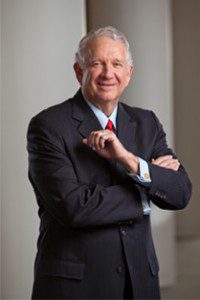
An important leader in thinking about Christian higher education in the United States is President Robert Sloan of HBU. He began this academic year reflecting on Christian higher education. First, he assumed certain things about education in his introduction. Second, he rejected the idea that Christianity only adds “nicety” to university. Third, Dr Sloan showed that no Christian college exists merely as a cover to “get people saved.” Finally, Sloan turned to the role of Jesus, the educator. As provost I have tried to reflect on what my leader is saying, not because I have to do so, but because when I heard this talk it seemed unusually important.
Sloan’s message was based on an ancient Christian hymn by the first great Christian thinker, Paul, in a letter to Christians in the city of Colosse:
9 For this cause we also, since the day we heard it, do not cease to pray for you, and to desire that ye might be filled with the knowledge of his will in all wisdom and spiritual understanding;10 That ye might walk worthy of the Lord unto all pleasing, being fruitful in every good work, and increasing in the knowledge of God;11 Strengthened with all might, according to his glorious power, unto all patience and longsuffering with joyfulness;12 Giving thanks unto the Father, which hath made us meet to be partakers of the inheritance of the saints in light:13 Who hath delivered us from the power of darkness, and hath translated us into the kingdom of his dear Son:14 In whom we have redemption through his blood, even the forgiveness of sins:15 Who is the image of the invisible God, the firstborn of every creature:16 For by him were all things created, that are in heaven, and that are in earth, visible and invisible, whether they be thrones, or dominions, or principalities, or powers: all things were created by him, and for him:17 And he is before all things, and by him all things consist.18 And he is the head of the body, the church: who is the beginning, the firstborn from the dead; that in all things he might have the preeminence.19 For it pleased the Father that in him should all fulness dwell;20 And, having made peace through the blood of his cross, by him to reconcile all things unto himself; by him, I say, whether they be things in earth, or things in heaven.21 And you, that were sometime alienated and enemies in your mind by wicked works, yet now hath he reconciled22 In the body of his flesh through death, to present you holy and unblameable and unreproveable in his sight:
There is no discipline that does not touch on the ideas, life, or work of Jesus Christ. He summarized centuries of God’s revelation in His teaching and examples including the Golden Rule (“do to others as you would have them do to you”), demands for justice for the poor, and a call for love, not revenge, to be the basis for relationships between people. His life modeled teaching based on hard questions (so called “Socratic” dialog), parables, and hard sayings that forced his students to think. He spent about three years educating women and men, preparing them to spread a message that would become the foundation for an alternative society. Finally, we are reminded that before Jesus became a human being, He was the Creator God. The very laws that scientists find and the maths that capture those laws are all shadows of His creation.
Jesus became human: God put on skin. No Christian can ever believe that “matter is evil:” a lie that retarded scientific investigation in the ancient world. Jesus often hid His glory so that His followers could learn instead of merely worshiping in His presence. If He had fully revealed Himself as He is, then students would have had no time to think in the blinding choice of either rebelling against Beauty or worshipping Beauty.
Sloan points out that “all things” are created by God: heavenly and earthly. Jesus “sums up all of human history.” The old creation was broken and became alienated from God, so evil is evil. As the Son of God, Jesus was creator of the first creation, but now He Himself is the start of the new creation. The creator becomes creature, the author part of His story, without losing His creative powers.
The old creation has the new springing up within it and we, the Christian educators, are agents of that perfect, splendid renewal of all things! Jesus “made peace” between estranged beings: a reconciliation. Sloan uses the example of a struggling husband and wife coming to reconciliation: two warring parts are brought into harmony. The job of a Christian university under the direction of Jesus is to continue this reconciliation.
All of creation—human, angelic, Heavenly, cosmic—is a field for reconciliation. We cannot be arrogant, because we were also alienated. As we restore creation, we are restored in our souls. What Sloan calls the “rescue operation” of God in history is so we can begin our life in the world: recreated for good works. We “live here and now as citizens of this new age.” Individuals are reconciled and now we can do the work of caring for creation.
Adam and Eve, the first humans, were gardeners, civilizing the raw material of creation. The New Adam, Jesus, allows us to pick up that task, this time building not just a garden, but the City of God. This City has beauty, life, and healing. As “the people of God” we belong together to “do God’s work.”
College is then a chance to “reflect deeply on the problems of the world” and be reconciled while reconciling. This people of God are, the President notes, “people of transformation” bringing peace here and now.
Education is a renewing of the mind, soul, and body. As a result, the role of college student is a training in transformation. The nursing, the psychology, and the medical student learn to provide healing while being healed. The criminal law student learns to be just while practicing justice. In the humanities, the Image of God in human nature is healed so that we can heal it in others. The theologian in training studies the depths of Revelation while gaining depth in his or her own soul. A student of science thinks the Creator’s thoughts after Him and finds order and beauty growing within self.
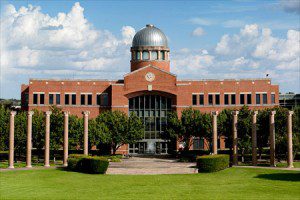
All students, faculty, and staff can be healed if they approach the broken world with the Mind of Christ and not in their own power. Truth can harm the student by smashing the image of self with devastating consequences, as Oedipus discovered. But Truth, even hard and painful Truth, found while in Jesus will break us only to renew us. Schools such as HBU are hopeful in the here and now and hopeful about the future because when we talk about Christ coming again, we see His coming every day in our work and we know Jesus will fully return at the end of time to complete the work He began so long ago. Christians cry “Maranatha!” (come quickly!) because we long for those good days, but we should not cry maranatha only in regard to the End.
 We cry “Come, Lord Jesus!” in the study of human things. Maranatha! We cry “Come, Lord Jesus!” in the mathematics and science. Maranatha! We cry “Come, Lord Jesus!” in business. Maranatha! We cry “Come, Lord Jesus!” in the fine arts. Maranatha! We cry “Come, Lord Jesus!” in behavior science and education. Maranatha! We cry “Come, Lord Jesus!” in theology, apologetics, and philosophy. Maranatha! We cry “Come, Lord Jesus!” in medicine. Maranatha.
If you are not in a community such as HBU, watch the lecture, and think about coming. If you are here, watch it again, and do it.
Wherever we are, whatever we are called to do, may all of us say, “Maranatha!” over all of life.
Previous Post

September 1, 2014
On Earth as It Is in Heaven: A Higher Education (III/IV)
Next Post
September 3, 2014 Happiness: My Goal
Browse Our Archives
Select a Category Apologetics Art Culture Education On Books On Education Philosophy Politics Pop Culture Spiritual Reflections Uncategorized
Select a Month October 2026 September 2026 August 2026 July 2026 July 2025 June 2025 September 2024 July 2024 June 2024 December 2023 June 2023 September 2022 May 2022 April 2022 March 2022 February 2022 July 2021 June 2021 May 2021 April 2021 March 2021 February 2021 January 2021 December 2020 November 2020 October 2020 September 2020 August 2020 July 2020 June 2020 May 2020 April 2020 March 2020 February 2020 January 2020 December 2019 November 2019 October 2019 September 2019 August 2019 July 2019 June 2019 May 2019 April 2019 March 2019 February 2019 January 2019 December 2018 November 2018 October 2018 September 2018 August 2018 July 2018 June 2018 May 2018 April 2018 March 2018 February 2018 January 2018 December 2017 November 2017 October 2017 September 2017 August 2017 July 2017 June 2017 May 2017 April 2017 March 2017 February 2017 January 2017 December 2016 November 2016 October 2016 September 2016 August 2016 July 2016 June 2016 May 2016 April 2016 March 2016 February 2016 January 2016 December 2015 November 2015 October 2015 September 2015 August 2015 July 2015 June 2015 May 2015 April 2015 March 2015 February 2015 January 2015 November 2014 October 2014 September 2014 August 2014 July 2014 June 2014 May 2014 April 2014 March 2014 February 2014 January 2014 December 2013 November 2013 October 2013 September 2013 August 2013 July 2013 June 2013 May 2013 April 2013 March 2013 February 2013 January 2013 December 2012 November 2012 October 2012 September 2012 August 2012 July 2012 June 2012 May 2012
Follow Us!
TAKE THE
Religious Wisdom Quiz
What does the name "Isaac" mean?
Select your answer to see how you score.
He rules He fights He laughs He prays
Books by This Author John Mark Reynolds
Related posts from Eidos

Why Classical Education Is a Conversation, Not a...

Does Classical Education Belong Only to the West?

Classical Education Must Teach Us to Make the...

Rooted: Why Classical Education Needs Community
TRENDING AT PATHEOS Evangelical

The REST of Your Life: A Creative Wrestles...
This week I had a conversation with a good friend from church....

How the author of the world's best hymn...
I've been working with John Newton for a while now. This makes...

Long before this Lectio Divina, Psalm 130 - the song - started...

What About the Trees? Another Living Parable
After I finished writing the last article about falling leaves as a...

Why Classical Education Is a Conversation, Not a...
Come and Read: Joy in Classical Education When I was a little...

Cornell University has received a great deal of negative publicity and intense...
view all Evangelical blogs
Ad-Free & Subscriber Log-In Subscription Support
- About Us
- 2026 Calendar
- Videos
- Podcasts
- Library of World Religions
- Faith In Media Tracker
- Advertise With Us
- Write for Us
- Privacy Policy
- Terms of Service
- Do Not Sell My Data
- Contact Us
- Radiant Digital
- Manage Newsletter Subscriptions
- Unsubscribe From Notifications
- Sitemap
Copyright 2008-2026, Patheos. All rights reserved.
Subscription Support Ad-Free & Subscriber Log-In
Follow Patheos