
BuddhistCatholicContemplativeEvangelicalGeneral ChristianHinduJewishLatter-day SaintMuslimNew VisionsProgressive Christian
Beliefs
- Buddhist
- Catholic
- Contemplative
- Evangelical
- General Christian
- Hindu
- Jewish
- Latter-day Saint
- More Voices
- Muslim
- New Visions
- Pagan
- Progressive Christian
Topics
- Religion News
- Food and Religion
- Sports and Religion
- Religious Art
- Religious Music and Entertainment
- Religious Events
- History and Religion
- Style and Religion
- Politics and Religion
- Women in Religion
- Recreation Outdoors and Religion
- Business Finance and Religion
- Careers Workplace and Religion
- Education and Religion
- Family Parenting and Religion
- Health Fitness and Religion
- Home and Religion
- Relationships and Religion
- Technology and Religion
- Travel and Religion
Columnists
- Buddhist Columnists
- Business Finance and Religion Columnists
- Careers Workplace and Religion Columnists
- Catholic Columnists
- Contemplative Columnists
- Education and Religion Columnists
- Evangelists Columnists
- Family Parenting and Religion Columnists
- General Christian Columnists
- Health Fitness and Religion Columnists
- Hindu Columnists
- History and Religion Columnists
- Home and Religion Columnists
- Jewish Columnists
- More Voices Columnists
- Latter Day Columnists
- Muslim Columnists
- New Visions Columnists
- Nonreligious Columnists
- Pagan Columnists
- Politics and Religion Columnists
- Progressive Columnists
- Recreation Outdoors and Religion Columnists
- Relationships and Religion Columnists
- Religion News Columnists
- Religious Art Columnists
- Religious Events Columnists
- Religious Music and Entertainment Columnists
- Sports and Religion Columnists
- Style and Religion Columnists
- Technology and Religion Columnists
- Travel and Religion Columnists
- Women in Religion Columnists
Resource Library
- 2026 Calendar
- Library of World Religions
- The 100 Most Holy Places on Earth
- Patheos Answers
- Podcasts
- Videos
- Faith Leaders Database
- Anglican Episcopalian
- Bahai
- Baptist
- Buddhism
- Christianity
- Confucianism
- Eastern Orthodoxy
- Hinduism
- Holiness and Pentecostal
- ISKCON
- Islam
- Judaism
- Lutheran
- Methodist
- The Church of Jesus Christ of Latter-day Saints
- New Age
- Paganism
- Presbytarian and Reformed
- Protestantism
- Religion Behind the Scenes
- Roman Catholic
- Scientology
- Shia Islam
- Sikhism
- Sufism
- Sunni Islam
- Taoism
- Zen
- See all religions
Research Tools
 Ad-Free & Subscriber Log-In Subscription Support
Ad-Free & Subscriber Log-In Subscription Support
Follow Patheos 

- Trending:
- Forgiveness
- |
- Marriage
- |
- Consciousness
- |
- Death Penalty
- |
- Election
- |
- Halloween

- Home
- Evangelical
- A Higher Education (I/IV)
A Higher Education (I/IV)
Last updated on: September 2, 2014 at 4:15 pm by John Mark N. Reynolds
A Higher Education (I/IV) 2014-09-02T16:15:21-04:00 John Mark N. Reynolds
Patheos Explore the world's faith through different perspectives on religion and spirituality! Patheos has the views of the prevalent religions and spiritualities of the world.
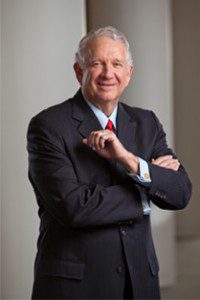 Students return, professors are prepared, staff is ready: education continues. I love this time of year: fresh Moleskine for my notes, reading Homer and Thucydides for class, getting ready for HBU’s first home football game. . . ever.
But what is it that we returned to do? Higher education is in turmoil nationally about this very question,but last week I heard a great answer. Watch my University President Robert Sloan give higher education a vision, at least if you made the wrong choice and are not here to have seen it yourself, or (second best) read my thoughts on these aspirational words. Perhaps your school could watch the video and discuss the ideas in it.
My Personal Preface
If people perish without a vision, HBU will never perish with this President. The first characteristic of a higher education is vision. If a school has to hire a vision, or find it, then there will be no authentic vision. Higher education requires a goal, a dream, and a worthy reason for everything it does. This, more than anything else, is the job of the Trustees and the President, but all the rest of us need to understand that goal.
We may make mistakes, but we must never mistake where we are going. This should matter to students, and to the family of students, because without a clearly stated vision, schools and universities end up corrupted.
Why?
If I have my goal for a “higher education at HBU” and every professor has his or her own private vision, then we end up offering a cafeteria of choices without any context in which to accept or reject that vision.
Do not be deceived by public relations: every school has a vision statement. Try this experiment to see if the vision statement is more than a slogan forgotten in practice: ask any faculty member at the school if actions taken every year in every department have the vision in mind. Is the vision specific enough to be used? Usually the answer is that leadership produces a “little red book” and then ignores it when the “practical business” starts.
A vision not incarnated in practical decisions perishes.
Of course, there is the opposite danger, though no modern state school and few religious schools run into it. There are a few schools with controlling leaders or overly robust specificity to their “vision.” Higher education should not be overly specified! A school whose statement of faith or vision statement runs to what feels like book length will find it hard to attract enough people who can really buy into the vision.
Academic freedom matters. If too many issues are “off the table,” there is too little about which to argue, develop or grow. But academic freedom is not the only good. Community around a common good matters as much! Individual schools have individual visions to realize the good life. Each school will see things differently (in the broad sense), but unite around a common ideal of the good life.
The diversity of schools in America provides a place to see which vision is best when worked out in the lives of the graduates. We should always be in a place where we can share that general goal.
Early Assumptions Regarding Higher Education in this Address
Coming to college marks a transition to adulthood. In America, college is when we fully pass from childhood to adulthood. If anybody gets this it is President Sloan: parent of seven with seventeen grandchildren under eight!
The implication for me as a parent is that I must let go of my old role. I am always my college kids’ father, but I am no longer making the decisions. They are. Of course, if they ask for money, or live in my house, there are strings attached, but those are negotiated between adults. My adult children honor me the best they can, but they do not obey me.
As the parent of three college students, I heard the talk by Dr. Sloan and got a healthy reminder not to cling!
The President loves education. School is a joyful time for him and it should be for all of us in education. Higher education is not a scary, hostile, foreign place for a Christian. We founded the system in earlier centuries and have always been a part of it! Avoid a place or becoming a place that is grim all the time. “It is a wonderful time of year.”
We are here to help students find a job and a career. That is not all a higher education does, but it had better do at least this task! Do not cut yourself off from the world when you live at school. I thought about this as I looked at our student body: we are educating a student body that is what America will be in 2050, rather than looking like America in 1950.
Part of that education is learning to have grownup fun. Degenerates make “adult” an adjective for entertainment that harms, but students are also not called to remain children. Education introduces through faculty lives and by organized events how to spend free time fruitfully and with maturity. Going to the Alma Mater’s game after a tailgate with friends is a lifetime joy.
We are not afraid to hold a party, but we are also unafraid of saying some entertainment is not for us.
Christian Education Has a Biblical Mandate
Any religious school can quote a passage, slap a Bible verse on their mission, but a Christian school should engage the text and obey it. This job is key for anyone who works at a Christian educational institution and requires leaders who can read, exegete, and implement.
Scripture is a big textual place. Where should we begin?
President Sloan points to a section of Colossians chapter 1, which may have been an early Christian hymn, as a statement of bedrock truths of the Faith.
9 For this cause we also, since the day we heard it, do not cease to pray for you, and to desire that ye might be filled with the knowledge of his will in all wisdom and spiritual understanding;10 That ye might walk worthy of the Lord unto all pleasing, being fruitful in every good work, and increasing in the knowledge of God;11 Strengthened with all might, according to his glorious power, unto all patience and longsuffering with joyfulness;12 Giving thanks unto the Father, which hath made us meet to be partakers of the inheritance of the saints in light:13 Who hath delivered us from the power of darkness, and hath translated us into the kingdom of his dear Son:14 In whom we have redemption through his blood, even the forgiveness of sins:15 Who is the image of the invisible God, the firstborn of every creature:16 For by him were all things created, that are in heaven, and that are in earth, visible and invisible, whether they be thrones, or dominions, or principalities, or powers: all things were created by him, and for him:17 And he is before all things, and by him all things consist.18 And he is the head of the body, the church: who is the beginning, the firstborn from the dead; that in all things he might have the preeminence.19 For it pleased the Father that in him should all fulness dwell;20 And, having made peace through the blood of his cross, by him to reconcile all things unto himself; by him, I say, whether they be things in earth, or things in heaven.21 And you, that were sometime alienated and enemies in your mind by wicked works, yet now hath he reconciled22 In the body of his flesh through death, to present you holy and unblameable and unreproveable in his sight:23 If ye continue in the faith grounded and settled, and be not moved away from the hope of the gospel, which ye have heard, and which was preached to every creature which is under heaven; whereof I Paul am made a minister. . .
The implications of this section of Paul will require three more sections to unpack!
Previous Post

August 28, 2014
While We Sleep: The Guns of August
Next Post
August 31, 2014 Don't Just Be Nice: A Higher Education (II/IV)
Browse Our Archives
Select a Category Apologetics Art Culture Education On Books On Education Philosophy Politics Pop Culture Spiritual Reflections Uncategorized
Select a Month October 2026 September 2026 August 2026 July 2026 July 2025 June 2025 September 2024 July 2024 June 2024 December 2023 June 2023 September 2022 May 2022 April 2022 March 2022 February 2022 July 2021 June 2021 May 2021 April 2021 March 2021 February 2021 January 2021 December 2020 November 2020 October 2020 September 2020 August 2020 July 2020 June 2020 May 2020 April 2020 March 2020 February 2020 January 2020 December 2019 November 2019 October 2019 September 2019 August 2019 July 2019 June 2019 May 2019 April 2019 March 2019 February 2019 January 2019 December 2018 November 2018 October 2018 September 2018 August 2018 July 2018 June 2018 May 2018 April 2018 March 2018 February 2018 January 2018 December 2017 November 2017 October 2017 September 2017 August 2017 July 2017 June 2017 May 2017 April 2017 March 2017 February 2017 January 2017 December 2016 November 2016 October 2016 September 2016 August 2016 July 2016 June 2016 May 2016 April 2016 March 2016 February 2016 January 2016 December 2015 November 2015 October 2015 September 2015 August 2015 July 2015 June 2015 May 2015 April 2015 March 2015 February 2015 January 2015 November 2014 October 2014 September 2014 August 2014 July 2014 June 2014 May 2014 April 2014 March 2014 February 2014 January 2014 December 2013 November 2013 October 2013 September 2013 August 2013 July 2013 June 2013 May 2013 April 2013 March 2013 February 2013 January 2013 December 2012 November 2012 October 2012 September 2012 August 2012 July 2012 June 2012 May 2012
Follow Us!
TAKE THE
Religious Wisdom Quiz
According to 2 Peter, what is the Lord not slow in keeping?
Select your answer to see how you score.
His judgment His commandments His mercy His promise
Books by This Author John Mark Reynolds
Related posts from Eidos

Why Classical Education Is a Conversation, Not a...

Does Classical Education Belong Only to the West?

Classical Education Must Teach Us to Make the...

Rooted: Why Classical Education Needs Community
TRENDING AT PATHEOS Evangelical

The REST of Your Life: A Creative Wrestles...
This week I had a conversation with a good friend from church....

How the author of the world's best hymn...
I've been working with John Newton for a while now. This makes...

Long before this Lectio Divina, Psalm 130 - the song - started...

What About the Trees? Another Living Parable
After I finished writing the last article about falling leaves as a...

Why Classical Education Is a Conversation, Not a...
Come and Read: Joy in Classical Education When I was a little...

Cornell University has received a great deal of negative publicity and intense...
view all Evangelical blogs
Ad-Free & Subscriber Log-In Subscription Support
- About Us
- 2026 Calendar
- Videos
- Podcasts
- Library of World Religions
- Faith In Media Tracker
- Advertise With Us
- Write for Us
- Privacy Policy
- Terms of Service
- Do Not Sell My Data
- Contact Us
- Radiant Digital
- Manage Newsletter Subscriptions
- Unsubscribe From Notifications
- Sitemap
Copyright 2008-2026, Patheos. All rights reserved.
Subscription Support Ad-Free & Subscriber Log-In
Follow Patheos