
BuddhistCatholicContemplativeEvangelicalGeneral ChristianHinduJewishLatter-day SaintMuslimNew VisionsProgressive Christian
Beliefs
- Buddhist
- Catholic
- Contemplative
- Evangelical
- General Christian
- Hindu
- Jewish
- Latter-day Saint
- More Voices
- Muslim
- New Visions
- Pagan
- Progressive Christian
Topics
- Religion News
- Food and Religion
- Sports and Religion
- Religious Art
- Religious Music and Entertainment
- Religious Events
- History and Religion
- Style and Religion
- Politics and Religion
- Women in Religion
- Recreation Outdoors and Religion
- Business Finance and Religion
- Careers Workplace and Religion
- Education and Religion
- Family Parenting and Religion
- Health Fitness and Religion
- Home and Religion
- Relationships and Religion
- Technology and Religion
- Travel and Religion
Columnists
- Buddhist Columnists
- Business Finance and Religion Columnists
- Careers Workplace and Religion Columnists
- Catholic Columnists
- Contemplative Columnists
- Education and Religion Columnists
- Evangelists Columnists
- Family Parenting and Religion Columnists
- General Christian Columnists
- Health Fitness and Religion Columnists
- Hindu Columnists
- History and Religion Columnists
- Home and Religion Columnists
- Jewish Columnists
- More Voices Columnists
- Latter Day Columnists
- Muslim Columnists
- New Visions Columnists
- Nonreligious Columnists
- Pagan Columnists
- Politics and Religion Columnists
- Progressive Columnists
- Recreation Outdoors and Religion Columnists
- Relationships and Religion Columnists
- Religion News Columnists
- Religious Art Columnists
- Religious Events Columnists
- Religious Music and Entertainment Columnists
- Sports and Religion Columnists
- Style and Religion Columnists
- Technology and Religion Columnists
- Travel and Religion Columnists
- Women in Religion Columnists
Resource Library
- 2026 Calendar
- Library of World Religions
- The 100 Most Holy Places on Earth
- Patheos Answers
- Podcasts
- Videos
- Faith Leaders Database
- Anglican Episcopalian
- Bahai
- Baptist
- Buddhism
- Christianity
- Confucianism
- Eastern Orthodoxy
- Hinduism
- Holiness and Pentecostal
- ISKCON
- Islam
- Judaism
- Lutheran
- Methodist
- The Church of Jesus Christ of Latter-day Saints
- New Age
- Paganism
- Presbytarian and Reformed
- Protestantism
- Religion Behind the Scenes
- Roman Catholic
- Scientology
- Shia Islam
- Sikhism
- Sufism
- Sunni Islam
- Taoism
- Zen
- See all religions
Research Tools
 Ad-Free & Subscriber Log-In Subscription Support
Ad-Free & Subscriber Log-In Subscription Support
Follow Patheos 

- Trending:
- Forgiveness
- |
- Marriage
- |
- Consciousness
- |
- Death Penalty
- |
- Election
- |
- Halloween
 Egregious Twaddle
- Home
- Catholic
- 5 Reasons Why Catholics (of All People!) Should Make Earth Day Holy
5 Reasons Why Catholics (of All People!) Should Make Earth Day Holy
Last updated on: April 22, 2015 at 12:56 pm by Joanne McPortland
5 Reasons Why Catholics (of All People!) Should Make Earth Day Holy 2015-04-22T12:56:16-06:00 Joanne McPortland
Patheos Explore the world's faith through different perspectives on religion and spirituality! Patheos has the views of the prevalent religions and spiritualities of the world.
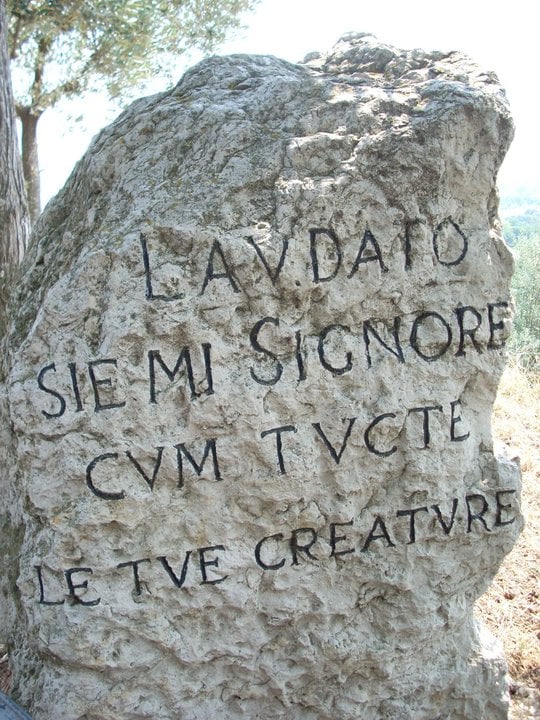
Today, Earth Day, should be a holy day of obligation for Catholics. That’s not exactly a majority opinion, I know.
To look around the blogosphere this week, you’d get the notion that many Catholics consider Earth Day—and anything even vaguely approaching concern for non-human creation—to be a communist Hollywood pagan plot, a form of idolatry perpetrated by no less an antichrist than That Guy in the Vatican (cf. Maureen Mullarkey’s, um, malarkey at First Things). At the very least, it’s an occasion for the social-media mockery of liberals with carbon footprints bigger than China.
At the other extreme, you will find Catholics (including That Guy in the Vatican) earnestly advocating and fiercely practicing environmental stewardship. Many of these Catholics belong to communities of religious women whose leadership just last week was absolved of charges of heretical New Agery, thank God, so their Earth Day advocacy remains suspect among The Hardcore Orthodox. And these are not the kinds of Catholics who go looking to establish new holy days of obligation under any circumstances. So it’s up to me to make the case.
Here are 5 reasons why Catholics, of all people, ought to be at the head of the line when it comes to celebrating, stewarding, and protecting all creation—today and every day:
1. We’re too smart to fall for bad science. (Especially when it’s politicized.) Best to get this one out of the way first off. For way too many people, environmentalism is a code word for climate change science, specifically what we know about how human activity interacts with and affects natural climate patterns. Any Catholic who rejects climate science out of hand, and tosses the baby of environmental stewardship out with that bathwater, is betraying the Catholic intellectual and scientific traditions that made the scientific revolution possible. Albertus Magnus rolls over in his sainted grave when we go all stupid. Catholics who reject good science, whether on climate or the origins of the universe or the development of life on Earth, slander the Church. And when they do it for political reasons—because the party line is more important than using the brains God gave them— it’s even worse. Catholics have made that mistake before, choosing power politics over the gift of knowledge and trying to pass it off as doctrine. It never ends well, and then you have to go publicly apologizing to Galileo all over again. [NOTE: Accepting good science doesn’t mean we have to accept all recommendations for applying it. See #4.]
2. We know the sacramentality of creation. Who better than we, who have been given by Christ the ability to see and celebrate and share God’s creative and salvific love in the things of Earth—water, oil, bread, wine, sexual fruitfulness and dedication to holiness—to lead people to the wonder and the mystery that restores all things? Who better than we, whose hours and days and months are tuned to the liturgical calendar of creation, the clock of the new heavens and the new earth, to lead lives of witness to the sacredness of time and space? “The world is charged with the grandeur of God” is more than just a line from the Jesuit poet Gerard Manley Hopkins—it’s a summation of Catholic sensibility. The dazzling epiphany of the blind Francis of Assisi is more than just a birdbath sculpture or refrigerator magnet piety—it’s the canticle of our shared creatureliness, our interdependence.
Most High, all powerful, good Lord,
Yours are the praises, the glory, the honor, and all blessing.
To You alone, Most High, do they belong,
and no man is worthy to mention Your name.
Be praised, my Lord, through all your creatures . . .
3. Global is our name. Literally. We are katholikos, catholic, universal, unbounded by national borders or political priorities. Our first allegiance is to God and the creation—human, non-human, living, non-living, and virally in-between, “all things visible and invisible”—with which we are entrusted. Nobody should have to tell us (though I guess many of us could use a reminder, Maureen) that our actions as humans affect one another and the non-human environment in ways that have profound moral consequences. We are one body in Christ, and not an ingrown toenail of us is any less worthy of honor and protection. Sustainability? Equal access to resources? They’re our middle names, and have been ever since we freaked out the first century CE with our reckless devotion to the common good. Yes, we as Church (not just you, Maureen) forget, all the time. But it’s in our spiritual DNA, and we are called to live as nothing less than grateful, joyful stewards. Maybe we can freak out this century, too.
4. Our voice is worth hearing. We have a wealth of wisdom on true stewardship of creation that needs to be a much more confident and compassionate part of the conversation. When we cede Earth Day and all it symbolizes to others, when we make of it a mockery or a triviality or a heresy or even something good that need not be connected with faith, we rob the planet and its interconnected lifeforms of possibilities and purpose. Shouting other voices down and shutting ours up are equally sinful practices. But when we dare to find ways to bring the hopeful and healing wisdom of our Catholic faith to questions of applying climate science, of ensuring access to the goods of the earth, of balancing the rights and obligations of humans and non-humans, of living faithfully the mandate to increase and multiply long after it has literally been fulfilled, the world will be better for it. We have it in our hands and as our charge to help restore the fallen and fractured relationship between the Creator and creation, and to speed the coming of God’s reign of true justice, real peace. Why on Earth Day would we want to pass that up?
5. And finally, because the pope said so. And no, Maureen, not just this present Guy in the Vatican and his upcoming encyclical that you don’t have to read to know you are superior to, or his suspiciously Green-tinged predecessors of recent memory. No Vicar of Christ, no magisterium of bishops (or of nuns), has ever issued doctrinally binding marching orders to rape and pillage the planet, to ignore the needs of the poor and disenfranchised, to load up at the all-we-can-eat buffet of God’s glorious wonders and then yell “We got ours!” and bar the door. There is no plenary indulgence to be earned for clinging to plastic grocery bags or driving gas guzzlers or making obscene profits from rainforest furniture or Chinese coal or puppy mills. On the contrary. Least of these, people, least of these. If you are a Catholic concerned about saving yourself and others from hell (as we all should be), think on that and what it means today in this world. Think mighty hard.
There are a few hours left in the day. Anybody up for offering me 5 good reasons, or even one, why next year’s Earth Day shouldn’t be marked by liturgies of celebration and feats of dedication and lots of good conversation and even more good news, by Catholics and everybody?
Image attribution: The opening phrase, in Italian, of the Canticle of the Creatures by Francis of Assisi, on a stone at the convent of San Damiano, where he first set the words down. Photo by the author.

Next Post

May 1, 2015 No Good Guys, No Bad Guys: Fr Greg Boyle on the Policing We Need
Browse Our Archives
Select a Category Abortion Advent Art Bishops Book Review Catholicism Fortnight 4 Freedom In the News Lent Marriage Mary Mental Health New Evangelization Nuns Pilgrimage 2012 Pop Culture Pope Francis Religious Education Reverts Saints' Lives and Legends Sin Staying Catholic Uncategorized Year of Faith
Select a Month May 2016 May 2015 April 2015 March 2015 December 2014 November 2014 October 2014 September 2014 August 2014 July 2014 June 2014 April 2014 March 2014 February 2014 December 2013 November 2013 October 2013 September 2013 August 2013 July 2013 June 2013 May 2013 April 2013 March 2013 February 2013 January 2013 December 2012 November 2012 October 2012 September 2012 August 2012 July 2012 June 2012 May 2012 April 2012 March 2012 February 2012 January 2012 November 2011 April 2011 March 2011 December 2010
Follow Us!
TAKE THE
Religious Wisdom Quiz
Who was healed of leprosy after washing seven times in the Jordan River?
Select your answer to see how you score.
Ben-hadad Hezekiah Hazael Naaman
Related posts from Egregious Twaddle

Depressed and Catholic: Learning It's OK to Live
No Good Guys, No Bad Guys: Fr Greg...

Dearest Pope Francis . . . Snap Out...

Pope and African Bishops to Cardinal Kasper: "Can...
TRENDING AT PATHEOS Catholic

Rejecting Doom: Christian Hope And Human Action
Christianity is a religion of hope. We are to have hope and...

It’s What Comes From Within Which Matters
One of the most difficult things for us to understand is why...

Why I Choose the Eucharist Over the Sermon
Choose the Eucharist, Not the Sermon What are we supposed to get...

5 Design Elements Found in Spiritually Rooted Homes
Putting Spirituality Into Home Decor Our homes are more than our living...

Credo: A Story of God Told with the...
About 10 years ago, I began to imagine a personal "Credo" that...

The Anatomy of Divine Revelation in Catholic Thought
The claim that God has made Himself known to human beings is...
view all Catholic blogs
Ad-Free & Subscriber Log-In Subscription Support
- About Us
- 2026 Calendar
- Videos
- Podcasts
- Library of World Religions
- Faith In Media Tracker
- Advertise With Us
- Write for Us
- Privacy Policy
- Terms of Service
- Do Not Sell My Data
- Contact Us
- Radiant Digital
- Manage Newsletter Subscriptions
- Unsubscribe From Notifications
- Sitemap
Copyright 2008-2026, Patheos. All rights reserved.
Subscription Support Ad-Free & Subscriber Log-In
Follow Patheos