
BuddhistCatholicContemplativeEvangelicalGeneral ChristianHinduJewishLatter-day SaintMuslimNew VisionsProgressive Christian
Beliefs
- Buddhist
- Catholic
- Contemplative
- Evangelical
- General Christian
- Hindu
- Jewish
- Latter-day Saint
- More Voices
- Muslim
- New Visions
- Pagan
- Progressive Christian
Topics
- Religion News
- Food and Religion
- Sports and Religion
- Religious Art
- Religious Music and Entertainment
- Religious Events
- History and Religion
- Style and Religion
- Politics and Religion
- Women in Religion
- Recreation Outdoors and Religion
- Business Finance and Religion
- Careers Workplace and Religion
- Education and Religion
- Family Parenting and Religion
- Health Fitness and Religion
- Home and Religion
- Relationships and Religion
- Technology and Religion
- Travel and Religion
Columnists
- Buddhist Columnists
- Business Finance and Religion Columnists
- Careers Workplace and Religion Columnists
- Catholic Columnists
- Contemplative Columnists
- Education and Religion Columnists
- Evangelists Columnists
- Family Parenting and Religion Columnists
- General Christian Columnists
- Health Fitness and Religion Columnists
- Hindu Columnists
- History and Religion Columnists
- Home and Religion Columnists
- Jewish Columnists
- More Voices Columnists
- Latter Day Columnists
- Muslim Columnists
- New Visions Columnists
- Nonreligious Columnists
- Pagan Columnists
- Politics and Religion Columnists
- Progressive Columnists
- Recreation Outdoors and Religion Columnists
- Relationships and Religion Columnists
- Religion News Columnists
- Religious Art Columnists
- Religious Events Columnists
- Religious Music and Entertainment Columnists
- Sports and Religion Columnists
- Style and Religion Columnists
- Technology and Religion Columnists
- Travel and Religion Columnists
- Women in Religion Columnists
Resource Library
- 2026 Calendar
- Library of World Religions
- The 100 Most Holy Places on Earth
- Patheos Answers
- Podcasts
- Videos
- Faith Leaders Database
- Anglican Episcopalian
- Bahai
- Baptist
- Buddhism
- Christianity
- Confucianism
- Eastern Orthodoxy
- Hinduism
- Holiness and Pentecostal
- ISKCON
- Islam
- Judaism
- Lutheran
- Methodist
- The Church of Jesus Christ of Latter-day Saints
- New Age
- Paganism
- Presbytarian and Reformed
- Protestantism
- Religion Behind the Scenes
- Roman Catholic
- Scientology
- Shia Islam
- Sikhism
- Sufism
- Sunni Islam
- Taoism
- Zen
- See all religions
Research Tools
 Ad-Free & Subscriber Log-In Subscription Support
Ad-Free & Subscriber Log-In Subscription Support
Follow Patheos 

- Trending:
- Forgiveness
- |
- Marriage
- |
- Consciousness
- |
- Death Penalty
- |
- Election
- |
- Halloween
 Egregious Twaddle
- Home
- Catholic
- I’m That Guy: The Gunpowder of Being Catholic in Public
I’m That Guy: The Gunpowder of Being Catholic in Public
Last updated on: May 2, 2016 at 11:31 am by Joanne McPortland
I’m That Guy: The Gunpowder of Being Catholic in Public 2016-05-02T11:31:02-06:00 Joanne McPortland
Patheos Explore the world's faith through different perspectives on religion and spirituality! Patheos has the views of the prevalent religions and spiritualities of the world.
On the eve of a contentious election, pondering the explosive nexus of faith and politics.
Please to remember
The Fifth of November
Gunpowder, Treason, and Strife . . .
Back when I was in my Anglican interim, I loved commemorating Guy Fawkes Day. A haunting little historical nursery rhyme, bonfires, the burning of effigies, and children in raggedy clothes with ash-blackened faces accosting householders, begging A penny for the Guy!—what’s not to love? I had a vague notion of the historical events behind the festivities, and knew that Shakespeare had referenced them in his haunted (and contemporaneous) masterpiece, Macbeth. Mostly, though, what I knew about Guy Fawkes day was that some bad guy named Guy had tried to blow up the English Parliament, but the plot was foiled and the guy was executed, so all loyal Brits must yuck it up in quaint fashion once a year.
But here it is the Fifth of November, and for this Catholic revert Oh, damn, the penny just dropped: I AM the Guy.
Because the real Guy Fawkes, like his co-conspirators in the Gunpowder Plot we don’t hear so much about, was a Catholic. And a Catholic in a time and a place where that was a lot tougher than the Accepted Wisdom lets on. In the wake of Henry VIII’s celebrated split from Rome, English Catholics had been scapegoated as badly as English Jews had been 300 years earlier. When the faith of the sovereign was the faith of the nation, it was risky to be on the wrong side. And that side changed with whiplash suddenness, the Tudors being notoriously poor at securing the succession.
Frankly, Catholics didn’t endear themselves to their countrymen during the reign of Bloody Mary Tudor, who imprisoned, tortured, and burned enough Protestants to fill Fox’s Book of Martyrs. Mary came by her Catholicism from her Spanish mother, Catherine of Aragon, and from Mary’s reign onward Catholics were viewed as ‘foreigners.’ The Spanish Armada’s assault on Elizabeth I made matters worse, as did the pope’s excommunication of Elizabeth—in essence, revoking the divine protection accorded monarchs and practically sending invitations to an assassination.
That’s the side we all heard, we Anglicans and Brits. That made it easy to buy the specter of the bogeyman Guy Fawkes, a Catholic fanatic bound on blowing the Houses of Parliament sky high on opening day, and taking out the Protestant King James I and his heir, Prince Henry, while he was at it. Fawkes and his co-conspirators, like some Popish al Qaeda—backed and funded, so the story goes, by a devilish cabal of Jesuits—would then kidnap the young Princess Elizabeth, crown her a Catholic queen, marry her to a Spaniard, and reclaim England for the Vatican. Way over the line, Guido! Burn that Guy in effigy, indeed!
Only (as with another official account of an act of terror we’ve heard recently) there was more to the story. I came by this knowledge by accident earlier this year, reading Clare Asquith’s Shadowplay, a fascinating study of Shakespeare’s plays as coded statements about the religious agonies of his time.
What no one is pleased to remember about the Fifth of November is the depth of desperation to which England’s Catholics had been driven by decades of government persecution. It wasn’t just a case of one side’s being in power and the other having to suck it up as the loyal opposition. Imagine if, on Wednesday, whichever party loses tomorrow’s election were instantly banned. Everyone required to re-register as a member of the party in power and campaign actively for the winning party’s platform. All elected officials representing the losing party driven from office, and no members of the losing party allowed to run again. All losing-party consultants and lobbyists deprived of citizenship and exiled. Members of losing party (and their minor children) no longer permitted to enroll in public universities or receive advanced degrees. Possession of losing-party pamphlets, buttons, signs, bumper stickers—even clothing in the losing party’s colors—made punishable by imprisonment, torture, forfeiture of all personal property. Dissemination of ‘seditious’ losing-party materials punishable by death. Neighbors deputized as a network of spies, sharing in the spoils of confiscated goods when they rat out ‘traitors.’
Those are precisely the conditions under which England’s Catholics lived in the last years of Elizabeth I’s reign—only the persecution was spiritual as well as temporal. Catholics were barred from the sacraments, because priests were barred from the country. No priests, no Eucharist, for real. Centuries of Catholic culture, embedded in the calendar of saints’ days and festivals, were erased. Catholic religious articles—prayerbooks, rosaries, missals, images of the Blessed Virgin—were as dangerous to possess as gunpowder.
There was hope that with the accession of James (the son of a Catholic, and married to the Catholic Anne of Denmark) things might change. And at first, the hope seemed justified. James swore to end religious execution, and promised to extend some measure of religious liberty to Catholic subjects. Catholics, known as recusants, who wished to opt out of forced Protestant church attendance, for example, could do so by paying exorbitant fines to the crown. The occasional member of a Catholic family, if he views were not too extreme, could take his place in the House of Lords. The presence of Anglo-Catholic diocesan priests was tolerated as long as they refrained from saying Mass in public and preached the party line. Like the clergy of so-called state churches under the Nazis and the Communists, like many Catholic clerics of our own time, they believed the government’s promises to respect the freedom of conscience—so long as that conscience never spoke against the head of state, and so long as the practice of religion remained a private matter, carefully kept out of the public square, carefully prohibited from the rocking of boats.
But accommodation was not enough for the fervent, whose faith was maintained under persecution by the courage of Jesuits and foreign clergy. Living under aliases, constantly fleeing spies and persecution, hidden in secret ‘priest holes,’ these men preserved access to the Eucharist. They carried messages between Catholic families and their sons, sent to the continent for Catholic education at universities like Douai. And they kept alive hope that Catholic Europe would intervene on the side of their persecuted English brothers.
Accommodation was also not enough for the increasingly powerful Puritan faction among English Protestants, represented by the spymaster Robert Cecil, Lord Salisbury. Cecil despised Catholics in general and Jesuits in particular, and he dropped enough hints of their threat to the order of the state that King James withdrew most of his initial gestures of toleration. Spain, too, weary of war, signed a treaty with England that precluded any invasion on behalf of the Catholics, now stranded. The Parliament that was to convene on November 5, 1605, was set to institute even harsher anti-Catholic laws.
Guy Fawkes and his co-conspirators—all of them laymen—were convinced (or so Fawkes confessed after being broken on the rack) that “desperate times require desperate measures.” He did not seem to have known what history later made evident: that the Plot was infiltrated from the start by Cecil’s spies, and the search of the vaults beneath the Houses of Parliament that netted Fawkes and his barrels of powder was orchestrated. The King was never in any danger, and the Jesuits (some of whom knew of the plotters’ intentions, but believed themselves to be bound by the seal of confession from revealing the information) had done everything within their power to deter violence. That did not prevent James, who had begun his reign by vowing to end torture (again, like someone else we know), from applying it with gusto to those of the plotters who survived capture, and to several Jesuits netted in the same sweep. Convicted of treason, the plotters and the Jesuits who survived imprisonment and torture were executed in the most agonizing manner, by being hanged, drawn, and quartered.
The very night of the plot’s discovery, November 5, loyal citizens were urged to light bonfires of thanksgiving and to keep the feast alive in memory. The burning of the ‘guy,’ a straw-stuffed effigy of Guy Fawkes (who was not actually the most prominent member of the conspiracy, but certainly the one whose name is remembered) followed quickly after. That Guy Fawkes Day was always meant to be anti-Catholic, rather than simply patriotic, was pointed out by Antonia Fraser in Faith and Treason, her study of the Gunpowder Plot. It was the pope, and not always Guy Fawkes, who was burned in effigy under Cromwell’s Puritan Parliament, which abolished all civil holidays but the November 5 commemoration—and it was the pope whose effigy was burned when the holiday came to the American colonies.
It’s a more sobering history than most of us, even Catholics, are aware of. And this year, as a voting Catholic, the echoes of 1605 are troubling. True, we live under the protection of the First Amendment’s guarantees that the faith of our governors need not be our faith, and that we are entitled to free exercise of religion. But we also know what it is like to have those freedoms questioned and curtailed, under the guise of the good of the state (framed as the right to equal marriage, the health of women, the exercise of the free market). We know what it is like for our bishops to be assured that conscience will be respected, only to have that promise—like the promise to end torture and execution without due process—evaporate in the face of other agendas. We know what it is like to be told be our leaders and a loud majority of our fellow citizens that the practice of our faith in the public square is intolerable, evil, unAmerican; that everything would be fine if we just kept our beliefs to ourselves and practiced them in suitable quiet behind closed doors for an hour on Sunday morning, if we just stopped FORCING WOMEN TO BEAR THEIR RAPISTS’ BABIES, as Rachel Maddow says 6 times an hour every night of the week. We know what it is like to have fellow Catholics tell us it’s just fine to permit late-term abortions or to dismiss half of the electorate as whining parasites that Ayn Randian pragmatism would cull. We know—I know, anyway—what it is like to be effectively disenfranchised because I can vote for neither party’s presidential candidate and remain true to the core principles of my Catholic faith. Damned if I do, damned if I don’t.
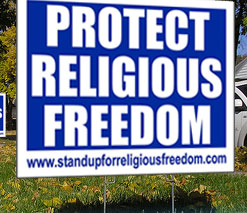 I would not, or so I like to think anyway, ever condone the kind of violence that handful of English Catholics plotted. And we are, despite the more extreme doomsday scenarios that haunt our nightmares and stud some bishops’ sermons, a good long way from the kind of persecution those English Catholics endured, or that our sisters and brothers endure right now in many parts of the world. Yet I can’t help but wonder if this isn’t what the leading edge of persecution feels like—this hint of gunpowder sulfur in the air, this disquiet, this uneasy sense that whomever is elected tomorrow, the cost of being Catholic in public in America will not go down any time soon. We are reminded Put not your trust in princes and Blessed are you when men persecute you, so we are not unwarned.
Please to remember the Fifth of November . . .
This year, I won’t be cheering the burning effigy—but praying, instead, for the grace to endure faithfully through whatever fire may come. This year, I have met the Guy, and he is me.
Previous Post
October 24, 2012
A Journal of My Council: A Book Review
Next Post

November 7, 2012 'VAGINAS WIN! VAGINAS WIN!': Reductio ad Lady Parts
Browse Our Archives
Select a Category Abortion Advent Art Bishops Book Review Catholicism Fortnight 4 Freedom In the News Lent Marriage Mary Mental Health New Evangelization Nuns Pilgrimage 2012 Pop Culture Pope Francis Religious Education Reverts Saints' Lives and Legends Sin Staying Catholic Uncategorized Year of Faith
Select a Month May 2016 May 2015 April 2015 March 2015 December 2014 November 2014 October 2014 September 2014 August 2014 July 2014 June 2014 April 2014 March 2014 February 2014 December 2013 November 2013 October 2013 September 2013 August 2013 July 2013 June 2013 May 2013 April 2013 March 2013 February 2013 January 2013 December 2012 November 2012 October 2012 September 2012 August 2012 July 2012 June 2012 May 2012 April 2012 March 2012 February 2012 January 2012 November 2011 April 2011 March 2011 December 2010
Follow Us!
TAKE THE
Religious Wisdom Quiz
Which Orthodox celebration marks the resurrection of Christ?
Select your answer to see how you score.
Pascha Epiphany Transfiguration Pentecost
Related posts from Egregious Twaddle

Depressed and Catholic: Learning It's OK to Live

No Good Guys, No Bad Guys: Fr Greg...

5 Reasons Why Catholics (of All People!) Should...

Dearest Pope Francis . . . Snap Out...
TRENDING AT PATHEOS Catholic

Rejecting Doom: Christian Hope And Human Action
Christianity is a religion of hope. We are to have hope and...

It’s What Comes From Within Which Matters
One of the most difficult things for us to understand is why...

Why I Choose the Eucharist Over the Sermon
Choose the Eucharist, Not the Sermon What are we supposed to get...

5 Design Elements Found in Spiritually Rooted Homes
Putting Spirituality Into Home Decor Our homes are more than our living...

Credo: A Story of God Told with the...
About 10 years ago, I began to imagine a personal "Credo" that...

The Anatomy of Divine Revelation in Catholic Thought
The claim that God has made Himself known to human beings is...
view all Catholic blogs
Ad-Free & Subscriber Log-In Subscription Support
- About Us
- 2026 Calendar
- Videos
- Podcasts
- Library of World Religions
- Faith In Media Tracker
- Advertise With Us
- Write for Us
- Privacy Policy
- Terms of Service
- Do Not Sell My Data
- Contact Us
- Radiant Digital
- Manage Newsletter Subscriptions
- Unsubscribe From Notifications
- Sitemap
Copyright 2008-2026, Patheos. All rights reserved.
Subscription Support Ad-Free & Subscriber Log-In
Follow Patheos