
BuddhistCatholicContemplativeEvangelicalGeneral ChristianHinduJewishLatter-day SaintMuslimNew VisionsProgressive Christian
Beliefs
- Buddhist
- Catholic
- Contemplative
- Evangelical
- General Christian
- Hindu
- Jewish
- Latter-day Saint
- More Voices
- Muslim
- New Visions
- Pagan
- Progressive Christian
Topics
- Religion News
- Food and Religion
- Sports and Religion
- Religious Art
- Religious Music and Entertainment
- Religious Events
- History and Religion
- Style and Religion
- Politics and Religion
- Women in Religion
- Recreation Outdoors and Religion
- Business Finance and Religion
- Careers Workplace and Religion
- Education and Religion
- Family Parenting and Religion
- Health Fitness and Religion
- Home and Religion
- Relationships and Religion
- Technology and Religion
- Travel and Religion
Columnists
- Buddhist Columnists
- Business Finance and Religion Columnists
- Careers Workplace and Religion Columnists
- Catholic Columnists
- Contemplative Columnists
- Education and Religion Columnists
- Evangelists Columnists
- Family Parenting and Religion Columnists
- General Christian Columnists
- Health Fitness and Religion Columnists
- Hindu Columnists
- History and Religion Columnists
- Home and Religion Columnists
- Jewish Columnists
- More Voices Columnists
- Latter Day Columnists
- Muslim Columnists
- New Visions Columnists
- Nonreligious Columnists
- Pagan Columnists
- Politics and Religion Columnists
- Progressive Columnists
- Recreation Outdoors and Religion Columnists
- Relationships and Religion Columnists
- Religion News Columnists
- Religious Art Columnists
- Religious Events Columnists
- Religious Music and Entertainment Columnists
- Sports and Religion Columnists
- Style and Religion Columnists
- Technology and Religion Columnists
- Travel and Religion Columnists
- Women in Religion Columnists
Resource Library
- 2026 Calendar
- Library of World Religions
- The 100 Most Holy Places on Earth
- Patheos Answers
- Podcasts
- Videos
- Faith Leaders Database
- Anglican Episcopalian
- Bahai
- Baptist
- Buddhism
- Christianity
- Confucianism
- Eastern Orthodoxy
- Hinduism
- Holiness and Pentecostal
- ISKCON
- Islam
- Judaism
- Lutheran
- Methodist
- The Church of Jesus Christ of Latter-day Saints
- New Age
- Paganism
- Presbytarian and Reformed
- Protestantism
- Religion Behind the Scenes
- Roman Catholic
- Scientology
- Shia Islam
- Sikhism
- Sufism
- Sunni Islam
- Taoism
- Zen
- See all religions
Research Tools
 Ad-Free & Subscriber Log-In Subscription Support
Ad-Free & Subscriber Log-In Subscription Support
Follow Patheos 

- Trending:
- Forgiveness
- |
- Marriage
- |
- Consciousness
- |
- Death Penalty
- |
- Election
- |
- Halloween
 Egregious Twaddle
- Home
- Catholic
- The Light of the Body of Christ
The Light of the Body of Christ
Last updated on: May 25, 2016 at 2:46 pm by Joanne McPortland
The Light of the Body of Christ 2016-05-25T14:46:35-06:00 Joanne McPortland
Patheos Explore the world's faith through different perspectives on religion and spirituality! Patheos has the views of the prevalent religions and spiritualities of the world.
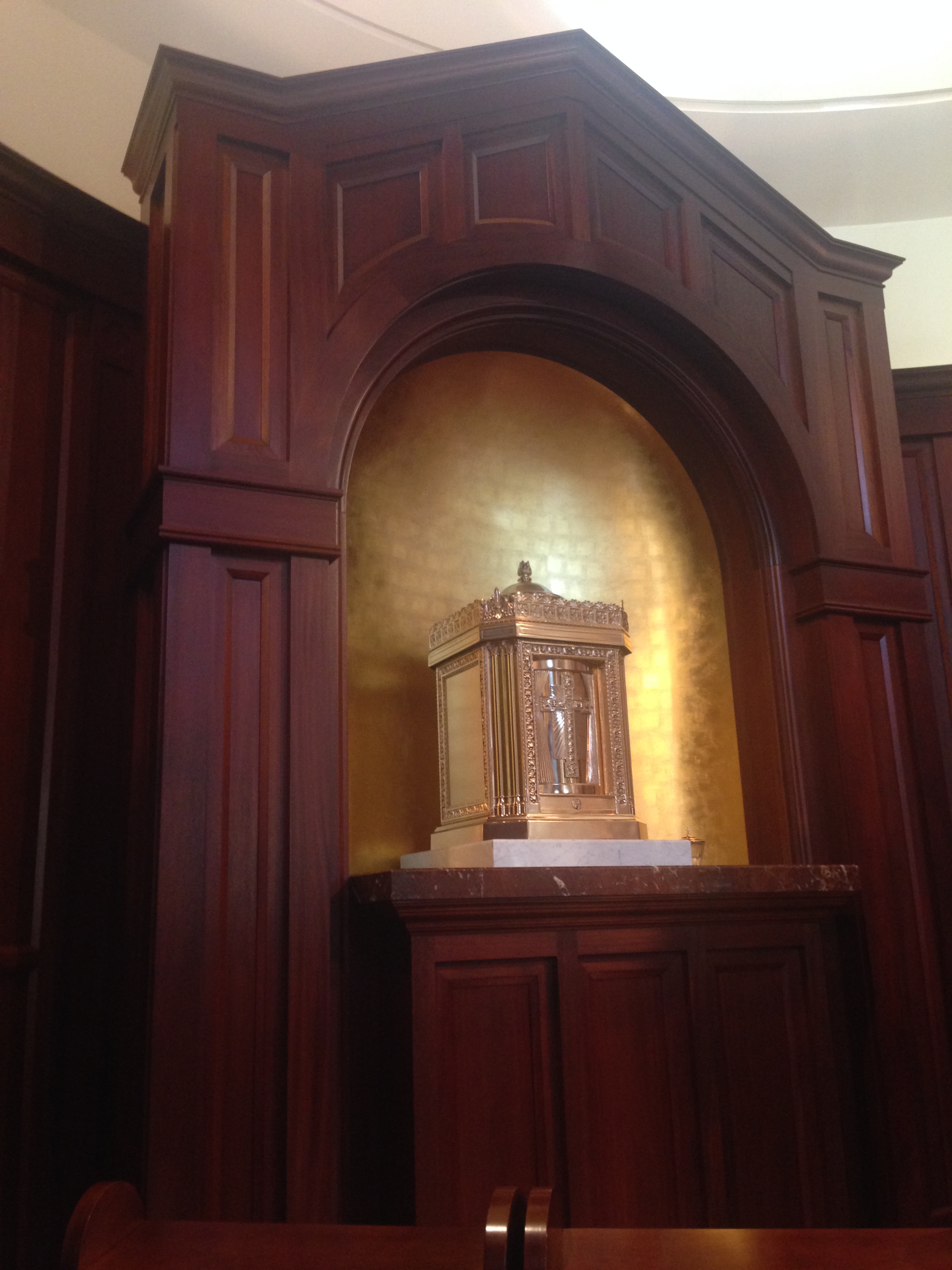

For Corpus Christi weekend, a 2012 piece on the history and meaning of the feast. For a beautiful Corpus Christi soundtrack, immerse yourself in Adoration at Ephesus, the latest release from the Benedictines of Mary, Queen of Apostles, which features several settings of material from Thomas’s Office, along with other Eucharistic hymns ancient and not-so-ancient.
This weekend Catholics in the Thursday-averse United States celebrate the Solemnity of the Most Holy Body and Blood of Christ, the feast more familiarly known by its Latin name, Corpus Christi. I can’t get as worked up about the transfer of this feast as I did about Ascension Thursday, mostly because the Feast of Corpus Christi is itself a transfer, and hopped around a lot before settling into the Church’s universal calendar.
We owe this feast—and, by extension, Thomas Aquinas’s stunningly beautiful Office celebrating it—to a 13th-century Belgian nun named Juliana. When Juliana was orphaned at the age of 5, she and her sister were housed on a small farm belonging to a double monastery of Norbertines (the French Augustinian canons known as Premonstratensians—yes, it does indeed sound like PMS—whose order is abbreviated O. Praem; I used to call them the Order of Perambulators).
Juliana, who had a lifelong devotion to the Blessed Sacrament, entered religious life at the age of 13, serving in the hospice for lepers that the community ran. From the age of 16 on she had a series of visions of the full moon obscured by a dark spot. At first troubled that her visions were of demonic origin, Juliana came to discern that instead the moon represented the Church’s liturgical year, and the dark spot a missing feast in honor of Christ present in the Sacrament. While Holy Thursday commemorates the institution of the Eucharist, the joyful mystery of the transubstantiation was, Juliana believed, overshadowed by the solemn events of Holy Week. Juliana thought her visions were telling her to promote such a feast, to be celebrated on the Thursday after Trinity Sunday.
Of course, she had no real means by which to do the promoting (there being no blogosphere or Twitter), so at first Juliana shared her ideas only with a few sympathetic sisters and a holy anchoress named Eve who lived nearby. Eventually, after having been named prioress of the monastery, she told her confessor, who told his superior, who told a bishop, who told a cardinal, and so on up the line to the Holy Father. Everybody agreed it would be no problem to celebrate such a feast, at least on the local level. So Juliana and her confessor composed the first Office for the feast.
But it wasn’t smooth sailing for Juliana. She lived in a time of political and religious turmoil. The same Guelph-and-Ghibelline squabbles that were giving Dante fits also reached Juliana’s convent. She had instituted reforms to bring the monastery back to its strict Augustinian rule, but the male cleric appointed to oversee her—a corrupt politician who had obtained his position by bribery—made her life so miserable with constant harassment and trumped-up charges of financial mismanagement that Juliana twice fled her convent. The first time she found shelter in her friend Eve’s anchorhold. Later, she moved farther afield, living for a time with the Beguines (laywomen who practiced communal lives of prayer and service, later suppressed by the Church for taking heretical positions and not demonstrating obedience to authority), and finally finding a new home among the Cistercians, with whom she lived until her death.
It was the anchoress Eve who continued to push for a universal celebration of the Feast of Corpus Christi, and Pope Urban IV finally relented, commissioning his friend Thomas Aquinas to write the Office we know so well.
Tantum ergo Sacramentum
Veneremur cernui:
Et antiquum documentum
Novo cedat ritui:
Praestet fides supplementum
Sensuum defectui.
Approved first only for clergy, the Feast of Corpus Christi was later extended to the universal Church. Juliana was canonized in 1869, largely on the basis of the virtues recounted in the biography composed by her friend, the anchoress Eve. With all Juliana’s and her feast’s perambulations, it’s only fitting that the Eucharistic processions that once marked the celebration of Corpus Christi are coming back into fashion.
There’s much worth reflecting on in the story of Juliana at this moment in the Church, when Guelphs and Ghibellines are again fighting the battles of Church v State, and Catholics on many fronts are in tension about where the line can be drawn between charism and heresy. It is Juliana’s vision of the moon, though, that carries the message about what was most important then and is most important now: the presence of Christ in the Eucharist that binds us together, without which there is a dark spot, a shadow, on our unity.
Restoring the Eucharist to its central position in our lives is quite simply the only hope we have of getting through this particular dark night. I like to think that Juliana, like Francis, saw the Body of Christ—Corpus Christi—in the twisted and disfigured bodies of the lepers she served, letting faith supply where the senses fall short. If we can look beyond the accidents that divide and distort us and see the Most Holy Body and Blood of Christ present in the Church and in one another, with God’s grace our light will shine brighter than any super moon.
Image: Spanish Colonial retablo in the Cathedral of Our Lady of the Angels, Los Angeles; photo by the author.
Benedictines of Mary Queen of Apostles
Previous Post

June 8, 2012
Praying for a Win--UPDATED
Next Post
June 10, 2012 The Parable of the Order Muppet and the Turquoise Hightops
Browse Our Archives
Select a Category Abortion Advent Art Bishops Book Review Catholicism Fortnight 4 Freedom In the News Lent Marriage Mary Mental Health New Evangelization Nuns Pilgrimage 2012 Pop Culture Pope Francis Religious Education Reverts Saints' Lives and Legends Sin Staying Catholic Uncategorized Year of Faith
Select a Month May 2016 May 2015 April 2015 March 2015 December 2014 November 2014 October 2014 September 2014 August 2014 July 2014 June 2014 April 2014 March 2014 February 2014 December 2013 November 2013 October 2013 September 2013 August 2013 July 2013 June 2013 May 2013 April 2013 March 2013 February 2013 January 2013 December 2012 November 2012 October 2012 September 2012 August 2012 July 2012 June 2012 May 2012 April 2012 March 2012 February 2012 January 2012 November 2011 April 2011 March 2011 December 2010
Follow Us!
TAKE THE
Religious Wisdom Quiz
Who is the "chosen lady" addressed in a New Testament letter?
Select your answer to see how you score.
Phoebe Unspecified church Lydia Mary
Related posts from Egregious Twaddle

The Parable of the Order Muppet and the...

Finding My Way Back to Fatima, and Down...

Depressed and Catholic: Learning It's OK to Live

No Good Guys, No Bad Guys: Fr Greg...
TRENDING AT PATHEOS Catholic

The Parable Of The Sower And The Word...
One of Christ’s most famous parables is that of the sower who...

Rejecting Doom: Christian Hope And Human Action
Christianity is a religion of hope. We are to have hope and...

Why I Choose the Eucharist Over the Sermon
Choose the Eucharist, Not the Sermon What are we supposed to get...

5 Design Elements Found in Spiritually Rooted Homes
Putting Spirituality Into Home Decor Our homes are more than our living...

Credo: A Story of God Told with the...
About 10 years ago, I began to imagine a personal "Credo" that...

The Anatomy of Divine Revelation in Catholic Thought
The claim that God has made Himself known to human beings is...
view all Catholic blogs
Ad-Free & Subscriber Log-In Subscription Support
- About Us
- 2026 Calendar
- Videos
- Podcasts
- Library of World Religions
- Faith In Media Tracker
- Advertise With Us
- Write for Us
- Privacy Policy
- Terms of Service
- Do Not Sell My Data
- Contact Us
- Radiant Digital
- Manage Newsletter Subscriptions
- Unsubscribe From Notifications
- Sitemap
Copyright 2008-2026, Patheos. All rights reserved.
Subscription Support Ad-Free & Subscriber Log-In
Follow Patheos