
BuddhistCatholicContemplativeEvangelicalGeneral ChristianHinduJewishLatter-day SaintMuslimNew VisionsProgressive Christian
Beliefs
- Buddhist
- Catholic
- Contemplative
- Evangelical
- General Christian
- Hindu
- Jewish
- Latter-day Saint
- More Voices
- Muslim
- New Visions
- Pagan
- Progressive Christian
Topics
- Religion News
- Food and Religion
- Sports and Religion
- Religious Art
- Religious Music and Entertainment
- Religious Events
- History and Religion
- Style and Religion
- Politics and Religion
- Women in Religion
- Recreation Outdoors and Religion
- Business Finance and Religion
- Careers Workplace and Religion
- Education and Religion
- Family Parenting and Religion
- Health Fitness and Religion
- Home and Religion
- Relationships and Religion
- Technology and Religion
- Travel and Religion
Columnists
- Buddhist Columnists
- Business Finance and Religion Columnists
- Careers Workplace and Religion Columnists
- Catholic Columnists
- Contemplative Columnists
- Education and Religion Columnists
- Evangelists Columnists
- Family Parenting and Religion Columnists
- General Christian Columnists
- Health Fitness and Religion Columnists
- Hindu Columnists
- History and Religion Columnists
- Home and Religion Columnists
- Jewish Columnists
- More Voices Columnists
- Latter Day Columnists
- Muslim Columnists
- New Visions Columnists
- Nonreligious Columnists
- Pagan Columnists
- Politics and Religion Columnists
- Progressive Columnists
- Recreation Outdoors and Religion Columnists
- Relationships and Religion Columnists
- Religion News Columnists
- Religious Art Columnists
- Religious Events Columnists
- Religious Music and Entertainment Columnists
- Sports and Religion Columnists
- Style and Religion Columnists
- Technology and Religion Columnists
- Travel and Religion Columnists
- Women in Religion Columnists
Resource Library
- 2026 Calendar
- Library of World Religions
- The 100 Most Holy Places on Earth
- Patheos Answers
- Podcasts
- Videos
- Faith Leaders Database
- Anglican Episcopalian
- Bahai
- Baptist
- Buddhism
- Christianity
- Confucianism
- Eastern Orthodoxy
- Hinduism
- Holiness and Pentecostal
- ISKCON
- Islam
- Judaism
- Lutheran
- Methodist
- The Church of Jesus Christ of Latter-day Saints
- New Age
- Paganism
- Presbytarian and Reformed
- Protestantism
- Religion Behind the Scenes
- Roman Catholic
- Scientology
- Shia Islam
- Sikhism
- Sufism
- Sunni Islam
- Taoism
- Zen
- See all religions
Research Tools
 Ad-Free & Subscriber Log-In Subscription Support
Ad-Free & Subscriber Log-In Subscription Support
Follow Patheos 

- Trending:
- Forgiveness
- |
- Marriage
- |
- Consciousness
- |
- Death Penalty
- |
- Election
- |
- Halloween
 Egregious Twaddle
- Home
- Catholic
- Of Wanderers and Anchorites: A Mother’s Day Reflection
Of Wanderers and Anchorites: A Mother’s Day Reflection
Last updated on: May 2, 2016 at 11:33 am by Joanne McPortland
Of Wanderers and Anchorites: A Mother’s Day Reflection 2016-05-02T11:33:21-06:00 Joanne McPortland
Patheos Explore the world's faith through different perspectives on religion and spirituality! Patheos has the views of the prevalent religions and spiritualities of the world.
I come from a line of mothers who wander.
One of my maternal great-grandmothers, otherwise a paragon of Irish Catholic virtue, used to save up her housekeeping money and disappear for weekend drinking binges on regular occasions. During one of those absences, her daughter, my maternal grandmother Maggie, played a game of jumprope with a friend. Because they didn’t have a third, they tied one end of the rope to an old icebox, which toppled over on Maggie while she was jumping. She was concussed, but the injury didn’t seem to be lasting. Her brain was scarred, though, and 30 years later she developed epilepsy. Her grand mal seizures were treated, in those days, as madness, and she was frequently committed to an asylum. So while Maggie didn’t wander on purpose, the absences of her monthly “spells” and her regular commitments meant my mother grew up uncertain of her mother’s mental and physical whereabouts.
My other maternal great-grandmother, Susan, wandered in both senses of the word. While married to my great-grandfather, who was the coachman to wealthy Boston art patroness Isabella Stewart Gardner, Susan took up with another Gardner servant. She ran away with him, taking her baby daughter Mildred (whose paternity is questionable) but abandoning her three young sons, among whom was my maternal grandfather Bert. Mrs. Jack, as the formidable Isabella was known, reacted to the scandal and the inconvenience of having her coachman saddled with single-father duties by giving my great-grandfather a choice: keep his children or keep his job. He opted for the job, though he didn’t hold it long, and died homeless some years later in a notorious Boston flophouse fire. My grandfather, at the age of 12, was fostered out to a New Hampshire farm family named Pulsifer, who gave him love as well as work. He never forgave his own mother, or saw her or his sister again.
The legacy of these holes in the fabric of motherhood made my mother perpetually uneasy and fearful, prickly rather than cuddly, a critic rather than a nurturer, uncomfortable with change. She transferred her daughterly affections to the Blessed Mother, of whom she spoke with such homely familiarity that I grew up thinking of Mary as a direct relative. The icon of Our Mother of Perpetual Help in the parish church before which we prayed after Mass every Sunday, the Hummel statue of the Madonna of the Flowers that sat on the living room table (and now sits on mine), the reproduction of Raphael’s Madonna of the Chair that hung over the mantel–these were extensions of our family photo albums. When I sat as close to my mother as her zone of stiffness would allow in the pew at the parish mission and sang the hymn to Mary, Star of the Sea, we both cried, knowing what it was like to be the daughter and granddaughter of wanderers, thrown on life’s surge with no lighthouse but the Mother of Christ.
Hail, Queen of Heaven, the Ocean Star
Guide of the wanderer here below
Thrown on life’s surge, we claim thy care
Save us from peril and from woe
Mother of Christ
Star of the Sea
Pray for the wanderer
Pray for me
The line of wanderers did a 180 when it got to me. Motherhood turned what had been an occasional tendency toward panic attacks into full-blown agoraphobia. I loved my son in ways I couldn’t imagine loving, but I had zero maternal instincts and not one clue. The world suddenly seemed too wide, and terrible in its wideness. I wanted to be walled away in a safe little cell, confined in the frame around an icon. My pervading sense of dread, like my mother’s before it, was a Bad Fairy’s christening gift, and I have spent a good part of my son’s nearly 38 years atoning for the damage it did at the start.
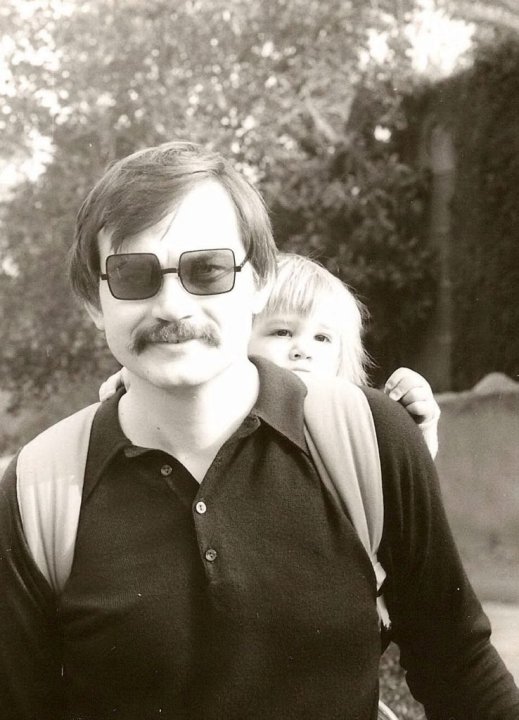
Fortunately, God often provides. When a mother can’t mother, sometimes a father can. My son’s father did, stepping up and stepping in until my reason (or most of it) returned, leaving my son the gift of being a great parent himself. My grandfather, maybe with the help of Mrs Pulsifer, overcame his own loss and dealt with his wife’s disability. He was mother to his six children, keeping the family together through the Great Depression, and somehow transferring to my mother the late-blooming maternal ease that would make her the most caring and skilled of Nanas.
And sometimes, stepmothers are not wicked. My son’s stepmother has also struggled with agoraphobia, only hers has been lifelong and unremitting. In spite of that, in spite of how little she felt prepared to welcome an angry little boy and later a smartass teenager into the ordered cell of her world, she supported my son’s father and me, gave him another set of grandparents, made sure Santa visited Daddy’s house on Christmas Eve while father and son were at the midnight service, and sent my son and his father back home to my house for Christmas morning every year. On this Mother’s Day, I celebrate fathers and stepmothers, too.
Today, in addition to Mother’s Day and the Sixth Sunday of Easter and the Feast of Our Lady of Fatima, the Roman Catholic Church remembers a woman who did wall herself up in a cell–though never losing sight of the wide and terrible world of 14th century England for which she prayed–and who knew God intimately as both father and mother. We don’t know much about Julian of Norwich, not even her real name. She lived as an anchoress in a cell fastened to the side of the parish church of St Julian like a barnacle clinging to the side of a boat. She may have been a nun, but it’s quite likely she was a laywoman. She may not have been a mother herself, but she was a daughter. After undergoing an illness with both mental and physical torments, Julian began having visionary conversations with Jesus, which she later set down in what is considered one of the first spiritual works in English. Marked by homely directness and practical wisdom, Julian’s Showings celebrate God’s faithfulness as a parent who never wanders, an anchor of trust:
Christ our natural mother, our gracious mother, because he willed to become our mother in everything, took the ground for his work most humbly and most mildly in the maiden’s womb. . . . Our high God, the sovereign Wisdom of all, arrayed himself in this low place and made himself entirely ready in our poor flesh in order to do the service and the office of motherhood himself in all things. (Showings, Chapter 60)
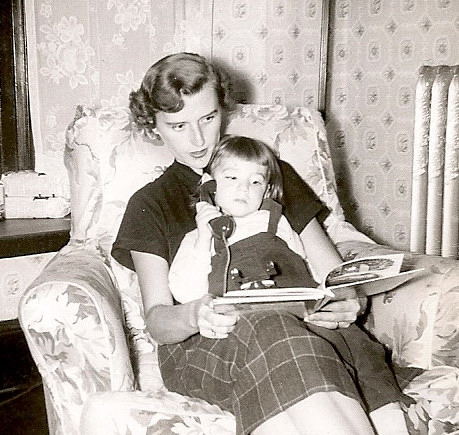
Happy Mother’s Day to mothers all, and fathers who are mothers: to the wanderers and the anchorites, the workers at home and in the world, the frightened and the clueless, the helicopters, the ones whose nests are empty and the ones whose first eggs are about to hatch, the stepmothers and foster mothers and mothers-in-law, the Madonnas and the rest of us. As Christ our Mother said to his friend Julian in what then seemed the darkest days on earth, the time of Black Death when it seemed least rational to bring a child into the world, as Mary herself heard in the stillness of her heart, as all who “do the service and the office of motherhood” as best they can in every age proclaim:
“It behoved that there should be sin; but all shall be well, and all shall be well, and all manner of thing shall be well.” (Showings, Chapter 27)
Previous Post

May 9, 2012
The Heartburn of Sex
Next Post
May 15, 2012 Angels in the Fields
Browse Our Archives
Select a Category Abortion Advent Art Bishops Book Review Catholicism Fortnight 4 Freedom In the News Lent Marriage Mary Mental Health New Evangelization Nuns Pilgrimage 2012 Pop Culture Pope Francis Religious Education Reverts Saints' Lives and Legends Sin Staying Catholic Uncategorized Year of Faith
Select a Month May 2016 May 2015 April 2015 March 2015 December 2014 November 2014 October 2014 September 2014 August 2014 July 2014 June 2014 April 2014 March 2014 February 2014 December 2013 November 2013 October 2013 September 2013 August 2013 July 2013 June 2013 May 2013 April 2013 March 2013 February 2013 January 2013 December 2012 November 2012 October 2012 September 2012 August 2012 July 2012 June 2012 May 2012 April 2012 March 2012 February 2012 January 2012 November 2011 April 2011 March 2011 December 2010
Follow Us!
TAKE THE
Religious Wisdom Quiz
True or False: According to 2 Peter, one day is with the Lord as a thousand years, and a thousand years as one day.
Select your answer to see how you score.
TRUE FALSE
Related posts from Egregious Twaddle

Finding My Way Back to Fatima, and Down...

Depressed and Catholic: Learning It's OK to Live

No Good Guys, No Bad Guys: Fr Greg...

5 Reasons Why Catholics (of All People!) Should...
TRENDING AT PATHEOS Catholic

Rejecting Doom: Christian Hope And Human Action
Christianity is a religion of hope. We are to have hope and...

It’s What Comes From Within Which Matters
One of the most difficult things for us to understand is why...

Why I Choose the Eucharist Over the Sermon
Choose the Eucharist, Not the Sermon What are we supposed to get...

5 Design Elements Found in Spiritually Rooted Homes
Putting Spirituality Into Home Decor Our homes are more than our living...

Credo: A Story of God Told with the...
About 10 years ago, I began to imagine a personal "Credo" that...

The Anatomy of Divine Revelation in Catholic Thought
The claim that God has made Himself known to human beings is...
view all Catholic blogs
Ad-Free & Subscriber Log-In Subscription Support
- About Us
- 2026 Calendar
- Videos
- Podcasts
- Library of World Religions
- Faith In Media Tracker
- Advertise With Us
- Write for Us
- Privacy Policy
- Terms of Service
- Do Not Sell My Data
- Contact Us
- Radiant Digital
- Manage Newsletter Subscriptions
- Unsubscribe From Notifications
- Sitemap
Copyright 2008-2026, Patheos. All rights reserved.
Subscription Support Ad-Free & Subscriber Log-In
Follow Patheos