
BuddhistCatholicContemplativeEvangelicalGeneral ChristianHinduJewishLatter-day SaintMuslimNew VisionsProgressive Christian
Beliefs
- Buddhist
- Catholic
- Contemplative
- Evangelical
- General Christian
- Hindu
- Jewish
- Latter-day Saint
- More Voices
- Muslim
- New Visions
- Pagan
- Progressive Christian
Topics
- Religion News
- Food and Religion
- Sports and Religion
- Religious Art
- Religious Music and Entertainment
- Religious Events
- History and Religion
- Style and Religion
- Politics and Religion
- Women in Religion
- Recreation Outdoors and Religion
- Business Finance and Religion
- Careers Workplace and Religion
- Education and Religion
- Family Parenting and Religion
- Health Fitness and Religion
- Home and Religion
- Relationships and Religion
- Technology and Religion
- Travel and Religion
Columnists
- Buddhist Columnists
- Business Finance and Religion Columnists
- Careers Workplace and Religion Columnists
- Catholic Columnists
- Contemplative Columnists
- Education and Religion Columnists
- Evangelists Columnists
- Family Parenting and Religion Columnists
- General Christian Columnists
- Health Fitness and Religion Columnists
- Hindu Columnists
- History and Religion Columnists
- Home and Religion Columnists
- Jewish Columnists
- More Voices Columnists
- Latter Day Columnists
- Muslim Columnists
- New Visions Columnists
- Nonreligious Columnists
- Pagan Columnists
- Politics and Religion Columnists
- Progressive Columnists
- Recreation Outdoors and Religion Columnists
- Relationships and Religion Columnists
- Religion News Columnists
- Religious Art Columnists
- Religious Events Columnists
- Religious Music and Entertainment Columnists
- Sports and Religion Columnists
- Style and Religion Columnists
- Technology and Religion Columnists
- Travel and Religion Columnists
- Women in Religion Columnists
Resource Library
- 2026 Calendar
- Library of World Religions
- The 100 Most Holy Places on Earth
- Patheos Answers
- Podcasts
- Videos
- Faith Leaders Database
- Anglican Episcopalian
- Bahai
- Baptist
- Buddhism
- Christianity
- Confucianism
- Eastern Orthodoxy
- Hinduism
- Holiness and Pentecostal
- ISKCON
- Islam
- Judaism
- Lutheran
- Methodist
- The Church of Jesus Christ of Latter-day Saints
- New Age
- Paganism
- Presbytarian and Reformed
- Protestantism
- Religion Behind the Scenes
- Roman Catholic
- Scientology
- Shia Islam
- Sikhism
- Sufism
- Sunni Islam
- Taoism
- Zen
- See all religions
Research Tools
 Ad-Free & Subscriber Log-In Subscription Support
Ad-Free & Subscriber Log-In Subscription Support
Follow Patheos 

- Trending:
- Forgiveness
- |
- Marriage
- |
- Consciousness
- |
- Death Penalty
- |
- Election
- |
- Halloween
 Egregious Twaddle
- Home
- Catholic
- Graveyard Shift
Graveyard Shift
Last updated on: May 2, 2016 at 11:25 am by Joanne McPortland
Graveyard Shift 2016-05-02T11:25:09-06:00 Joanne McPortland
Patheos Explore the world's faith through different perspectives on religion and spirituality! Patheos has the views of the prevalent religions and spiritualities of the world.
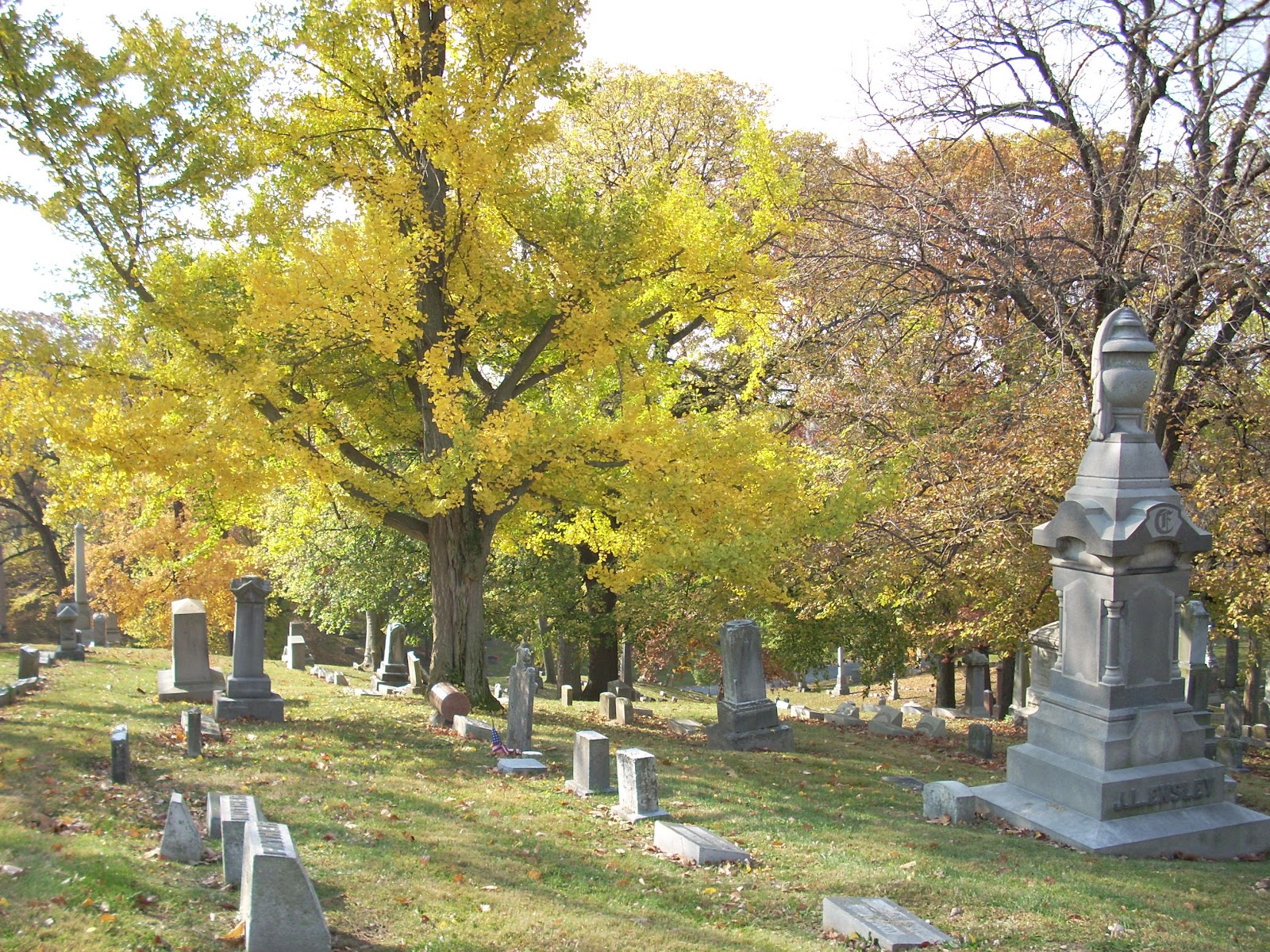
I took my lunch to Woodland Cemetery and Arboretum today–one of my favorite spots in this, my adopted hometown, in which I celebrate 16 years (though only my fourth anniversary, since I arrived on Leap Day) today. Woodland is beautiful in any season, but in today’s preternaturally soft (68 degrees!) early spring mistiness, it was particularly peaceful. The opposite of the newswires, and my soul.
I got to thinking, as everyone who sits in a cemetery and thinks for more than a minute and a half has thought, what a restorative thing it can be to spend a little time among the dead. The battles that seem so critical, the bills that press, the words that cut to the heart, the fears of being foolish–really, what do they matter? We’re dead so very much longer than we’re alive and worrying. Thomas Gray’s 18th-century “Elegy Written in a Country Churchyard” is dated and precious now, but still true:
The boast of heraldry, the pomp of power,
And all that beauty, all that wealth e’er gave,
Awaits alike the inevitable hour:–
The paths of glory lead but to the grave.
Perspective. That’s what doing time in the graveyard offers. My Puritan New England forebears were better at recognizing that than we are, with their winged hourglasses and skulls where we cover tombstones with laser-etched replicas of our pets and our hobbies. In this life that flies by, what matters most? What am I doing with this day–this extra 24 hours in the year–that will have made any difference at all by the time I reach the inevitable hour?
It’s a pretty good bet that arguing with people in comboxes doesn’t qualify (though the heartburn might hasten the inevitable hour). Nor will reading more dispatches from the frontlines of the Pelvic Wars. Yesterday’s New York Times, for example, brought this completely unsurprising editorial attempt to wedge the attack on Catholic conscience even deeper into the health care battlefield. “Women’s Health Care at Risk,” reads the headline over the warning that “a wave of mergers between Catholic and secular hospitals is threatening to deprive women of access to important reproductive services.” So now we’re not just making women sick by refusing to pay for free contraceptives for our employees; we’re withholding critical care. That these “important reproductive services”–“Catholic hospitals have refused to terminate pregnancies, provide contraceptive services, offer a standard treatment for ectopic pregnancies, or allow sterilization after caesarean sections,” all of which violate Catholic teaching on the sanctity of life–are in actual fact nonreproductive services is something nobody seems to be willing to discuss. (Is it just me?)
There’s also a flurry of Planned Parenthood influenced pieces showing up in the Health sections of the major dailies this week, touting–as I predicted after reading the PP-sponsored research behind the Institute of Medicine report that motivated the HHS mandate, much of which is picked up directly in these articles–the health and cost benefits of IUDs. This example even points readers to the online chat room IUD Divas, where women share their experiences with this “worry-free” method of contraception. (That might backfire. I spent enough time reading the message threads at IUD Divas this morning to need to run away to the cemetery. With all the bleeding, cramping, loss of libido, fears of expulsion, need to use backup methods, difficulties with insertion, and recommendations of heavy pain meds, “worry-free” doesn’t seem to be quite the right term.)
IUDs, whether mechanical or hormonal in function, and injectables like Depo-Provera are the gold standard of “preventive medicine” (when the disease is pregnancy) because they don’t require compliance at the time of sexual activity, but they’re expensive, so to make them available to the “risk pool” of poor, young, uneducated, and minority women, they need to be made universally available free of charge. No mention of the diseases that IUDs cause, like chronic pelvic pain and and persistent yeast infections, or the ones they don’t prevent, like STDs and HIV. Ah, but that way lies more heartburn.
And no use pointing any of this stuff out in any public forum, because I’m Catholic, and you know how we are. I said to someone today that Fat and Catholic are the only two groups it’s still acceptable for tolerant, politically correct people to judge, hate, and ridicule, and God help me, I’m both of them. So it was off to the cemetery for the longer view.
When I was growing up, my dad worked rotating shifts in his job at a chemical plant. One week on days–7am to 3pm. One week on swing–3pm to 11pm. (That week, my sister and I came home for lunch so we could have dinner at noon as a family.) One week 11pm to 7am, and then 5 days off. The overnight week, the graveyard shift, was toughest on his body and the family and the neighborhood, because my mother would spend the whole day yelling out the apartment window at the local kids to be quiet so dad could get some rest. I’m sure the disturbed sleep cycle contributed to the alcoholism he was already using to self-medicate his tendency toward depression.
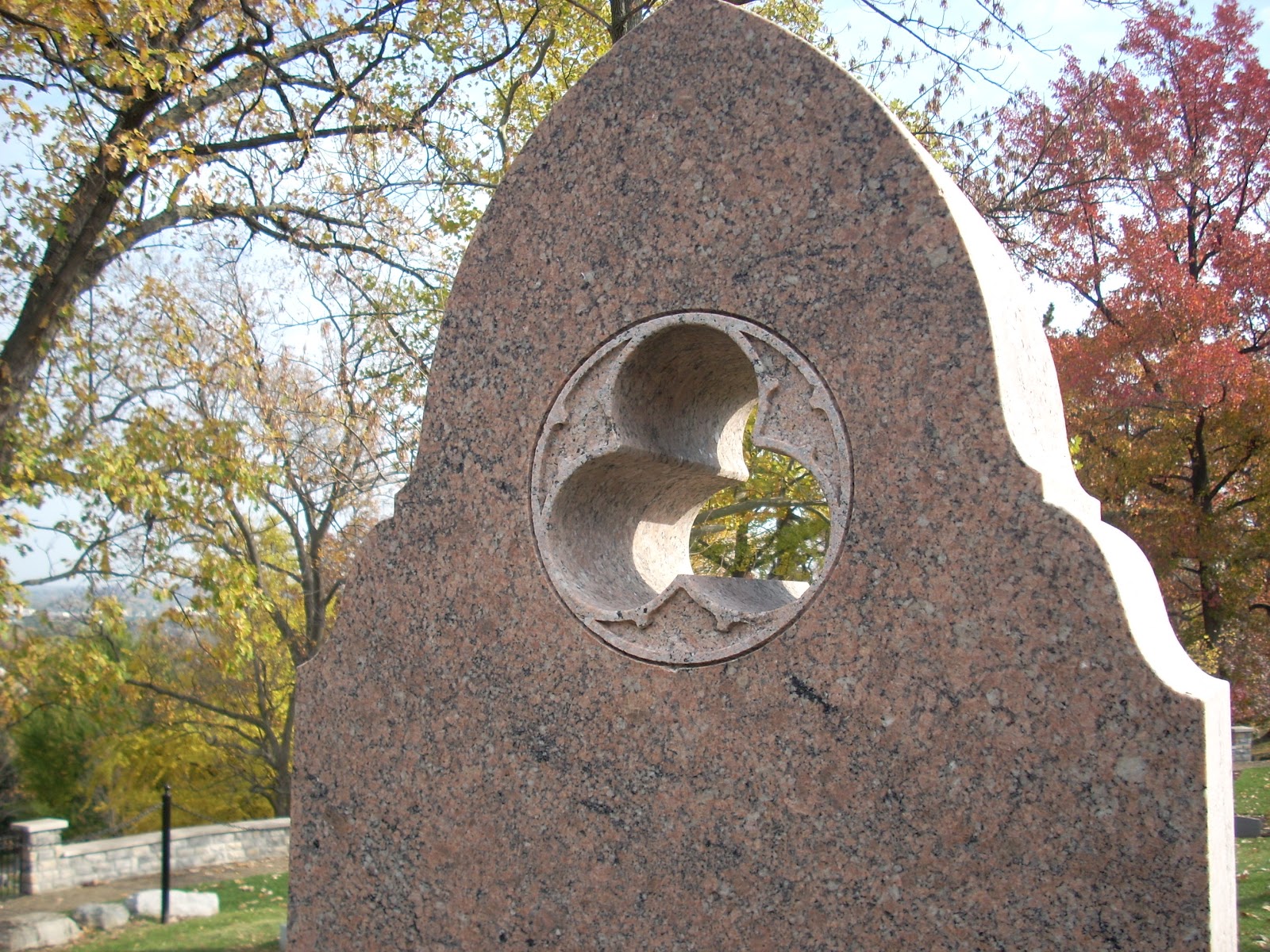
That kind of graveyard shift wasn’t healthy. But I think the time out I took today was. And in a larger way, I think Lent is a kind of graveyard shift, when we step out of the daily rhythms to face our own dark night, to recall what matters. In “Song of Myself,” Walt Whitman found a different answer than Gray’s gloomy one, leaning and loafing amid the leaves of grass he called “the beautiful uncut hair of graves”:
What do you think has become of the young and old men?
And what do you think has become of the women and children?
They are alive and well somewhere.
The smallest sprout shows there is really no death,
And if ever there was, it led forward life, and does not wait at the end to arrest it,
And ceased at the moment life appear’d.
All goes onward and outward, nothing collapses.
And to die is different from what anyone supposed, and luckier.
Nothing collapses. That’s good to know, when everything feels so fragile. There really is no death. That’s the lesson learned by an empty tomb at the end of Lent. Because it worked so well to refocus me on this bonus day, I think I will insert a little graveyard shift–a little considering my end, and the world’s–into every Lenten day this year.
Images are the author’s own.
Previous Post

February 27, 2012
The Silence of Doris Valentin
Next Post
March 3, 2012 Occupied by Grace: Katharine Drexel's Gift
Browse Our Archives
Select a Category Abortion Advent Art Bishops Book Review Catholicism Fortnight 4 Freedom In the News Lent Marriage Mary Mental Health New Evangelization Nuns Pilgrimage 2012 Pop Culture Pope Francis Religious Education Reverts Saints' Lives and Legends Sin Staying Catholic Uncategorized Year of Faith
Select a Month May 2016 May 2015 April 2015 March 2015 December 2014 November 2014 October 2014 September 2014 August 2014 July 2014 June 2014 April 2014 March 2014 February 2014 December 2013 November 2013 October 2013 September 2013 August 2013 July 2013 June 2013 May 2013 April 2013 March 2013 February 2013 January 2013 December 2012 November 2012 October 2012 September 2012 August 2012 July 2012 June 2012 May 2012 April 2012 March 2012 February 2012 January 2012 November 2011 April 2011 March 2011 December 2010
Follow Us!
TAKE THE
Religious Wisdom Quiz
How should Christians respond to insults?
Select your answer to see how you score.
Insult in return Fight back Ignore always Bless those who curse you
Related posts from Egregious Twaddle

Finding My Way Back to Fatima, and Down...

Depressed and Catholic: Learning It's OK to Live

No Good Guys, No Bad Guys: Fr Greg...

5 Reasons Why Catholics (of All People!) Should...
TRENDING AT PATHEOS Catholic

Rejecting Doom: Christian Hope And Human Action
Christianity is a religion of hope. We are to have hope and...

It’s What Comes From Within Which Matters
One of the most difficult things for us to understand is why...

Why I Choose the Eucharist Over the Sermon
Choose the Eucharist, Not the Sermon What are we supposed to get...

5 Design Elements Found in Spiritually Rooted Homes
Putting Spirituality Into Home Decor Our homes are more than our living...

Credo: A Story of God Told with the...
About 10 years ago, I began to imagine a personal "Credo" that...

The Anatomy of Divine Revelation in Catholic Thought
The claim that God has made Himself known to human beings is...
view all Catholic blogs
Ad-Free & Subscriber Log-In Subscription Support
- About Us
- 2026 Calendar
- Videos
- Podcasts
- Library of World Religions
- Faith In Media Tracker
- Advertise With Us
- Write for Us
- Privacy Policy
- Terms of Service
- Do Not Sell My Data
- Contact Us
- Radiant Digital
- Manage Newsletter Subscriptions
- Unsubscribe From Notifications
- Sitemap
Copyright 2008-2026, Patheos. All rights reserved.
Subscription Support Ad-Free & Subscriber Log-In
Follow Patheos