
BuddhistCatholicContemplativeEvangelicalGeneral ChristianHinduJewishLatter-day SaintMuslimNew VisionsProgressive Christian
Beliefs
- Buddhist
- Catholic
- Contemplative
- Evangelical
- General Christian
- Hindu
- Jewish
- Latter-day Saint
- More Voices
- Muslim
- New Visions
- Pagan
- Progressive Christian
Topics
- Religion News
- Food and Religion
- Sports and Religion
- Religious Art
- Religious Music and Entertainment
- Religious Events
- History and Religion
- Style and Religion
- Politics and Religion
- Women in Religion
- Recreation Outdoors and Religion
- Business Finance and Religion
- Careers Workplace and Religion
- Education and Religion
- Family Parenting and Religion
- Health Fitness and Religion
- Home and Religion
- Relationships and Religion
- Technology and Religion
- Travel and Religion
Columnists
- Buddhist Columnists
- Business Finance and Religion Columnists
- Careers Workplace and Religion Columnists
- Catholic Columnists
- Contemplative Columnists
- Education and Religion Columnists
- Evangelists Columnists
- Family Parenting and Religion Columnists
- General Christian Columnists
- Health Fitness and Religion Columnists
- Hindu Columnists
- History and Religion Columnists
- Home and Religion Columnists
- Jewish Columnists
- More Voices Columnists
- Latter Day Columnists
- Muslim Columnists
- New Visions Columnists
- Nonreligious Columnists
- Pagan Columnists
- Politics and Religion Columnists
- Progressive Columnists
- Recreation Outdoors and Religion Columnists
- Relationships and Religion Columnists
- Religion News Columnists
- Religious Art Columnists
- Religious Events Columnists
- Religious Music and Entertainment Columnists
- Sports and Religion Columnists
- Style and Religion Columnists
- Technology and Religion Columnists
- Travel and Religion Columnists
- Women in Religion Columnists
Resource Library
- 2026 Calendar
- Library of World Religions
- The 100 Most Holy Places on Earth
- Patheos Answers
- Podcasts
- Videos
- Faith Leaders Database
- Anglican Episcopalian
- Bahai
- Baptist
- Buddhism
- Christianity
- Confucianism
- Eastern Orthodoxy
- Hinduism
- Holiness and Pentecostal
- ISKCON
- Islam
- Judaism
- Lutheran
- Methodist
- The Church of Jesus Christ of Latter-day Saints
- New Age
- Paganism
- Presbytarian and Reformed
- Protestantism
- Religion Behind the Scenes
- Roman Catholic
- Scientology
- Shia Islam
- Sikhism
- Sufism
- Sunni Islam
- Taoism
- Zen
- See all religions
Research Tools
 Ad-Free & Subscriber Log-In Subscription Support
Ad-Free & Subscriber Log-In Subscription Support
Follow Patheos 

- Trending:
- Forgiveness
- |
- Marriage
- |
- Consciousness
- |
- Death Penalty
- |
- Election
- |
- Halloween
 Eastern Catholic Person
- Home
- Catholic
- Home is where your food is: a speech for JubilAsian 2019 (APIDA Heritage Month)
Home is where your food is: a speech for JubilAsian 2019 (APIDA Heritage Month)
Last updated on: May 24, 2019 at 8:50 pm by Justin Tse
Home is where your food is: a speech for JubilAsian 2019 (APIDA Heritage Month) 2019-05-24T20:50:21-07:00 Justin Tse
Patheos Explore the world's faith through different perspectives on religion and spirituality! Patheos has the views of the prevalent religions and spiritualities of the world.
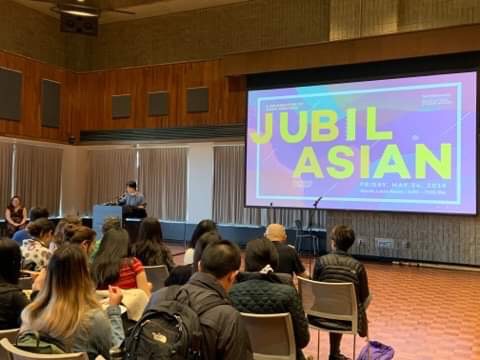
photo by Jenny
Every year, in the month of May, the Multicultural Student Affairs’ office at Northwestern puts on an event for the Asian Pacific Islander Desi American (APIDA) Heritage Month. It was my great honour to be invited as the faculty speaker for this year, and I was so moved by how my brilliant student Ying Dai, who is on the committee, introduced me with her close knowledge of exactly what I’m up to in my scholarship and teaching.
The organizing committee requested that I talk about home, community, and bridge-building in the Asian American Studies Program at Northwestern, and to work the crowd with some informality. Here, then, is what I said:
Today, I want to talk about food. When I first thought about what to say here about a sense of home in Asian American studies at Northwestern, I kept drawing blanks. So I took a cue from my white colleagues in Asian studies: I asked my Asian wife what to do. She said that I should talk about food. We’ve been long-distance while I was here, and what keeps us together is food; we eat together on camera. So I began thinking about food, and it made me hungry, which is how I started thinking about what I’d say here.
I am, of course, not in Asian studies; I am in Asian American studies, and one of the first distinctives that was sold to me on the website as I researched the program was that faculty invite their students to their houses to eat. Now that I work here, I am not sure which ones actually do, but I can tell you that it took me two years to work up the courage to do that. Homes are intimate spaces, and so is my cooking, which is why I often told people I couldn’t cook and instead ordered Harold’s Chicken Shack for my student dinners.
The trouble is that I was fooling no one about how much food drives my life. Students and colleagues who figured me out in time came to drop by my office with the one question I could never resist: ‘Wanna get food?’ – which is the more conventional way to word this request, unless one is from Asian American InterVarsity, in which case you say, ‘Wanna grab a meal?’ By this, we learn that intellectual communities are also homes. The work that we do with our intellects – reading, collecting, analyzing, critiquing, taking action – the source for such acts comes from a place of intimacy. The mind is not split from the body, and bodies must be fed, and feeding it with other persons makes a program into a home. I realized, as this insight dawned on me, that this is why conversations with my peer mentor here, Professor Ji-Yeon Yuh, always began with food, with how we cook, with people we eat with, with how a house becomes a home. Last Thanksgiving, she formally expanded this Cantonese boy’s culinary horizons by teaching me how to make Korean soups and stews from scratch, from the anchovy broths up to the sundubu and kimchi jjigae. When I posted photos of my efforts, I was richly rewarded: Maangchi retweeted me.
What does it mean to have found a home in Asian American Studies here? It means that these are the people with whom I eat, and that is not metaphorical, with the corny move that somehow intellectual production – which is work – is a kind of brain food (it’s more like going to the toilet). I will miss this place immensely, then, because we are moving to Singapore soon for me to join another intellectual community at Singapore Management University. But that city, as you all well know, is delicious. You should therefore know that if you ever visit, the claims I’ve made in this speech about being family will still hold, because we will eat.


Browse Our Archives
Select a Category Academia Anglican Communion anti-racism Aristotle Asia-Pacific Asian American Asian Canadian BlackLivesMatter Cantonese Catholic China Chinglican church politics Church-State Politics Civil Society Conservative Eastern Christianity Evangelical Evangelical Left Feminist/Womanist Theology Food Greek-Catholic Church of Kyiv Hong Kong Housekeeping Kyivan Church Latin Catholicism Law Liberal Liberation Theology New Calvinism Pentecostal/Charismatic Protestant Psychoanalysis Publics Religion Ethnicity Wired Secular Sovereignty TPCIU Uncategorized
Select a Month July 2019 June 2019 May 2019 April 2019 March 2019 February 2019 January 2019 December 2018 November 2018 October 2018 September 2018 August 2018 July 2018 June 2018 May 2018 March 2018 February 2018 January 2018 December 2017 November 2017 October 2017 September 2017 August 2017 July 2017 June 2017 April 2017 March 2017 February 2017 January 2017 December 2016 November 2016 October 2016 September 2016 August 2016 July 2016 January 2016 December 2015 November 2015 October 2015 August 2015 April 2015 March 2015 February 2015 December 2014 November 2014 September 2014 August 2014 July 2014 June 2014 May 2014 April 2014 March 2014 December 2013 November 2013 October 2013 September 2013 August 2013 July 2013 June 2013 May 2013 April 2013 March 2013 February 2013 January 2013 December 2012 October 2012 June 2012 May 2012 April 2012 February 2012 January 2012
Follow Us!
TAKE THE
Religious Wisdom Quiz
According to 2 Peter, what is the Lord not slow in keeping?
Select your answer to see how you score.
His promise His commandments His mercy His judgment
Related posts from Eastern Catholic Person

The Bay Area of the nineties is where...

I am no longer ashamed of being from...

Patriyarkhat: 'Attending to the movements of my heart'

I'm flattered to be named an Asian American...
TRENDING AT PATHEOS Catholic

Rejecting Doom: Christian Hope And Human Action
Christianity is a religion of hope. We are to have hope and...

It’s What Comes From Within Which Matters
One of the most difficult things for us to understand is why...

Why I Choose the Eucharist Over the Sermon
Choose the Eucharist, Not the Sermon What are we supposed to get...

5 Design Elements Found in Spiritually Rooted Homes
Putting Spirituality Into Home Decor Our homes are more than our living...

Credo: A Story of God Told with the...
About 10 years ago, I began to imagine a personal "Credo" that...

The Anatomy of Divine Revelation in Catholic Thought
The claim that God has made Himself known to human beings is...
view all Catholic blogs
Ad-Free & Subscriber Log-In Subscription Support
- About Us
- 2026 Calendar
- Videos
- Podcasts
- Library of World Religions
- Faith In Media Tracker
- Advertise With Us
- Write for Us
- Privacy Policy
- Terms of Service
- Do Not Sell My Data
- Contact Us
- Radiant Digital
- Manage Newsletter Subscriptions
- Unsubscribe From Notifications
- Sitemap
Copyright 2008-2026, Patheos. All rights reserved.
Subscription Support Ad-Free & Subscriber Log-In
Follow Patheos