
BuddhistCatholicContemplativeEvangelicalGeneral ChristianHinduJewishLatter-day SaintMuslimNew VisionsProgressive Christian
Beliefs
- Buddhist
- Catholic
- Contemplative
- Evangelical
- General Christian
- Hindu
- Jewish
- Latter-day Saint
- More Voices
- Muslim
- New Visions
- Pagan
- Progressive Christian
Topics
- Religion News
- Food and Religion
- Sports and Religion
- Religious Art
- Religious Music and Entertainment
- Religious Events
- History and Religion
- Style and Religion
- Politics and Religion
- Women in Religion
- Recreation Outdoors and Religion
- Business Finance and Religion
- Careers Workplace and Religion
- Education and Religion
- Family Parenting and Religion
- Health Fitness and Religion
- Home and Religion
- Relationships and Religion
- Technology and Religion
- Travel and Religion
Columnists
- Buddhist Columnists
- Business Finance and Religion Columnists
- Careers Workplace and Religion Columnists
- Catholic Columnists
- Contemplative Columnists
- Education and Religion Columnists
- Evangelists Columnists
- Family Parenting and Religion Columnists
- General Christian Columnists
- Health Fitness and Religion Columnists
- Hindu Columnists
- History and Religion Columnists
- Home and Religion Columnists
- Jewish Columnists
- More Voices Columnists
- Latter Day Columnists
- Muslim Columnists
- New Visions Columnists
- Nonreligious Columnists
- Pagan Columnists
- Politics and Religion Columnists
- Progressive Columnists
- Recreation Outdoors and Religion Columnists
- Relationships and Religion Columnists
- Religion News Columnists
- Religious Art Columnists
- Religious Events Columnists
- Religious Music and Entertainment Columnists
- Sports and Religion Columnists
- Style and Religion Columnists
- Technology and Religion Columnists
- Travel and Religion Columnists
- Women in Religion Columnists
Resource Library
- 2026 Calendar
- Library of World Religions
- The 100 Most Holy Places on Earth
- Patheos Answers
- Podcasts
- Videos
- Faith Leaders Database
- Anglican Episcopalian
- Bahai
- Baptist
- Buddhism
- Christianity
- Confucianism
- Eastern Orthodoxy
- Hinduism
- Holiness and Pentecostal
- ISKCON
- Islam
- Judaism
- Lutheran
- Methodist
- The Church of Jesus Christ of Latter-day Saints
- New Age
- Paganism
- Presbytarian and Reformed
- Protestantism
- Religion Behind the Scenes
- Roman Catholic
- Scientology
- Shia Islam
- Sikhism
- Sufism
- Sunni Islam
- Taoism
- Zen
- See all religions
Research Tools
 Ad-Free & Subscriber Log-In Subscription Support
Ad-Free & Subscriber Log-In Subscription Support
Follow Patheos 

- Trending:
- Forgiveness
- |
- Marriage
- |
- Consciousness
- |
- Death Penalty
- |
- Election
- |
- Halloween
 Eastern Catholic Person
- Home
- Catholic
- The secular does not stop when your drive dies: mystagogy for Bright and Thomas Weeks
The secular does not stop when your drive dies: mystagogy for Bright and Thomas Weeks
Last updated on: May 14, 2019 at 3:54 pm by Justin Tse
The secular does not stop when your drive dies: mystagogy for Bright and Thomas Weeks 2019-05-14T15:54:06-07:00 Justin Tse
Patheos Explore the world's faith through different perspectives on religion and spirituality! Patheos has the views of the prevalent religions and spiritualities of the world.
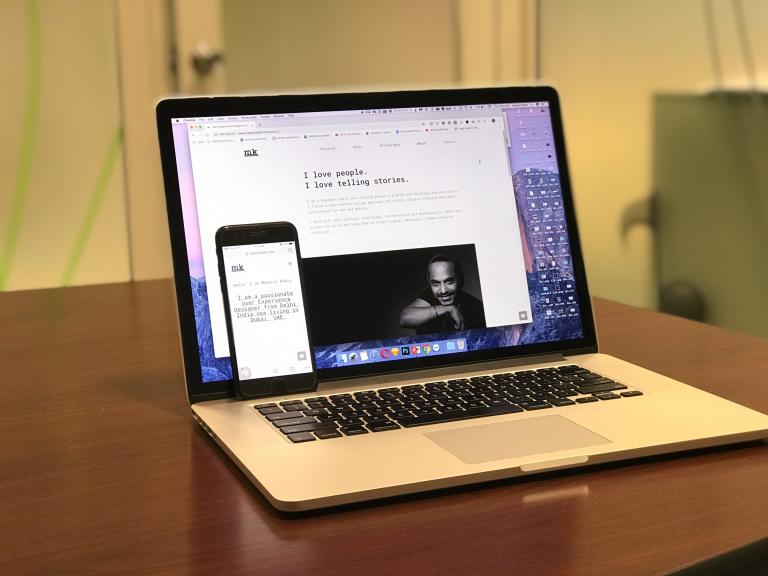
image from Pexels
I was in Madison for Great and Holy Week because every year, the Association of Asian American Studies seems to fall on some version of Great and Holy Week, whether on the Old Calendar or the New. Unable to catch a break, I attended my discipline’s annual professional meeting and even organized a panel on the work of my intellectual hero, the historian Gary Okihiro, on the afternoon of Great and Holy Saturday. The timing, of course, was not of my own choosing. I would have preferred to get back to Chicago to be with my church family for Pascha. But it was not possible.
Then, just as the conference ended, as if right on cue, my laptop died. I have had many experiences with dead Macbooks; what usually happens, as was the case this time, is that instead of displaying the Apple logo while starting up, the screen turns bright white, then displays that dreaded empty folder with a question mark. This time, the death was even more perverse. Sometimes when I started the machine, I’d be able to get in. It would survive for a few minutes, forty-five at the most, then crash again. I was smart this time, though. Once upon a time, I used to back up all of my materials on a hard drive, which meant that I’d have to do it manually, and while I was doing field work in Hong Kong for the book I am writing on Cantonese Protestants, a crash sent eleven interviews I had not backed up into oblivion, never to be retrieved again. A colleague recently told me to put everything on our university’s cloud system. Because of their advice, I did not panic as much as I did when I was in the field.
It was an interesting exercise, I must say, going through much of Bright Week without a computer, then spending most of Thomas Week trying to catch up. One of the more interesting experiences that I had was working in the student computer lab a floor above my office. I listened to a Bible study in session, witnessed a quasi-frat meeting, and observed other students trying to work on their papers. I finished mine, emailed it out, and went for wings and beer as a reward. The next day, I told my students all about it, and they asked me why I was there in the first place. I was writing a paper, I said, and it was overdue, like all of my work, much like most of my peers at my career stage overwhelmed in the deluge of work that this institution called academia puts us through. My students laughed. You’re really overdoing the acting-like-a-student thing, one said. I did what I had to do to meet my deadline, I reflected.
Mystagogy, I have been reflecting over the last two weeks, happens in the real world. Increasingly, I have become disillusioned with the idealism of my graduate school days, those good times when I could read someone like a Stanley Hauerwas and, in his words, keep the church the church and the world the world. I suppose you have to do that if, say, you are a bishop or his paid agents and employees. I work in the university, secular ones at that, with very little desire to try my hand at a religious educational institution. I realized that I had this attitude when I was very generously and kindly invited to Calvin College to give two talks, one lecture in an undergraduate class, another a seminar on my research, both focused on my work. I had a very, very good time and got some valuable feedback on works that will undoubtedly be pushed further along the publication pipeline. But there, I also learned that my intellectual formation is almost entirely secular, at least in comportment. I asked students in the lounge to watch my computer as I went to the bathroom. They replied, There is no need. We are a Christian college. We’re good Christians. Somehow, I doubt that theft does not happen at such institutions, whether Protestant, Catholic, or Orthodox (they probably happen especially in the Orthodox institutions), but the point is that I have become so used to working in secular academia that I have everyday habits, like asking people to watch my stuff and not assuming that everyone shares the same moral sensibility, that it would take a lot to get used to a new habitus.
It took, I think, my hard drive dying for me to begin these reflections. Within the echo chamber of churches that are scared of the outside world, the secular can be a scary concept. Commentators on my work often refer, as if they know what they mean or what the origins of such words are, to social justice warriors, ‘liberal’ and ‘leftist’ exclusion of conservative thought at universities, and the marginalization of pro-life politics, as if these were the serious problems in the world in which I live. It has become so commonplace in the church, in fact, that I sometimes just nod and smile when my sisters and brothers make such comments about my intellectual life; how do I explain, after all, the way that secularity actually works for people whose theological consciousness is so colonized by the half-millennia ravages of secularization?
Let me try, though. The secular, as the very problematic theologian John Milbank reminded us long ago in Theology and Social Theory, refers not so much to a space, but to a sense of time. It operates chronologically, moving from one day to the next, and assuming that all along the way, people are generally productive. As the anthropologist Talal Asad puts it, what internalizing a secular logic does to ordinary people is to divide their senses of self. Most people want to be perceived as productive, contributing citizens to both an economy and to a political arena in which they can freely participate. This public persona becomes the curated person that people see, meaning that there is a whole private realm that is kept secret. As Asad, as well as the philosopher Charles Taylor, provocatively have it, that means that religion is generally relegated to the same domain as sex and sexuality. Who cares, the logic goes, whether you get off on Jesus or BDSM? The real question in a secularized world is whether you can keep that personal life from interfering with your public productivity.
Secular time, in other words, does not stop for your private life. It won’t stop for Pascha, especially if you are on the Old Calendar, and it also does not care if your computer hard drive is dead. The expectation remains that you will remain productive, that you’ll just need to work out not only the pleasures and poetics that feed your personhood, but also sicknesses, setbacks, and sudden emergencies that cram your schedule and render you unable to work. I remember reading a wonderful book by Henri Nouwen on this problem, titled Life of the Beloved. A busy, secular professional asked Nouwen for advice on how to feed his spirituality in a secular world. A cursory reading will notice that the book is divided into the fourfold action of the Eucharist, that we ourselves in our bodies are taken, blessed, broken, and given to the world. But the point of the book is that that beautiful image was of absolutely no help to this person seeking advice. The real question behind their inquiry was how they could possibly remain human in such an inhumane world that maintains its systems more than taking into account that people not only need to play and pray, but also that ordinary folks get sick, freak out, are still growing, engage in the pettiness of institutional politics wherever they live and work, and so on and so forth. The problem is not just that the spiritual life, the work of prayer, is slow-going and requires patience; it is that real life, of the order of the everyday, is woefully inefficient, religious or otherwise, and the word of the secular condemns such inefficiencies. My hard drive died; too bad, the response is, as a deadline is still dead too, because our communities of work do not run according to the same sense of time as our ecclesial, familial, and personal ones.
What is the mystagogical reflection here? It is, I think, the realization that I am only human, but that I live in a secular world. It is also that what it means to do theology in such a situation requires reflection on the resources of this Kyivan Church of ours –especially the sense in which the person is an icon of Christ, that there is a womanist dimension to wisdom, that our tradition is fundamentally anti-colonial — for how to be a person in a world that is relentless in its demands on my time and energy. The secular is not to be feared; it must be analyzed, as much with the tools of critical social science as with theology that comes from the movements of my heart and the practices of my hands and feet. The mystagogy of the last two weeks, with my dead hard drive, is that if there is anything to living the truth of Christ our Pascha — that he gave us eternal life, and we bow down before his third-day resurrection — it is that it calls into question my obsession with productivity and refocuses me, in the very midst of my body being stressed to the limit, to relationships I have with the people around me and the earth on which I am grounded. Otherwise, all that I might produce would be in vain, because in the resurrection, all that will matter is whether I loved well.
Previous Post
May 11, 2019
Patriyarkhat: 'Attending to the movements of my heart'
Browse Our Archives
Select a Category Academia Anglican Communion anti-racism Aristotle Asia-Pacific Asian American Asian Canadian BlackLivesMatter Cantonese Catholic China Chinglican church politics Church-State Politics Civil Society Conservative Eastern Christianity Evangelical Evangelical Left Feminist/Womanist Theology Food Greek-Catholic Church of Kyiv Hong Kong Housekeeping Kyivan Church Latin Catholicism Law Liberal Liberation Theology New Calvinism Pentecostal/Charismatic Protestant Psychoanalysis Publics Religion Ethnicity Wired Secular Sovereignty TPCIU Uncategorized
Select a Month July 2019 June 2019 May 2019 April 2019 March 2019 February 2019 January 2019 December 2018 November 2018 October 2018 September 2018 August 2018 July 2018 June 2018 May 2018 March 2018 February 2018 January 2018 December 2017 November 2017 October 2017 September 2017 August 2017 July 2017 June 2017 April 2017 March 2017 February 2017 January 2017 December 2016 November 2016 October 2016 September 2016 August 2016 July 2016 January 2016 December 2015 November 2015 October 2015 August 2015 April 2015 March 2015 February 2015 December 2014 November 2014 September 2014 August 2014 July 2014 June 2014 May 2014 April 2014 March 2014 December 2013 November 2013 October 2013 September 2013 August 2013 July 2013 June 2013 May 2013 April 2013 March 2013 February 2013 January 2013 December 2012 October 2012 June 2012 May 2012 April 2012 February 2012 January 2012
Follow Us!
TAKE THE
Religious Wisdom Quiz
What does "Jehovah Nissi" mean?
Select your answer to see how you score.
The Lord Saves The Lord is Holy The Lord is My Provider The Lord is My Banner
Related posts from Eastern Catholic Person

I've found my way home: on the unraveling...

Patriyarkhat: 'Attending to the movements of my heart'

I'm flattered to be named an Asian American...
The meat of Pascha: theological commentary on the...
TRENDING AT PATHEOS Catholic

Creation, Preservation, and Teleology in Catholic Theology
As I write this, it is very early Monday morning. Like millions...

The Parable Of The Sower And The Word...
One of Christ’s most famous parables is that of the sower who...

Rejecting Doom: Christian Hope And Human Action
Christianity is a religion of hope. We are to have hope and...

Why I Choose the Eucharist Over the Sermon
Choose the Eucharist, Not the Sermon What are we supposed to get...

5 Design Elements Found in Spiritually Rooted Homes
Putting Spirituality Into Home Decor Our homes are more than our living...

Credo: A Story of God Told with the...
About 10 years ago, I began to imagine a personal "Credo" that...
view all Catholic blogs
Ad-Free & Subscriber Log-In Subscription Support
- About Us
- 2026 Calendar
- Videos
- Podcasts
- Library of World Religions
- Faith In Media Tracker
- Advertise With Us
- Write for Us
- Privacy Policy
- Terms of Service
- Do Not Sell My Data
- Contact Us
- Radiant Digital
- Manage Newsletter Subscriptions
- Unsubscribe From Notifications
- Sitemap
Copyright 2008-2026, Patheos. All rights reserved.
Subscription Support Ad-Free & Subscriber Log-In
Follow Patheos