
BuddhistCatholicContemplativeEvangelicalGeneral ChristianHinduJewishLatter-day SaintMuslimNew VisionsProgressive Christian
Beliefs
- Buddhist
- Catholic
- Contemplative
- Evangelical
- General Christian
- Hindu
- Jewish
- Latter-day Saint
- More Voices
- Muslim
- New Visions
- Pagan
- Progressive Christian
Topics
- Religion News
- Food and Religion
- Sports and Religion
- Religious Art
- Religious Music and Entertainment
- Religious Events
- History and Religion
- Style and Religion
- Politics and Religion
- Women in Religion
- Recreation Outdoors and Religion
- Business Finance and Religion
- Careers Workplace and Religion
- Education and Religion
- Family Parenting and Religion
- Health Fitness and Religion
- Home and Religion
- Relationships and Religion
- Technology and Religion
- Travel and Religion
Columnists
- Buddhist Columnists
- Business Finance and Religion Columnists
- Careers Workplace and Religion Columnists
- Catholic Columnists
- Contemplative Columnists
- Education and Religion Columnists
- Evangelists Columnists
- Family Parenting and Religion Columnists
- General Christian Columnists
- Health Fitness and Religion Columnists
- Hindu Columnists
- History and Religion Columnists
- Home and Religion Columnists
- Jewish Columnists
- More Voices Columnists
- Latter Day Columnists
- Muslim Columnists
- New Visions Columnists
- Nonreligious Columnists
- Pagan Columnists
- Politics and Religion Columnists
- Progressive Columnists
- Recreation Outdoors and Religion Columnists
- Relationships and Religion Columnists
- Religion News Columnists
- Religious Art Columnists
- Religious Events Columnists
- Religious Music and Entertainment Columnists
- Sports and Religion Columnists
- Style and Religion Columnists
- Technology and Religion Columnists
- Travel and Religion Columnists
- Women in Religion Columnists
Resource Library
- 2026 Calendar
- Library of World Religions
- The 100 Most Holy Places on Earth
- Patheos Answers
- Podcasts
- Videos
- Faith Leaders Database
- Anglican Episcopalian
- Bahai
- Baptist
- Buddhism
- Christianity
- Confucianism
- Eastern Orthodoxy
- Hinduism
- Holiness and Pentecostal
- ISKCON
- Islam
- Judaism
- Lutheran
- Methodist
- The Church of Jesus Christ of Latter-day Saints
- New Age
- Paganism
- Presbytarian and Reformed
- Protestantism
- Religion Behind the Scenes
- Roman Catholic
- Scientology
- Shia Islam
- Sikhism
- Sufism
- Sunni Islam
- Taoism
- Zen
- See all religions
Research Tools
 Ad-Free & Subscriber Log-In Subscription Support
Ad-Free & Subscriber Log-In Subscription Support
Follow Patheos 

- Trending:
- Forgiveness
- |
- Marriage
- |
- Consciousness
- |
- Death Penalty
- |
- Election
- |
- Halloween
 Eastern Catholic Person
- Home
- Catholic
- I’m flattered to be named an Asian American theologian
I’m flattered to be named an Asian American theologian
Last updated on: May 10, 2019 at 2:29 pm by Justin Tse
I’m flattered to be named an Asian American theologian 2019-05-10T14:29:22-07:00 Justin Tse
Patheos Explore the world's faith through different perspectives on religion and spirituality! Patheos has the views of the prevalent religions and spiritualities of the world.
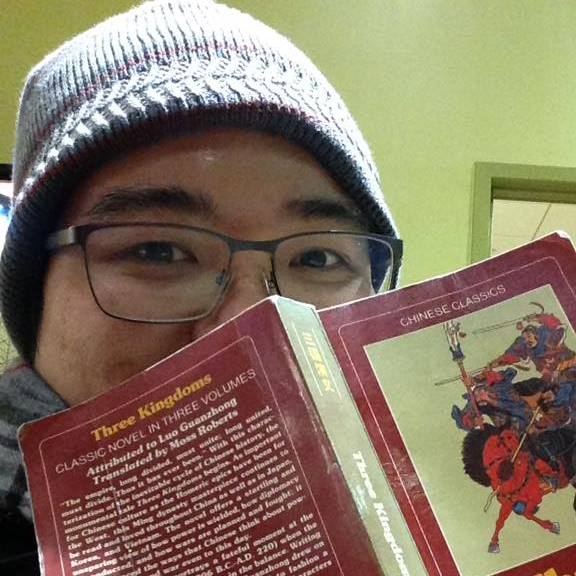
photo by me
A student messaged me about a month ago to tell me that she had read somewhere that I was on a list of Asian American theologians. I thought that couldn’t be right. I have always denied being a theologian — I am a social and cultural geographer who works on the concept of the postsecular and locates that work in everyday lives lived in communities structured by the ‘Pacific Rim’ — so I said she must be wrong. But she was right; she had receipts. It was DJ Chuang’s 2017 post on Asian American theologians. Googling my own name, I’ve found that he also calls my blog ‘#robust.’
I was and remain, I must say, deeply flattered, and the more spiritually honest I’ve become, the more I will admit that I am not above flattery. A wise person in my church told me that as he was training to be a lawyer, he noticed that his opponent in his first case was buttering up the judge, and though it was so obsequious, the honorable whoever just ate it up. He learned a lesson that day, that sometimes you just have to flatter people. I was, as my mother put it to me in Cantonese, so lum, glowing from within because of the flattery. And then I forgot about it. That’s not to say that being flattered was unimportant. It didn’t lead to pride; it led to good vibes. And then, I had stuff to write and food to cook and places to go, and I had a good time doing it all because I was, as Nina Simone once said, feeling good.
Then last week, Dominique Gilliard, a guy that I’ve been meaning to meet who is Director of Racial Righteousness and Reconciliation for the Love Mercy Do Justice (LMDJ) initiative of the Evangelical Covenant Church (ECC) but have not managed to because of my own terrible schedule (let the record show that it was I who flaked on him, and the first bowl of pho is therefore on me), was writing a list of Asian American theologians to someone looking for a recommendation, and he included me. Of all people, I said to myself, not knowing whether I was referencing my inclusion on the list or that the person who included me is the guy I flaked out on.
I commented back that I was so deeply honoured (flattered again), but really, I would love to sit at any table with all the amazing people he named — the list was long, and actually consisted of very serious theologians — and contribute my Where in the World Is Carmen Sandiego geographical trivia to their very serious conversations. Though it was a joke, I was serious; I’ve read enough Freud to know that this is true. It was not, as both Oswald Chambers and John Milbank might have put it, false humility. As someone who is realizing how much I love to be flattered and is rather unrepentant about it, as I am no longer of the John Bunyan school of thought where the Flatterer is always masquerading as an angel of light. I am not a Puritan. I give off, as one famous journalist later recounted to me about the experience of researching me to see whether he should interview me for his show, the affect of excessive narcissism. Then he said he interviewed me and thought I was awesome. I was flattered, lum even.
The problem is that I am realizing that people really do see me as an Asian American theologian. This is funny to me because I do not really publish in theology, nor do I teach theology, nor do I really do anything that most other professional theologians do, besides attending the American Academy of Religion every year, which is a religious studies conference. Theology and religious studies, of course, are not as separate as most people think, certainly not if you are into social justice, as some of the more recent articles in the Journal of the American Academy of Religion have been pointing out. In fact, Lucia Helsether argues that some of the division is born of a white reticence to get involved in the theological work of racial justice.
But I am also not above maintaining appearances, not in the fake it till you make it sense, but more like the story that Slavoj Žižek tells about Niels Bohr having a horseshoe in his laboratory for good luck: I don’t believe in it, but I hear that even if you don’t believe in it, it still works. My reference here to going through the motions is not to theology. It is more about the semblance of division between theology and religious studies. Someone once said to me that he thought that because this line doesn’t actually exist, it should be policed. But I became Eastern Catholic because of the Umbrella Movement. Police brutality is against my politics.
I am, in other words, not faking being a theologian till I make it in theology. If anything, the fakery in me is to deny the postsecular implications of the work on the secular in which I have been steeping. The first two books I read when I entered my doctorate in geography were Theology and Social Theory and A Secular Age. Actually, just kidding, it was The Brothers Karamazov, which I noted in my margin notes was a spectacular affirmation of the resurrection in the practice of everyday life, and this is before I became Orthodox and began to understand the liturgical significance of the ending scene when Alyosha says, Memory eternal, with the boys he’s been hanging out with to their recently reposed friend. In any case, I was encouraged to think about the way that social science and theology were related tasks, mostly because all of the founders of the social sciences made reference to religious phenomena, and in many ways, my dissertation on Cantonese-speaking Protestants was really about this more theoretical phenomenon. Years later, I am still writing about them, and as it turns out recently, that means that I’m still writing about social science as ‘grounded theologies’ too.
Grounded theologies used to be my cop-out. I used to tell my colleagues and students that I do not do theology; what I am actually interested in is how other people ground their theologies in space. This explanation worked for the people who did not call my bluff; my brother Sam Rocha, however, seldom takes these sorts of hints that I giving voice to my own more-than-unconscious repression and challenged me, a bit like that student who took me to task on Eastern Christianities, who also incidentally wrote a very compelling (and frankly convincing) paper in another class of mine telling me that what I called theologies were actually ideologies. Sam said the same thing. I said that he didn’t understand what I was trying to do. He asked me what ideologies were, then. I mumbled some garbled working definition about them being abstract ideas to which one gives allegiance. He told me to get a theory of ideology. I told him that I was too busy trying to get published. He pointed out that all my papers were getting rejected. I asked him which smartypants I should read. He said, in all caps, ŽIŽEK. I said that that man was a joke. He told me to read the heavy-hitting books, then, especially The Ticklish Subject. I watched The Pervert’s Guide to Cinema instead.
Within two weeks, I was hooked. I wrote back to Sam to thank him, to tell him that Žižek was exactly right. He told me to get a life, that no one is ever exactly right. In this way, that student who called me on Eastern Christianities as well as the distinction between the ideological and the theological was doubly vindicated: by the end of that year, as I came to the end of a two-year postdoctoral fellowship with nothing but my intellectual delusions made plain to show for it, I was a catechumen in an Eastern Catholic church, as well as an voracious reader of Žižek trying to figure out what ‘ideology’ meant and why on earth he needed psychoanalysis to explain it. She and I have been given to joking that she will one day become my spiritual director, as whenever we get into a fight about the knots in my intellect, she always wins.
Anna Freud reminds us that repression is but one of the defense mechanisms, so I have done some soul-searching as to what I was defending against by repressing my theological side. After all, the defensiveness manifested in a number of ways, including in me blogging anonymously as the character Chinglican at Table so that I could have plausible deniability, not about anything that I said, but that I was an active participant in the doing of a theology that sought to make sense of my prayer life in the messy contours of the Anglican Communion and its realignments as a Chinese American with familial colonial baggage. I’m so pleased that when I joined Patheos after I became Eastern Catholic, they told me that my previous posts would have to be imported onto this blog, which means that if you want to know how Chinglican wrote, you have to look no further than the previous posts here, especially the piece on ‘Anne Hathaway Anglicanism‘ that my friends refer to as the best thing on the Internet. Flattery, yet again.
For all of my switching ecclesial and ideological sides over the last few years, my own review of what I’ve been doing has yielded a strange consistency. If I am to be honest with my work, it’s that I am always trying to look from the perspective of a colonized community, usually by some act of what Edward Said called orientalism, at the way that the structures of the world have contributed to their colonization. It helps that one of the first books I read when I started graduate school was The Sociological Imagination, by C. Wright Mills, though I did not know how important that text was or why this Mills was different from John Stuart. The reason I read it was because I kept encountering in geographical texts this term geographical imaginations, and wanting to operationalize it, I went to the Dictionary of Human Geography and found the entry by Derek Gregory, who had written a book by precisely the name of Geographical Imaginations. He said that he got the idea from two sources: Said’s ‘imaginative geographies’ from Orientalism and Mills’s sociological imagination.
I did not comprehend the significance of this sourcing until much later when I began teaching Asian American studies and came across the historian Gary Okihiro’s Third World Studies. There, he also cites Mills and Said to outline his research agenda, that the task of ‘Third World Studies,’ of which is what Asian American studies is a part because of its historical origins in the Third World Liberation Front strikes in the 1960s, is to analyze power in what a number of critical social scientists call the social formation, the infrastructure of apparatuses that includes politics, economies, civil societies, religious organizations, educational institutions, legal systems, voluntary associations, and so on and so forth. The task of education in Asian American studies, which is what liberating education is supposed to be writ large (especially in Paulo Freire’s sense in Pedagogy of the Oppressed), is to look at the social formation from the perspective of orientalized communities, to become conscious of a colonized sociological imagination in order to develop a liberating imaginative geography by which everyday persons take on what Henri Lefebvre calls the right to the city, the agency to shape the commons in which they live, for their own communities.
In many senses, this task of Asian American studies is one of ideological analysis and critique, but Okihiro, like Freire and Said and Žižek and others, moves further. He says that when you do your intellectual work this way, what happens is a kind of groundedness with the land, one that has been best described by indigenous and womanist intellectuals. The irony of looking up at the social formation together is that it grounds you on the earth, among the people whose relationship with you can only be described as love and communion. That impulse, a number of scholars have shown, is spiritual, and in a more than metaphorical sense, because it includes the agency of gods and spirits, heroes and ghosts. It is, in a word, theological.
The task of theology, in other words, comes from being grounded in what I am doing among the people with whom I am reflecting together on rather secular structures. Theology describes the spirits that roam in our midst, the materiality that is the stuff of everyday life being mysteriously constituted by the supernatural such that it can never be described, as Henri de Lubac SJ once put it, as pura natura. In my Christian tradition, it is in the doing of the liturgy together that we discover that Christ is among us, that as Bonhoeffer puts it in his earliest work, the church-community turns out to be the Christ-community, the very Lord who is in our midst living in the world. Unable to escape the orientalizing formations that have demanded my assimilation and rendered me as a psychic ‘other,’ the theological reflections that I write are inescapably Asian American, in the sense of joining in solidarity with everyone who has been impacted by orientalism — which turns out literally to be everyone in the modern world — to contest its dehumanization and its ecological devastations.
Flattery has elicited this reflection, which is why I’m not shy to say that I am flattered to have been named an Asian American theologian among such a great cloud of witnesses. But the point is also that if I can be an Asian American theologian, so can you, and so can we, and so must we all, in a world that is so laced with the fantasies of orientalism that they muddy the waters when we try to speak of the spirits that are real because they are constitutive of the stuff of our life, the waters, the land, the wood, the food, and everything else.
Journal of the American Academy of Religion
Previous Post
April 28, 2019
The meat of Pascha: theological commentary on the resurrection
Next Post

May 11, 2019 Patriyarkhat: 'Attending to the movements of my heart'
Browse Our Archives
Select a Category Academia Anglican Communion anti-racism Aristotle Asia-Pacific Asian American Asian Canadian BlackLivesMatter Cantonese Catholic China Chinglican church politics Church-State Politics Civil Society Conservative Eastern Christianity Evangelical Evangelical Left Feminist/Womanist Theology Food Greek-Catholic Church of Kyiv Hong Kong Housekeeping Kyivan Church Latin Catholicism Law Liberal Liberation Theology New Calvinism Pentecostal/Charismatic Protestant Psychoanalysis Publics Religion Ethnicity Wired Secular Sovereignty TPCIU Uncategorized
Select a Month July 2019 June 2019 May 2019 April 2019 March 2019 February 2019 January 2019 December 2018 November 2018 October 2018 September 2018 August 2018 July 2018 June 2018 May 2018 March 2018 February 2018 January 2018 December 2017 November 2017 October 2017 September 2017 August 2017 July 2017 June 2017 April 2017 March 2017 February 2017 January 2017 December 2016 November 2016 October 2016 September 2016 August 2016 July 2016 January 2016 December 2015 November 2015 October 2015 August 2015 April 2015 March 2015 February 2015 December 2014 November 2014 September 2014 August 2014 July 2014 June 2014 May 2014 April 2014 March 2014 December 2013 November 2013 October 2013 September 2013 August 2013 July 2013 June 2013 May 2013 April 2013 March 2013 February 2013 January 2013 December 2012 October 2012 June 2012 May 2012 April 2012 February 2012 January 2012
Follow Us!
TAKE THE
Religious Wisdom Quiz
What book contains the shortest chapter in the Bible?
Select your answer to see how you score.
Obadiah Haggai Psalms Proverbs
Related posts from Eastern Catholic Person

I've found my way home: on the unraveling...

The Bay Area of the nineties is where...

This time, I have a tradition: on solidarity...

Home is where your food is: a speech...
TRENDING AT PATHEOS Catholic

Rejecting Doom: Christian Hope And Human Action
Christianity is a religion of hope. We are to have hope and...

It’s What Comes From Within Which Matters
One of the most difficult things for us to understand is why...

Why I Choose the Eucharist Over the Sermon
Choose the Eucharist, Not the Sermon What are we supposed to get...

5 Design Elements Found in Spiritually Rooted Homes
Putting Spirituality Into Home Decor Our homes are more than our living...

Credo: A Story of God Told with the...
About 10 years ago, I began to imagine a personal "Credo" that...

The Anatomy of Divine Revelation in Catholic Thought
The claim that God has made Himself known to human beings is...
view all Catholic blogs
Ad-Free & Subscriber Log-In Subscription Support
- About Us
- 2026 Calendar
- Videos
- Podcasts
- Library of World Religions
- Faith In Media Tracker
- Advertise With Us
- Write for Us
- Privacy Policy
- Terms of Service
- Do Not Sell My Data
- Contact Us
- Radiant Digital
- Manage Newsletter Subscriptions
- Unsubscribe From Notifications
- Sitemap
Copyright 2008-2026, Patheos. All rights reserved.
Subscription Support Ad-Free & Subscriber Log-In
Follow Patheos