
BuddhistCatholicContemplativeEvangelicalGeneral ChristianHinduJewishLatter-day SaintMuslimNew VisionsProgressive Christian
Beliefs
- Buddhist
- Catholic
- Contemplative
- Evangelical
- General Christian
- Hindu
- Jewish
- Latter-day Saint
- More Voices
- Muslim
- New Visions
- Pagan
- Progressive Christian
Topics
- Religion News
- Food and Religion
- Sports and Religion
- Religious Art
- Religious Music and Entertainment
- Religious Events
- History and Religion
- Style and Religion
- Politics and Religion
- Women in Religion
- Recreation Outdoors and Religion
- Business Finance and Religion
- Careers Workplace and Religion
- Education and Religion
- Family Parenting and Religion
- Health Fitness and Religion
- Home and Religion
- Relationships and Religion
- Technology and Religion
- Travel and Religion
Columnists
- Buddhist Columnists
- Business Finance and Religion Columnists
- Careers Workplace and Religion Columnists
- Catholic Columnists
- Contemplative Columnists
- Education and Religion Columnists
- Evangelists Columnists
- Family Parenting and Religion Columnists
- General Christian Columnists
- Health Fitness and Religion Columnists
- Hindu Columnists
- History and Religion Columnists
- Home and Religion Columnists
- Jewish Columnists
- More Voices Columnists
- Latter Day Columnists
- Muslim Columnists
- New Visions Columnists
- Nonreligious Columnists
- Pagan Columnists
- Politics and Religion Columnists
- Progressive Columnists
- Recreation Outdoors and Religion Columnists
- Relationships and Religion Columnists
- Religion News Columnists
- Religious Art Columnists
- Religious Events Columnists
- Religious Music and Entertainment Columnists
- Sports and Religion Columnists
- Style and Religion Columnists
- Technology and Religion Columnists
- Travel and Religion Columnists
- Women in Religion Columnists
Resource Library
- 2026 Calendar
- Library of World Religions
- The 100 Most Holy Places on Earth
- Patheos Answers
- Podcasts
- Videos
- Faith Leaders Database
- Anglican Episcopalian
- Bahai
- Baptist
- Buddhism
- Christianity
- Confucianism
- Eastern Orthodoxy
- Hinduism
- Holiness and Pentecostal
- ISKCON
- Islam
- Judaism
- Lutheran
- Methodist
- The Church of Jesus Christ of Latter-day Saints
- New Age
- Paganism
- Presbytarian and Reformed
- Protestantism
- Religion Behind the Scenes
- Roman Catholic
- Scientology
- Shia Islam
- Sikhism
- Sufism
- Sunni Islam
- Taoism
- Zen
- See all religions
Research Tools
 Ad-Free & Subscriber Log-In Subscription Support
Follow Patheos 

- Trending:
- Advent
- |
- Forgiveness
- |
- Thanksgiving
- |
- Election
- |
- Seasonal Holidays
- |
- Marriage
 Eastern Catholic Person
- Home
- Catholic
- Social justice symphonia: on Holodomor for the Feast of St Josaphat of Polotsk
Social justice symphonia: on Holodomor for the Feast of St Josaphat of Polotsk
Last updated on: November 25, 2018 at 6:30 am by Justin Tse
Social justice symphonia: on Holodomor for the Feast of St Josaphat of Polotsk 2018-11-24T18:30:46-07:00 Justin Tse
Patheos Explore the world's faith through different perspectives on religion and spirituality! Patheos has the views of the prevalent religions and spiritualities of the world.
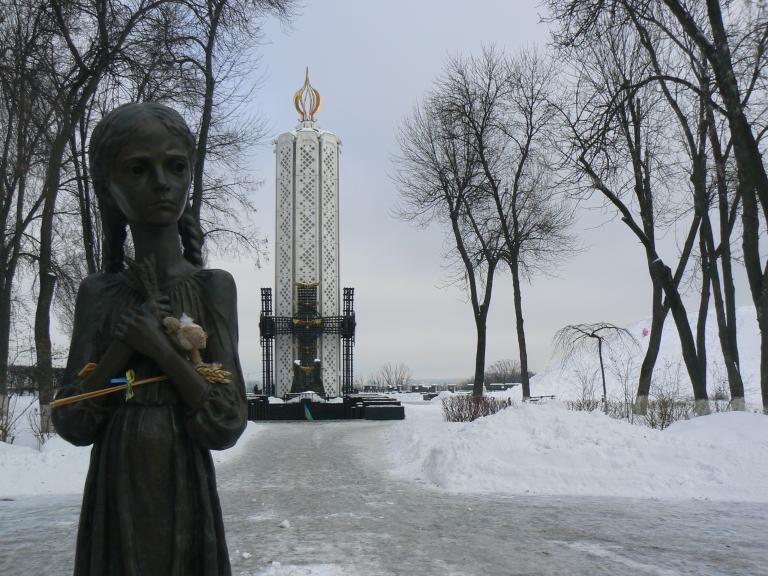
“The Memory Candle” monument to the victims of Holodomor, Kyiv – by Jarosław Góralczyk, 12 February 2017, 13:06:16 (CC BY-SA 4.0 [https://creativecommons.org/licenses/by-sa/4.0/deed.en]), via Wikimedia Commons
By Orthodox standards, the saint of the Kyivan Church, the Holy Hieromartyr Josaphat (Kuntsevych) of Polotsk, is a controversial one. No matter how much it has been shown that Holy Josaphat was Orthodox in his practice of the liturgy, his association with the Union of Brest, for which he was killed by an angry mob, forever paints him as an agent of uniatism. The Orthodox accuse him of ordering the burning of churches, and while accusation may be more akin to confession in this case, reasonable folks in and out of communion with Rome can probably agree that it was most likely the case that nobody’s hands were clean.
The more fundamental accusation against Holy Josaphat, however, is that he was someone who represented a top-down power imposing uniatism on ordinary folks who didn’t want it, and it is this charge, I feel, that makes it particularly interesting this year that the eve of the feast coincides with the commemoration of the anniversary of the Holodomor, the famine made by human hands in Ukraine in 1932 and 1933. As tied to the figure of Holy Josaphat the Kyivan Church’s spirituality may be, it is also laced with the memory of Stalin taking away the grain of Ukrainian peasants, charging them with being an invented class of kulak peasant landowners, and using the artificial famine to collectivize their farms. Remembering another Stalinist event – the Pseudo-Sobor of Lviv in 1946 that was also instigated by the Man of Steel – our Patriarch recently informed the Bishop of Rome that the greatest act of uniatism was perpetrated by the Soviet Union in forcibly re-uniting Greek Catholics with the Moscow Patriarchate. From our experiences of the Holodomor and the Pseudo-Sobor of Lviv, we are against such impositions from above. Indeed, a proper understanding of what happened on the Maidan in 2013 and 2014 is that Kyivan Church achieved a deeper understanding of her consciousness in the sense that the symphonia of the church does not lie with empire, but with the people themselves. As Patriarch Sviatoslav quoted Pope Francis at the time, the shepherds must smell like the sheep.
That this bottom-up symphonia was achieved by a process of conscientization suggests that it has taken some time for even us in the Kyivan Church to realize that ecclesial coordination with empire can be lethal. A Protestant friend of mine recently accused me of being in a Constantinian church, anti-Constantinianism being all the rage among some young Protestants usually because they’ve read a book or two by Stanley Hauerwas and ignore the fact that John Howard Yoder was a rapist, and I responded that I understand this charge very well. The problem is that empire and nation haven’t worked out well for us either, and when we’ve been on the wrong side of the fence (such as during the Holodomor), people in our church have been murdered for it. We understand the problems of imperialism and nationalism in the church because we have firsthand experience of it instead of pretending that our church is free of them. From such suffering is our social justice consciousness born.
Holodomor is ground zero of that suffering. Worse than the gaslighting that befalls Greek Catholics about Holy Josaphat being a proto-Nazi in Orthodox polemics, the terror of the famine made with hands endures because we are gaslit by both the Left and the Right about what happened at the time. The scholar who coined the term genocide, Raphael Lemkin, names the Holodomor as a Soviet genocide of Ukrainians. That doesn’t stop some from saying that the killing of ‘kulaks’ was ideologically justified, or that Russia somehow has a mysterious right to override the borders of Ukraine in an attempt to establish a ‘Russian World.’ Fr Myron Panchuk was right when he drew out the implications of acknowledging the Holodomor as genocide at a concert in Chicago commemorating the event earlier this year. We must link arms, he told the mostly Ukrainian audience, with Armenians, Palestinians, Jews, Uyghurs, indigenous peoples, and others to denounce the killing of peoples to establish ideological systems. Our symphonia with the people has a clear political implication: we are against genocide of all forms.
What could this insight possibly mean, then, on this Feast of Holy Josaphat of Polotsk? Perhaps I can tell a story. A few months back, we received a brother of ours, Paul-san, from the Latin Church into our Kyivan Church in Richmond. Being in full communion with the Latin Church, the form of reception was ascription, which means that with the Latin and Kyivan bishops agreeing, Paul-san was simply taken in by signing a piece of paper. But for Paul-san, the journey to that moment was a spiritual one, and wanting to acknowledge it, we wanted to give him a liturgical experience. The solution, we discerned, was to offer a moleben to Holy Josaphat of Polotsk, acknowledging our ecumenical union with our sister church while doubling down on our Orthodoxy. At the end of the service, Paul-san then shared what the moment meant to him. He testified that as a Catholic theologian, one of the major emphases of his work was to explore what it meant that Japan after the Pacific War renounced warfare as a means of settling disputes among nations. Like other national empires, the imperial expansion that Japanese fascists had embarked upon in the first half of the twentieth century was framed as liberation, but was genocidal to the core, killing off those who appeared as colonizers and their collaborators.
Is not this pseudo-liberatory genocide, I reflect, the same logic that went behind the murder of Holy Josaphat and the starvation of the ‘kulaks’ in the Holodomor? The church’s symphonia with the people is precisely positioned against such a genocidal orientation. It is to make sure that the people are not manipulated by imperial systems to do their killing for them. Instead of perpetuating a cycle of populist vengeance, the place of the church among the people is to foster a culture of ecumenism, of attentiveness to the oikoumēnē, the common inhabitation that we have on the earth and the ecological justice we must enact if we are to survive together on it. The coincidence of the memory of the Holodomor and the Feast of Holy Josaphat of Polotsk should therefore not be taken as a spiritual accident. It is instead a moment when we in the Kyivan Church might ask for the patronage of the Holy Hieromartyr Josaphat for the works of social justice that we will perform on this earth, bringing together the peoples of the world in a fuller consciousness of how to live together in these commons that we know to be undergirded by the supernatural power of love.

Next Post
November 25, 2018 From the Stepenni Hymns this morning, for such dangerous times as these
Browse Our Archives
Select a Category Academia Anglican Communion anti-racism Aristotle Asia-Pacific Asian American Asian Canadian BlackLivesMatter Cantonese Catholic China Chinglican church politics Church-State Politics Civil Society Conservative Eastern Christianity Evangelical Evangelical Left Feminist/Womanist Theology Food Greek-Catholic Church of Kyiv Hong Kong Housekeeping Kyivan Church Latin Catholicism Law Liberal Liberation Theology New Calvinism Pentecostal/Charismatic Protestant Psychoanalysis Publics Religion Ethnicity Wired Secular Sovereignty TPCIU Uncategorized
Select a Month July 2019 June 2019 May 2019 April 2019 March 2019 February 2019 January 2019 December 2018 November 2018 October 2018 September 2018 August 2018 July 2018 June 2018 May 2018 March 2018 February 2018 January 2018 December 2017 November 2017 October 2017 September 2017 August 2017 July 2017 June 2017 April 2017 March 2017 February 2017 January 2017 December 2016 November 2016 October 2016 September 2016 August 2016 July 2016 January 2016 December 2015 November 2015 October 2015 August 2015 April 2015 March 2015 February 2015 December 2014 November 2014 September 2014 August 2014 July 2014 June 2014 May 2014 April 2014 March 2014 December 2013 November 2013 October 2013 September 2013 August 2013 July 2013 June 2013 May 2013 April 2013 March 2013 February 2013 January 2013 December 2012 October 2012 June 2012 May 2012 April 2012 February 2012 January 2012
Follow Us!
TAKE THE
Religious Wisdom Quiz
Who parted the Red Sea?
Select your answer to see how you score.
God Joshua Moses Aaron
Related posts from Eastern Catholic Person

I've found my way home: on the unraveling...
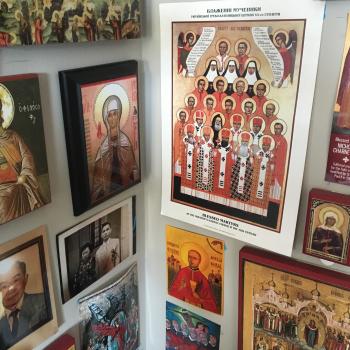
The enthronement of Metropolitan Borys before the New-Martyrs
Patriyarkhat: 'Attending to the movements of my heart'
I'm flattered to be named an Asian American...
TRENDING AT PATHEOS Catholic

Bad Survey Questions Distort Eucharistic Theology
It seems to be the newest thing: someone conducts a bad survey...

If Baptism Washes Away Sin, Why Do Catholics...
The seven sacraments stand as the foundation of Catholic ecclesial life. The...

Far from promoting indifference, inaction, or quietism, Paul consistently tells us to...

The Power of Setting a Good Example
Remember last August when the Chicago White Sox hosted a "Pope Hat...

A Catholic Critique of Biblical Unitarianism
If the statistics are to be believed, Unitarianism is rising worldwide. Although...

How Grandma Tourism Helps Grandparents Live Their Vocation
Grandma, The New Travel Influencer What started as a nostalgia-inspired social media...
view all Catholic blogs
Ad-Free & Subscriber Log-In Subscription Support
- About Us
- 2026 Calendar
- Videos
- Podcasts
- Library of World Religions
- Faith In Media Tracker
- Advertise With Us
- Write for Us
- Privacy Policy
- Terms of Service
- Do Not Sell My Data
- Contact Us
- Radiant Digital
- Manage Newsletter Subscriptions
- Unsubscribe From Notifications
- Sitemap
Copyright 2008-2026, Patheos, part of the Radiant Digital network of media brands. All rights reserved.
Subscription Support Ad-Free & Subscriber Log-In
Follow Patheos