
BuddhistCatholicContemplativeEvangelicalGeneral ChristianHinduJewishLatter-day SaintMuslimNew VisionsProgressive Christian
Beliefs
- Buddhist
- Catholic
- Contemplative
- Evangelical
- General Christian
- Hindu
- Jewish
- Latter-day Saint
- More Voices
- Muslim
- New Visions
- Pagan
- Progressive Christian
Topics
- Religion News
- Food and Religion
- Sports and Religion
- Religious Art
- Religious Music and Entertainment
- Religious Events
- History and Religion
- Style and Religion
- Politics and Religion
- Women in Religion
- Recreation Outdoors and Religion
- Business Finance and Religion
- Careers Workplace and Religion
- Education and Religion
- Family Parenting and Religion
- Health Fitness and Religion
- Home and Religion
- Relationships and Religion
- Technology and Religion
- Travel and Religion
Columnists
- Buddhist Columnists
- Business Finance and Religion Columnists
- Careers Workplace and Religion Columnists
- Catholic Columnists
- Contemplative Columnists
- Education and Religion Columnists
- Evangelists Columnists
- Family Parenting and Religion Columnists
- General Christian Columnists
- Health Fitness and Religion Columnists
- Hindu Columnists
- History and Religion Columnists
- Home and Religion Columnists
- Jewish Columnists
- More Voices Columnists
- Latter Day Columnists
- Muslim Columnists
- New Visions Columnists
- Nonreligious Columnists
- Pagan Columnists
- Politics and Religion Columnists
- Progressive Columnists
- Recreation Outdoors and Religion Columnists
- Relationships and Religion Columnists
- Religion News Columnists
- Religious Art Columnists
- Religious Events Columnists
- Religious Music and Entertainment Columnists
- Sports and Religion Columnists
- Style and Religion Columnists
- Technology and Religion Columnists
- Travel and Religion Columnists
- Women in Religion Columnists
Resource Library
- 2026 Calendar
- Library of World Religions
- The 100 Most Holy Places on Earth
- Patheos Answers
- Podcasts
- Videos
- Faith Leaders Database
- Anglican Episcopalian
- Bahai
- Baptist
- Buddhism
- Christianity
- Confucianism
- Eastern Orthodoxy
- Hinduism
- Holiness and Pentecostal
- ISKCON
- Islam
- Judaism
- Lutheran
- Methodist
- The Church of Jesus Christ of Latter-day Saints
- New Age
- Paganism
- Presbytarian and Reformed
- Protestantism
- Religion Behind the Scenes
- Roman Catholic
- Scientology
- Shia Islam
- Sikhism
- Sufism
- Sunni Islam
- Taoism
- Zen
- See all religions
Research Tools
 Ad-Free & Subscriber Log-In Subscription Support
Ad-Free & Subscriber Log-In Subscription Support
Follow Patheos 

- Trending:
- Forgiveness
- |
- Marriage
- |
- Consciousness
- |
- Death Penalty
- |
- Election
- |
- Halloween
 Eastern Catholic Person
- Home
- Catholic
- Crossing the rooms of the intellect
Crossing the rooms of the intellect
Last updated on: September 26, 2018 at 4:08 pm by Justin Tse
Crossing the rooms of the intellect 2018-09-26T16:08:16-07:00 Justin Tse
Patheos Explore the world's faith through different perspectives on religion and spirituality! Patheos has the views of the prevalent religions and spiritualities of the world.
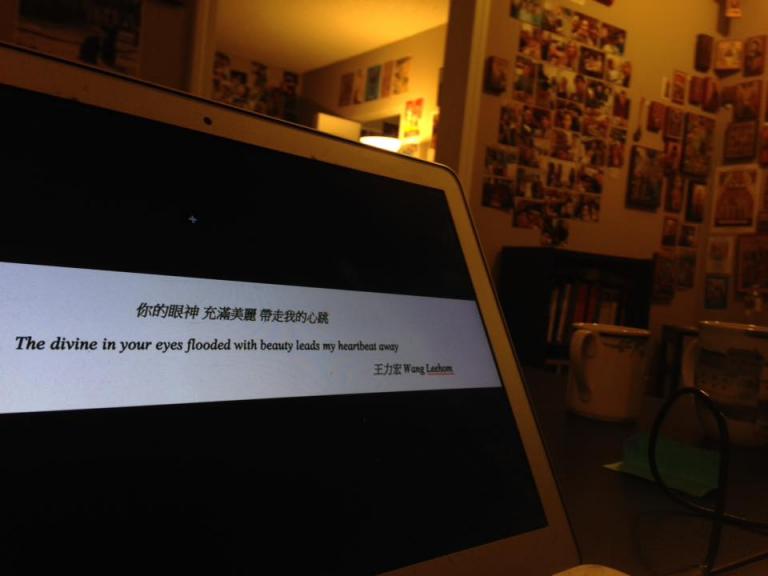
my apartment – photo by me
Once upon a time, the Jesuit scholar Matteo Ricci impressed the Ming imperial court with his brilliant memory. His tricks are, of course, no longer just the stuff of legend, but also the stuff of contemporary television drama. Benedict Cumberbatch’s Sherlock doesn’t only deduce who your lover is like Arthur Conan Doyle’s nineteenth-century hero. He has a memory palace where he remembers them, and he fights baddies who also have them and use that information for blackmail.
I have a friend who tells me that my apartment is structured ‘like the inside of someone’s brain.’ I like that, as part of a long-term project that I am working on in my scholarship is a kind of psychoanalytic reading of publics. My friend’s comment was made in relation to all the photos, icons, movie posters and stills, notes, books, and other random things than line the walls of my residence. I thought of this as I got to the end of the Prayers Before Sleep in my Orthodox prayer book and walked around the apartment with my hand cross, blessing it nightly beginning with the four corners of the bed, with words drawn from the Psalm verses used in the Paschal stichera:
Let God arise and let His enemies be scattered, and let them that hate Him flee from before His face. As smoke vanisheth, so let them vanish; as wax melteth before the fire , so let the demons perish from the presence of them that love God and who sign themselves with the sign of the Cross and say in gladness: Rejoice, most venerable and life-giving Cross of the Lord, for Thou drivest away the demons by the power of our Lord Jesus Christ Who was crucified on thee, Who went down to hades and trampled on the power of the devil, and gave us thee, His venerable Cross, for the driving away of every adversary. O most venerable and life-giving Cross of the Lord, help me together with the holy Lady Virgin Theotokos, and with all the saints, unto the ages. Amen.
It occurred to me if my apartment is arranged like the chambers of my brain, going through it with my hand-cross nightly – and then doing it officially when I get my house blessed after Theophany – then it is like an integration of my mental palace and my external residence. This is an especially poignant thought as today is the Forefeast of the Exaltation of the Cross on the Old Calendar, on which our mission worships in the Chicago Eparchy. Of course, the Greek-Catholic Eparchy of Chicago has been famous throughout our global Kyivan Church for our fights about the calendar, so this may give a clue as to who I hang out with in the Eparchy. My only warning to those making assumptions about who constitutes the Kyivan Psychoanalysis Study Group based on this statement is that the networks that filter through our midst are rather promiscuous.
I too have a memory palace, and I would wager that most people also do. The question, I think, is whether it is well-managed – or to put it in Byzantine terms, whether its economia is organized or left to disarray. In the context of today’s entry into this festal-fasting season of the Holy Cross, a wise priest informed me that it is through prayer that some of what he called the debris of the mind can be put back into its place, or even discarded.
It is the cross, I submit, by which this economia is managed. So much of what is known to be management is of a kind of post-political variety, a kind that substitutes policy for politics. But it need not be this way. Through the cross, my mirrors are broken. The problem with management without the cross is that I become overwhelmed by all the realities I have to manage, even the fictional ones. The cross shatters what our prayers call the nocturnal phantasies, such that they are revealed as irrelevant to the tasks I have at hand. Ave crux, spes unica was the motto of the Congregation of Holy Cross, the Latin order in whose tradition my high school educated me – Hail the Cross, our only hope. It is as the Protestant theologian Jürgen Moltmann insightfully puts it in his classic Theology of Hope, with surprisingly Catholic and even Orthodox themes:
In the Middle Ages, Anselm of Canterbury set up what has since been the standard basic principle of theology: fides quaerens intellectum – credo, ut intelligam. This principle holds also for eschatology, and it could well be that it is of decisive importance for Christian theology today to follow the basic principle: spes quaerens intellectum – spero, ut intelligam. If it is hope that maintains and upholds faith and keeps it moving on, if it is hope that draws the believer into the life of love, then it will also be hope that is the mobilizing and driving force of faith’s thinking, of its knowledge of, and reflections on, human nature, history and society. (Theology of Hope, p. 33).
I scribbled in the margins as I was reading this passage recently that the only Protestant thing about Moltmann is that he seems to think that he’s original. But originality is not the work of theology. What we do is to encounter the living G-d, revealed to us in the Son of Man lifted up upon the wood of the cross, and in this, the fantasies of the demons are negated – stripped of their power, as the Holy Apostle Paul writes to the Church of Colossae. The true meaning, then, of knowing only Jesus Christ and him crucified is that the hope we have is not false. Instead, it has negated falsehood and opened the way to the truth.
The economia of my mind and of my residence is therefore organized in the same way: subjected to the wood of the cross that is exalted over it. By the cross, its fantasy-structures are revealed, transferences exposed, and the truth of my relations revealed. The organizational principle here is to invest my heart into what is actually real, to peel back the layers of secular ideology and to plumb the depths of the supernatural by which the world is truly constituted.
As I came back to my apartment, I had to finish an overdue essay for a publication into which I have been pouring my heart. A closer reading of my recent posts will reveal that I have been thinking about it in the background, and when it is published, I am sure that some of the source material will be seen to have been available here all along. I will not give away its content before it comes out, but I will say that it does concern the musings on the heart that I provided about Chinese Christianity after my friend Faith was received into the Greek-Catholic Church a few weeks ago. As I thought about it, I considered that the perfect epigraph comes from the chorus of the Taiwanese pop star Lee Hom in his song ‘Heartbeat,’ 心跳.
The Chinese of the first line of ‘Heartbeat’ is in Mandarin: 你的眼神 充滿美麗 帶走我的心跳 (ni de yanshen chongman meili daizou wo de xintiao). I struggled to translate it, as the essence of it simply comes out to, Your eyes filled with beauty take my heartbeat away. English is such a boring language, I reflected, and I sought to provide a more awkward and wooden translation to capture the imagery of the Chinese. My first try, displayed in the picture I have provided, was, The divine in your eyes flooded with beauty leads my heartbeat away, with divine in the modern sense of divinity and the older English meaning of being able to discern. A dear friend wrote to criticize me, saying that 眼神 (yanshen) is a colloquialism that really just refers to the expression and essence of the eyes. Of course I know that; this is everyday Chinese language in both Mandarin and Cantonese, and I use it daily. When I submitted the piece, the translation was the spirit of your eyes, with spirit connoting both ‘expression’ and the English sense of faerie too.
Lee Hom, it should be said, is a Christian, probably in a Protestant tradition. The song he has here is not addressed to God, but to a woman he loves – in fact, one with whom he has had a recent series of intimate fights and is begging her to remember how and why they first fell in love. As I mused on the negation of the cross and the importance of holding it over the economia of my mind and of my residence, it also struck me that these words seek to align the heart with the real, instead of the interfering fantasies that get Lee Hom into fights with his beloved. At this intimate level, the importance of crossing the mind with the True Cross is revealed. It is because without such negation, the mind will never be aligned with the heart, and without the stillness that this alignment brings, one will not only be unchaste, but one may as well kiss organization goodbye. What is at stake in discerning the real is nothing short of heart speaking to heart, as opposed to heart consumed by the fictions of fantasy. The economia of the memory palace, it turns out, is not just an impressive trick for expanding the capacity of the intellect. It is to cultivate personal relationships in which contact is actually made with the person and not a figment of the imagination.

Next Post

September 28, 2018 The fourth anniversary of the Umbrella Movement
Browse Our Archives
Select a Category Academia Anglican Communion anti-racism Aristotle Asia-Pacific Asian American Asian Canadian BlackLivesMatter Cantonese Catholic China Chinglican church politics Church-State Politics Civil Society Conservative Eastern Christianity Evangelical Evangelical Left Feminist/Womanist Theology Food Greek-Catholic Church of Kyiv Hong Kong Housekeeping Kyivan Church Latin Catholicism Law Liberal Liberation Theology New Calvinism Pentecostal/Charismatic Protestant Psychoanalysis Publics Religion Ethnicity Wired Secular Sovereignty TPCIU Uncategorized
Select a Month July 2019 June 2019 May 2019 April 2019 March 2019 February 2019 January 2019 December 2018 November 2018 October 2018 September 2018 August 2018 July 2018 June 2018 May 2018 March 2018 February 2018 January 2018 December 2017 November 2017 October 2017 September 2017 August 2017 July 2017 June 2017 April 2017 March 2017 February 2017 January 2017 December 2016 November 2016 October 2016 September 2016 August 2016 July 2016 January 2016 December 2015 November 2015 October 2015 August 2015 April 2015 March 2015 February 2015 December 2014 November 2014 September 2014 August 2014 July 2014 June 2014 May 2014 April 2014 March 2014 December 2013 November 2013 October 2013 September 2013 August 2013 July 2013 June 2013 May 2013 April 2013 March 2013 February 2013 January 2013 December 2012 October 2012 June 2012 May 2012 April 2012 February 2012 January 2012
Follow Us!
TAKE THE
Religious Wisdom Quiz
How many commandments were written on stone tablets?
Select your answer to see how you score.
Seven Twelve Ten Thirteen
Related posts from Eastern Catholic Person

I've found my way home: on the unraveling...
Tiananmen is my first childhood memory: reflections on...

Patriyarkhat: 'Attending to the movements of my heart'

I'm flattered to be named an Asian American...
TRENDING AT PATHEOS Catholic

Creation, Preservation, and Teleology in Catholic Theology
As I write this, it is very early Monday morning. Like millions...

The Parable Of The Sower And The Word...
One of Christ’s most famous parables is that of the sower who...

Rejecting Doom: Christian Hope And Human Action
Christianity is a religion of hope. We are to have hope and...

Why I Choose the Eucharist Over the Sermon
Choose the Eucharist, Not the Sermon What are we supposed to get...

5 Design Elements Found in Spiritually Rooted Homes
Putting Spirituality Into Home Decor Our homes are more than our living...

Credo: A Story of God Told with the...
About 10 years ago, I began to imagine a personal "Credo" that...
view all Catholic blogs
Ad-Free & Subscriber Log-In Subscription Support
- About Us
- 2026 Calendar
- Videos
- Podcasts
- Library of World Religions
- Faith In Media Tracker
- Advertise With Us
- Write for Us
- Privacy Policy
- Terms of Service
- Do Not Sell My Data
- Contact Us
- Radiant Digital
- Manage Newsletter Subscriptions
- Unsubscribe From Notifications
- Sitemap
Copyright 2008-2026, Patheos. All rights reserved.
Subscription Support Ad-Free & Subscriber Log-In
Follow Patheos