
BuddhistCatholicContemplativeEvangelicalGeneral ChristianHinduJewishLatter-day SaintMuslimNew VisionsProgressive Christian
Beliefs
- Buddhist
- Catholic
- Contemplative
- Evangelical
- General Christian
- Hindu
- Jewish
- Latter-day Saint
- More Voices
- Muslim
- New Visions
- Pagan
- Progressive Christian
Topics
- Religion News
- Food and Religion
- Sports and Religion
- Religious Art
- Religious Music and Entertainment
- Religious Events
- History and Religion
- Style and Religion
- Politics and Religion
- Women in Religion
- Recreation Outdoors and Religion
- Business Finance and Religion
- Careers Workplace and Religion
- Education and Religion
- Family Parenting and Religion
- Health Fitness and Religion
- Home and Religion
- Relationships and Religion
- Technology and Religion
- Travel and Religion
Columnists
- Buddhist Columnists
- Business Finance and Religion Columnists
- Careers Workplace and Religion Columnists
- Catholic Columnists
- Contemplative Columnists
- Education and Religion Columnists
- Evangelists Columnists
- Family Parenting and Religion Columnists
- General Christian Columnists
- Health Fitness and Religion Columnists
- Hindu Columnists
- History and Religion Columnists
- Home and Religion Columnists
- Jewish Columnists
- More Voices Columnists
- Latter Day Columnists
- Muslim Columnists
- New Visions Columnists
- Nonreligious Columnists
- Pagan Columnists
- Politics and Religion Columnists
- Progressive Columnists
- Recreation Outdoors and Religion Columnists
- Relationships and Religion Columnists
- Religion News Columnists
- Religious Art Columnists
- Religious Events Columnists
- Religious Music and Entertainment Columnists
- Sports and Religion Columnists
- Style and Religion Columnists
- Technology and Religion Columnists
- Travel and Religion Columnists
- Women in Religion Columnists
Resource Library
- 2026 Calendar
- Library of World Religions
- The 100 Most Holy Places on Earth
- Patheos Answers
- Podcasts
- Videos
- Faith Leaders Database
- Anglican Episcopalian
- Bahai
- Baptist
- Buddhism
- Christianity
- Confucianism
- Eastern Orthodoxy
- Hinduism
- Holiness and Pentecostal
- ISKCON
- Islam
- Judaism
- Lutheran
- Methodist
- The Church of Jesus Christ of Latter-day Saints
- New Age
- Paganism
- Presbytarian and Reformed
- Protestantism
- Religion Behind the Scenes
- Roman Catholic
- Scientology
- Shia Islam
- Sikhism
- Sufism
- Sunni Islam
- Taoism
- Zen
- See all religions
Research Tools
 Ad-Free & Subscriber Log-In Subscription Support
Ad-Free & Subscriber Log-In Subscription Support
Follow Patheos 

- Trending:
- Forgiveness
- |
- Marriage
- |
- Consciousness
- |
- Death Penalty
- |
- Election
- |
- Halloween
 Eastern Catholic Person
- Home
- Catholic
- I study publics
I study publics
Last updated on: August 2, 2018 at 8:57 pm by Justin Tse
I study publics 2018-08-02T20:57:51-07:00 Justin Tse
Patheos Explore the world's faith through different perspectives on religion and spirituality! Patheos has the views of the prevalent religions and spiritualities of the world.
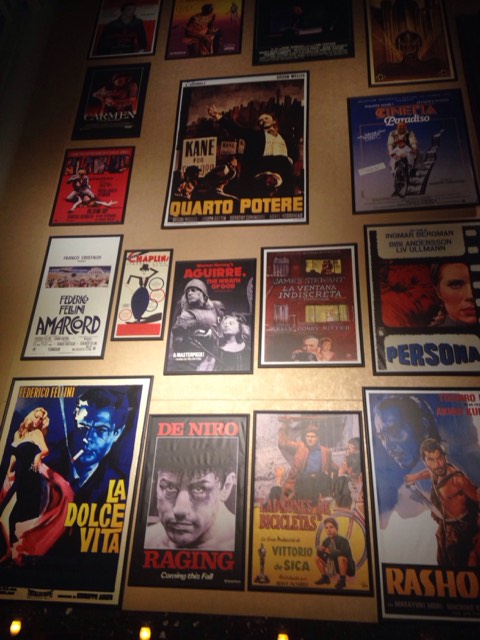
movie posters in my local theater – by me
I remember the first time I solicited advice from a colleague – an equal, not a superego – about how I should describe what I do as an academic. Everybody in the academy has their elevator pitch about what they do, and I was having trouble narrowing mine down.
I am, as I am told, interested in many things. At the time I was in trouble – and this was before the Umbrella Movement, and thus preceding my encounter with Eastern Catholicism – my list included: Chinese people both in the Chinas (and the not-Chinas) and the Americas, conservatisms, liberalisms, radicalisms, the Anglican Communion, Protestant theology, Catholicism, a whiff of Orthodoxy, urban planning, suburbanization, Asian cities, Pacific Rim ideologies, orientalization, religion, the postsecular, and secularization, along with a promiscuous blend of theorists from Habermas to Hauerwas to Arendt to Butler, with Charles Taylor and John Milbank at the helm. Nobody seemed to buy my story that the discipline I was in was geography, the topic I was interested in was religion and secularization, the region I concerned myself with was the Pacific – both sides of it – and the politics I approached it with was Asian American, but not radical enough to be a turnoff (this last formulation was the true mistake). I think most people thought I studied theology, which was not untrue, I’d say at the time, because I studied grounded theologies as a geographer.
With some desperation, I turned to my friend with a proposal: I study publics in the Pacific in a postsecular way. I thought it was a good way to get off the misunderstanding of being thought as a theologian. I could speak to religious studies folks with the word ‘postsecular,’ and I could hint at my respectable interests in examining orientalism to Asian Americanists while being nonchalant while retaining some theological commitments for a broader audience. He dressed me down: I study publics.
I had my doubts at the time about whether this minimalism would work. Strictly speaking, I did not feel trained to study publics. If anything, I had been pegged as a geographer of religion, and I felt that I had read more theology than I had public sphere studies. I tried out this line on several other people, including at conferences and in job applications, and it fell flat each time. They were not my words, I thought. The next year, I told my friend that I’d steal from the opening line of Moby-Dick, a book that I still think encapsulates many of my broad interests and that many scholars of secularization, like John Lardas Modern and Gil Anidjar, agree should be on any list regarding what we do in our line of scholarship. Call me Ishmael, I told my friend. He said that he liked it, but I’ve never used it. It’s corny.
My friend told me that he watched as I went from one shiny theoretical thing to another. In hindsight, I agree. It was like I was the John Kerry of critical theory. First I was for the new materialism because I was introduced to it by theologians and I thought it was like de Lubac’s recovery of the supernatural as constitutive of the natural, and then I was against it because I couldn’t understand Dolce and Gabbana Deleuze and Guattari. I had a flirtation with affect theory, and then I got within a hair of getting royally screwed by one of its practitioners and dramatically renounced it as if it were the occult. I became enamoured by the focus of cultural studies on articulation, and not only did the emphasis on discourse lead to the embodied betrayals of white people pretending to be black or native (like Rachel Dolezal), but also about three hundred of us cultural geographers found ourselves getting chewed out at the annual geography conference right after the death of Stuart Hall by the feminist geographer Doreen Massey for ‘betraying Stuart’s legacy’ by not paying attention to structures and the material of the economy. And then, there was the Umbrella Movement, which forced me to re-evaluate what I discovered to be my liberal moderation, penchant for consensus building, and flirtation with authoritarian efficiency and required me to more seriously consider liberation theology, critical pedagogy, and more radical modes of action aimed at dismantling instead of reforming systems of oppression.
Just as David Harvey notes that capitalist economies tend to move from crisis to manufactured crisis, I moved quickly from seduction to shock in my theoretical experimentations. My friend said that he would be patient, that he would wait for me to come out of my emergency mode of doing things. He also distrusted my move into Eastern Catholicism, liberation theology, and psychoanalysis for the same reasons. When my modus operandi was to run from shiny thing to disappointment in the space of six months maximum per thing, it is understandable that my judgment was not to be trusted. Even publics got relegated to the ash heap. Burning out from writing about what I had called the private consensus – the unspoken agreement among contemporary institutions that things should be done in-house with as little transparency and dialogue as possible – I told him that I was done with doing stuff on the public too.
It is no use pretending that my readers do not know who this friend is. Obviously, he is Sam Rocha, and I have to give that full disclosure because the next thing I glommed onto was his folk phenomenology, the way that ordinary folks encounter the world in personal and erotic ways. Sam told me in the middle of my crisis that eventually I’d get myself back to my doctoral work – the intellectual stuff that had actually formed me instead of the fads in the academic candy store that I was childishly trying out – and how I know that Sam’s work is not a fad is that it got me back to the point at the very beginning of my doctorate when I began to use the work of Michel de Certeau SJ to reconceptualize some previous research on transnational Hong Kong churches in suburban Vancouver. For both Rocha and de Certeau, the focus of study is not so much on the apparatuses of power and canons of learning, but rather on the ways that people in their everyday lives make use of the structures that circumscribe their lives. This was what I was supposed to have done with Cantonese Protestants in my doctoral work, to understand the ways that they conceptualized the civil societies that they lived in so as to make an intervention into their public spheres. The problem, as another colleague (not Rocha) said to me – and her observation has been repeated by a number of colleagues who have read and heard my more recent work at conferences – is that I gave in at some point to the temptation to do top-down scholarship. It was like I had a set of standards of orthodoxy by which my research subjects were judged, and I had betrayed my original commitments.
Slowly, Rocha’s work began to undo my judgmental ivory tower tendencies and to recover the sensibilities of scholarship that I had developed in my doctoral project. My students at Simon Fraser University and at Northwestern will recognize my obsession with de Certeau’s Practice of Everyday Life, as well as my struggle with what they must have seen as my inner demons. One perceptive student commented in office hours that it was like I was sometimes doing battle with imaginary interlocutors in my head. I replied that those were people in the field I was dialoguing with. She told me to teach the material.
The problem is that the demons were crowding out the material. I wanted to be a bottom-up scholar, but my impulses were somehow top-down. I wasn’t sure where that came from. Perhaps, I thought, it was my penchant for academic fads. Or maybe it was that I was doing too much theology. Or maybe it was that I wasn’t intellectually mature enough.
It turns out that it was all three. For me, the theological moment coincided with a turn in geography – and in the humanities and social sciences more generally – toward the postsecular. We had had the interrogation into the private/public binary before, and the triumvirate of race/class/gender as axes of power even before that, and now we were in a hot moment where religion was resurgent as a topic of study. With grounded theologies I had glommed onto that fad, but what I didn’t know was that without losing my evangelicalism – the propensity to inquire into whether the spiritual ontologies I was studying conformed propositionally to a certain standard of orthodoxy – my scholarship basically was not so much descriptive about the Cantonese Protestants I was studying and more calling them to judgment. They were secular, I argued, because they tended to privatize their congregations while ethnically leveraging their essentialized Chineseness for public engagement. It was a clever way of saying that I had become the standard of theological orthodoxy, and according to that criteria, they were secular.
With the introduction of the practice of everyday life by ordinary folks with folk phenomenology, I had a problem. I could not write with an air of superiority about my research subjects, but I didn’t know how else to write about them either. At that time, I described to my spiritual father while in the catechumenate that it was like I was typing, and a train of words like an oncoming light would come hurtling back at me. My intellectual impulses were all out of whack. In desperation, I tried to write theory and felt like a fraud. Then I’d try to write about everyday life and didn’t have the data to back up my findings.
And then, it occurred to me what The Practice of Everyday Life was really about. The argument that de Certeau presents – which is not unlike Rocha’s Folk Phenomenology either – is that the everyday lives of ordinary folks are impinged upon by apparatuses of power that can be described as a scriptural economy. Through law, mediated communications, and the ways that cities are planned, everyday lives are always negotiated in relation to that awful word that I had dumped all those years ago because I was sick of my own activism about the private consensus: the public sphere. Does not Habermas, as arguably the last real Frankfurt School theorist, not build off the insights of Adorno, Horkheimer, Benjamin, Marcuse, and others to map out a historical sociology of publics as circuits of mediated communication among the bourgeois class that mediate between the state and the masses? Do not Habermas’s sympathizers, critics, and otherwise interlocutors not sketch out the possibility of variegated publics, publics for different classes, and counterpublics? Does this not cast new light on Lyotard’s coinage of the term postmodernism as what he calls an inquiry into knowledge that is about how publics in advanced capitalist societies have been fragmented, and do not the Marxist critics of postmodernity like Jameson and Harvey not agree with this fundamental Lyotardian thesis? Has not Lauren Berlant not theorized the affectual power of what she calls the intimate publics in which – quite like Walter Benjamin – ordinary desires can be traced to circuits of communication in everyday life? Is not Žižek’s analysis of popular culture the same thing that de Certeau – a student of Lacan’s – is doing, which is taking a psychoanalytic approach to the publics that affect our everyday lives? And the kicker: does not the postsecular simply describe the bubbling up of the previously-thought-to-be erased theology of everyday life – what de Certeau calls the myths, legends, fables, and superstitions of ordinary folks – into these secular – that is, worldly – public spheres?
When I arrived at this insight, I was dumbfounded by Sam’s earliest insight into my work. I study publics. Publics are what holds it all together – the theology, the psychoanalysis, the ideology critique, the radical liberation impulses, the focus on orientalism (because Said is fundamentally a scholar of publics too), the everyday lives, the critique of authoritarianism, the postsecular Pacific, the recent writing on popular culture, even the silly reference to Moby-Dick. But to get here, I have had to kill the evangelicalism, to mortify the impulse to measure that which I study to the propositions of a kind of orthodoxy. The scholarship of publics depends on a kind of hesychastic humility, one in which I am content to describe what is going on in the world. It is also geographical work, as publics describe networks of communication that have real-world structures and facilitate this-worldly practices, as well as the imaginaries that they circulate that is made of the stuff of dreams and is best dealt with psychoanalytic methods. Such publics remain postsecular in the sense that spiritual and more-than-secular material is floating through them.
But theology is beginning to retreat into the secret of my heart. Orthodoxy is not a standard; it is prayer, the being of an icon, the stillness by negation, the erotic transformation of the person by the divine energy of the One-Who-Is but whose essence cannot be grasped, the G-d who has revealed himself as Father, Son, and Holy Spirit and has drawn me into his bosom through Jesus Christ. Theology is not my object of scholarship. It is that which powers my study of publics. And in such stillness, I pray not to be thrown around like a rudderless ship again chasing after fetishes and being led by my transferences again. Call me Ishmael.
Next Post
August 14, 2018 Discerning settler colonialism
Browse Our Archives
Select a Category Academia Anglican Communion anti-racism Aristotle Asia-Pacific Asian American Asian Canadian BlackLivesMatter Cantonese Catholic China Chinglican church politics Church-State Politics Civil Society Conservative Eastern Christianity Evangelical Evangelical Left Feminist/Womanist Theology Food Greek-Catholic Church of Kyiv Hong Kong Housekeeping Kyivan Church Latin Catholicism Law Liberal Liberation Theology New Calvinism Pentecostal/Charismatic Protestant Psychoanalysis Publics Religion Ethnicity Wired Secular Sovereignty TPCIU Uncategorized
Select a Month July 2019 June 2019 May 2019 April 2019 March 2019 February 2019 January 2019 December 2018 November 2018 October 2018 September 2018 August 2018 July 2018 June 2018 May 2018 March 2018 February 2018 January 2018 December 2017 November 2017 October 2017 September 2017 August 2017 July 2017 June 2017 April 2017 March 2017 February 2017 January 2017 December 2016 November 2016 October 2016 September 2016 August 2016 July 2016 January 2016 December 2015 November 2015 October 2015 August 2015 April 2015 March 2015 February 2015 December 2014 November 2014 September 2014 August 2014 July 2014 June 2014 May 2014 April 2014 March 2014 December 2013 November 2013 October 2013 September 2013 August 2013 July 2013 June 2013 May 2013 April 2013 March 2013 February 2013 January 2013 December 2012 October 2012 June 2012 May 2012 April 2012 February 2012 January 2012
Follow Us!
TAKE THE
Religious Wisdom Quiz
Which letter is addressed "to the twelve tribes in the Dispersion"?
Select your answer to see how you score.
Galatians James 2 John Jude
Related posts from Eastern Catholic Person

I've found my way home: on the unraveling...

I am no longer ashamed of being from...

Patriyarkhat: 'Attending to the movements of my heart'

I'm flattered to be named an Asian American...
TRENDING AT PATHEOS Catholic

Rejecting Doom: Christian Hope And Human Action
Christianity is a religion of hope. We are to have hope and...

It’s What Comes From Within Which Matters
One of the most difficult things for us to understand is why...

Why I Choose the Eucharist Over the Sermon
Choose the Eucharist, Not the Sermon What are we supposed to get...

5 Design Elements Found in Spiritually Rooted Homes
Putting Spirituality Into Home Decor Our homes are more than our living...

Credo: A Story of God Told with the...
About 10 years ago, I began to imagine a personal "Credo" that...

The Anatomy of Divine Revelation in Catholic Thought
The claim that God has made Himself known to human beings is...
view all Catholic blogs
Ad-Free & Subscriber Log-In Subscription Support
- About Us
- 2026 Calendar
- Videos
- Podcasts
- Library of World Religions
- Faith In Media Tracker
- Advertise With Us
- Write for Us
- Privacy Policy
- Terms of Service
- Do Not Sell My Data
- Contact Us
- Radiant Digital
- Manage Newsletter Subscriptions
- Unsubscribe From Notifications
- Sitemap
Copyright 2008-2026, Patheos. All rights reserved.
Subscription Support Ad-Free & Subscriber Log-In
Follow Patheos