
BuddhistCatholicContemplativeEvangelicalGeneral ChristianHinduJewishLatter-day SaintMuslimNew VisionsProgressive Christian
Beliefs
- Buddhist
- Catholic
- Contemplative
- Evangelical
- General Christian
- Hindu
- Jewish
- Latter-day Saint
- More Voices
- Muslim
- New Visions
- Pagan
- Progressive Christian
Topics
- Religion News
- Food and Religion
- Sports and Religion
- Religious Art
- Religious Music and Entertainment
- Religious Events
- History and Religion
- Style and Religion
- Politics and Religion
- Women in Religion
- Recreation Outdoors and Religion
- Business Finance and Religion
- Careers Workplace and Religion
- Education and Religion
- Family Parenting and Religion
- Health Fitness and Religion
- Home and Religion
- Relationships and Religion
- Technology and Religion
- Travel and Religion
Columnists
- Buddhist Columnists
- Business Finance and Religion Columnists
- Careers Workplace and Religion Columnists
- Catholic Columnists
- Contemplative Columnists
- Education and Religion Columnists
- Evangelists Columnists
- Family Parenting and Religion Columnists
- General Christian Columnists
- Health Fitness and Religion Columnists
- Hindu Columnists
- History and Religion Columnists
- Home and Religion Columnists
- Jewish Columnists
- More Voices Columnists
- Latter Day Columnists
- Muslim Columnists
- New Visions Columnists
- Nonreligious Columnists
- Pagan Columnists
- Politics and Religion Columnists
- Progressive Columnists
- Recreation Outdoors and Religion Columnists
- Relationships and Religion Columnists
- Religion News Columnists
- Religious Art Columnists
- Religious Events Columnists
- Religious Music and Entertainment Columnists
- Sports and Religion Columnists
- Style and Religion Columnists
- Technology and Religion Columnists
- Travel and Religion Columnists
- Women in Religion Columnists
Resource Library
- 2026 Calendar
- Library of World Religions
- The 100 Most Holy Places on Earth
- Patheos Answers
- Podcasts
- Videos
- Faith Leaders Database
- Anglican Episcopalian
- Bahai
- Baptist
- Buddhism
- Christianity
- Confucianism
- Eastern Orthodoxy
- Hinduism
- Holiness and Pentecostal
- ISKCON
- Islam
- Judaism
- Lutheran
- Methodist
- The Church of Jesus Christ of Latter-day Saints
- New Age
- Paganism
- Presbytarian and Reformed
- Protestantism
- Religion Behind the Scenes
- Roman Catholic
- Scientology
- Shia Islam
- Sikhism
- Sufism
- Sunni Islam
- Taoism
- Zen
- See all religions
Research Tools
 Ad-Free & Subscriber Log-In Subscription Support
Ad-Free & Subscriber Log-In Subscription Support
Follow Patheos 

- Trending:
- Forgiveness
- |
- Marriage
- |
- Consciousness
- |
- Death Penalty
- |
- Election
- |
- Halloween
 Eastern Catholic Person
- Home
- Catholic
- Fire and wind (Album Challenge #2)
Fire and wind (Album Challenge #2)
Last updated on: May 15, 2018 at 9:18 pm by Justin Tse
Fire and wind (Album Challenge #2) 2018-05-15T21:18:52-07:00 Justin Tse
Patheos Explore the world's faith through different perspectives on religion and spirituality! Patheos has the views of the prevalent religions and spiritualities of the world.
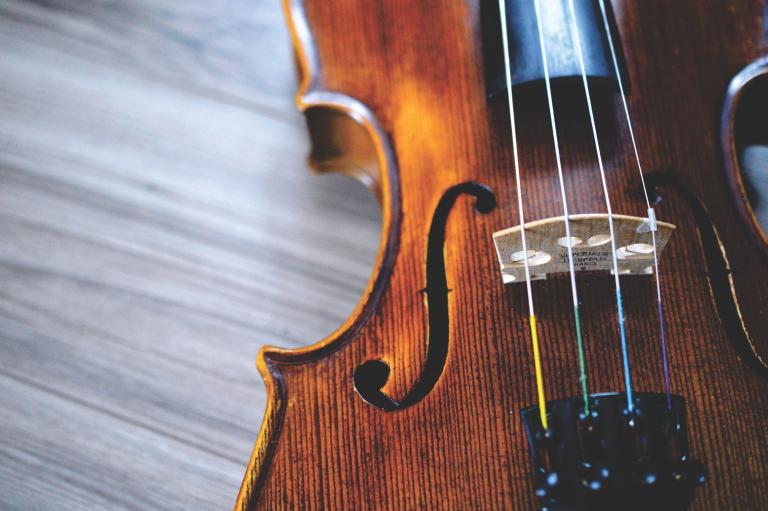
fair use picture from pxhere
My first encounter with the violin was the day that I also learned about Kumon. Both were activities that my friends did. I knew them as ‘South Fremont’ things.
It was a strange time in my life. I spent the first eighteen years of my life growing up in a neighborhood called Ardenwood. It was on the north side of Fremont, a suburb in the San Francisco Bay Area that had previously been five small towns but had now incorporated for economic cooperation. I was happy playing with my friends in this neighborhood until around the time I was about seven or eight. Their parents, seeking to enrol them into a top public school district, moved to South Fremont. The idea was that there, they’d get into Weibel Elementary, which was a straight shot into Hopkins Junior High, and then the holy grail: Mission San Jose High. When the Fremont Unified School District redrew the lines, those same parents protested. They had bought all that expensive property for nothing.
I associated violin and Kumon with these friends who moved south. I remember one auntie berating my friend for not concentrating on his violin practice. The next thing I knew, she was also timing him with a stopwatch for speed math exercises from Kumon, which was then followed by speed-reading. Then, we all got into the car and scooted off to the Kumon Center itself, where rows of kids were subjected to more stopwatch timing.
I didn’t know to associate this phenomenon with being ‘Chinese.’ After all, I am Chinese, and my activities did not include violin and Kumon. What’s more, some of my friends’ parents identified as ‘Taiwanese,’ so if anything, I thought of these activities as things that my Taiwanese friends did, as opposed to our more jocular Cantonese family. It wasn’t until much later that I learned that we were all lumped into a myth called the model minority, but by then, I had been disabused of the Cantonese-Taiwanese distinction, as enough of my Cantonese friends had also moved to South Fremont (and their parents had also participated in the protest against the school district for redrawing the lines).
But suffice it to say that I didn’t have a good impression of the violin. It didn’t occur to me that when I took up the trumpet, I was doing the same thing as my friends who had the unfortunate pleasure of having to juggle piano and violin, whereas I had the fun of doing trumpet and piano. I associated it with parents who were inexplicably mean to their children with some delusion desperation for God-knows-what.
Imagine my surprise when I read about a violinist in TIME Magazine, to which my parents subscribed, named Hilary Hahn. Her story, though she appeared white, seemed similar enough to my friends: she had been a prodigy and had been recording for quite some time. But she seemed to be enjoying what she was doing, and what’s more, the reviewer said her playing was like ‘no robotic virtuoso,’ but ‘lean and sweet’ and ‘her interpretations smart and unshowy; even the hardest-boiled prodigy-hating critics in the business go all mushy when she plays Bach, Beethoven, Barber and Bernstein.’ This description piqued my curiosity. It also helped, as my piano teacher pointed out when I said I’d gotten into Hilary Hahn, that she was ‘pretty.’
The next time I was at the factory outlet with my parents, then, I did the unthinkable. Instead of only looking for brass music in the classical section at the Music Warehouse, I went in search of Hilary Hahn. There was a cd of music from composers I’d never heard of – Barber and Meyer – but there she was on the album cover, standing among autumn leaves, and she sure was pretty too. I bought it, which means my dad bought it.
When I got home, I put it into the cd player. And there I stood, transfixed. It was like the album cover came alive, transporting me into the scene of the autumn leaves with wind blowing them around. The music drew me in, and then in with the third movement of the Barber Violin Concerto into the Meyer Concerto, the intensity was like fire.
Hilary Hahn opened me to new vistas from my tunnel vision obsession with brass music. As my trumpet teacher said to me, there’s more than brass music in classical, you know. My sister, who is JustAnotherFlutist on YouTube, agrees. She says that the first time she played the Dvorak New World Symphony, she could have sworn that she had heard of it but couldn’t figure out where. Then the blazing brass arrived in the fourth movement. She put her hand to her face. She had heard it streaming from my room, but I only ever listened to that movement.
Hilary Hahn opened my ears to the possibility that the violin is not an instrument of model minority torture. Some say that the violin sings, but it is more like the violin is fire and wind – it’s the intensity that drives the dance, as she showed me when I listened to her first album of Bach partitas and suites. I soon collected them all, and when I had them signed by her at a show in Berkeley, she asked me why I had so many of her cds. I’m a trumpet player, I told her, which seemed to weird her out until she caught herself and said that this is like violinists imitating voice. Something like that, I replied.
As I continue to think about what I am doing with the trumpet now (and piano, for that matter) that I don’t practice and I am in a church that sings a capella, I am discovering that the vista that Hilary Hahn opened me up to is the playfulness of intensity. Perhaps this is another liturgical sensibility that has been emerging in my amateur cantoring – the thread from the Latin theologians Romano Guardini and Joseph Ratzinger that the spirit of the liturgy (as both of their books are named) is play. Like my encounter with the violin, I had to discover that liturgy is not a set of regulations with model minority pretensions. It is playful and childlike, and from there it derives its fire-and-ice intensity. It is no surprise, then, to know that Hilary Hahn played Mozart for Benedict XVI’s 80th birthday, and he liked it. As the Protestant theologian Karl Barth confirms:
I hear Mozart – both younger and older – at play. But play is something so lofty and demanding that it requires mastery. And in Mozart I hear an art of playing as I hear in no one else. Beautiful playing presupposes an intuitive, childlike awareness of the essence or center – as also the beginning and the end – of all things. It is from this center, from this beginning and end, that I hear Mozart create his music. I can hear those boundaries which he imposed upon himself because it was precisely this discipline that gave him joy. And when I hear him, it gladdens, encourages, and comforts me as well. (Barth, ‘A Testimonial to Mozart,’ in Wolfgang Amadeus Mozart, pp. 16-17).
With gratefulness for her for rescuing the violin from the model minority for me, I say similar words about Hilary Hahn.
I was nominated by our blog’s former resident Latin Catholic Person, Eugenia Geisel, to do the Facebook Album Art Challenge. Posting the covers gave me some nostalgia that I wish to work through. I am therefore blogging about it too now concurrently. Perhaps Eugenia will do so as well on her blog, Lipstick on My Relics. This is the second of ten in the series.
Previous Post
May 13, 2018
'The Lord is calling me to the trumpet' (Album Challenge #1)
Next Post
May 16, 2018 I didn't want to listen to music about sex (Album Challenge #3)
Browse Our Archives
Select a Category Academia Anglican Communion anti-racism Aristotle Asia-Pacific Asian American Asian Canadian BlackLivesMatter Cantonese Catholic China Chinglican church politics Church-State Politics Civil Society Conservative Eastern Christianity Evangelical Evangelical Left Feminist/Womanist Theology Food Greek-Catholic Church of Kyiv Hong Kong Housekeeping Kyivan Church Latin Catholicism Law Liberal Liberation Theology New Calvinism Pentecostal/Charismatic Protestant Psychoanalysis Publics Religion Ethnicity Wired Secular Sovereignty TPCIU Uncategorized
Select a Month July 2019 June 2019 May 2019 April 2019 March 2019 February 2019 January 2019 December 2018 November 2018 October 2018 September 2018 August 2018 July 2018 June 2018 May 2018 March 2018 February 2018 January 2018 December 2017 November 2017 October 2017 September 2017 August 2017 July 2017 June 2017 April 2017 March 2017 February 2017 January 2017 December 2016 November 2016 October 2016 September 2016 August 2016 July 2016 January 2016 December 2015 November 2015 October 2015 August 2015 April 2015 March 2015 February 2015 December 2014 November 2014 September 2014 August 2014 July 2014 June 2014 May 2014 April 2014 March 2014 December 2013 November 2013 October 2013 September 2013 August 2013 July 2013 June 2013 May 2013 April 2013 March 2013 February 2013 January 2013 December 2012 October 2012 June 2012 May 2012 April 2012 February 2012 January 2012
Follow Us!
TAKE THE
Religious Wisdom Quiz
What is "the beginning of knowledge," according to Proverbs?
Select your answer to see how you score.
Humility Riches Power Fear of the Lord
Related posts from Eastern Catholic Person

I've found my way home: on the unraveling...

The Bay Area of the nineties is where...

I am no longer ashamed of being from...

Patriyarkhat: 'Attending to the movements of my heart'
TRENDING AT PATHEOS Catholic

Rejecting Doom: Christian Hope And Human Action
Christianity is a religion of hope. We are to have hope and...

It’s What Comes From Within Which Matters
One of the most difficult things for us to understand is why...

Why I Choose the Eucharist Over the Sermon
Choose the Eucharist, Not the Sermon What are we supposed to get...

5 Design Elements Found in Spiritually Rooted Homes
Putting Spirituality Into Home Decor Our homes are more than our living...

Credo: A Story of God Told with the...
About 10 years ago, I began to imagine a personal "Credo" that...

The Anatomy of Divine Revelation in Catholic Thought
The claim that God has made Himself known to human beings is...
view all Catholic blogs
Ad-Free & Subscriber Log-In Subscription Support
- About Us
- 2026 Calendar
- Videos
- Podcasts
- Library of World Religions
- Faith In Media Tracker
- Advertise With Us
- Write for Us
- Privacy Policy
- Terms of Service
- Do Not Sell My Data
- Contact Us
- Radiant Digital
- Manage Newsletter Subscriptions
- Unsubscribe From Notifications
- Sitemap
Copyright 2008-2026, Patheos. All rights reserved.
Subscription Support Ad-Free & Subscriber Log-In
Follow Patheos