
BuddhistCatholicContemplativeEvangelicalGeneral ChristianHinduJewishLatter-day SaintMuslimNew VisionsProgressive Christian
Beliefs
- Buddhist
- Catholic
- Contemplative
- Evangelical
- General Christian
- Hindu
- Jewish
- Latter-day Saint
- More Voices
- Muslim
- New Visions
- Pagan
- Progressive Christian
Topics
- Religion News
- Food and Religion
- Sports and Religion
- Religious Art
- Religious Music and Entertainment
- Religious Events
- History and Religion
- Style and Religion
- Politics and Religion
- Women in Religion
- Recreation Outdoors and Religion
- Business Finance and Religion
- Careers Workplace and Religion
- Education and Religion
- Family Parenting and Religion
- Health Fitness and Religion
- Home and Religion
- Relationships and Religion
- Technology and Religion
- Travel and Religion
Columnists
- Buddhist Columnists
- Business Finance and Religion Columnists
- Careers Workplace and Religion Columnists
- Catholic Columnists
- Contemplative Columnists
- Education and Religion Columnists
- Evangelists Columnists
- Family Parenting and Religion Columnists
- General Christian Columnists
- Health Fitness and Religion Columnists
- Hindu Columnists
- History and Religion Columnists
- Home and Religion Columnists
- Jewish Columnists
- More Voices Columnists
- Latter Day Columnists
- Muslim Columnists
- New Visions Columnists
- Nonreligious Columnists
- Pagan Columnists
- Politics and Religion Columnists
- Progressive Columnists
- Recreation Outdoors and Religion Columnists
- Relationships and Religion Columnists
- Religion News Columnists
- Religious Art Columnists
- Religious Events Columnists
- Religious Music and Entertainment Columnists
- Sports and Religion Columnists
- Style and Religion Columnists
- Technology and Religion Columnists
- Travel and Religion Columnists
- Women in Religion Columnists
Resource Library
- 2026 Calendar
- Library of World Religions
- The 100 Most Holy Places on Earth
- Patheos Answers
- Podcasts
- Videos
- Faith Leaders Database
- Anglican Episcopalian
- Bahai
- Baptist
- Buddhism
- Christianity
- Confucianism
- Eastern Orthodoxy
- Hinduism
- Holiness and Pentecostal
- ISKCON
- Islam
- Judaism
- Lutheran
- Methodist
- The Church of Jesus Christ of Latter-day Saints
- New Age
- Paganism
- Presbytarian and Reformed
- Protestantism
- Religion Behind the Scenes
- Roman Catholic
- Scientology
- Shia Islam
- Sikhism
- Sufism
- Sunni Islam
- Taoism
- Zen
- See all religions
Research Tools
 Ad-Free & Subscriber Log-In Subscription Support
Ad-Free & Subscriber Log-In Subscription Support
Follow Patheos 

- Trending:
- Forgiveness
- |
- Marriage
- |
- Consciousness
- |
- Death Penalty
- |
- Election
- |
- Halloween
 Eastern Catholic Person
- Home
- Catholic
- They call me Prof Yenta
They call me Prof Yenta
Last updated on: February 15, 2018 at 10:22 am by Justin Tse
They call me Prof Yenta 2018-02-15T10:22:15-07:00 Justin Tse
Patheos Explore the world's faith through different perspectives on religion and spirituality! Patheos has the views of the prevalent religions and spiritualities of the world.
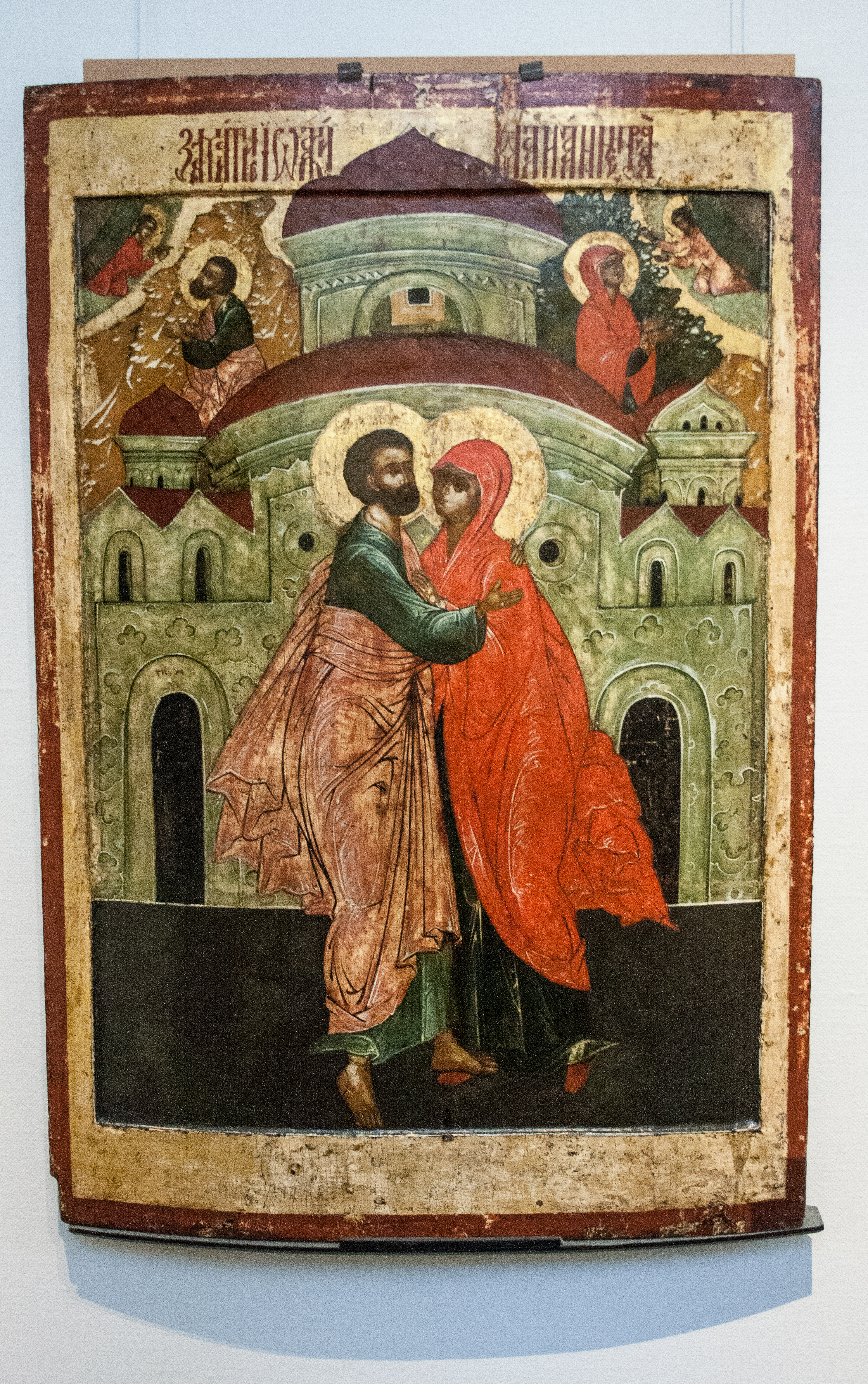
The embrace of Joachim and Anna, PD-Art, via Wikimedia Commons
Some former students of mine have joked recently that I am basically ‘Prof Yenta.’ I think they mean that I am one of those old-fashioned professor types who give out free dating and matchmaking advice to those who want it. Generally, I refrain from this practice when it comes to my current students, but somehow or another, the ones who become friends after they survive a class or two with me end up discovering this informal dimension of my teaching. I looked up what ‘yenta’ means, though, because I do not speak Yiddish, and it turns out that the meaning is much closer to ‘gossip or busybody.’ This second definition captures my condition much better, as I cannot vouch for my romantic counsel.
I have been thinking about what this nickname of mine could possibly mean for my academic praxis. It is, after all, the age of Title IX and #metoo, and the informality of these personal realms do not play well with the bureaucratic policing of campus relationships. I do not practice my ‘yenta’ ways for students in my classes, and I am married, which means that I am not in anything even bordering on the askew with any of them, but the point still stands. Sexual assault is real, and no campus knows it better than the one on which I teach, Northwestern University. The case of the Second Life philosopher Peter Ludlow continues to generate debate in the public square, especially with the publication of Laura Kipnis’s book Unwanted Advances and the furor she generated by having the audacity to defend Ludlow. Just a few days ago, the journalism professor Alec Klein was accused of predatory behaviour among his students. Needless to say, it’s a pretty sensitive time on my campus.
One of the books that I taught early on here at Northwestern was Allan Bloom’s Closing of the American Mind. I used it in my course on conservative ideologies and peoples of color because of the way that he decries ethnic studies for seeming to advance the cause of diversity while stymying it with groupthink. In my view, Bloom seems to be the last conservative that those of us in minority scholarship engaged seriously because it is so pugnaciously militant against our existence – Glenn Omatsu engages it, so does Eve Sedgwick, and recently Gary Okihiro wrote in Third World Studies that he even teaches it.
Of course, we read it in our class as an oppositional text. Quite unlike Bloom, I quite enjoy being in Asian American studies. I do not think Asian American studies is about groupthink or diversity or even identity. In fact, I am invested in studying the world and its people by militating against orientalist fantasies, which in my view prevent a scholarly exegesis of the world because it presents the lands and seas from Turkey to the Pacific Islands (and arguably the Americas too) as a mirror for the West. The task of scholarship is to break the mirror, not to read yourself into the world. Insofar as he is invested in confronting fantasy for the sake of exegesis, we were sympathetic. But when he read his own ideas about what black studies and women’s studies were into the work, we were ruthless.
The funny thing, though, is that opposition to ethnic studies is not really the point of The Closing of the American Mind; it is its entry point. The core of the book deals with what Bloom thinks university is for, and therein lies the surprise. It is, as most people rightly read it, a sappy apologetic for the Great Books written by Dead White Men. However, the reason to read them, Bloom argues, is because university is supposed to be about the cultivation of erotic desire, and this, Bloom says, is what has been forgotten as far back as the 1960s:
A significant number of students used to arrive at the university physically and spiritually virginal, expecting to lose their innocence there. Their lust was mixed into everything they thought and did. They were painfully aware that they wanted something but were not quite sure exactly what it was, what form it would take and what it all meant. The range of satisfactions intimated by their desire moved from prostitutes to Plato, and back, from the criminal to the sublime. Above all they looked for instruction. Practically everything they read in the humanities and social sciences might be a source of learning about their pain, and a path to its healing. This powerful tension, this literal lust for knowledge, was what a teacher could see in the eyes of those who flattered him by giving such evidence of their need for him. His own satisfaction was promised by having something with which to feed their hunger, an overflow to bestow on their emptiness. His joy was in hearing the ecstatic “Oh, yes!” as he dished up Shakespeare and Hegel to minister to their need. Pimp and midwife really described him well. The itch for what appeared to be only sexual intercourse was the material manifestation of the Delphic oracle’s command, which is but a reminder of the most fundamental human desire, to “know thyself.” (pp. 135-6).
Maybe Bloom is a little over the top here. His imagination of such an ideal university has also been said to be just that: idealistic. I also disagree with what he says about ‘popularized Freud…putting the seal of science on an unerotic understanding of sex’ (p. 134). But what he is saying, I think, is very relevant to our contemporary academic praxis. It means that the university is not exactly a purely rational space. It’s teeming with libido that is somehow related to the working out of knowledge.
Here, I think Freud can be read against Bloom. Bloom accuses Freud of trying to make mystery scientific: ‘Freud accepted the unconscious, and then tried to give it perfect clarity by means of science’ (p. 199). But there is something Freudian about the contemporary academy that I think Bloom would have to begrudgingly agree with: the attempt to rationalize knowledge production results in weird kinds of erotic repression, and those desires have to go somewhere. Kipnis takes it too far in her tacit defence of free love, but there is a psychological tie between the knowledge that the university has to offer and eros. Repress it, and the university becomes a giant transference machine. This dynamic has to be understood, channeled, intensified by chastity. Leave it to Aristotle to explain this problem:
Hence a young man is not a proper hearer of lectures on political science; for he is inexperienced in the actions that occur in life, but its discussions start from these and are about these; and, further, since he tends to follow his passions, his study will be vain and unprofitable, because the end aimed at is not knowledge but action. And it makes no difference whether is young in years or youthful in character; the defect does not depend on time, but on his living, and pursuing each successive object, as passion directs. For to such persons, as to the incontinent, knowledge brings no profit; but to those who desire and act in accordance with a rational principle knowledge about such matters will be of great benefit. (Nicomachean Ethics, 3).
Knowledge, in other words, requires chastity, and continence requires askesis, the training of the body. But repression is not the same thing as being chaste because hiding the passions under a rug just makes you act out. One way academics act out, for example, is that we are constantly in the habit of projecting ourselves onto our interlocutors, as if they were mirrors. It takes a kind of intellectual chastity not to do that. That, I think, should be part of my pedagogy.
When it comes down to it, to be ‘Prof Yenta’ is to be invested in the sharing of the practice of everyday life, including in intellectual space because erotic desire is part of it. The discipline that I’ve been learning in such praxis, especially during this Preparatory time for the Great Fast, is to listen closely to what my students, especially the former ones with whom I have no formal relationship except as friend, are telling me about what they are doing. What I keep hearing is that their experience of modern love and romance, as well as on their various job markets, is to be constantly projected upon. It is like they are icons being defaced: they are looking at the person who is supposed to be loving them, but they realize quickly that that which the other loves is not them, but a projection of them. I sympathize with this; it is the transference machine at work. But my training as ‘Prof Yenta’ is not to then project my experience of the contemporary libidinal economy onto them. It is to hear what they are saying and converse with them about what they are doing in their lives. As much as my formal practices of research and teaching are important for my scholarly work, it is these everyday encounters that form in me at least the conviction about the chaste disposition I must have in order to practice good scholarship.
The paradox of being Prof Yenta is that it requires the discipline of intellectual chastity on my part. Perhaps this psychological continence is also what I am getting at with my reflections during this Preparation period on my old writing and my bad reading habits. As I am growing, I am becoming increasingly convinced that these disciplines of the intellect are the path to sainthood, the narrow way that does not fall into the psychological fallacy of repression while maintaining an opposition to the violence of rape culture – which is, as far as I have experienced the transference machine, a real thing in more ways than the physical. But I am a long way away from being able to live with such intellectual discipline. It is thus for refining my praxis as Prof Yenta that I must therefore fast.
Previous Post

February 14, 2018
The Freud candle house blessing
Next Post

February 16, 2018 On process and preparation
Browse Our Archives
Select a Category Academia Anglican Communion anti-racism Aristotle Asia-Pacific Asian American Asian Canadian BlackLivesMatter Cantonese Catholic China Chinglican church politics Church-State Politics Civil Society Conservative Eastern Christianity Evangelical Evangelical Left Feminist/Womanist Theology Food Greek-Catholic Church of Kyiv Hong Kong Housekeeping Kyivan Church Latin Catholicism Law Liberal Liberation Theology New Calvinism Pentecostal/Charismatic Protestant Psychoanalysis Publics Religion Ethnicity Wired Secular Sovereignty TPCIU Uncategorized
Select a Month July 2019 June 2019 May 2019 April 2019 March 2019 February 2019 January 2019 December 2018 November 2018 October 2018 September 2018 August 2018 July 2018 June 2018 May 2018 March 2018 February 2018 January 2018 December 2017 November 2017 October 2017 September 2017 August 2017 July 2017 June 2017 April 2017 March 2017 February 2017 January 2017 December 2016 November 2016 October 2016 September 2016 August 2016 July 2016 January 2016 December 2015 November 2015 October 2015 August 2015 April 2015 March 2015 February 2015 December 2014 November 2014 September 2014 August 2014 July 2014 June 2014 May 2014 April 2014 March 2014 December 2013 November 2013 October 2013 September 2013 August 2013 July 2013 June 2013 May 2013 April 2013 March 2013 February 2013 January 2013 December 2012 October 2012 June 2012 May 2012 April 2012 February 2012 January 2012
Follow Us!
TAKE THE
Religious Wisdom Quiz
What was a standard day's wage in Biblical times?
Select your answer to see how you score.
Talent Shekel Mina Denarius
Related posts from Eastern Catholic Person

I've found my way home: on the unraveling...
Tiananmen is my first childhood memory: reflections on...

Home is where your food is: a speech...

Patriyarkhat: 'Attending to the movements of my heart'
TRENDING AT PATHEOS Catholic

Rejecting Doom: Christian Hope And Human Action
Christianity is a religion of hope. We are to have hope and...

It’s What Comes From Within Which Matters
One of the most difficult things for us to understand is why...

Why I Choose the Eucharist Over the Sermon
Choose the Eucharist, Not the Sermon What are we supposed to get...

5 Design Elements Found in Spiritually Rooted Homes
Putting Spirituality Into Home Decor Our homes are more than our living...

Credo: A Story of God Told with the...
About 10 years ago, I began to imagine a personal "Credo" that...

The Anatomy of Divine Revelation in Catholic Thought
The claim that God has made Himself known to human beings is...
view all Catholic blogs
Ad-Free & Subscriber Log-In Subscription Support
- About Us
- 2026 Calendar
- Videos
- Podcasts
- Library of World Religions
- Faith In Media Tracker
- Advertise With Us
- Write for Us
- Privacy Policy
- Terms of Service
- Do Not Sell My Data
- Contact Us
- Radiant Digital
- Manage Newsletter Subscriptions
- Unsubscribe From Notifications
- Sitemap
Copyright 2008-2026, Patheos. All rights reserved.
Subscription Support Ad-Free & Subscriber Log-In
Follow Patheos