
BuddhistCatholicContemplativeEvangelicalGeneral ChristianHinduJewishLatter-day SaintMuslimNew VisionsProgressive Christian
Beliefs
- Buddhist
- Catholic
- Contemplative
- Evangelical
- General Christian
- Hindu
- Jewish
- Latter-day Saint
- More Voices
- Muslim
- New Visions
- Pagan
- Progressive Christian
Topics
- Religion News
- Food and Religion
- Sports and Religion
- Religious Art
- Religious Music and Entertainment
- Religious Events
- History and Religion
- Style and Religion
- Politics and Religion
- Women in Religion
- Recreation Outdoors and Religion
- Business Finance and Religion
- Careers Workplace and Religion
- Education and Religion
- Family Parenting and Religion
- Health Fitness and Religion
- Home and Religion
- Relationships and Religion
- Technology and Religion
- Travel and Religion
Columnists
- Buddhist Columnists
- Business Finance and Religion Columnists
- Careers Workplace and Religion Columnists
- Catholic Columnists
- Contemplative Columnists
- Education and Religion Columnists
- Evangelists Columnists
- Family Parenting and Religion Columnists
- General Christian Columnists
- Health Fitness and Religion Columnists
- Hindu Columnists
- History and Religion Columnists
- Home and Religion Columnists
- Jewish Columnists
- More Voices Columnists
- Latter Day Columnists
- Muslim Columnists
- New Visions Columnists
- Nonreligious Columnists
- Pagan Columnists
- Politics and Religion Columnists
- Progressive Columnists
- Recreation Outdoors and Religion Columnists
- Relationships and Religion Columnists
- Religion News Columnists
- Religious Art Columnists
- Religious Events Columnists
- Religious Music and Entertainment Columnists
- Sports and Religion Columnists
- Style and Religion Columnists
- Technology and Religion Columnists
- Travel and Religion Columnists
- Women in Religion Columnists
Resource Library
- 2026 Calendar
- Library of World Religions
- The 100 Most Holy Places on Earth
- Patheos Answers
- Podcasts
- Videos
- Faith Leaders Database
- Anglican Episcopalian
- Bahai
- Baptist
- Buddhism
- Christianity
- Confucianism
- Eastern Orthodoxy
- Hinduism
- Holiness and Pentecostal
- ISKCON
- Islam
- Judaism
- Lutheran
- Methodist
- The Church of Jesus Christ of Latter-day Saints
- New Age
- Paganism
- Presbytarian and Reformed
- Protestantism
- Religion Behind the Scenes
- Roman Catholic
- Scientology
- Shia Islam
- Sikhism
- Sufism
- Sunni Islam
- Taoism
- Zen
- See all religions
Research Tools
 Ad-Free & Subscriber Log-In Subscription Support
Ad-Free & Subscriber Log-In Subscription Support
Follow Patheos 

- Trending:
- Forgiveness
- |
- Marriage
- |
- Consciousness
- |
- Death Penalty
- |
- Election
- |
- Halloween
 Eastern Catholic Person
- Home
- Catholic
- There is nothing respectable about Eastern Christianity: a catechumen’s essay on Frederica Matthewes-Green’s Facing East
There is nothing respectable about Eastern Christianity: a catechumen’s essay on Frederica Matthewes-Green’s Facing East
Last updated on: April 3, 2017 at 6:49 am by Justin Tse
There is nothing respectable about Eastern Christianity: a catechumen’s essay on Frederica Matthewes-Green’s Facing East 2017-04-03T06:49:21-07:00 Justin Tse
Patheos Explore the world's faith through different perspectives on religion and spirituality! Patheos has the views of the prevalent religions and spiritualities of the world.
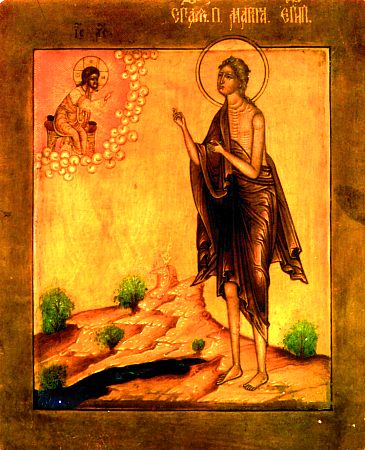
St Mary of Egypt – Orthodox Icon – PD-Art, via Wikimedia Commons
As I relive my catechumenate during this Great Fast, there’s a piece that I want to share that I wrote as a catechumen for my catechumenate that was at the time only circulated within our temple. It can be said that participating in the Great Canon of St Andrew of Crete during my catechumenate made me take the seriousness of what I had gotten myself into a bit more seriously. Because of this, I write this essay that I wrote shortly after that experience, dovetailing with a bit of homework that I did as a catechumen on the first book that was assigned for my catechumenate reading, Frederica Matthewes-Green’s Facing East. Eventually, Holy Mary of Egypt comes up along with what I call the erotics of holiness, as does the question of ‘spiritual fathers,’ but ultimately, it is a piece that I wrote at the time about what stuck out to me about the strange church that I realized that I was joining. The use of the word vulgar in the way that I do owes no small debt to what the Latin Catholic blogger Artur Rosman terms ‘Rabelaisian Catholicism,’ about which he makes no secret that I helped him coin once upon a time in a Facebook comment thread and then has in subsequent conversation influenced my view of how apostolic ecclesiologies might be viewed from the bottom up as churches full of sinners and are therefore often sites of base comedy. Perhaps there are some claims in there I might moderate or change or unpack some more now, especially what I term Orthodox multiculturalism, but I am sharing the piece as I wrote it then.
There Is Nothing Respectable About Eastern Christianity: notes on Facing East: A Pilgrim’s Journey into the Mysteries of Orthodoxy, by Frederica Matthewes-Green
Facing East revolves around the journey of Holy Cross Antiochian Orthodox Mission in the suburbs of Baltimore. The story is told through the eyes of its khouria (priest’s wife), Frederica Matthewes-Green – or hereafter, ‘Mama Fred.’ Her writing style is often described as a set of ‘homespun musings’ with an ‘affectionate’ touch, and this is true for the most part: all of the majestically mysterious terms that I have come to encounter in Byzantine Catholicism – kontakion, troparia, Theotokos, stichera – are woven in and explained almost as if they were just her family’s traditions. This is an especially striking way to tell the tale because she and her husband, Gregory Mathewes-Green (one of the five notorious Episcopal priests who signed the ‘Baltimore Declaration’ advocating for Anglican orthodoxy in 1992), both converted to Orthodoxy, along with her family and many members of their previous Episcopal parish.
It is this almost embarrassing feeling of domesticity on which I want to reflect in my own set of musings on this book. Put another way, I don’t want to stop at the usual reflections on Mama Fred’s homespun writing because I think ‘homespun’ and ‘affectionate’ doesn’t quite get at how embarrassingly vulgar this book’s confrontation with respectable religion is. I realize that the word ‘embarrassing’ is quite strong, but I use it because within Mama Fred’s narrative, the daughter who goes off to college and gets a nose ring also gives off the impression that she’s embarrassed by the family, that she wants to be an individual detached from the homespun quality of the family’s Orthodoxy, but that she also knows that Orthodoxy even beyond the family that led her into Eastern Christianity is going to be her life after she gets over the embarrassment.
In other words, what I got out of Mama Fred’s story is that it’s good to be embarrassing as an Eastern Christian. The story paralleling the advertised story of the book (Mama Fred’s practice of Orthodoxy through the liturgical year, starting from ‘Preparations for Lent’) concerns how life in an Orthodox mission might be seen in the kaleidoscope of American religious pluralism, from the respectability of her former Episcopalianism to the storefront churches she drives by on the way to her temple. It turns out that the saving grace of Orthodoxy may well be that it isn’t at all respectable in America, as this is the story of how the members of the Holy Cross Mission all seem to lose their religious respectability. This suggests that the homespun quality of Facing East is a contribution to helping readers realize that we too will have to lay aside our pretensions to respectable religious practice and, in the words of one prayer, fall down before the very Lord Jesus Christ, our King and God – and the pathway of Eastern Christianity is a great way of getting rid of our religious pretensions.
For starters, everything that we understand to be respectable about religion – from art to ritual to food – is rendered vulgar by Mama Fred’s frequently asked question: why do the Orthodox kiss so much stuff? Respectability is based on distance: we admire a painting from afar, we analyze ritual practices, we critique the taste of food based on a set of criteria. All of this is thrown out of the window in Mama Fred’s account. Icons are not just religious art, contrary to what she had been taught through the various renewal movements in evangelicalism and Episcopal liturgical turns. The seed of Mama Fred’s own conversion came through seeing the Sacred Heart of Jesus displayed in a statue in Dublin during her honeymoon; the icon – or in this case, the Latin statue – delivers an intensely personal address to the viewer, compelling a visceral response. At another point in her journey toward appreciating icons (which she unashamedly says that she didn’t at first), Mama Fred talks about noticing lipstick stains on the plexiglas and realizing to her amazement that the icon had been kissed multiple times in veneration. Icons, Mama Fred shows us, are painted as prayer by various members of the mission, and they are kissed and kissed and kissed and kissed.
Why do the Orthodox kiss so much stuff? Because the stuff the Orthodox kiss have addressed them first in personal ways, requiring a response of love. This response starts with kissing, but it doesn’t stop there; it extends throughout Orthodox practices of liturgy and fasting, which gets to a second point that Mama Fred reiterates over and over: the Orthodox don’t seem to have standardized rules about their practices. This feels a bit strange at first because it seems like there are rules everywhere in Mama Fred’s book, beginning with her husband’s desire to transfer to a church that would not apostasize (as he held that the Episcopal Church was doing) and extending into the dietary restrictions of the Great Fast, the rules for painting icons, the need for confession, and the extended meditation toward the end of the book about how important it is to not have ingested anything prior to receiving communion. It is here that the real differences with Latin Catholics come into stark relief: as a point of cultural practice (which means, incidentally, that there is a non-secular way of saying that religion is cultural because it is composed of practices and, to adopt the lingo of Jesuit theorist Michel de Certeau, those practices tell their own stories), regulations for the Orthodox are a matter of erotics, not legality (which, as an aside, is surely what Latin Catholicism at its best is supposed to be about, e.g. ubi caritas et amor Deus ibi est). To be Orthodox is not to conform to a set of practices that have been codified into a code of canon law; it is to throw oneself into a set of practices that come from a conglomeration of traditions that may result in a variety of ways of doing Orthodoxy depending on one’s spiritual father, bishop, and church. Confession, for example, with Father Gregory and Father Orestes are so similar but so different because the practice of confession is about how your priest asks you to confess. It’s intensely personal, generated out of a desire to practice Orthodox Christianity as a way of life, and therefore born out of eros, which – for all of Latin Catholicism’s claims to be an erotic religion, though its erotics are constantly in tension with its drive to legalize and centralize – makes Orthodox Christianity and its mish-mash of cultural practices the paragon of erotic religion.
Perhaps this is where the multicultural beauty of Holy Cross Antiochian Orthodox Mission also becomes clear; the mission is situated within the religious pluralism of suburban Baltimore, but it also makes no secret of promiscuously adopting all sorts of Orthodox cultures: Russian, Greek, Syrian, Bulgarian, Romanian, Kyivian, Galician. What might be striking for an Orthodox reader of Facing East is how promiscuous the former Episcopal members of Holy Cross are, doing tones in Russian, Romanian, and Greek (whatever sounds better) and singing nativity carols in Ukrainian, Carpatho-Russian, and Romanian too. Saints of all ethnicities are venerated, foods from Greek and Russian traditions are served during the fasts and the feasts, and one Greek Orthodox member keeps shouting, ‘Axios!’ at the wrong times. What is so Antiochian about all of this? Nothing, and that is the point: in some ways, Holy Cross is the American Orthodox dream, a site where all the Orthodox churches come together in a multicultural mishmash of local orthodoxies.
This mixing-and-matching of orthodoxies in America acts as a foil to the respectability of liberal multicultural religious pluralism, which also keeps coming up in Facing East. Mama Fred recounts constantly having to drive past storefront churches, as well her own background from Unitarian, evangelical, and Episcopal circles. Moreover, the church building that Holy Cross ends up buying when their land deal becomes complicated in regulatory red tape was home to a variety of Christian traditions: Methodist, Episcopal, Baptist, Korean Presbyterian. The respectable thing to do would be to celebrate this multicultural religious landscape, that the truth to be found in all traditions erases any boundaries between all the various ways of doing religion, including Christianity. But Holy Cross removes the pews in their new church building, acknowledges the differences that they have with other Christians, and openly talks about how they left the Episcopal Church over liberalism. There is a difference of multiculturalisms here, a distinction between liberal pluralism and the blending of orthodoxies in the local church, and what is ironic is that the respectable liberalism operates at heart with such a logic of schism that it ends up generating Holy Cross’s exodus from Episcopalianism in the first place while the vulgar blending of orthodoxies ends up drawing the community together and revitalizing the faith of even formerly ethnic, nominal Orthodox in various church communities across America.
What drives this vulgar, erotic, multicultural Orthodoxy in Facing East? Arguably, the book revolves around the figure of St Mary of Egypt, a fifth-century saint with one of the wildest conversion stories in Orthodox hagiography (from sexual athlete to desert mother) venerated in the fifth week of the Great Fast. St Mary of Egypt often stands in as a cipher for Mama Fred’s own conversion from wandering the various religious traditions available in America’s religious market to finding Orthodoxy; it is no surprise that this desert saints comes up numerous times in Facing East’s tale. It is a vulgar conversion story, one that is explicit about the desert saint’s previous sexual escapades. It is erotic: after viewing an icon of the Theotokos in Jerusalem, St Mary of Egypt drives herself out to the deserts of Palestine, and when Father Zosimus finds her, the vulgar erotics are transposed into the erotics of spirituality, as they both desire greater heights of divine union. What Mama Fred doesn’t talk about, however, is the real clincher in St Sophronius of Jerusalem’s seventh-century account of the encounter between Zosimus and Mary: Zosimus is a Palestinian monk traveling from monastery to monastery seeking a variety of practices for holiness, Mary converts on a pilgrimage from Egypt to Jerusalem, the service in which Mary is venerated is the Great Canon of St Andrew of (of all places) Crete. In other words, the multiculturalism of orthodoxy is put on full display in this arguably central story in Orthodox practice; the whole point of the life of St Mary of Egypt and a conversion to Orthodox Christianity is to vulgarly, unabashedly, and even erotically mix and match Orthodox practices because what matters is not ethnicity, but a desire for holiness shorn of respectability.
In short, the point of Facing East, as it seems to me, is that Mama Fred’s conversion to Orthodoxy is a transfer from a sort of respectable religion to a much more vulgar and erotic path to holiness. The implication for Eastern Christianity in a world of religious pluralism is thus also stark: the whole point of being an Eastern Christian is to forego the respectability of liberalism and to throw oneself into the erotics of holiness, with the kissing, the dieting, the singing, and even the disorganization of its traditional regulations all thrown in together. The irony, it seems for Mama Fred, is that it’s only in this way that real multiculturalism, real pluralism, and real coexistence can happen because what’s formed out of such practices is a real church, a real assembly, a real gathering of those who are ‘Orthodox,’ those who confess the true faith with a variety of languages, tones, and cultural practices.

Browse Our Archives
Select a Category Academia Anglican Communion anti-racism Aristotle Asia-Pacific Asian American Asian Canadian BlackLivesMatter Cantonese Catholic China Chinglican church politics Church-State Politics Civil Society Conservative Eastern Christianity Evangelical Evangelical Left Feminist/Womanist Theology Food Greek-Catholic Church of Kyiv Hong Kong Housekeeping Kyivan Church Latin Catholicism Law Liberal Liberation Theology New Calvinism Pentecostal/Charismatic Protestant Psychoanalysis Publics Religion Ethnicity Wired Secular Sovereignty TPCIU Uncategorized
Select a Month July 2019 June 2019 May 2019 April 2019 March 2019 February 2019 January 2019 December 2018 November 2018 October 2018 September 2018 August 2018 July 2018 June 2018 May 2018 March 2018 February 2018 January 2018 December 2017 November 2017 October 2017 September 2017 August 2017 July 2017 June 2017 April 2017 March 2017 February 2017 January 2017 December 2016 November 2016 October 2016 September 2016 August 2016 July 2016 January 2016 December 2015 November 2015 October 2015 August 2015 April 2015 March 2015 February 2015 December 2014 November 2014 September 2014 August 2014 July 2014 June 2014 May 2014 April 2014 March 2014 December 2013 November 2013 October 2013 September 2013 August 2013 July 2013 June 2013 May 2013 April 2013 March 2013 February 2013 January 2013 December 2012 October 2012 June 2012 May 2012 April 2012 February 2012 January 2012
Follow Us!
TAKE THE
Religious Wisdom Quiz
Who said, "Let us build us a city and a tower, whose top may reach unto heaven"?
Select your answer to see how you score.
Israelites Egyptians People of Babel Chaldeans
Related posts from Eastern Catholic Person

I've found my way home: on the unraveling...

Patriyarkhat: 'Attending to the movements of my heart'

I'm flattered to be named an Asian American...

The secular does not stop when your drive...
TRENDING AT PATHEOS Catholic

Creation, Preservation, and Teleology in Catholic Theology
As I write this, it is very early Monday morning. Like millions...

The Parable Of The Sower And The Word...
One of Christ’s most famous parables is that of the sower who...

Rejecting Doom: Christian Hope And Human Action
Christianity is a religion of hope. We are to have hope and...

Why I Choose the Eucharist Over the Sermon
Choose the Eucharist, Not the Sermon What are we supposed to get...

5 Design Elements Found in Spiritually Rooted Homes
Putting Spirituality Into Home Decor Our homes are more than our living...

Credo: A Story of God Told with the...
About 10 years ago, I began to imagine a personal "Credo" that...
view all Catholic blogs
Ad-Free & Subscriber Log-In Subscription Support
- About Us
- 2026 Calendar
- Videos
- Podcasts
- Library of World Religions
- Faith In Media Tracker
- Advertise With Us
- Write for Us
- Privacy Policy
- Terms of Service
- Do Not Sell My Data
- Contact Us
- Radiant Digital
- Manage Newsletter Subscriptions
- Unsubscribe From Notifications
- Sitemap
Copyright 2008-2026, Patheos. All rights reserved.
Subscription Support Ad-Free & Subscriber Log-In
Follow Patheos