
BuddhistCatholicContemplativeEvangelicalGeneral ChristianHinduJewishLatter-day SaintMuslimNew VisionsProgressive Christian
Beliefs
- Buddhist
- Catholic
- Contemplative
- Evangelical
- General Christian
- Hindu
- Jewish
- Latter-day Saint
- More Voices
- Muslim
- New Visions
- Pagan
- Progressive Christian
Topics
- Religion News
- Food and Religion
- Sports and Religion
- Religious Art
- Religious Music and Entertainment
- Religious Events
- History and Religion
- Style and Religion
- Politics and Religion
- Women in Religion
- Recreation Outdoors and Religion
- Business Finance and Religion
- Careers Workplace and Religion
- Education and Religion
- Family Parenting and Religion
- Health Fitness and Religion
- Home and Religion
- Relationships and Religion
- Technology and Religion
- Travel and Religion
Columnists
- Buddhist Columnists
- Business Finance and Religion Columnists
- Careers Workplace and Religion Columnists
- Catholic Columnists
- Contemplative Columnists
- Education and Religion Columnists
- Evangelists Columnists
- Family Parenting and Religion Columnists
- General Christian Columnists
- Health Fitness and Religion Columnists
- Hindu Columnists
- History and Religion Columnists
- Home and Religion Columnists
- Jewish Columnists
- More Voices Columnists
- Latter Day Columnists
- Muslim Columnists
- New Visions Columnists
- Nonreligious Columnists
- Pagan Columnists
- Politics and Religion Columnists
- Progressive Columnists
- Recreation Outdoors and Religion Columnists
- Relationships and Religion Columnists
- Religion News Columnists
- Religious Art Columnists
- Religious Events Columnists
- Religious Music and Entertainment Columnists
- Sports and Religion Columnists
- Style and Religion Columnists
- Technology and Religion Columnists
- Travel and Religion Columnists
- Women in Religion Columnists
Resource Library
- 2026 Calendar
- Library of World Religions
- The 100 Most Holy Places on Earth
- Patheos Answers
- Podcasts
- Videos
- Faith Leaders Database
- Anglican Episcopalian
- Bahai
- Baptist
- Buddhism
- Christianity
- Confucianism
- Eastern Orthodoxy
- Hinduism
- Holiness and Pentecostal
- ISKCON
- Islam
- Judaism
- Lutheran
- Methodist
- The Church of Jesus Christ of Latter-day Saints
- New Age
- Paganism
- Presbytarian and Reformed
- Protestantism
- Religion Behind the Scenes
- Roman Catholic
- Scientology
- Shia Islam
- Sikhism
- Sufism
- Sunni Islam
- Taoism
- Zen
- See all religions
Research Tools
 Ad-Free & Subscriber Log-In Subscription Support
Ad-Free & Subscriber Log-In Subscription Support
Follow Patheos 

- Trending:
- Forgiveness
- |
- Marriage
- |
- Consciousness
- |
- Death Penalty
- |
- Election
- |
- Halloween
 Eastern Catholic Person
- Home
- Catholic
- To be intellectually chaste
To be intellectually chaste
Last updated on: March 10, 2017 at 7:18 pm by Justin Tse
To be intellectually chaste 2017-03-10T19:18:34-07:00 Justin Tse
Patheos Explore the world's faith through different perspectives on religion and spirituality! Patheos has the views of the prevalent religions and spiritualities of the world.
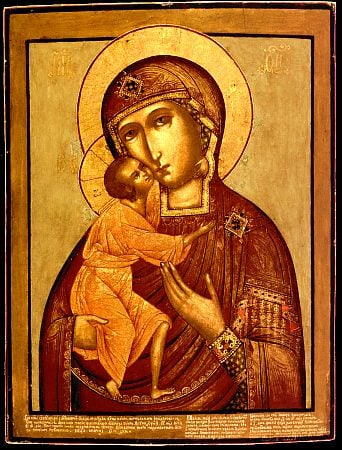
Our Lady of St Theodore (10th century), 18th Century copy of the holy protectress of Kostroma, following the same Byzantine “Tender Mercy” type – PD-Art, via Wikimedia Commons
A trusted friend told me over the last week that my writing – both published and unpublished – was beginning to feel a little restless, a little rushed, even a bit feverish in its production of joy, excitement, and enthusiasm.
It would be tempting to blame this on the Asian American evangelicals with whom I hung out over the last week, but it would not be fair to impugn their spirituality. This is about me. It is not that my writing over the last week was bad, or I wrote anything untrue, or that what I had written and shared both publicly and privately were not encouraging to those who read them. This is not even about my ‘spiritual state’; that is between my confessors and me, not for the blogosphere. This is rather about the state of my intellect.
The insight this friend had for me was the same that I had had for him a few years back. He too is given to enthusiasm, excitement, and even emotional outbursts when he speaks publicly; I used to describe going to a talk with him as an experience.
When I was working in Seattle, this friend of mine came to speak at the local Newman Center on campus on how to think like a Catholic. The hour that followed was perhaps the most boring, tedious, and monotonous talk through which I have ever sat. I had thought that the talk would be about how to engage the passions in the task of thinking; if anything, what my friend delivered was anything but passionate. Certainly, it was methodical, distinguishing between ideas and issues, for example, where ideas were big world-changing thoughts whereas issues were the mot du jour, here today, gone tomorrow.
I was stunned. It was so boring, and during the question-and-answer session, I told him so. ‘This is the first time I have ever seen you so boring, so methodical, so tedious. What is with this intellectual chastity?’ I asked.
Intellectual chastity – this is a word that has come to mark our friendship. Both of us, given in different ways to wild bursts of enthusiasm and emotion, remind each other from time to time that if our bodies must be chaste, so must our minds.
Chastity, my friend reminded me this week, is not only about rigor. Everything that I wrote this week was, after all, true, and indeed, it was full of exuberance for many of the concrete things that I could recount. But rigor does not chastity make. Chastity is what the desert mothers and fathers call the passionless passion – that even as Christ dies his agonizing death in a way that makes Benedict XVI describe it as the ‘mad eros of the cross,’ he is passionless about it, emptying himself even to death, death on a cross. Chastity is kenotic; it is about the emptying of the self so that the body, the mind, and the heart can come into the state of negation where the Holy Spirit can be grasped and possessed. If we were to take this Latin term chastity and fully own it as Byzantine, the passionless passion sounds to me nothing short of hesychasm, the stilling of the heart by quite literally bringing the ‘intellect’ (the nous) into the heart through the negative repetition of the Jesus Prayer so that I encounter Christ there. All intellectual work – all of the writing that I therefore do – is an extension of such hesychastic prayer; it must emanate from the passionless passion, the chastity of the nous.
I think I’ve found what I need to work through during this Great Fast, then. My nous must become chaste; it must descend into the heart; it must beat out the words of the Jesus Prayer. Perhaps there will be visible changes to my writing, both public and private, and perhaps some things will stay the same; who knows? But now I am beginning to understand that the chastity of the intellect, the stillness of the mind, is important for the sustenance of intellectual work.
And thus, I pray the prayer of Holy Antiochus in the Prayers Before Sleep in the Jordanville Prayerbook:
O Ruler of all, Word of the Father, O Jesus Christ, Thou Who art perfect: For the sake of the plenitude of Thy mercy, never depart from me, but always remain in me Thy servant. O Jesus, Good Shepherd of Thy sheep, deliver me not over to the sedition of the serpent, and leave me not to the will of Satan, for the seed of corruption is in me. But do Thou, O Lord, worshipful God, holy King, Jesus Christ, as I sleep, guard me by the Unwaning Light, Thy Holy Spirit, by Whom Thou didst sanctify Thy disciples. O Lord, grant me, Thine unworthy servant, Thy salvation upon my bed. Enlighten my mind with the light of understanding of Thy Holy Gospel; my soul, with the love of Thy Cross; my heart, with the purity of Thy word; my body, with Thy passionless Passion. Keep my thought in Thy humility, and raise me up at the proper time for Thy glorification. For most glorified art Thou together with Thine unoriginate Father, and the Most-holy Spirit, unto the ages. Amen.
O Lord and Master of my life, drive from me the spirit of indifference, despair, lust for power, and idle chatter.
Instead, bestow on your servant the spirit of integrity, humility, patience, and love.
Yes, my Lord and King, grant me to see my own sins and not judge my sisters and brothers, for you are blessed, both now and ever and for ages of ages. Amen.
Previous Post

March 9, 2017
Why I Blog (Part 3): the Chinglican gag on A Christian Thing
Next Post
March 11, 2017 The Blog in the Economia of Academic Writing
Browse Our Archives
Select a Category Academia Anglican Communion anti-racism Aristotle Asia-Pacific Asian American Asian Canadian BlackLivesMatter Cantonese Catholic China Chinglican church politics Church-State Politics Civil Society Conservative Eastern Christianity Evangelical Evangelical Left Feminist/Womanist Theology Food Greek-Catholic Church of Kyiv Hong Kong Housekeeping Kyivan Church Latin Catholicism Law Liberal Liberation Theology New Calvinism Pentecostal/Charismatic Protestant Psychoanalysis Publics Religion Ethnicity Wired Secular Sovereignty TPCIU Uncategorized
Select a Month July 2019 June 2019 May 2019 April 2019 March 2019 February 2019 January 2019 December 2018 November 2018 October 2018 September 2018 August 2018 July 2018 June 2018 May 2018 March 2018 February 2018 January 2018 December 2017 November 2017 October 2017 September 2017 August 2017 July 2017 June 2017 April 2017 March 2017 February 2017 January 2017 December 2016 November 2016 October 2016 September 2016 August 2016 July 2016 January 2016 December 2015 November 2015 October 2015 August 2015 April 2015 March 2015 February 2015 December 2014 November 2014 September 2014 August 2014 July 2014 June 2014 May 2014 April 2014 March 2014 December 2013 November 2013 October 2013 September 2013 August 2013 July 2013 June 2013 May 2013 April 2013 March 2013 February 2013 January 2013 December 2012 October 2012 June 2012 May 2012 April 2012 February 2012 January 2012
Follow Us!
TAKE THE
Religious Wisdom Quiz
What food was eaten during the first Passover?
Select your answer to see how you score.
Unleavened bread, bitter herbs, and lamb Fish and figs Roasted quail and dates Barley and honey
Related posts from Eastern Catholic Person

I've found my way home: on the unraveling...

Patriyarkhat: 'Attending to the movements of my heart'

I'm flattered to be named an Asian American...

The secular does not stop when your drive...
TRENDING AT PATHEOS Catholic

Rejecting Doom: Christian Hope And Human Action
Christianity is a religion of hope. We are to have hope and...

It’s What Comes From Within Which Matters
One of the most difficult things for us to understand is why...

Why I Choose the Eucharist Over the Sermon
Choose the Eucharist, Not the Sermon What are we supposed to get...

5 Design Elements Found in Spiritually Rooted Homes
Putting Spirituality Into Home Decor Our homes are more than our living...

Credo: A Story of God Told with the...
About 10 years ago, I began to imagine a personal "Credo" that...

The Anatomy of Divine Revelation in Catholic Thought
The claim that God has made Himself known to human beings is...
view all Catholic blogs
Ad-Free & Subscriber Log-In Subscription Support
- About Us
- 2026 Calendar
- Videos
- Podcasts
- Library of World Religions
- Faith In Media Tracker
- Advertise With Us
- Write for Us
- Privacy Policy
- Terms of Service
- Do Not Sell My Data
- Contact Us
- Radiant Digital
- Manage Newsletter Subscriptions
- Unsubscribe From Notifications
- Sitemap
Copyright 2008-2026, Patheos. All rights reserved.
Subscription Support Ad-Free & Subscriber Log-In
Follow Patheos