
BuddhistCatholicContemplativeEvangelicalGeneral ChristianHinduJewishLatter-day SaintMuslimNew VisionsProgressive Christian
Beliefs
- Buddhist
- Catholic
- Contemplative
- Evangelical
- General Christian
- Hindu
- Jewish
- Latter-day Saint
- More Voices
- Muslim
- New Visions
- Pagan
- Progressive Christian
Topics
- Religion News
- Food and Religion
- Sports and Religion
- Religious Art
- Religious Music and Entertainment
- Religious Events
- History and Religion
- Style and Religion
- Politics and Religion
- Women in Religion
- Recreation Outdoors and Religion
- Business Finance and Religion
- Careers Workplace and Religion
- Education and Religion
- Family Parenting and Religion
- Health Fitness and Religion
- Home and Religion
- Relationships and Religion
- Technology and Religion
- Travel and Religion
Columnists
- Buddhist Columnists
- Business Finance and Religion Columnists
- Careers Workplace and Religion Columnists
- Catholic Columnists
- Contemplative Columnists
- Education and Religion Columnists
- Evangelists Columnists
- Family Parenting and Religion Columnists
- General Christian Columnists
- Health Fitness and Religion Columnists
- Hindu Columnists
- History and Religion Columnists
- Home and Religion Columnists
- Jewish Columnists
- More Voices Columnists
- Latter Day Columnists
- Muslim Columnists
- New Visions Columnists
- Nonreligious Columnists
- Pagan Columnists
- Politics and Religion Columnists
- Progressive Columnists
- Recreation Outdoors and Religion Columnists
- Relationships and Religion Columnists
- Religion News Columnists
- Religious Art Columnists
- Religious Events Columnists
- Religious Music and Entertainment Columnists
- Sports and Religion Columnists
- Style and Religion Columnists
- Technology and Religion Columnists
- Travel and Religion Columnists
- Women in Religion Columnists
Resource Library
- 2026 Calendar
- Library of World Religions
- The 100 Most Holy Places on Earth
- Patheos Answers
- Podcasts
- Videos
- Faith Leaders Database
- Anglican Episcopalian
- Bahai
- Baptist
- Buddhism
- Christianity
- Confucianism
- Eastern Orthodoxy
- Hinduism
- Holiness and Pentecostal
- ISKCON
- Islam
- Judaism
- Lutheran
- Methodist
- The Church of Jesus Christ of Latter-day Saints
- New Age
- Paganism
- Presbytarian and Reformed
- Protestantism
- Religion Behind the Scenes
- Roman Catholic
- Scientology
- Shia Islam
- Sikhism
- Sufism
- Sunni Islam
- Taoism
- Zen
- See all religions
Research Tools
 Ad-Free & Subscriber Log-In Subscription Support
Ad-Free & Subscriber Log-In Subscription Support
Follow Patheos 

- Trending:
- Forgiveness
- |
- Marriage
- |
- Consciousness
- |
- Death Penalty
- |
- Election
- |
- Halloween
 Eastern Catholic Person
- Home
- Catholic
- Mikrodiakonia, or why it’s important that I’m not having meat for a while
Mikrodiakonia, or why it’s important that I’m not having meat for a while
Last updated on: February 18, 2017 at 3:04 pm by Justin Tse
Mikrodiakonia, or why it’s important that I’m not having meat for a while 2017-02-18T15:04:35-07:00 Justin Tse
Patheos Explore the world's faith through different perspectives on religion and spirituality! Patheos has the views of the prevalent religions and spiritualities of the world.
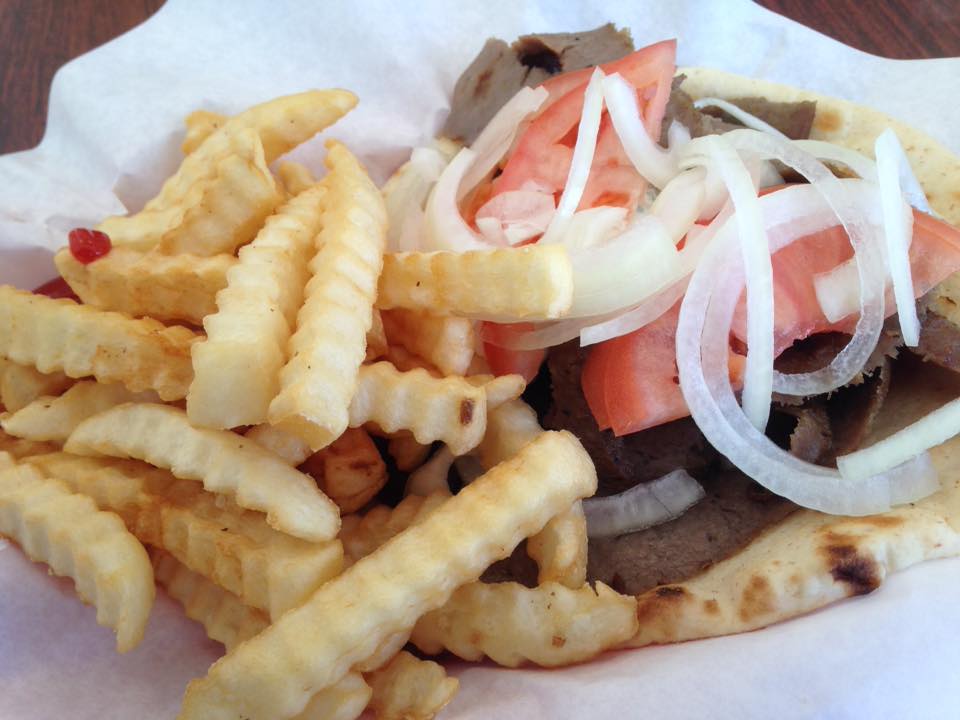
My last meat meal for a while – photo by me
I haven’t written for a while, though again this is not due as much to lack of interest or material as it is lack of time. I have been teaching two courses in Asian American studies at Northwestern, one of which is very heavily populated by students more intelligent than me (the other one is less populated, but still with students of the same caliber). In the effort to make them stupider (this is a goal of my teaching, as it is stupid, basic questions that I think lead to deeper intellectual inquiry), I have neglected blogging, to my great regret, because I have had much to say.
Much of what I had to say, of course, has revolved around the events unfolding in the White House right now, as well as more global geopolitical events involving the Vatican and its relationship with Moscow and Beijing. I wanted to write, for example, about the Pokrova during the Women’s March – in fact, I wanted to give a sort of Byzantine reading of the Women’s March – but I have been prevented for lack of time, which will probably result in fewer trolls from Catholic and Orthodox Internet getting on my case.
One of my readers, however, said to me early this year that he had in fact become disappointed with how ‘partisan’ I have become. I didn’t really understand his objection, as I have always positioned myself on the Eastern Catholic Left, and I teach Asian American studies, to boot. Separating theology from politics, he asked me to write about the big theological picture, not the petty squabbles of politicians. Perhaps because I grew up with Cantonese stories of how it is court intrigue that determines the rise and fall of empires, I objected strongly to him, and I still reserve the right to write about politics, if indeed from a partisan view that can only be construed as confused because I am not quite sure on behalf of which political party I write.
But as critical as I am of this critical friend of mine, I am coming to see that he has a point, although I am taking away from him a point that perhaps he did not intend to give. I have been writing about makrodiakonia, the possibility of a Byzantine form of political discernment in which larger apparatuses can be analyzed, judged theologically, and dismantled by collective actions of solidarity. However, in the recent weeks in which we are leading up to the Great Fast next week, I have encountered moments of hilarious grace in encounters that can be described as mikrodiakonia, individual personal encounters where grace is served.
Take, for example, this morning at my local neighbourhood grill here in Chicago. I walk in, and one of the guys who owns the place already has his hand out ready to shake mine. He asks me what I want, and I tell him that today’s the last day before I can have meat for a while; tomorrow is, after all, Meatfare Sunday, the day when we start eliminating meat from our diet in preparation for the Great Fast which starts on Cheesefare Sunday next week (when we eliminate eggs and dairy too).
‘You fasting, buddy?’ he says. ‘That’s a good thing, man. A good thing.’ I then ask him what’s the best way to load up on meat today. ‘Do the Gyros, man. With fries?’ Yes. ‘Everything on it?’ Yes. ‘Yeah, buddy, that’ll take care of you.’
I realized then that this grill’s owners are Greek, and they close at 3 pm every afternoon. Some friends and I (including two Chinese American evangelicals) are going to Orthodoxy on Tap tonight in Chicago, and I can’t shake the feeling I’m going to see this guy there, as my Kyivan friend tells me that it’s mostly going to be a Greek audience tonight. Of course, I am not saying that all Greek people know each other, but it was pretty obvious this guy knew what the fast was. He even shook my hand again as I left and said, ‘Hey, buddy, don’t worry, I’ll help you out with the fast. I got stuff, no meat, I’ll help you, I gotcha.’
It’s these kinds of encounters that have marked my Herald Fast, the several weeks leading up to the Great Fast. In the three foregoing weeks, we have heard in this order the story of Zacchaeus the Publican repenting so hard from cheating his neighbours that he goes into bankruptcy for the Lord, the story of the Publican who was justified when he prayed for mercy while the Pharisee attempted to justify himself, and the story of the Prodigal Son who wastes his entire house and yet is welcomed back with open arms by his father into the house. In the encounters of mikrodiakonia, it appears that I am, say, the patron of this grill, or as is more often the case for me as an academic, the professor teaching my students. But these encounters – ones marked with love and grace – expose in my own reflection my deep personal flaws, the ones for which I am fasting during this upcoming Great Fast.
A student told me last night that she had never met a professor who was so insistent on combining my teaching, research, and personal spirituality. It was refreshing, she said, and this is the feedback that I’ve gotten from quite a few students who come by office hours and participate in class discussion, like one student who comes by to talk about identity even though I profess to despise identity politics and the other student who is so invested in evangelicalism that she has come to see that capitalism is built on sin and then went to a lecture with me on political theology and neoliberalism and asked a question about how the economia of spiritual gifts in the New Testament is related to the deep structure of the neoliberal order.
But for me, such feedback is revealing because it seems to me that what is refreshing is that my students, more than anyone, see my flaws not only as a teacher, but as a person. The same goes for my work as a writer, especially here on this blog; the more I write, the more my readers are able to see what kind of person I am, and some will latch onto my flaws, especially the ones who are kind to me and actually give me deep engagement and feedback. In saying this, I am not being sarcastic – I would say that I learn more about my own ticks and flaws and sins as a person from those who are kind to me than those who try to eviscerate me on Catholic and Orthodox Internet.
In fact, I came to this conclusion through another micro-personal encounter on Facebook. My settings are set to ‘Public’ in the sense that even those who are not friends of mine can comment. One of these people was a rabid anti-Catholic and anti-Orthodox guy, and he warned me and my Catholic friends that we were basically going to hell if we did not repent, by which he meant that we needed to extricate ourselves from these horribly colonizing church structures and have a Jesus-only relationship. He explained in the course of discussion that he had learned that he was a sinner before he was a Christian, but one of the great things about becoming a Christian is that he was not afraid of God’s punishment and does not need God’s mercy, only forgiveness.
One could criticize such fundamentalism to no end, but it caused me a great deal of reflection. After all, in the Byzantine churches, all we ever do in our liturgy and in our personal prayer is, like the publican, cry for G-d’s mercy. But is it because we are afraid of G-d’s punishment? The liturgy and the personal prayer petitions seem to work against that; more often than not, our prayer for mercy is a response to the love of G-d and his kindness toward us. In the words of the Holy Apostle Paul: Do you not realize that God’s kindness is meant to lead you to repentance?
In the weeks leading up to the Great Fast, all I have been encountering at the micro-political scale is such love, such kindness, such warmth. This is the love of G-d mediated through the personal encounters of mikrodiakonia. But in response, I realize that I could be kinder, I could love my neighbour more deeply and concretely, I could know my stuff better as an academic, and I could definitely afford to lay off some of my leftover colonizing Christian superiority in relation to my neighbour and just be a sinner on whom the Lord has mercy.
For the sake of such love, it is good that I am not going to have meat for a while. I have complained and grumbled about this moment. But as the Vigil of the Sunday of the Last Judgment draws near – we are going to do a readers’ version at my friend’s icon corner, and two of my Chinese American evangelical friends are going to come – I am actually excited about venturing into the desert of this Great Fast. Lord Jesus Christ, Son of G-d, have mercy on me, a sinner.

Browse Our Archives
Select a Category Academia Anglican Communion anti-racism Aristotle Asia-Pacific Asian American Asian Canadian BlackLivesMatter Cantonese Catholic China Chinglican church politics Church-State Politics Civil Society Conservative Eastern Christianity Evangelical Evangelical Left Feminist/Womanist Theology Food Greek-Catholic Church of Kyiv Hong Kong Housekeeping Kyivan Church Latin Catholicism Law Liberal Liberation Theology New Calvinism Pentecostal/Charismatic Protestant Psychoanalysis Publics Religion Ethnicity Wired Secular Sovereignty TPCIU Uncategorized
Select a Month July 2019 June 2019 May 2019 April 2019 March 2019 February 2019 January 2019 December 2018 November 2018 October 2018 September 2018 August 2018 July 2018 June 2018 May 2018 March 2018 February 2018 January 2018 December 2017 November 2017 October 2017 September 2017 August 2017 July 2017 June 2017 April 2017 March 2017 February 2017 January 2017 December 2016 November 2016 October 2016 September 2016 August 2016 July 2016 January 2016 December 2015 November 2015 October 2015 August 2015 April 2015 March 2015 February 2015 December 2014 November 2014 September 2014 August 2014 July 2014 June 2014 May 2014 April 2014 March 2014 December 2013 November 2013 October 2013 September 2013 August 2013 July 2013 June 2013 May 2013 April 2013 March 2013 February 2013 January 2013 December 2012 October 2012 June 2012 May 2012 April 2012 February 2012 January 2012
Follow Us!
TAKE THE
Religious Wisdom Quiz
How many days did God take to create the world?
Select your answer to see how you score.
Six Ten Two Seven
Related posts from Eastern Catholic Person

I've found my way home: on the unraveling...

Home is where your food is: a speech...

I am no longer ashamed of being from...

Patriyarkhat: 'Attending to the movements of my heart'
TRENDING AT PATHEOS Catholic

Rejecting Doom: Christian Hope And Human Action
Christianity is a religion of hope. We are to have hope and...

It’s What Comes From Within Which Matters
One of the most difficult things for us to understand is why...

Why I Choose the Eucharist Over the Sermon
Choose the Eucharist, Not the Sermon What are we supposed to get...

5 Design Elements Found in Spiritually Rooted Homes
Putting Spirituality Into Home Decor Our homes are more than our living...

Credo: A Story of God Told with the...
About 10 years ago, I began to imagine a personal "Credo" that...

The Anatomy of Divine Revelation in Catholic Thought
The claim that God has made Himself known to human beings is...
view all Catholic blogs
Ad-Free & Subscriber Log-In Subscription Support
- About Us
- 2026 Calendar
- Videos
- Podcasts
- Library of World Religions
- Faith In Media Tracker
- Advertise With Us
- Write for Us
- Privacy Policy
- Terms of Service
- Do Not Sell My Data
- Contact Us
- Radiant Digital
- Manage Newsletter Subscriptions
- Unsubscribe From Notifications
- Sitemap
Copyright 2008-2026, Patheos. All rights reserved.
Subscription Support Ad-Free & Subscriber Log-In
Follow Patheos