
BuddhistCatholicContemplativeEvangelicalGeneral ChristianHinduJewishLatter-day SaintMuslimNew VisionsProgressive Christian
Beliefs
- Buddhist
- Catholic
- Contemplative
- Evangelical
- General Christian
- Hindu
- Jewish
- Latter-day Saint
- More Voices
- Muslim
- New Visions
- Pagan
- Progressive Christian
Topics
- Religion News
- Food and Religion
- Sports and Religion
- Religious Art
- Religious Music and Entertainment
- Religious Events
- History and Religion
- Style and Religion
- Politics and Religion
- Women in Religion
- Recreation Outdoors and Religion
- Business Finance and Religion
- Careers Workplace and Religion
- Education and Religion
- Family Parenting and Religion
- Health Fitness and Religion
- Home and Religion
- Relationships and Religion
- Technology and Religion
- Travel and Religion
Columnists
- Buddhist Columnists
- Business Finance and Religion Columnists
- Careers Workplace and Religion Columnists
- Catholic Columnists
- Contemplative Columnists
- Education and Religion Columnists
- Evangelists Columnists
- Family Parenting and Religion Columnists
- General Christian Columnists
- Health Fitness and Religion Columnists
- Hindu Columnists
- History and Religion Columnists
- Home and Religion Columnists
- Jewish Columnists
- More Voices Columnists
- Latter Day Columnists
- Muslim Columnists
- New Visions Columnists
- Nonreligious Columnists
- Pagan Columnists
- Politics and Religion Columnists
- Progressive Columnists
- Recreation Outdoors and Religion Columnists
- Relationships and Religion Columnists
- Religion News Columnists
- Religious Art Columnists
- Religious Events Columnists
- Religious Music and Entertainment Columnists
- Sports and Religion Columnists
- Style and Religion Columnists
- Technology and Religion Columnists
- Travel and Religion Columnists
- Women in Religion Columnists
Resource Library
- 2026 Calendar
- Library of World Religions
- The 100 Most Holy Places on Earth
- Patheos Answers
- Podcasts
- Videos
- Faith Leaders Database
- Anglican Episcopalian
- Bahai
- Baptist
- Buddhism
- Christianity
- Confucianism
- Eastern Orthodoxy
- Hinduism
- Holiness and Pentecostal
- ISKCON
- Islam
- Judaism
- Lutheran
- Methodist
- The Church of Jesus Christ of Latter-day Saints
- New Age
- Paganism
- Presbytarian and Reformed
- Protestantism
- Religion Behind the Scenes
- Roman Catholic
- Scientology
- Shia Islam
- Sikhism
- Sufism
- Sunni Islam
- Taoism
- Zen
- See all religions
Research Tools
 Ad-Free & Subscriber Log-In Subscription Support
Ad-Free & Subscriber Log-In Subscription Support
Follow Patheos 

- Trending:
- Forgiveness
- |
- Marriage
- |
- Consciousness
- |
- Death Penalty
- |
- Election
- |
- Halloween
 Eastern Catholic Person
- Home
- Catholic
- Some of my Cantonese friends seem superstitious about holy water, and I don’t think that’s anything to mock
Some of my Cantonese friends seem superstitious about holy water, and I don’t think that’s anything to mock
Last updated on: January 6, 2017 at 5:46 pm by Justin Tse
Some of my Cantonese friends seem superstitious about holy water, and I don’t think that’s anything to mock 2017-01-06T17:46:36-07:00 Justin Tse
Patheos Explore the world's faith through different perspectives on religion and spirituality! Patheos has the views of the prevalent religions and spiritualities of the world.
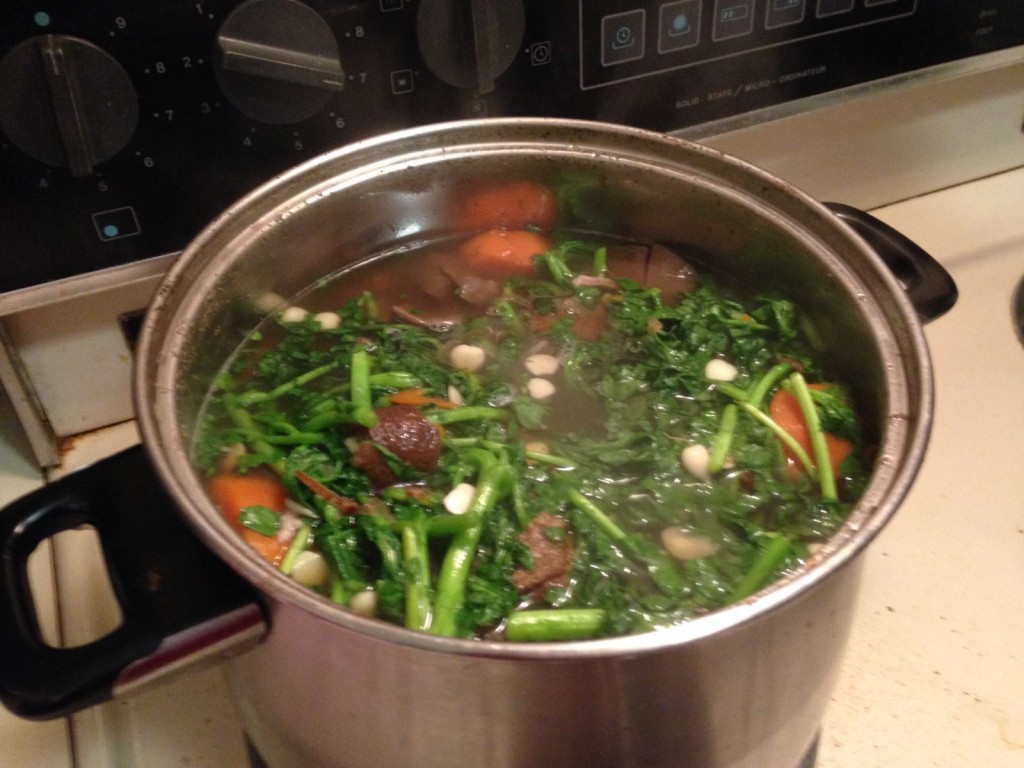
Cantonese watercress soup – I made it, so photo by me
It’s Theophany today, and that has me thinking about the holy water that is sanctified through the Great Blessing of the Waters.
There’s a Cantonese friend of mine who is an evangelical Protestant who is obsessed with holy water. He likes to go to my home temple in Richmond to drink it during coffee hour. I have never witnessed him gulping it down because I am usually at coffee hour itself (the parish hall is across the parking lot), but I hear the amounts he drinks are – in the immortal words of Neil Patrick Harris – legendary. I remember him saying something about it perhaps bringing him success with his business and his prospects for getting a girlfriend (he wants one – and in case you have accidentally bought into all the propaganda about Chinese people being asexual, Cantonese street culture is riddled with sex jokes, just fyi), and I think he therefore found it particularly unhelpful one time he asked my spiritual father to bless his car with holy water and the blessing included, ‘May you be like the Ethiopian eunuch riding in the chariot.’
There’s another Cantonese friend of mine who is canonically Latin who is also obsessed with holy water. Last Theophany, she told me that the holy water blessed by my spiritual father had healing properties and that the Orthodox like to drink their holy water with as much of the candle wax from the Great Blessing as possible. She told me that one time her daughter had a very severe flu but had to go to class anyway, so she slipped some holy water into her congee; en route to the university, the daughter was suddenly cured. That’s the holy water that Father blessed, she told me.
Of course, my spiritual father encourages none of this superstition, although the truth is that because I too may have slipped some into a hot toddy one time when I had a sore throat and felt better afterward (but whether it was the holy water or the aqua vitae, we will never know), I can neither confirm nor deny my participation in propagating such mythology among the easily persuaded at my home temple. But as perverse as I am, my spiritual father is theologically solid with holy water. I heard last night that my spiritual father called the holy water by its correct name, the ‘Jordan water’ (because it is the baptismal water from the Jordan into which Christ was baptized and chased the dragons out of the waters of creation). During his blessing of anything (houses, cars, etc.), he also stresses that what it means for the waters of baptism to drench these material possessions is that they now all belong to Christ. As he stressed to my friend before giving him the blessing of the Ethiopian eunuch, This blessing won’t bring you more business or a girlfriend. This will not prevent you from getting into an accident or having your car break down. All it means is that your car now belongs to Christ. Do you still want to go ahead with the blessing?
My friend gleefully nodded yes. I think he thought that the car belonging to Christ would get him some extra spiritual kickback. I also don’t think he knows that the Ethiopian eunuch is a reference to Isaiah’s prophecy regarding the eunuch: ‘Do not let the eunuch say: “I am just a dry tree”‘ (Is. 56.3b), partly because eunuchs were very much a thing in our ancient imperial courts (it was how to prevent the king’s servants from sleeping with the emperor’s wives) and my friend watches way too many Hong Kong television shows portraying court eunuchs to know the difference between the imperial court and Isaianic prophecy fulfilled by the Holy Deacon Philip. Poor guy.
It would be all too easy to mock my Cantonese friends – one evangelical, one Latin, and others who probably will never dare to tell me what they think of holy water for fear that I’ll blog about it – for their superstitious views on the matter. In fact, that is what some of my Cantonese Protestant friends – the ones who have zero interest in the Byzantine tradition (although they come out for all of our social justice things) – are doing. We had an interesting conversation last night with my friend-who-is-no-eunuch-trust-me, and the topic of superstition came up with reference to his obsession with drinking holy water. Superstition, my Protestant friends said, is when you try to manipulate the supernatural order for personal advantage. I actually have no qualms with that definition myself, although I sure hope that they don’t think the Great Blessing of the Waters, or our veneration of icons, or the real presence in the Eucharist falls under that category.
But I’m a little more hesitant to mock my Cantonese friends in this regard, and that’s because I also don’t want to short-circuit an interesting kind of inculturation that seems to be going on in their comments. This perhaps calls for some understanding of Cantonese culture – by which I do not mean a coherent set of abstract Cantonese values, but a relationship to the material world that can be described as uniquely Cantonese.
We Cantonese (meaning, those of us whose ‘Chineseness’ – whatever that is (story for another day) – is generally associated with the southern Chinese province of Guangdong and usually have some kind of connection with Hong Kong, where the lingua franca is Cantonese) do a thing called Cantonese food therapy. It is as it sounds: we eat, because food heals, and this is so much a part of everyday life that even I do it without thinking too much about it. There is a balance of elements in the body, and you could say it’s yin and yang and be forgiven because you are not in my Asian American religions class. The truth is that it has more to do with hot and cold. I’m told that I have a ‘hot air’ constitution, and that does not only mean that I am prone to nonsense in my writing and teaching. It means, rather, that there are foods that can exacerbate the heat of my constitution – heat not really being sexual arousal (I cannot tell lies here), but all the bad things that are described like feeling like you’re on fire, e.g. sore throat, indigestion, acid reflux, diarrhea – and these foods generally include things that are fried or fat or frozen (an obvious combination of ‘hot’ foods, duh). My wife, on the other hand, has a ‘cold basis,’ and this too has nothing to do with frigidity and everything to do with all that bad things that are described like feeling like your body is freezing up, e.g. dry cough, muscle tension and pain, and headache. Generally, what you do if you are a Cantonese person who eats (which is just about every Cantonese) is that you are trying to achieve some kind of balance between hot and cold. For example, if I am eating ‘hot’ foods (fried, fat, or frozen), I want to balance it out with some ‘cold basis’ foods and drinks (winter melon tea, bitter melon – a lot of melons, come to think of it) so that I do not end up with phlegm the next day.
The highest form of this, I think, is in the Cantonese soup. Combining all of these elements of hot and cold, you can produce a broth. In fact, Chinese medicine is usually about combining herbs to produce a healing broth too; Cantonese soup is a variation on that theme, creating a broth that is not bitter (like herbal medicine), but sumptuous and soothing, usually because there is a big hunk of pork thrown in to get the broth going. If you know how to make soup, you know how to make healing waters from elements hot and cold.
Put this way, my Cantonese friends are not superstitious about holy water. As I know personally that both are experts at making Cantonese soup, it may well be a form of Cantonese inculturation – adding holy water to the repertoire of Cantonese food therapy. Certainly, food therapy doesn’t get you a girlfriend or get you rich, but it does keep you healthy and is meant to have a sort of soothing effect.
Honestly, then, on this Theophany, why not? After all, the honest truth is that such a view of holy water isn’t so much superstitious as it is missing the whole picture, which is technically not a problem if my Cantonese friends – like the people baptized in Kyivan Rus’ a thousand years ago – are allowed to grow in their understanding of the waters of baptism. It is, after all, in holy water that we are immersed into the life of G-d; why would it not be healing? In holy water, we and everything we own ceases to belong to ourselves and are caught up in the economia of G-d; why would it not drive out the things that make us unhealthy? In holy water, we become a part of the reality that Christ has chased the dragons out of the water; why not add it to Cantonese soup and congee and a hot toddy?
Let it be said among us who are Eastern Catholic and Chinese and obviously so because the ‘Eastern’ in Eastern Catholic obviously means that Cantonese should be Eastern Catholic that we know what to do with holy water in our food. Let Cantonese soup become the new borscht; in fact, our Hong Kong tea cafés serve heretical versions of borscht that do not involve beets but do involve brisket. But most of all, let it be said that we are not superstitious at the end of the day, because all it means to partake of holy water is that we who are Cantonese and Christian simply drink it not because we want to get rich or get laid or even get well, but because we belong to Jesus Christ who has been baptized in the Jordan by John.
All creation is filled with rejoicing today, for Christ is baptized in the Jordan!
Browse Our Archives
Select a Category Academia Anglican Communion anti-racism Aristotle Asia-Pacific Asian American Asian Canadian BlackLivesMatter Cantonese Catholic China Chinglican church politics Church-State Politics Civil Society Conservative Eastern Christianity Evangelical Evangelical Left Feminist/Womanist Theology Food Greek-Catholic Church of Kyiv Hong Kong Housekeeping Kyivan Church Latin Catholicism Law Liberal Liberation Theology New Calvinism Pentecostal/Charismatic Protestant Psychoanalysis Publics Religion Ethnicity Wired Secular Sovereignty TPCIU Uncategorized
Select a Month July 2019 June 2019 May 2019 April 2019 March 2019 February 2019 January 2019 December 2018 November 2018 October 2018 September 2018 August 2018 July 2018 June 2018 May 2018 March 2018 February 2018 January 2018 December 2017 November 2017 October 2017 September 2017 August 2017 July 2017 June 2017 April 2017 March 2017 February 2017 January 2017 December 2016 November 2016 October 2016 September 2016 August 2016 July 2016 January 2016 December 2015 November 2015 October 2015 August 2015 April 2015 March 2015 February 2015 December 2014 November 2014 September 2014 August 2014 July 2014 June 2014 May 2014 April 2014 March 2014 December 2013 November 2013 October 2013 September 2013 August 2013 July 2013 June 2013 May 2013 April 2013 March 2013 February 2013 January 2013 December 2012 October 2012 June 2012 May 2012 April 2012 February 2012 January 2012
Follow Us!
TAKE THE
Religious Wisdom Quiz
According to 2 John, anyone who does not continue in the teaching of Christ does not have what?
Select your answer to see how you score.
The Holy Spirit Truth God Salvation
Related posts from Eastern Catholic Person

I've found my way home: on the unraveling...

This time, I have a tradition: on solidarity...

Home is where your food is: a speech...

I am no longer ashamed of being from...
TRENDING AT PATHEOS Catholic

Creation, Preservation, and Teleology in Catholic Theology
As I write this, it is very early Monday morning. Like millions...

The Parable Of The Sower And The Word...
One of Christ’s most famous parables is that of the sower who...

Rejecting Doom: Christian Hope And Human Action
Christianity is a religion of hope. We are to have hope and...

Why I Choose the Eucharist Over the Sermon
Choose the Eucharist, Not the Sermon What are we supposed to get...

5 Design Elements Found in Spiritually Rooted Homes
Putting Spirituality Into Home Decor Our homes are more than our living...

Credo: A Story of God Told with the...
About 10 years ago, I began to imagine a personal "Credo" that...
view all Catholic blogs
Ad-Free & Subscriber Log-In Subscription Support
- About Us
- 2026 Calendar
- Videos
- Podcasts
- Library of World Religions
- Faith In Media Tracker
- Advertise With Us
- Write for Us
- Privacy Policy
- Terms of Service
- Do Not Sell My Data
- Contact Us
- Radiant Digital
- Manage Newsletter Subscriptions
- Unsubscribe From Notifications
- Sitemap
Copyright 2008-2026, Patheos. All rights reserved.
Subscription Support Ad-Free & Subscriber Log-In
Follow Patheos