
BuddhistCatholicContemplativeEvangelicalGeneral ChristianHinduJewishLatter-day SaintMuslimNew VisionsProgressive Christian
Beliefs
- Buddhist
- Catholic
- Contemplative
- Evangelical
- General Christian
- Hindu
- Jewish
- Latter-day Saint
- More Voices
- Muslim
- New Visions
- Pagan
- Progressive Christian
Topics
- Religion News
- Food and Religion
- Sports and Religion
- Religious Art
- Religious Music and Entertainment
- Religious Events
- History and Religion
- Style and Religion
- Politics and Religion
- Women in Religion
- Recreation Outdoors and Religion
- Business Finance and Religion
- Careers Workplace and Religion
- Education and Religion
- Family Parenting and Religion
- Health Fitness and Religion
- Home and Religion
- Relationships and Religion
- Technology and Religion
- Travel and Religion
Columnists
- Buddhist Columnists
- Business Finance and Religion Columnists
- Careers Workplace and Religion Columnists
- Catholic Columnists
- Contemplative Columnists
- Education and Religion Columnists
- Evangelists Columnists
- Family Parenting and Religion Columnists
- General Christian Columnists
- Health Fitness and Religion Columnists
- Hindu Columnists
- History and Religion Columnists
- Home and Religion Columnists
- Jewish Columnists
- More Voices Columnists
- Latter Day Columnists
- Muslim Columnists
- New Visions Columnists
- Nonreligious Columnists
- Pagan Columnists
- Politics and Religion Columnists
- Progressive Columnists
- Recreation Outdoors and Religion Columnists
- Relationships and Religion Columnists
- Religion News Columnists
- Religious Art Columnists
- Religious Events Columnists
- Religious Music and Entertainment Columnists
- Sports and Religion Columnists
- Style and Religion Columnists
- Technology and Religion Columnists
- Travel and Religion Columnists
- Women in Religion Columnists
Resource Library
- 2026 Calendar
- Library of World Religions
- The 100 Most Holy Places on Earth
- Patheos Answers
- Podcasts
- Videos
- Faith Leaders Database
- Anglican Episcopalian
- Bahai
- Baptist
- Buddhism
- Christianity
- Confucianism
- Eastern Orthodoxy
- Hinduism
- Holiness and Pentecostal
- ISKCON
- Islam
- Judaism
- Lutheran
- Methodist
- The Church of Jesus Christ of Latter-day Saints
- New Age
- Paganism
- Presbytarian and Reformed
- Protestantism
- Religion Behind the Scenes
- Roman Catholic
- Scientology
- Shia Islam
- Sikhism
- Sufism
- Sunni Islam
- Taoism
- Zen
- See all religions
Research Tools
 Ad-Free & Subscriber Log-In Subscription Support
Ad-Free & Subscriber Log-In Subscription Support
Follow Patheos 

- Trending:
- Forgiveness
- |
- Marriage
- |
- Consciousness
- |
- Death Penalty
- |
- Election
- |
- Halloween
 Eastern Catholic Person
- Home
- Catholic
- A retraction to my students, some clarifications, a bit of fun, and a hearty introduction
A retraction to my students, some clarifications, a bit of fun, and a hearty introduction
Last updated on: August 11, 2016 at 12:34 am by Justin Tse
A retraction to my students, some clarifications, a bit of fun, and a hearty introduction 2016-08-11T00:34:06-07:00 Justin Tse
Patheos Explore the world's faith through different perspectives on religion and spirituality! Patheos has the views of the prevalent religions and spiritualities of the world.
![St. John of Shanghai and San Francisco on his arrival in Shanghai, November 1934 - from Rose, Seraphim; Abbot Herman (1987) "Part II: A Pictorial Biography" in Blessed John the Wonderworker (third, revised edition ed.), Platina: St. Herman of Alaska Brotherhood [PD-US]](https://wp-media.patheos.com/blogs/sites/721/2016/08/Stjohn_shanghai.png)
St. John of Shanghai and San Francisco on his arrival in Shanghai, November 1934 – from Rose, Seraphim; Abbot Herman (1987) “Part II: A Pictorial Biography” in Blessed John the Wonderworker (third, revised edition ed.), Platina: St. Herman of Alaska Brotherhood (Stjohn_shanghai.png) ([PD-US], via Wikimedia Commons
I’ve been quite quiet on the blog for the last few days because I’ve been working up a storm on other projects, but I thought I’d do a bit of a housekeeping post to let you know what has been going on and to introduce a series of guest posts from a person who was at World Youth Day who might be able to shed a different light on Eastern Catholic personhood, especially because she is Latin Catholic. Her name is Eugenia Geisel, she was one of my students in a course I taught at the University of Washington called ‘Trans-Pacific Christianities,’ and I’ve written about her previously on this blog.
As I brought Eugenia on for a series of posts, I realized that I have to make good on a promise that I made to the students who were in that class: to issue a public retraction for something stupid I said in that classroom. Naturally, it was about Eastern Christianities.
Toward the middle of the term, I tried to emphasize to them a distinction that I often try to blur on this blog (perversely so): that Eastern Christianities do not necessarily refer to Asian and Asian American Christianities! I said that when we are talking about contemporary Christianities in Asia and Asian America, we are usually talking about the Western traditions of Protestantism and Latin Catholicism, although it is true that Christianities in southern India can trace their heritage back to St Thomas; moreover, it is widely known that Syriac Christians established churches throughout the Tang Dynasty, although whether or not they were ‘Nestorians’ is up for some debate.
But for our purposes, I then said, we are not interested in Eastern Christianities in Asia and Asian America, because in modern Asia and Asian America, it’s Western Christianities (I claimed) that have made the most impact there, even if they were ‘inculturated.’
At this point, one of my students who has some relationship to the Syro-Malabar Catholic Church loudly protested. What! she said. But I can trace my line back to St Thomas!
It doesn’t matter, I said. We’re focusing on Western Christianities.
Of all the people who have been the most entertained by my journey to Eastern Catholicism, my students from that class seem to take personal delight in watching me eat those words. The Syro-Malabar student even told me that she had been praying for me to come into communion with the Catholic Church ever since she met me, and she basks in the sweet justice with which her prayers have been answered.
So in light of Eugenia guest-blogging for me, I must say emphatically: of course Eastern Christianities matter in Asia and Asian America! And of course I know about St John Maximovitch the Wonderworker of Shanghai and San Francisco. I am perhaps the only person foolish enough not to have thought of him while making that statement. The class, after all, was not about Asian and Asian American identities. It was about the geographies of Christianity in Asia and Asian America. Everything counts, and this is just the tip of the iceberg.
This is a nice segue into a clarification to my readers. One of my astute readers commented recently that perhaps I should consider what my knowledge of Eastern Catholicism is in relation to whether I am in fact qualified to write an Eastern Catholic blog. While my simple reply is that the above retraction demonstrates that I have not only considered it and found myself not only unqualified but disqualified, perhaps I should reiterate what I said in my first post and in quite a few subsequent posts (such as the one where I took some public – and therefore provisional – notes about what Archbishop Job of Telmessos said): this is a log on the web – and therefore a weblog – of stuff that I as a person am reading, experiencing, and encountering. As a person, I am of course canonically Eastern Catholic, and I try to practice an Orthodox-in-communion-with-Rome theology because I think it’s (generally speaking) good theology. As one of my Latin Catholic friends once said to me, to be a practicing Catholic means that you’re not good at it yet. On this criteria, I am a practicing Eastern Catholic. Michael Pezzulo on Steel Magnificat therefore highlighted in a very kind post he wrote about my blog that my thoughts here are very provisional, as a log on the web should be.
That’s not to say that I don’t do any real academic work; the truth is that I do less of it here and more of it in my day job. What it means to be an Eastern Catholic person is that I am not an Eastern Catholic scholar; academically speaking, I am only a human geographer with interests in religion, ideology, and placemaking in Asia and Asian America. There are others on Patheos Catholic who are actually scholars in an Eastern Catholic tradition, and their ranks do not include me. In fact, I get a lot both devotionally and intellectually from reading them, which means that if knowledge is what you are looking for, you should be reading their blogs. For starters, I recommend reading Henry Karlson’s recent post about Islam and the wisdom of G-d as well as Chase Padusniak’s short and poignant thoughts about the Bulgarian Orthodox Church’s failure to acknowledge the marytrdom of Fr Jacques Hamel. In contrast to them, I am only a scholar in what might be called ‘the geographical tradition,’ but they are really scholars in an Eastern Catholic tradition. For the purposes of this blog, then, I am therefore only a person who has been received into an Eastern Catholic Church, and all I write about is how I am stumbling through this world as a neophyte.
But as an Eastern Catholic person, this doesn’t mean that I don’t see fun connections to Byzantine Christianities in my academic work from time to time. Last week, David Russell Mosley put up a short post with two videos featuring the founder of the theological trend called ‘Radical Orthodoxy,’ John Milbank, speaking about two Latin theologians, St Augustine and St Nicholas of Cusa. This reminded me of a forum that I edited on Syndicate Theology on Milbank’s new book, Beyond Secular Order, where Milbank talks very explicitly about reading Latin theologians like Augustine and Aquinas through the Byzantine lenses of iconography and kingship. I don’t have time here to get into the details or whether Byzantine theology can really be reduced to iconography and kingship, but I found this gem of a footnote as I worked my way through Milbank’s very poetically difficult writing:
Often the contemporary Orthodox churches sustain the myth that the ‘Uniate’ Greek Rite Catholic churches are a post-Reformation phenomenon. In reality their claim to an archaic double fealty is arguably more authentic than the Orthodox abandonment of any subscription to the Roman Empire. For long into the high Middle Ages many in the east acknowledged both Pope and Byzantine emperor, unperturbed by the rift over the filioque. (Milbank, Beyond Secular Order, p. 256, n. 520).
Although nit-pickers will of course take issue with words like ‘Uniate,’ ‘Greek Rite,’ and the overemphasis on the filioque as the key part of the rift between the Christian West and East (it is not, at least according to John Erickson), what struck me about this footnote is how sympathetic Milbank seems to be toward Eastern Catholic projects of ‘double communion,’ as Melkite Archbishop Elias Zoghby (memory eternal) used to put it. The even more interesting point would be that, given Milbank’s argument about bridging Byzantine, Latin, and (gasp!) Anglican theologies of governance, how much would the videos that Mosley posted be examples of Milbank doing his Byzantine reading of Latin theologians? And then for my purposes as an Eastern Catholic person, how would that fly as one avenue (among others) of doing this mysterious task called Eastern Catholic theology as a way of making sense of my stumbling through the life of my church? One day I will talk more about Milbank’s influence on both my ecclesial personhood and on my scholarship in geography, but I would venture to suggest that perhaps Milbank’s awkward terminology about Eastern Catholicism doesn’t mean he’s a total write-off on this matter – there is, after all, a whole special issue in Logos: A Journal of Eastern Christian Studies (which is published by the Metropolitan Andrei Sheptytsky Institute for Eastern Christian Studies in Ottawa) on Radical Orthodoxy.
This finally brings me to an introduction to Eugenia Geisel. As I said in my previous post on her, she was one of my students in the class for which I just issued a retraction. She is a Korean major, with minors in comparative religion and Russian and Slavic literature at the University of Washington. She is also canonically Latin Catholic, and she’ll be writing about an event that is predominantly (but – perhaps unsurprisingly – not completely) Latin Catholic, World Youth Day. The most important thing, though, is that she is a person, and her qualification to write is that she is a person who simply was at World Youth Day, which is a subject about which I have had a good deal of interest on this blog.
But as with Milbank, I think we are in for some surprises from her. After all, it was to her class that I had to issue my retraction on Eastern Christianities. Maybe she will give us some tidbits from the ground up about the presence of Byzantine practices and artefacts at World Youth Day (we certainly have discussed this in personal conversation), even though Polish Catholicism has historically been Latin through and through. Maybe she won’t even know about them until she writes more, or perhaps she won’t even write about them explicitly and leave us to sort through it. Whatever she writes about, I am very excited for these guest posts, and I hope that you will be as well.
John of Shanghai and San Francisco
Previous Post
August 7, 2016
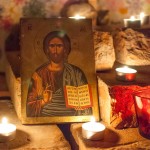
I'm getting my chrismation icons blessed!
Next Post
August 10, 2016 It turns out that I did make it to Kraków
Browse Our Archives
Select a Category Academia Anglican Communion anti-racism Aristotle Asia-Pacific Asian American Asian Canadian BlackLivesMatter Cantonese Catholic China Chinglican church politics Church-State Politics Civil Society Conservative Eastern Christianity Evangelical Evangelical Left Feminist/Womanist Theology Food Greek-Catholic Church of Kyiv Hong Kong Housekeeping Kyivan Church Latin Catholicism Law Liberal Liberation Theology New Calvinism Pentecostal/Charismatic Protestant Psychoanalysis Publics Religion Ethnicity Wired Secular Sovereignty TPCIU Uncategorized
Select a Month July 2019 June 2019 May 2019 April 2019 March 2019 February 2019 January 2019 December 2018 November 2018 October 2018 September 2018 August 2018 July 2018 June 2018 May 2018 March 2018 February 2018 January 2018 December 2017 November 2017 October 2017 September 2017 August 2017 July 2017 June 2017 April 2017 March 2017 February 2017 January 2017 December 2016 November 2016 October 2016 September 2016 August 2016 July 2016 January 2016 December 2015 November 2015 October 2015 August 2015 April 2015 March 2015 February 2015 December 2014 November 2014 September 2014 August 2014 July 2014 June 2014 May 2014 April 2014 March 2014 December 2013 November 2013 October 2013 September 2013 August 2013 July 2013 June 2013 May 2013 April 2013 March 2013 February 2013 January 2013 December 2012 October 2012 June 2012 May 2012 April 2012 February 2012 January 2012
Follow Us!
TAKE THE
Religious Wisdom Quiz
Which Christian denomination is most associated with the Reformation led by Martin Luther?
Select your answer to see how you score.
Orthodox Catholic Lutheran Anglican
Related posts from Eastern Catholic Person

I've found my way home: on the unraveling...

I am no longer ashamed of being from...

Patriyarkhat: 'Attending to the movements of my heart'

I'm flattered to be named an Asian American...
TRENDING AT PATHEOS Catholic

Creation, Preservation, and Teleology in Catholic Theology
As I write this, it is very early Monday morning. Like millions...

The Parable Of The Sower And The Word...
One of Christ’s most famous parables is that of the sower who...

Rejecting Doom: Christian Hope And Human Action
Christianity is a religion of hope. We are to have hope and...

Why I Choose the Eucharist Over the Sermon
Choose the Eucharist, Not the Sermon What are we supposed to get...

5 Design Elements Found in Spiritually Rooted Homes
Putting Spirituality Into Home Decor Our homes are more than our living...

Credo: A Story of God Told with the...
About 10 years ago, I began to imagine a personal "Credo" that...
view all Catholic blogs
Ad-Free & Subscriber Log-In Subscription Support
- About Us
- 2026 Calendar
- Videos
- Podcasts
- Library of World Religions
- Faith In Media Tracker
- Advertise With Us
- Write for Us
- Privacy Policy
- Terms of Service
- Do Not Sell My Data
- Contact Us
- Radiant Digital
- Manage Newsletter Subscriptions
- Unsubscribe From Notifications
- Sitemap
Copyright 2008-2026, Patheos. All rights reserved.
Subscription Support Ad-Free & Subscriber Log-In
Follow Patheos