
BuddhistCatholicContemplativeEvangelicalGeneral ChristianHinduJewishLatter-day SaintMuslimNew VisionsProgressive Christian
Beliefs
- Buddhist
- Catholic
- Contemplative
- Evangelical
- General Christian
- Hindu
- Jewish
- Latter-day Saint
- More Voices
- Muslim
- New Visions
- Pagan
- Progressive Christian
Topics
- Religion News
- Food and Religion
- Sports and Religion
- Religious Art
- Religious Music and Entertainment
- Religious Events
- History and Religion
- Style and Religion
- Politics and Religion
- Women in Religion
- Recreation Outdoors and Religion
- Business Finance and Religion
- Careers Workplace and Religion
- Education and Religion
- Family Parenting and Religion
- Health Fitness and Religion
- Home and Religion
- Relationships and Religion
- Technology and Religion
- Travel and Religion
Columnists
- Buddhist Columnists
- Business Finance and Religion Columnists
- Careers Workplace and Religion Columnists
- Catholic Columnists
- Contemplative Columnists
- Education and Religion Columnists
- Evangelists Columnists
- Family Parenting and Religion Columnists
- General Christian Columnists
- Health Fitness and Religion Columnists
- Hindu Columnists
- History and Religion Columnists
- Home and Religion Columnists
- Jewish Columnists
- More Voices Columnists
- Latter Day Columnists
- Muslim Columnists
- New Visions Columnists
- Nonreligious Columnists
- Pagan Columnists
- Politics and Religion Columnists
- Progressive Columnists
- Recreation Outdoors and Religion Columnists
- Relationships and Religion Columnists
- Religion News Columnists
- Religious Art Columnists
- Religious Events Columnists
- Religious Music and Entertainment Columnists
- Sports and Religion Columnists
- Style and Religion Columnists
- Technology and Religion Columnists
- Travel and Religion Columnists
- Women in Religion Columnists
Resource Library
- 2026 Calendar
- Library of World Religions
- The 100 Most Holy Places on Earth
- Patheos Answers
- Podcasts
- Videos
- Faith Leaders Database
- Anglican Episcopalian
- Bahai
- Baptist
- Buddhism
- Christianity
- Confucianism
- Eastern Orthodoxy
- Hinduism
- Holiness and Pentecostal
- ISKCON
- Islam
- Judaism
- Lutheran
- Methodist
- The Church of Jesus Christ of Latter-day Saints
- New Age
- Paganism
- Presbytarian and Reformed
- Protestantism
- Religion Behind the Scenes
- Roman Catholic
- Scientology
- Shia Islam
- Sikhism
- Sufism
- Sunni Islam
- Taoism
- Zen
- See all religions
Research Tools
 Ad-Free & Subscriber Log-In Subscription Support
Ad-Free & Subscriber Log-In Subscription Support
Follow Patheos 

- Trending:
- Forgiveness
- |
- Marriage
- |
- Consciousness
- |
- Death Penalty
- |
- Election
- |
- Halloween
 Eastern Catholic Person
- Home
- Catholic
- The Parastas That Became for Père Jacques
The Parastas That Became for Père Jacques
Last updated on: July 28, 2016 at 1:07 am by Justin Tse
The Parastas That Became for Père Jacques 2016-07-28T01:07:05-07:00 Justin Tse
Patheos Explore the world's faith through different perspectives on religion and spirituality! Patheos has the views of the prevalent religions and spiritualities of the world.
![By RassaphoreGeorge (Parastas in Cemetary.jpg) [CC by 1.0 (https://creativecommons.org/publicdomain/zero/1.0/deed.en)] via Wikimedia Commons](https://wp-media.patheos.com/blogs/sites/721/2016/07/Parastas_in_Cemetery-1024x742.jpg)
By RassaphoreGeorge (Parastas in Cemetary.jpg) [CC by 1.0 (https://creativecommons.org/publicdomain/zero/1.0/deed.en)] via Wikimedia Commons
Yesterday afternoon at the Eastern Catholic Church in Richmond, we said a parastas. The Order of Parastas is a memorial service for those who have fallen asleep (‘reposed’) in Christ. There were three of us – one Chinese evangelical, one Eastern Catholic Jesuit who is also Chinese Canadian, and me (whatever I am) – and therefore the Lord was in our midst.
We had planned this parastas last week. I had first suggested it to my priest because a few of my close friends had asked me to pray for their families. Apart from one Latin Catholic who asked us to pray for her father who recently reposed, many of my friends – even though I have become Eastern Catholic – are evangelicals, and the people we prayed for were, for the most part, evangelical Protestants: a friend’s mother-in-law, another’s classmate, still another’s pastor, and more in another’s extended family. Though many of us are not in communion, there are no boundaries for praying for the souls of those who have reposed.
Yesterday morning, we woke up and learned of what had happened in Normandy – how Islamic State sympathizers had stormed the threshold of a church during morning mass, slit the throat of the celebrant Fr Jacques Hamel, and used some of the small group of mass attendees as human shields until they were dispatched by the police. As the Church with the world, we were horrified. Jean Duchesne – the Archbishop of Paris’s special advisor – writes starkly, ‘Until now…the fanatics had attacked aspects of the flattering self-image that we “citizens” have of ourselves’ (like Charlie Hebdo, the French National Stadium, the Bataclan, the Eleventh Arrondissement, Bastille Day), but this time, the ‘target of this revenge was the root of the West, the West’s living source, even when it is unremembered – namely, Christianity, in the time and the place where, tacitly but invincibly, it becomes most explicitly and intensely real: the celebration of the Mass.’ Mary Pezzulo is therefore right when she cautions against jumping to the celebration of martyrdom here: ‘This is a tragedy and a trauma, and people who try to make it out to be nothing but a cause for celebration are wrong. Terrorist attacks are always a failure of humanity. We should always be traumatized. We should always weep.’
Radically, then, the parastas positions every death in relation to the martyrs. The extended conclusion of the service is called the Canon of the Departed, and in each of the odes that compose it, we hear of the solidarity of the martyrs with the reposed. In the first ode, we listen to the martyrs interceding for the reposed: ‘Your courageous martyrs,’ the first ode reads, ‘in their heavenly mansions implore You, O Lord: Deem the faithful, whom You have taken from the earth, worthy to receive Your eternal blessings.’ The same goes for the third ode: ‘Your martyrs, O Giver of Life, have competed according to the rules and were rewarded with the laurel of victory, now they ask of You eternal redemption for the earnestly praying faithful ones who have departed from us.’
The sixth ode explains this invocation of the martyrs by identifying them with the sufferings of Christ on the cross: ‘While being nailed to the Cross, O Blessed One, You gathered to Yourself throngs of martyrs who imitated Your passion; therefore we beseech You, give rest to them who have now departed to You.’ The ninth ode teaches that the reposed imitate the martyrs: ‘Hope encouraged the multitude of martyrs and directed them in fervour to Your love, and it foreshadowed the future and truly undisturbed rest. O Gracious One, grant that Your departed faithful may attain the same rest.’
At one point while we were singing through this canon, our priest paused to make a reflection. It is not at every parastas that we remember those who have died in our time in odium fidei, as the Latins say. But on the very day of our parastas, Père Jacques had received the culmination of a long life (as another colleague also noted) – the crown of martyrdom, his blood spilled upon the very altar where Christ’s blood is poured out for us.
The parastas is thus supposed to remind us that every death is a shock. But to say it like that would almost be to slip into an #AllLivesMatter key, to throw a glib Valar morghulis in dismissal of all the departed. The horror of such triviality, as my parish priest often reminds us, is that it is a ‘détente with death,’ a numb acceptance that death is final and even a fine end to a celebrated life.
The blood of the martyrs, in connection with the blood of Christ spilled by the principalities and powers of this age, awakens us from our numbness. Yes, the martyrs bear witness (as the odes say) to the hope of the resurrection, but their bodies also fully display the profound evil manifested by those who, motivated by ideology of any kind, perpetrate the horror of death. It is enough that death is horrible. How much worse it is when this horror is purposefully brought about by a deliberate act. Perhaps this is why G-d commands his people in the Decalogue: ‘You shall not kill.’
Including Père Jacques in our parastas brought us from the ideal conception of martyrdom to its horrific concrete reality. It is not fine that he died the way he did, and therefore, it is also not fine that my friends’ mother-in-law, father, pastor, classmate, and extended families died. By all accounts, Père Jacques was sundered from his community by death; my friends are also stricken with grief because their loved ones have been sundered from them. The pain of Père Jacques and his parish is our pain; the pain of death experienced by my Protestant friends is also our church’s to share. None of it is the way it should be; we grieve because it is the way that things currently stand.
‘Break your contract with death!’ our priest once exhorted during a homily a few months back. He did not have to repeat it at our service, as the parastas conveyed the same message. When the Canon speaks of the solidarity of the martyrs in Christ with the reposed, does this not presume, as our Lord tells the Sadducees, that ‘He is not God of the dead, but of the living’ (Matt. 22.32)? This is the blessed hope, Metropolitan John of Pergamon reminds us, of belonging to the Church, of having an ‘ecclesial mode of existence,’ because in a ‘hypostasis’ of ‘communion and love,’
the body transcends together with its individualism and separation from other beings even its own dissolution, which is death. Since it has been shown as a body of communion to be free from the laws of its biological nature with regard to individualism and exclusiveness, why should it not also be shown finally to be free even from the very laws relating to death, which are only the other side of the same coin? The ecclesial existence of man, his hypostasization in a eucharistic manner, thus constitutes a pledge, an “earnest,” of the final victory of man over death. This victory will be a victory not of nature but of the person, and consequently not a victory of man in his self-sufficency but of man in his hypostatic union with God, that is, a victory of God as the man of patristic Christology. (Zizioulas, Being as Communion: Studies in Personhood and the Church, p. 64).
‘Christ is risen from the dead,’ we thus sing at Pascha, ‘trampling death by death, and to those in the tombs giving life.’ We proclaim in the Hymn of St Athanasius of Alexandria at every Divine Liturgy: ‘You were crucified, O Christ our God, and trampled death by death.’ Even more pointedly, the parastas invokes the martyrs, the ones who died the most horribly, to trample death as they intercede for all the reposed. Death makes no sense, but the ones who died the most senseless of all deaths – death perpetrated by persons possessed by ideology – triumph over the horror by participating in the destruction of death itself. Therefore, just as the martyrs interceded for Père Jacques at his martyrdom, so by including him in our parastas, he too intercedes together with the martyrs (as the parastas teaches) for all the reposed we remembered as we prayed. Together, they behold the Lord’s face, and the Crucified One wipes away their tears with his pierced hand.
Like the thief who called to Christ on the cross asking to be remembered when the Lord comes into his kingdom, we finished the parastas asking that the Lord will make their memory to be eternal.
Eternal memory! Eternal memory! Eternal memory!
Eternal memory! Eternal memory! Eternal memory!
With the saints, give them rest, O Christ!
Eternal memory!
Previous Post

July 26, 2016
I'm a person on Patheos!
Next Post

July 27, 2016 Growing Up Conservative
Browse Our Archives
Select a Category Academia Anglican Communion anti-racism Aristotle Asia-Pacific Asian American Asian Canadian BlackLivesMatter Cantonese Catholic China Chinglican church politics Church-State Politics Civil Society Conservative Eastern Christianity Evangelical Evangelical Left Feminist/Womanist Theology Food Greek-Catholic Church of Kyiv Hong Kong Housekeeping Kyivan Church Latin Catholicism Law Liberal Liberation Theology New Calvinism Pentecostal/Charismatic Protestant Psychoanalysis Publics Religion Ethnicity Wired Secular Sovereignty TPCIU Uncategorized
Select a Month July 2019 June 2019 May 2019 April 2019 March 2019 February 2019 January 2019 December 2018 November 2018 October 2018 September 2018 August 2018 July 2018 June 2018 May 2018 March 2018 February 2018 January 2018 December 2017 November 2017 October 2017 September 2017 August 2017 July 2017 June 2017 April 2017 March 2017 February 2017 January 2017 December 2016 November 2016 October 2016 September 2016 August 2016 July 2016 January 2016 December 2015 November 2015 October 2015 August 2015 April 2015 March 2015 February 2015 December 2014 November 2014 September 2014 August 2014 July 2014 June 2014 May 2014 April 2014 March 2014 December 2013 November 2013 October 2013 September 2013 August 2013 July 2013 June 2013 May 2013 April 2013 March 2013 February 2013 January 2013 December 2012 October 2012 June 2012 May 2012 April 2012 February 2012 January 2012
Follow Us!
TAKE THE
Religious Wisdom Quiz
According to Hebrews, who serves as a copy and shadow of what is in heaven?
Select your answer to see how you score.
The angels The priests in the earthly sanctuary The apostles The prophets
Related posts from Eastern Catholic Person

I've found my way home: on the unraveling...
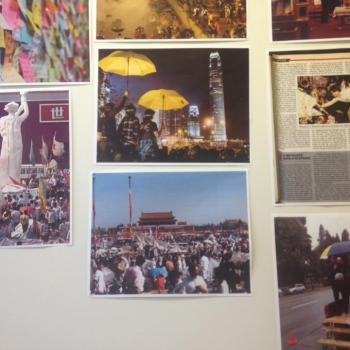
Tiananmen is my first childhood memory: reflections on...

Patriyarkhat: 'Attending to the movements of my heart'

I'm flattered to be named an Asian American...
TRENDING AT PATHEOS Catholic

Creation, Preservation, and Teleology in Catholic Theology
As I write this, it is very early Monday morning. Like millions...

The Parable Of The Sower And The Word...
One of Christ’s most famous parables is that of the sower who...

Rejecting Doom: Christian Hope And Human Action
Christianity is a religion of hope. We are to have hope and...

Why I Choose the Eucharist Over the Sermon
Choose the Eucharist, Not the Sermon What are we supposed to get...

5 Design Elements Found in Spiritually Rooted Homes
Putting Spirituality Into Home Decor Our homes are more than our living...

Credo: A Story of God Told with the...
About 10 years ago, I began to imagine a personal "Credo" that...
view all Catholic blogs
Ad-Free & Subscriber Log-In Subscription Support
- About Us
- 2026 Calendar
- Videos
- Podcasts
- Library of World Religions
- Faith In Media Tracker
- Advertise With Us
- Write for Us
- Privacy Policy
- Terms of Service
- Do Not Sell My Data
- Contact Us
- Radiant Digital
- Manage Newsletter Subscriptions
- Unsubscribe From Notifications
- Sitemap
Copyright 2008-2026, Patheos. All rights reserved.
Subscription Support Ad-Free & Subscriber Log-In
Follow Patheos