
BuddhistCatholicContemplativeEvangelicalGeneral ChristianHinduJewishLatter-day SaintMuslimNew VisionsProgressive Christian
Beliefs
- Buddhist
- Catholic
- Contemplative
- Evangelical
- General Christian
- Hindu
- Jewish
- Latter-day Saint
- More Voices
- Muslim
- New Visions
- Pagan
- Progressive Christian
Topics
- Religion News
- Food and Religion
- Sports and Religion
- Religious Art
- Religious Music and Entertainment
- Religious Events
- History and Religion
- Style and Religion
- Politics and Religion
- Women in Religion
- Recreation Outdoors and Religion
- Business Finance and Religion
- Careers Workplace and Religion
- Education and Religion
- Family Parenting and Religion
- Health Fitness and Religion
- Home and Religion
- Relationships and Religion
- Technology and Religion
- Travel and Religion
Columnists
- Buddhist Columnists
- Business Finance and Religion Columnists
- Careers Workplace and Religion Columnists
- Catholic Columnists
- Contemplative Columnists
- Education and Religion Columnists
- Evangelists Columnists
- Family Parenting and Religion Columnists
- General Christian Columnists
- Health Fitness and Religion Columnists
- Hindu Columnists
- History and Religion Columnists
- Home and Religion Columnists
- Jewish Columnists
- More Voices Columnists
- Latter Day Columnists
- Muslim Columnists
- New Visions Columnists
- Nonreligious Columnists
- Pagan Columnists
- Politics and Religion Columnists
- Progressive Columnists
- Recreation Outdoors and Religion Columnists
- Relationships and Religion Columnists
- Religion News Columnists
- Religious Art Columnists
- Religious Events Columnists
- Religious Music and Entertainment Columnists
- Sports and Religion Columnists
- Style and Religion Columnists
- Technology and Religion Columnists
- Travel and Religion Columnists
- Women in Religion Columnists
Resource Library
- 2026 Calendar
- Library of World Religions
- The 100 Most Holy Places on Earth
- Patheos Answers
- Podcasts
- Videos
- Faith Leaders Database
- Anglican Episcopalian
- Bahai
- Baptist
- Buddhism
- Christianity
- Confucianism
- Eastern Orthodoxy
- Hinduism
- Holiness and Pentecostal
- ISKCON
- Islam
- Judaism
- Lutheran
- Methodist
- The Church of Jesus Christ of Latter-day Saints
- New Age
- Paganism
- Presbytarian and Reformed
- Protestantism
- Religion Behind the Scenes
- Roman Catholic
- Scientology
- Shia Islam
- Sikhism
- Sufism
- Sunni Islam
- Taoism
- Zen
- See all religions
Research Tools
 Ad-Free & Subscriber Log-In Subscription Support
Ad-Free & Subscriber Log-In Subscription Support
Follow Patheos 

- Trending:
- Forgiveness
- |
- Marriage
- |
- Consciousness
- |
- Death Penalty
- |
- Election
- |
- Halloween
 Eastern Catholic Person
- Home
- Catholic
- I really thought I didn’t do China studies until 2014
I really thought I didn’t do China studies until 2014
Last updated on: July 28, 2016 at 3:25 pm by Justin Tse
I really thought I didn’t do China studies until 2014 2016-07-28T15:25:24-07:00 Justin Tse
Patheos Explore the world's faith through different perspectives on religion and spirituality! Patheos has the views of the prevalent religions and spiritualities of the world.
![Umbrella Movement, Mong Kok, 2014 - by Citobun (Umbrella_movement_Mong_Kok_November_26_2014_post-clearance_35) [CC BY-SA 4.0 (https://creativecommons.org/licenses/by-sa/4.0/deed.en)], via Wikimedia Commons](https://wp-media.patheos.com/blogs/sites/721/2014/12/Umbrella_movement_Mong_Kok_November_26_2014_post-clearance_35-1024x681.jpg)
Umbrella Movement, Mong Kok, 2014 – by Citobun (Umbrella_movement_Mong_Kok_November_26_2014_post-clearance_35) [CC BY-SA 4.0 (https://creativecommons.org/licenses/by-sa/4.0/deed.en)], via Wikimedia Commons
If New Year’s Eve is a time to take stock of what went down in the year before, you could say that I’ve had a lot of thinking to do.
I’m in the middle of finishing yet another piece on the Hong Kong protests of 2014, a topic that has occupied much of my thinking since late September and that is making me rethink how I articulate my academic interests. Those who read this blog know that I rotate among several items of interest regularly – American megachurches and the demise of Mars Hill Church, property politics in British Columbia, an occasional dabble into Roman Catholic geopolitics, and a great deal about how the private consensus is unraveling. I insist that I work on publics, that my regional focus is the Pacific Rim, that my postdoctoral work is on Asian American and Asian Canadian studies.
All of this is of no avail. It’s taken the events of 2014 – the Sunflower Movement in Taiwan and the Umbrella Movement in Hong Kong – to make me realize that I need to admit myself that I do China studies.
This is a difficult admission to make. When I began my doctorate, my committee’s advice to me to work on Christianity in China – by which they meant the People’s Republic of China (PRC) – set me at odds with them. The jobs were there, they told me, because of the growing political and economic power of the PRC, as well as the proliferation of (often elite) migrants from the PRC around the world. It made sense: I’m Chinese, I speak both Cantonese and Mandarin, I operate with enough of a reading knowledge of Chinese to get by if I have sufficient dictionary tools (we in geography do not have a language requirement, unlike our friends in the humanities), and this would all be a match made in heaven with China written into the title.
The thing was, I didn’t want to be pegged as a China studies guy, and still don’t. As I observed the academy at the time, that seemed to be precisely what was happening. If you do China, you devote your whole life to studying China, China, and more China. I had other interests. I was working on grounded theologies. I wanted to do stuff on public spheres. I didn’t want to give up Asian American and Asian Canadian studies.
The result is that my committee and I agreed that I should do a Pacific Rim church-state relations kind of project. That’s why I ended up studying the contributions of Cantonese-speaking (read: Hong Kong-centric) Chinese Christians in Vancouver, San Francisco, and Hong Kong. I indulged in Asian American and Asian Canadian studies. I read mostly in public sphere theory and political theology. I even dabbled in Catholic studies to balance out what I was seeing as a Protestant obsession in the social science of religion, and I wrote a postdoctoral fellowship grant to study younger-generation Asian Americans and Asian Canadians in the Pacific Northwest. I was extremely gratified when my new research in Seattle and Vancouver turned up case after case of younger-generation people arguing that they did not have transnational Asian sensibilities, that having been raised in America and Canada, they focused their energies on local issues and conceptualized their difference in terms of race. I even taught a class on American religion.
And then the Sunflower Movement happened. Then Occupy Central heated up. Then the Umbrella Movement exploded.
When students occupied the Legislative Yuan in Taipei in March, I began to accept that my research would always have Asia-Pacific connections. I was, after all, still going to draft and submit articles on Hong Kong, and I had planned to do one on Occupy Central as soon as it was clear what kind of civil disobedience Benny Tai actually had in mind. But then things began to heat up, very seriously. I began to write primers on this blog – primer after primer – that I inserted between all the Mark Driscoll posts that the evangelical blogosphere was begging for. I also wrote posts over the summer about whether Asian Americans and Asian Canadians could be supportive of the impending Occupy Central protests.
And then it happened. It finally happened. After months and months of stalling, the students gave up on Occupy Central and decided fatefully to enact a series of student strikes and to take back Civic Square in Admiralty. When police fired back with tear gas and pepper spray, it wasn’t Central that got occupied – it was Admiralty, Lippo Centre, Causeway Bay, and (good heavens!) Mong Kok across the water. The Umbrella Movement was on, and I had followed it all the way up to that point.
But it wasn’t until I started writing and giving talks on Hong Kong that it dawned on me that, against my will, talking about Hong Kong and Taiwan will still get you pegged as a China studies guy. The questions I began to get asked in Catholic interviews were about Sino-Vatican relations. When I gave a talk on the ‘shadow of Tiananmen’ – a topic that had been decided prior to the Umbrella Movement – I got thrown a bunch of questions about the Chinese state apparatus. Even when answering objections about American involvement, I found myself having to think a lot about how the PRC propaganda machine worked. One piece that started out on this blog and wound up working itself itself into several talks is now even being slated for publication in an academic journal called Review of Religion in Chinese Society.
I’ve finally accepted it.
In a way, I’ve prepared for it. I did my share of reading China geographers for my comprehensive exams – George Lin, Fulong Wu, Laurence Ma, Carolyn Cartier. I certainly had thought a lot about Chinese urbanisms as part of studying Asia-Pacific urban geographies. My undergraduate advisor Tim Cheek also employed me to be his research assistant as he worked on post-Reform China and the role of zhishifenzi (intellectuals) throughout the twentieth century. The times that I’ve had to ask my friend Anna Scott – now a Georgetown graduate student working on Chinese policy – about the Chinese state apparatus have been too many to count. I had thought through the ‘trans-Pacific transpositions’ that historian Tim Tseng writes about, connecting Chinese nationalisms with Chinese churches in the Americas. I had even found that one of the major texts in public sphere theory, Craig Calhoun’s Neither Emperors Nor Gods, was on the 1989 Beijing Spring in Tiananmen Square – not a popular topic with the PRC, to be sure, but definitely centering China studies all the same. But to admit that I was actually studying China from the outside-in, that’s something that perhaps I had said one or two times, but that I had never taken seriously.
Now I have to. The last few months have made me think constantly about the Chinese state apparatus, what ‘one country, two systems’ means, and the extent of the PRC machine into North American societies, both in terms of influence and in terms of protest. I think a good deal about the PRC, and I’ve been reviewing a bunch of China studies stuff in order to do a half-decent job writing about Hong Kong.
So, as 2014 draws to a close, I suppose that for all the talk about doing geography, religious studies, public sphere theory, Catholic studies, Protestant studies, American studies, Canadian studies, Hong Kong studies, migration studies, and trans-Pacific studies, my committee was right all along. I have to be honest with myself. If the study of public spheres in Greater China and Asian North America keeps on drawing me in this direction, then I suppose I do have an interest in things like Sino-Vatican relations, Chinese ideologies of privatization, PRC policy geographies in Greater China, and public spheres and religious spaces as Hong Kong relates to China. In that case, I really do do China studies.
Bring it on, 2015. I’m late to my own party, and I’ve got to catch up on. Bring it.
POSTSCRIPT: This means, of course, that #TPCIU is as related to the American studies side of my work as it is the China/Asia-Pacific side. But you knew that already.
Previous Post

November 30, 2014
We're Awake
Next Post
February 9, 2015 Nobody expects Reinhold Niebuhr
Browse Our Archives
Select a Category Academia Anglican Communion anti-racism Aristotle Asia-Pacific Asian American Asian Canadian BlackLivesMatter Cantonese Catholic China Chinglican church politics Church-State Politics Civil Society Conservative Eastern Christianity Evangelical Evangelical Left Feminist/Womanist Theology Food Greek-Catholic Church of Kyiv Hong Kong Housekeeping Kyivan Church Latin Catholicism Law Liberal Liberation Theology New Calvinism Pentecostal/Charismatic Protestant Psychoanalysis Publics Religion Ethnicity Wired Secular Sovereignty TPCIU Uncategorized
Select a Month July 2019 June 2019 May 2019 April 2019 March 2019 February 2019 January 2019 December 2018 November 2018 October 2018 September 2018 August 2018 July 2018 June 2018 May 2018 March 2018 February 2018 January 2018 December 2017 November 2017 October 2017 September 2017 August 2017 July 2017 June 2017 April 2017 March 2017 February 2017 January 2017 December 2016 November 2016 October 2016 September 2016 August 2016 July 2016 January 2016 December 2015 November 2015 October 2015 August 2015 April 2015 March 2015 February 2015 December 2014 November 2014 September 2014 August 2014 July 2014 June 2014 May 2014 April 2014 March 2014 December 2013 November 2013 October 2013 September 2013 August 2013 July 2013 June 2013 May 2013 April 2013 March 2013 February 2013 January 2013 December 2012 October 2012 June 2012 May 2012 April 2012 February 2012 January 2012
Follow Us!
TAKE THE
Religious Wisdom Quiz
What does Paul teach about boasting?
Select your answer to see how you score.
Boast in riches Boast in the Lord Never boast Boast in yourself
Related posts from Eastern Catholic Person

I've found my way home: on the unraveling...

The Bay Area of the nineties is where...

This time, I have a tradition: on solidarity...
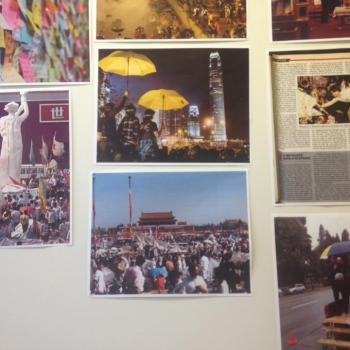
Tiananmen is my first childhood memory: reflections on...
TRENDING AT PATHEOS Catholic

Rejecting Doom: Christian Hope And Human Action
Christianity is a religion of hope. We are to have hope and...

It’s What Comes From Within Which Matters
One of the most difficult things for us to understand is why...

Why I Choose the Eucharist Over the Sermon
Choose the Eucharist, Not the Sermon What are we supposed to get...

5 Design Elements Found in Spiritually Rooted Homes
Putting Spirituality Into Home Decor Our homes are more than our living...

Credo: A Story of God Told with the...
About 10 years ago, I began to imagine a personal "Credo" that...

The Anatomy of Divine Revelation in Catholic Thought
The claim that God has made Himself known to human beings is...
view all Catholic blogs
Ad-Free & Subscriber Log-In Subscription Support
- About Us
- 2026 Calendar
- Videos
- Podcasts
- Library of World Religions
- Faith In Media Tracker
- Advertise With Us
- Write for Us
- Privacy Policy
- Terms of Service
- Do Not Sell My Data
- Contact Us
- Radiant Digital
- Manage Newsletter Subscriptions
- Unsubscribe From Notifications
- Sitemap
Copyright 2008-2026, Patheos. All rights reserved.
Subscription Support Ad-Free & Subscriber Log-In
Follow Patheos