
BuddhistCatholicContemplativeEvangelicalGeneral ChristianHinduJewishLatter-day SaintMuslimNew VisionsProgressive Christian
Beliefs
- Buddhist
- Catholic
- Contemplative
- Evangelical
- General Christian
- Hindu
- Jewish
- Latter-day Saint
- More Voices
- Muslim
- New Visions
- Pagan
- Progressive Christian
Topics
- Religion News
- Food and Religion
- Sports and Religion
- Religious Art
- Religious Music and Entertainment
- Religious Events
- History and Religion
- Style and Religion
- Politics and Religion
- Women in Religion
- Recreation Outdoors and Religion
- Business Finance and Religion
- Careers Workplace and Religion
- Education and Religion
- Family Parenting and Religion
- Health Fitness and Religion
- Home and Religion
- Relationships and Religion
- Technology and Religion
- Travel and Religion
Columnists
- Buddhist Columnists
- Business Finance and Religion Columnists
- Careers Workplace and Religion Columnists
- Catholic Columnists
- Contemplative Columnists
- Education and Religion Columnists
- Evangelists Columnists
- Family Parenting and Religion Columnists
- General Christian Columnists
- Health Fitness and Religion Columnists
- Hindu Columnists
- History and Religion Columnists
- Home and Religion Columnists
- Jewish Columnists
- More Voices Columnists
- Latter Day Columnists
- Muslim Columnists
- New Visions Columnists
- Nonreligious Columnists
- Pagan Columnists
- Politics and Religion Columnists
- Progressive Columnists
- Recreation Outdoors and Religion Columnists
- Relationships and Religion Columnists
- Religion News Columnists
- Religious Art Columnists
- Religious Events Columnists
- Religious Music and Entertainment Columnists
- Sports and Religion Columnists
- Style and Religion Columnists
- Technology and Religion Columnists
- Travel and Religion Columnists
- Women in Religion Columnists
Resource Library
- 2026 Calendar
- Library of World Religions
- The 100 Most Holy Places on Earth
- Patheos Answers
- Podcasts
- Videos
- Faith Leaders Database
- Anglican Episcopalian
- Bahai
- Baptist
- Buddhism
- Christianity
- Confucianism
- Eastern Orthodoxy
- Hinduism
- Holiness and Pentecostal
- ISKCON
- Islam
- Judaism
- Lutheran
- Methodist
- The Church of Jesus Christ of Latter-day Saints
- New Age
- Paganism
- Presbytarian and Reformed
- Protestantism
- Religion Behind the Scenes
- Roman Catholic
- Scientology
- Shia Islam
- Sikhism
- Sufism
- Sunni Islam
- Taoism
- Zen
- See all religions
Research Tools
 Ad-Free & Subscriber Log-In Subscription Support
Ad-Free & Subscriber Log-In Subscription Support
Follow Patheos 

- Trending:
- Forgiveness
- |
- Marriage
- |
- Consciousness
- |
- Death Penalty
- |
- Election
- |
- Halloween
 Eastern Catholic Person
- Home
- Catholic
- Cascadian Privates and Occupy Central
Cascadian Privates and Occupy Central
Last updated on: July 28, 2016 at 3:43 pm by Justin Tse
Cascadian Privates and Occupy Central 2016-07-28T15:43:57-07:00 Justin Tse
Patheos Explore the world's faith through different perspectives on religion and spirituality! Patheos has the views of the prevalent religions and spiritualities of the world.
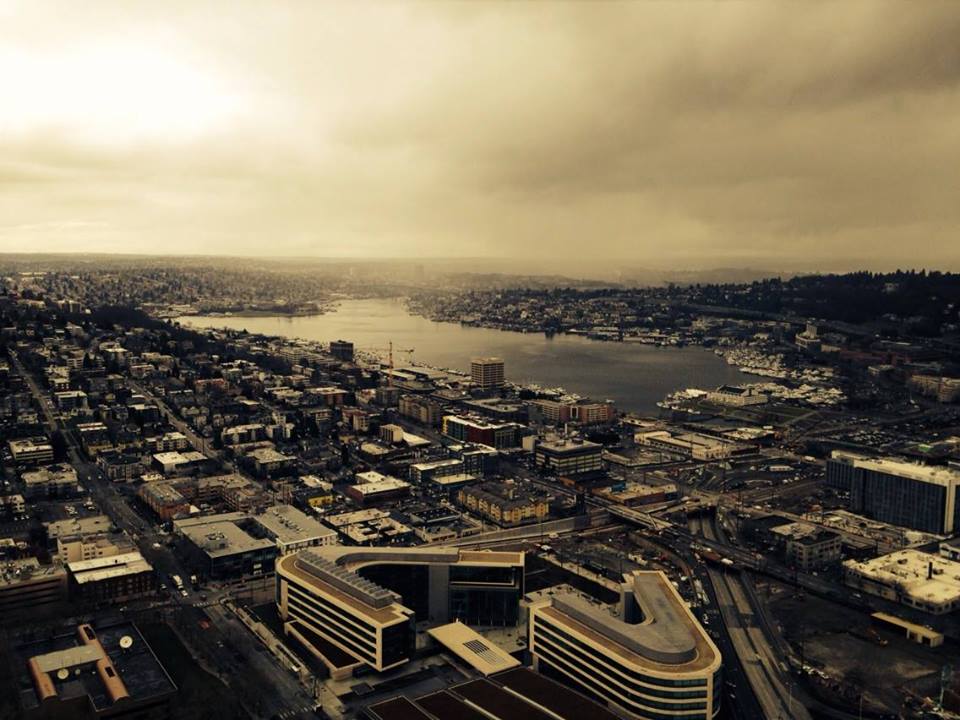
Seattle, from Space Needle – photo taken and edited by me
I’ve just gotten done with a conference called Christ and Cascadia. Just this morning, Pacific Standard Time, I also received word that in Hong Kong, the democratic movement called Occupy Central with Love and Peace has actually started to physically occupy the Central district.
That’s remarkable.
It’s remarkable because the confluence of these two things together — one in the Pacific Northwest, the other in Hong Kong — helped me think through one central theme that holds the two places together: private sovereignties.
I’ve used the term before, but when Regent College’s John Stackhouse used ‘private sovereignties’ to describe the way that many residents of the Pacific Northwest live in the world, I realized that this political sensibility was not restricted to people whose skin colour is white. In fact, I agree so much with Stackhouse’s assessment that I have to disagree with him when he said in the closing session that Vancouver’s new Chinese migrants who are said to be buying lots of private properties in cash are making Vancouver less Cascadian.
I should have known better. I was the one, after all, who argued at a panel organized by my colleague Elizabeth Chapin that one of the fundamental ways that private property is managed at the recently-troubled Mars Hill Church is by imagining an Oriental nemesis. For example, when Cornerstone Church of Simi Valley’s Francis Chan abruptly resigned from his position in 2010 and wandered the earth in search of social justice projects, Mark Driscoll called him an ‘international Fu Manchu man of mystery’ who abandoned his property for others to manage, irresponsibly relinquishing his private sovereignty over his church. To my surprise, re-reading Confessions of a Reformission Rev yielded example after example of the ‘oriental other’ in relation to property management, and that’s what I talked about. Thanks to the work of Elizabeth Stoker Bruenig, I had re-read this text thinking that I would only find evidence of the propertization of theology. But because I found race littered throughout the book, my evangelical colleagues would say that I was only preaching the text.
It didn’t occur to me until Occupy Central was announced that when property buyers from the Asia-Pacific buy up properties and act like that they are sovereign over the lands that they purchase, they are quite literally living the Cascadian dream.
That seems to be the view of how Occupy Central will affect things over here in the Pacific Northwest as things unfold. That I have blogged, tweeted, and Facebook shared posts in solidarity with the democratic protests in Hong Kong marks me as rather unusual, I’ve found. The word on the street over here seems to capitalize on the Hong Kong protests, alleging that as freedoms erode in Hong Kong, there will be a new wave of migrants to cities like Vancouver that will result in even more property purchases. While I’ve facetiously argued that these political refugees will have much to teach British Columbians about constitutional law and democratic deliberation, they will join two previous Chinese migration trends that have been heavily scrutinized for their private property purchases, generating discourses about ‘monster houses’ in wealthy Vancouver neighbourhoods, vacant properties held by offshore speculators, and escalating property prices.
That these two Chinese migration waves have been scrutinized doesn’t mean, of course, that they should be scapegoated for Vancouver’s property situation — or Metro Seattle’s, for that matter. One of the books I read early on in graduate school was University of Washington critical geographer Katharyne Mitchell’s Crossing the Neoliberal Line. Mitchell’s central argument is that what’s going on in Vancouver are actually two neoliberalisms layered on top of each other, two of the same kind of free-market ideology stacked. Vancouver, she contends, had a market-driven ideology that developed an international property market. The Chinese migrants, she then suggests, bought into that market and brought over their own brand of market ideology. As Vancouver geographer David Ley puts it in his account of the ‘monster house’ controversy in an affluent neighbourhood called Shaughnessy, the Anglos may have been the first wave of settler colonists in Vancouver, but they were followed by a wave of wealthy Chinese in the 1980s and 1990s — one that, by the way, connected little to the Chinese Canadians who had enacted an anti-racist Asian Canadian political sensibility a generation earlier. As an observer of gentrification in Vancouver in the 1980s and 1990s, Ley knew what he was talking about: the property market in Vancouver had already begun to price people out of the market in the 1980s and 1990s, and there was no use blaming the new migrants for everything.
In preparation for the Christ and Cascadia conference, I flipped through another University of Washington critical geographer’s book, Matt Sparke’s In the Space of Theory (full disclosure: Mitchell and Sparke are spouses). Sparke reminded me that the designation ‘Cascadia’ is not value neutral. It is itself a neoliberal, market-driven ideology of capital accumulation that wants to see the region run by the free market, not by the borders of the nation-state.
No wonder, then, that the sessions that were the most compelling revolved around settler colonialism in the Pacific Northwest. This morning, I attended a session where two George Fox University students, Emily Rice and Matt Cumings (both members of an exciting new solidarity collective, Killjoy Prophets), called for solidarity with indigenous sovereignty movements in Cascadia, a point that my colleague Elizabeth Chapin (herself a George Fox University instructor) reinforced in an unlikely way when she pointed out that megachurches that are vocal on sexuality issues in fact perform sexual regulation as an arm of the state. It was then that I received a tweet from Catholic blogger Artur Rosman accusing the conference of ‘expelling’ Catholics and Orthodox because they were ‘not Christian, right?’ Funny enough, as I received the tweet, I was having lunch with Gonzaga University’s Patricia Killen, who educated me via her argument in her co-authored book with Roberta Brown, Selected Letters of A.M.A. Blanchet, Bishop of Walla Walla and Nesqualy (1846-1879), that it was the migration of French Canadian Catholics into the region that led to the first church-based provision of social services and set the tone for how the majority of Catholics in Washington are still Native American. I then missed what I heard was a fabulous session on ‘post-colonial theologies of place’ organized by George Fox University’s Randy Woodley, but I then heard Seattle Pacific University’s David Leong’s brilliant paper on gentrification in Seattle’s Rainier Valley. Leong’s theological critique of gentrifying processes came out of Duke theologian Willie Jennings’s Christian Imagination, a contemporary classic that argues that Christians need to recover an indigenous sense of place and a critique of propertization if they want to produce anti-racist theologies.
I’ll confess that I was thinking about all of these themes as I came into the conference. After all, I presented a paper on Friday morning about Faith Communities Called to Solidarity with the Poor, an interfaith coalition that aided Tenth Avenue Alliance Church in Vancouver in 2007 and 2008 to contest the municipal permit department over whether their homeless shelter needed a social services permit. The document that group produced is called ‘The Social Vocation of the Church,’ a fascinating decolonial theological treatise that argues that if the state were to police churches caring for the poor, they would not just be hindering religious freedom and doing violence to a theological tradition, but they would be complicit in discriminating against the poor.
Here’s where the arts come into the picture. I asked Leong, in light of David Ley’s research on gentrification, whether the ‘missional’ movement’s emphasis on Christianity and the arts led to gentrification and the displacement of poor populations. After all, for all of the calls to decolonize Cascadia and produce anti-racist theologies, the conference was also well-attended by those touting what Soong-Chan Rah calls a ‘white saviour’ mentality to save Cascadia into the image of the white hipster. Leong skillfully deflected my loaded question. He gave an example from the Rainier Valley of a crack house that had been transformed into an arts house, featuring hip hop and spoken word. He said that if ‘artists’ were the vanguard of gentrification, then that meant that they were artists coming in from the outside of a community who were displacing those who were doing the arts from within those neighbourhoods.
The light bulb clicked. David Leong was doing what philosopher of education Sam Rocha calls ‘folk phenomenology.’ As I wrote in another post reviewing Rocha’s new soul/jazz album Late to Love, folk phenomenology is simply the doing of philosophy from the perspective of the poor. The poor have an aesthetic sensibility, an artistry that demands to be seen and heard.
I then remembered why I asked that question. It was because on that panel on Mars Hill, my colleague, ethnomusicologist Maren Haynes, had delivered a brilliant exegesis of music at Mars Hill, showing meticulously that the songs highlight the leading male voice just as its gendered dynamics emphasize the leading manly man. Long known as an artistic and musical hub, Mars Hill’s influence in the 2000s was the reason that I had first understood Ley’s argument about artists as the vanguard of gentrification: they create an ‘aesthetic of cool’ (Leong used that in his answer too!), which leads wealthy migrants to gravitate toward their neighbourhoods for property purchases. The thing is, when we talk about the arts and ‘missional’ theological practice, we are often talking about this kind of aesthetic and acoustic, and it shows up especially in ‘Cascadian’ discussions around technological savvy, independent musical tastes, and eclectic art. As Maren later pointed out to me, Seattle was where Death Cab for Cutie, the Postal Service, and Fleet Foxes all got their start.
But a call to solidarity with the poor means to embrace the aesthetics and acoustics of the poor, the displaced, the refugee, and the colonized. This is how I understand Jim Wellman’s keynote on Cascadia as the ‘abundant zone,’ a region filled with beauty, wonder, and creative people. Quoting our Comparative Religion Unit founder Eugene Webb, Wellman waxed Eastern Orthodox, declaring with Webb that ‘the universe is a grand experiment in incarnation.’ Yes, it is — oh, amen, Jim, it absolutely is — because the poor produce artistic works that are ignored even by people who claim to love the region. As Judy Graves, the former Advocate for the Homeless in the City of Vancouver, puts it, the poor are scholars and theologians — the homeless whom she visited nightly from 2 to 6 AM were my ‘professors, pastors, priests, and rabbis,’ she always says.
In this way, the Christ in Cascadia bears witness against Mammon. It’s remarkable how much theology Mammon gets to do in this region. Take, for example, why Vancouver, which is said to be so deeply linked to Hong Kong, has been very politically quiet about Occupy Central, and if it’s ever discussed in hushed conversation, the talk is usually about how much good the democracy movements will do for the real estate sector. If there’s anything that Christ and Cascadia has impressed on me, understanding the centrality of Mammon to Cascadia will require churches and faith communities to move past a simplistic ‘religion v. secular’ dichotomy to look at how theologies are actually done here. Churches seem to be obsessed with this question, misreading Killen’s ‘none zone’ thesis to mean that the region is full of religious ignorami. As I realized in a fascinating session today about religious freedom with Whitworth University’s Julia Stronks and Trinity Western University’s John Dyck, there seem to be loads of Cascadian legal concerns about private religious liberties against secular encroachment, such as at Trinity Western University in Langley, BC and the sexuality issues proliferating in the public sphere. In fact, Wellman, Webb, and my own department, the Comparative Religion Unit, was founded by one such lawsuit in 1966.
But that simplistic ‘religion v. the secular’ dichotomy is simply not the point. If I’m listening rightly to the presentations I’ve heard and the papers that I had to prepare, everything in Cascadia is theological. The difference is capital. The theologies that we call ‘secular’ — propertization, settler colonialism, emphases on private sovereignties, the ‘spiritual but not religious’ that Charles Taylor reveals to be an individualized quest for fullness, the refusal to be in solidarity with indigenous sovereignty in the Pacific Northwest and democratic movements in the Asia-Pacific — are often theologies made possible by the accumulation of wealth. But the theologies that can more rightly be called ‘Christian’ — solidarity with the poor, power to the people, being incarnational with the folk — are theologies produced by the lack of material capital.
I actually said that at the end of my paper. That provoked Jim Wellman to ask me whether I was suggesting that academics are perhaps complicit in the secularization that is wrapped up with gaining power instead of bearing witness to the truth. What was fascinating is that right after Jim asked me that, a pastor who works with the homeless in Hood River, Oregon suggested to me that clergy and activists often had trouble convincing churchgoers that they needed to care for the poor instead of living their comfortable capitalist lives. I realized, then, that the divide that some had thought would plague the conference between academics and practitioners was completely artificial. We were all practitioners. The question is whether our practice was loaded with capital.
Previous Post

September 18, 2014
Putting Brad Salzberg First
Next Post

September 28, 2014 The World Is Watching. #OccupyCentral #HongKong
Browse Our Archives
Select a Category Academia Anglican Communion anti-racism Aristotle Asia-Pacific Asian American Asian Canadian BlackLivesMatter Cantonese Catholic China Chinglican church politics Church-State Politics Civil Society Conservative Eastern Christianity Evangelical Evangelical Left Feminist/Womanist Theology Food Greek-Catholic Church of Kyiv Hong Kong Housekeeping Kyivan Church Latin Catholicism Law Liberal Liberation Theology New Calvinism Pentecostal/Charismatic Protestant Psychoanalysis Publics Religion Ethnicity Wired Secular Sovereignty TPCIU Uncategorized
Select a Month July 2019 June 2019 May 2019 April 2019 March 2019 February 2019 January 2019 December 2018 November 2018 October 2018 September 2018 August 2018 July 2018 June 2018 May 2018 March 2018 February 2018 January 2018 December 2017 November 2017 October 2017 September 2017 August 2017 July 2017 June 2017 April 2017 March 2017 February 2017 January 2017 December 2016 November 2016 October 2016 September 2016 August 2016 July 2016 January 2016 December 2015 November 2015 October 2015 August 2015 April 2015 March 2015 February 2015 December 2014 November 2014 September 2014 August 2014 July 2014 June 2014 May 2014 April 2014 March 2014 December 2013 November 2013 October 2013 September 2013 August 2013 July 2013 June 2013 May 2013 April 2013 March 2013 February 2013 January 2013 December 2012 October 2012 June 2012 May 2012 April 2012 February 2012 January 2012
Follow Us!
TAKE THE
Religious Wisdom Quiz
How many years between Abraham and David?
Select your answer to see how you score.
800 years 1200 years 1000 years 600 years
Related posts from Eastern Catholic Person

The Bay Area of the nineties is where...

This time, I have a tradition: on solidarity...

Home is where your food is: a speech...

I am no longer ashamed of being from...
TRENDING AT PATHEOS Catholic

The Parable Of The Sower And The Word...
One of Christ’s most famous parables is that of the sower who...

Rejecting Doom: Christian Hope And Human Action
Christianity is a religion of hope. We are to have hope and...

Why I Choose the Eucharist Over the Sermon
Choose the Eucharist, Not the Sermon What are we supposed to get...

5 Design Elements Found in Spiritually Rooted Homes
Putting Spirituality Into Home Decor Our homes are more than our living...

Credo: A Story of God Told with the...
About 10 years ago, I began to imagine a personal "Credo" that...

The Anatomy of Divine Revelation in Catholic Thought
The claim that God has made Himself known to human beings is...
view all Catholic blogs
Ad-Free & Subscriber Log-In Subscription Support
- About Us
- 2026 Calendar
- Videos
- Podcasts
- Library of World Religions
- Faith In Media Tracker
- Advertise With Us
- Write for Us
- Privacy Policy
- Terms of Service
- Do Not Sell My Data
- Contact Us
- Radiant Digital
- Manage Newsletter Subscriptions
- Unsubscribe From Notifications
- Sitemap
Copyright 2008-2026, Patheos. All rights reserved.
Subscription Support Ad-Free & Subscriber Log-In
Follow Patheos