
BuddhistCatholicContemplativeEvangelicalGeneral ChristianHinduJewishLatter-day SaintMuslimNew VisionsProgressive Christian
Beliefs
- Buddhist
- Catholic
- Contemplative
- Evangelical
- General Christian
- Hindu
- Jewish
- Latter-day Saint
- More Voices
- Muslim
- New Visions
- Pagan
- Progressive Christian
Topics
- Religion News
- Food and Religion
- Sports and Religion
- Religious Art
- Religious Music and Entertainment
- Religious Events
- History and Religion
- Style and Religion
- Politics and Religion
- Women in Religion
- Recreation Outdoors and Religion
- Business Finance and Religion
- Careers Workplace and Religion
- Education and Religion
- Family Parenting and Religion
- Health Fitness and Religion
- Home and Religion
- Relationships and Religion
- Technology and Religion
- Travel and Religion
Columnists
- Buddhist Columnists
- Business Finance and Religion Columnists
- Careers Workplace and Religion Columnists
- Catholic Columnists
- Contemplative Columnists
- Education and Religion Columnists
- Evangelists Columnists
- Family Parenting and Religion Columnists
- General Christian Columnists
- Health Fitness and Religion Columnists
- Hindu Columnists
- History and Religion Columnists
- Home and Religion Columnists
- Jewish Columnists
- More Voices Columnists
- Latter Day Columnists
- Muslim Columnists
- New Visions Columnists
- Nonreligious Columnists
- Pagan Columnists
- Politics and Religion Columnists
- Progressive Columnists
- Recreation Outdoors and Religion Columnists
- Relationships and Religion Columnists
- Religion News Columnists
- Religious Art Columnists
- Religious Events Columnists
- Religious Music and Entertainment Columnists
- Sports and Religion Columnists
- Style and Religion Columnists
- Technology and Religion Columnists
- Travel and Religion Columnists
- Women in Religion Columnists
Resource Library
- 2026 Calendar
- Library of World Religions
- The 100 Most Holy Places on Earth
- Patheos Answers
- Podcasts
- Videos
- Faith Leaders Database
- Anglican Episcopalian
- Bahai
- Baptist
- Buddhism
- Christianity
- Confucianism
- Eastern Orthodoxy
- Hinduism
- Holiness and Pentecostal
- ISKCON
- Islam
- Judaism
- Lutheran
- Methodist
- The Church of Jesus Christ of Latter-day Saints
- New Age
- Paganism
- Presbytarian and Reformed
- Protestantism
- Religion Behind the Scenes
- Roman Catholic
- Scientology
- Shia Islam
- Sikhism
- Sufism
- Sunni Islam
- Taoism
- Zen
- See all religions
Research Tools
 Ad-Free & Subscriber Log-In Subscription Support
Ad-Free & Subscriber Log-In Subscription Support
Follow Patheos 

- Trending:
- Forgiveness
- |
- Marriage
- |
- Consciousness
- |
- Death Penalty
- |
- Election
- |
- Halloween
 Eastern Catholic Person
- Home
- Catholic
- We Remember
We Remember
Last updated on: July 27, 2016 at 4:50 pm by Justin Tse
We Remember 2016-07-27T16:50:28-07:00 Justin Tse
Patheos Explore the world's faith through different perspectives on religion and spirituality! Patheos has the views of the prevalent religions and spiritualities of the world.
June 4 is a day for remembering. This year is no different, for it is now the twenty-fourth anniversary of the Tiananmen Incident, the event in which students who had occupied Tiananmen Square in Beijing for over a month were brutally suppressed–the official term of protest from its observers is massacred–as they demonstrated for a new democratic regime in China.
It is thus a day to remember.
We remember that the fight for redress is not yet over. When a state uses military force against its own citizens and then attempts to paste over these events by denying their historical validity and diverting focus from them onto market reform, it is incumbent on all of us to remember that justice has not yet been served, that the state’s murder of people within its own borders is never just wherever it happens, whether in China in 1989, in the present in Tunisia, Egypt, Libya, Israel/Palestine, Syria, or Turkey, or even in the history of the Americas in American and Canadian treatment of indigenous peoples. We remember because we are calling for the state to acknowledge its own crimes and to bring to justice those who maneuvered the state to commit these crimes.
But we remember also that our memory can be corrupted. We also remember that the remembrance that these atrocities happened have also been used in the service of othering exclusion. We must remember then that when memory becomes corrupted, it can be used for the service of greater evil.
And thus we must also remember that China is not a geographical foil for the politics of life. We have heard over and over of the issues of life in various sites in China–a little girl run over by a truck, the countless road accidents, the melamine lacing of baby powder, the unethical production of under-regulated automobile parts, the human rights abuses against ethnic minorities. Recently, we heard of a baby boy flushed down a toilet by a desperate mother, and we heard of school principals sexually preying on their own students in collusion with government officials. As we hear of these issues, we are tempted to frame China as the space of the other, a space where life is devalued, a space inhabited by barbarians and country bumpkins and industrial crooks and political Fu Manchu masterminds, a space where everything should point to the events of Tiananmen being just business as usual.
Even as we remember for the sake of Tiananmen redress, we also remember that we must not give in to the temptation to see China as a unified geopolitical bloc. We remember instead that China is vast, that its political system is complex, and that its vastness and complexity belies many avenues of dissent. We remember that dissent is not always on the side of justice simply because it is dissent, that people we hold up as democracy heroes like Nobel Prize winner Liu Xiaobo supported the Bush Administration’s Iraq War with the anti-democratic, neoconservative rationale of pre-emptive warfare in the hope of forcibly enacting democracy in the Middle East for American imperialist interests. We remember that China is not the unitary other, that people and politics as complex as our own go on there as well, and that our pleas for redress are coupled with the complexities of human sociality.
We thus do not remember in order to frame China as the geopolitical other. We remember instead that history is littered with spectacles of violence as various individuals, parties, regimes, and imperial rulers have attempted to exert their sovereign power to make the meaning of ‘Chineseness’ uniform. We remember that these efforts at racial, ethnic, and national subjectification are themselves born of unjust impulses. For what, after all, was the point of the crackdown at Tiananmen, if not to exert the sovereign power of the state to make an international example of those who dared to dissent against an ideology of Chineseness?
So yes, we protest as we remember. But how we protest can never be done with the methods of exclusion. As John Paul II reminded us in Centesimus annus, our protest is not waged by deploying alternate ideologies as foils to injustice. Instead, a constant focus on the dignity of the human person is a protest against ideology itself, grounding our critique in the reality that we are not primarily cogs in a state or market regime, but embodied persons who live and eat and sleep and feel and play and work and laugh and weep and love. Yes, we remember, but our memory grapples with the will to power inherent in something as banal as saying that all ‘Chinese’ people should be a certain way. Those of us who are Christians who join in this protest are thus uninterested in developing a new ideology of what it means to be Chinese. We are looking forward instead to the day when our human community will be constituted by the recognition that we are all made in the image of God.
Previous Post

June 2, 2013
Yes, I'm a Chinglican Who Celebrates Corpus Christi
Next Post
June 10, 2013 Preaching Elijah
Browse Our Archives
Select a Category Academia Anglican Communion anti-racism Aristotle Asia-Pacific Asian American Asian Canadian BlackLivesMatter Cantonese Catholic China Chinglican church politics Church-State Politics Civil Society Conservative Eastern Christianity Evangelical Evangelical Left Feminist/Womanist Theology Food Greek-Catholic Church of Kyiv Hong Kong Housekeeping Kyivan Church Latin Catholicism Law Liberal Liberation Theology New Calvinism Pentecostal/Charismatic Protestant Psychoanalysis Publics Religion Ethnicity Wired Secular Sovereignty TPCIU Uncategorized
Select a Month July 2019 June 2019 May 2019 April 2019 March 2019 February 2019 January 2019 December 2018 November 2018 October 2018 September 2018 August 2018 July 2018 June 2018 May 2018 March 2018 February 2018 January 2018 December 2017 November 2017 October 2017 September 2017 August 2017 July 2017 June 2017 April 2017 March 2017 February 2017 January 2017 December 2016 November 2016 October 2016 September 2016 August 2016 July 2016 January 2016 December 2015 November 2015 October 2015 August 2015 April 2015 March 2015 February 2015 December 2014 November 2014 September 2014 August 2014 July 2014 June 2014 May 2014 April 2014 March 2014 December 2013 November 2013 October 2013 September 2013 August 2013 July 2013 June 2013 May 2013 April 2013 March 2013 February 2013 January 2013 December 2012 October 2012 June 2012 May 2012 April 2012 February 2012 January 2012
Follow Us!
TAKE THE
Religious Wisdom Quiz
What did the soldier dress Jesus in after he was accused?
Select your answer to see how you score.
Scarlet Robe Golden Robe Nothing Thorns
Related posts from Eastern Catholic Person

This time, I have a tradition: on solidarity...
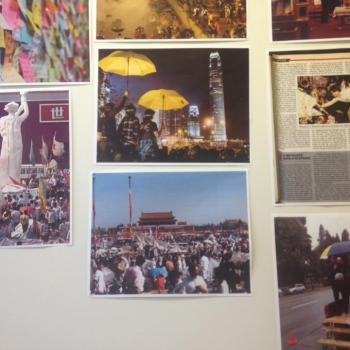
Tiananmen is my first childhood memory: reflections on...

I'm flattered to be named an Asian American...
Teaching Genesis: for Great and Holy Monday
TRENDING AT PATHEOS Catholic

Rejecting Doom: Christian Hope And Human Action
Christianity is a religion of hope. We are to have hope and...

It’s What Comes From Within Which Matters
One of the most difficult things for us to understand is why...

Why I Choose the Eucharist Over the Sermon
Choose the Eucharist, Not the Sermon What are we supposed to get...

5 Design Elements Found in Spiritually Rooted Homes
Putting Spirituality Into Home Decor Our homes are more than our living...

Credo: A Story of God Told with the...
About 10 years ago, I began to imagine a personal "Credo" that...

The Anatomy of Divine Revelation in Catholic Thought
The claim that God has made Himself known to human beings is...
view all Catholic blogs
Ad-Free & Subscriber Log-In Subscription Support
- About Us
- 2026 Calendar
- Videos
- Podcasts
- Library of World Religions
- Faith In Media Tracker
- Advertise With Us
- Write for Us
- Privacy Policy
- Terms of Service
- Do Not Sell My Data
- Contact Us
- Radiant Digital
- Manage Newsletter Subscriptions
- Unsubscribe From Notifications
- Sitemap
Copyright 2008-2026, Patheos. All rights reserved.
Subscription Support Ad-Free & Subscriber Log-In
Follow Patheos