
BuddhistCatholicContemplativeEvangelicalGeneral ChristianHinduJewishLatter-day SaintMuslimNew VisionsProgressive Christian
Beliefs
- Buddhist
- Catholic
- Contemplative
- Evangelical
- General Christian
- Hindu
- Jewish
- Latter-day Saint
- More Voices
- Muslim
- New Visions
- Pagan
- Progressive Christian
Topics
- Religion News
- Food and Religion
- Sports and Religion
- Religious Art
- Religious Music and Entertainment
- Religious Events
- History and Religion
- Style and Religion
- Politics and Religion
- Women in Religion
- Recreation Outdoors and Religion
- Business Finance and Religion
- Careers Workplace and Religion
- Education and Religion
- Family Parenting and Religion
- Health Fitness and Religion
- Home and Religion
- Relationships and Religion
- Technology and Religion
- Travel and Religion
Columnists
- Buddhist Columnists
- Business Finance and Religion Columnists
- Careers Workplace and Religion Columnists
- Catholic Columnists
- Contemplative Columnists
- Education and Religion Columnists
- Evangelists Columnists
- Family Parenting and Religion Columnists
- General Christian Columnists
- Health Fitness and Religion Columnists
- Hindu Columnists
- History and Religion Columnists
- Home and Religion Columnists
- Jewish Columnists
- More Voices Columnists
- Latter Day Columnists
- Muslim Columnists
- New Visions Columnists
- Nonreligious Columnists
- Pagan Columnists
- Politics and Religion Columnists
- Progressive Columnists
- Recreation Outdoors and Religion Columnists
- Relationships and Religion Columnists
- Religion News Columnists
- Religious Art Columnists
- Religious Events Columnists
- Religious Music and Entertainment Columnists
- Sports and Religion Columnists
- Style and Religion Columnists
- Technology and Religion Columnists
- Travel and Religion Columnists
- Women in Religion Columnists
Resource Library
- 2026 Calendar
- Library of World Religions
- The 100 Most Holy Places on Earth
- Patheos Answers
- Podcasts
- Videos
- Faith Leaders Database
- Anglican Episcopalian
- Bahai
- Baptist
- Buddhism
- Christianity
- Confucianism
- Eastern Orthodoxy
- Hinduism
- Holiness and Pentecostal
- ISKCON
- Islam
- Judaism
- Lutheran
- Methodist
- The Church of Jesus Christ of Latter-day Saints
- New Age
- Paganism
- Presbytarian and Reformed
- Protestantism
- Religion Behind the Scenes
- Roman Catholic
- Scientology
- Shia Islam
- Sikhism
- Sufism
- Sunni Islam
- Taoism
- Zen
- See all religions
Research Tools
 Ad-Free & Subscriber Log-In Subscription Support
Ad-Free & Subscriber Log-In Subscription Support
Follow Patheos 

- Trending:
- Forgiveness
- |
- Marriage
- |
- Consciousness
- |
- Death Penalty
- |
- Election
- |
- Halloween
 Eastern Catholic Person
- Home
- Catholic
- Remembering Martin Luther King Jr. at the Qingming Festival
Remembering Martin Luther King Jr. at the Qingming Festival
Last updated on: July 27, 2016 at 2:50 pm by Justin Tse
Remembering Martin Luther King Jr. at the Qingming Festival 2016-07-27T14:50:20-07:00 Justin Tse
Patheos Explore the world's faith through different perspectives on religion and spirituality! Patheos has the views of the prevalent religions and spiritualities of the world.
清明時節雨紛紛
路上行人欲斷魂
借問酒家何處有
牧童遙指杏花村
The drizzling rain at Qingming time
The rending flesh of the pedestrians
Where to find a pub to drink my sadness?
A cowherd points to Almond Flower Village.
–杜牧 Du Mu
Since before the days when Qin Shihuang conquered the various warring states that came to constitute the imperial Middle Kingdom, there has been the tradition of the Qingming Festival. Originally commemorated in memory of the accidental burning of a Spring and Autumn Period official’s servant, the festival has developed since the Tang Dynasty to be a day to honour the dead by sweeping the graves of ancestors, carrying willows and flowers to ward off evil spirits, and more recently, remembering the deaths of intellectual dissidents in twentieth-century Chinese history.
Typically, Qingming Festival falls on April 5.
But this year’s Qingming Festival falls on April 4.
And incidentally, April 4 is the anniversary of the assassination of the Rev. Dr. Martin Luther King, Jr.
I think this warrants some theological reflection, particularly from Chinese North American Christians, about our solidarity in the struggle for human rights.
On the night before he died, King preached at Mason Temple in Memphis, Tennessee. His sermon came to be known as, “I’ve Been to the Mountaintop,” and his words that night foreshadowed his assassination the next day:
Well, I don’t know what will happen now. We’ve got some difficult days ahead. But it doesn’t really matter with me now. Because I’ve been to the mountaintop. And I don’t mind. Like anybody, I would like to live a long life; longevity has its place. But I’m not concerned about that now. I just want to do God’s will. And He’s allowed me to go up to the mountain. And I’ve looked over. And I’ve seen the Promised Land. I may not get there with you. But I want you to know tonight, that we, as a people, will get to the Promised Land! And so I’m happy tonight; I’m not worried about anything; I’m not fearing any man: mine eyes have seen the glory of the coming of the Lord!
Incidentally, Sam Wells also has a great meditation on death and Steve Jobs through the Mountaintop speech as well.
Asian American scholar Glenn Omatsu protests the domestication of the Asian American participation in the civil rights movement. He points specifically to King and says that the invocation of his tradition of non-violence has overshadowed the radical actions taken by the Third World Liberation Front in 1968 to found ethnic studies departments in California universities. For Omatsu, it’s not the legacy of King that needs to be reclaimed for our solidarity for rights, but that of Malcolm X.
I take issue with Omatsu.
When King said that he had been to the mountaintop, it would be right to think that he’s invoking Moses climbing Mount Nebo to look over into the Promised Land that he wouldn’t be able to enter with the beloved community. Most would remember his dream articulated at the March on Washington that his “four little children will one day live in a nation where they will not be judged by the color of their skin but by the content of their character.” For Omatsu, it’s precisely this that has led to a neo-conservatism among Asian Americans who believe themselves to have made it economically as “the model minority.” America is finally colour-blind, say the suburban dwellers; the dream has been realized. Omatsu is disgusted.
But a closer look at King’s sermon complicates things. Sure, King is a Moses figure, but the Promised Land of which King speaks does not refer to a colour-blind nation. Rather, it’s about a global human rights revolution in the second half of the twentieth century, a call to freedom just like Moses called on Pharaoh to let the children of Israel go:
Something is happening in our world. The masses of people are rising up. And wherever they are assembled today, whether they are in Johannesburg, South Africa; Nairobi, Kenya; Accra, Ghana; New York City; Atlanta, Georgia; Jackson, Mississippi; or Memphis, Tennessee–the cry is always the same: “We want to be free.”
King had been to the mountaintop. He had seen the sit-ins, the Freedom Rides, the Albany Movement, the Civil Rights Bill, the March on Washington, the March on Selma, and the action for which he was in Memphis. Like Moses, King had been to the mountaintop, and he had seen the Promised Land of justice and equality for the least of these, the coloured colonized by white supremacy and the impoverished trampled by an economic oligarchy. Interpreting the story of Exodus through the lens of solidarity, he sees that Pharaoh’s tactic for keeping the slaves enslaved is to divide them among themselves, to keep the ministers only thinking about themselves and preaching irrelevant airy-fairy hopes of white robes, milk and honey, and streets of gold over yonder while people here go naked, live in slums, and stay hungry. “But whenever the slaves get together,” King preached, “something happens in Pharaoh’s court, and he cannot hold the slaves in slavery. When the slaves get together, that’s the beginning of getting out of slavery.”
For King, at that moment, what was needed was direct action for the case at hand: justice for sanitation workers in Memphis wearing black T-shirts and holding signs that read, “I Am a Man”: “Let us keep the issues where they are,” he said. “The issue is injustice. The issue is the refusal of Memphis to be fair and honest in its dealings with its public servants, who happen to be sanitation workers.” Here, he fuses the Moses tradition with the Jericho Road in Jesus’ parable of the Good Samaritan. As he puts it in the speech, just like the Samaritan stopping on the “Bloody Pass,” we too must realize that the plight of the sanitation worker in Memphis is our plight as well. He imagines the priest and the Levite passing up the bloodied robbed man because they fear that he might be bait to lure them to bandits, or worse, he might be a con artist himself. King speculates that they probably thought, “If I stop to help this man, what will happen to me?” He then interprets the Good Samaritan as asking: “If I do not stop to help this man, what will happen to him?” King then continues:
That’s the question before you tonight. Not, “If I stop to help the sanitation workers, what will happen to my job?” Not, “If I stop to help the sanitation workers, what will happen to all of the hours that I usually spend in my office every day and every week as a pastor?” The question is not, “If I stop to help this man in need, what will happen to me?” The question is, “If I do not stop to help the sanitation workers, what will happen to them?” That’s the question.
It was for this that King knew that he was going to his death. He talks about getting on the plane from Atlanta that morning, of the pilot’s voice coming over the public address system saying that because King was on board, they had had to take extra security cautions because of the threats on King’s life coming from Memphis. He remembers that before what we now know as the Civil Rights Movement happened, he had been stabbed while signing books, and the blade had come so close to his aorta that The New York Times reported at the time that if he had just sneezed, he would have died. He knew this because what he was doing was radical because he wasn’t just calling for everybody just to get along in a colour-blind nation. (And by the way, as James Cone points out, King and Malcolm X need not be pitted against each other, but can rather be seen as complementary figures in the black liberation movement.)
He was calling for class solidarity as the rubric of racial reconciliation and social justice. He had protested the Vietnam War, particularly because African Americans were disproportionately drafted, and now he was marching on poverty, calling for economic action on the part of everyone listening to him: “If it means leaving work, if it means leaving school–be there. Be concerned about your brother. You may not be on strike. But either we go up together, or we go down together.” He was calling for both marches and outright boycotts on unjust corporations, “bank-ins” to take money out of mainstream banks and put them in black banks, and “insurance-ins” where black people could buy insurance plans from black insurance companies. He was calling for an Occupy movement before there was an Occupy movement; he was advocating precautions for the beloved community before the idea of subprime mortgages targeting African American populations was even invented. And for him, this Memphis case of sanitation workers was the perfect case where the rubber met the road because for King, the measure of a society was how the sanitation workers were treated. Radical? Yes. It’s what got King killed.
Perhaps it’s only right that the anniversary of the assassination of King and the Qingming Festival fall this year within Holy Week in the liturgical calendar. Jesus’ Good Samaritan parable was offensive precisely because as Dietrich Bonhoeffer puts it in Letters and Papers from Prison, it focused Christian practice on being “the Man [sic] for Others.” It was told to a lawyer who wanted to justify himself for having fulfilled the commandment of loving one’s neighbour as oneself. Jesus turned the lawyer’s world upside-down, telling him to go and do as a Samaritan would have done to go out of his way to help a bloodied stranger of the wrong geopolitical stripe on the Bloody Pass of the Jericho Road.
This was arguably what got Jesus, Bonhoeffer, and King killed. The offence was a radical view of the neighbour. Will we indeed love our neighbours as ourselves? What if the neighbour is of the wrong nationality? the wrong race? the wrong class? King’s words ring in our ears: The question is, “If I do not stop to help the sanitation workers, what will happen to them?” That’s the question.
This is a question for reflection for Chinese North American Christians today. Qingming Festival is a day to honour the dead, yes. But to be Christian is not merely to honour our own dead, those within our own family or those within the diaspora that we call “Chinese.” King’s legacy–one that also garnered us civil liberties–begs us to come out of the convenient labels that we’ve constructed for ourselves–“Chinese,” “Asian,” “Asian American”–and realize that our solidarity with the poor for justice cuts across racial, ethnic, and class lines. There is a saying among Chinese in the diaspora that we should only sweep beneath the awnings of our own homes. The irony of this year’s Qingming Festival is that it calls us precisely to repent of this notion.
Yes, we honour our ancestors today. Some of these, yes, are the Chinese political dissidents that we remember yearly. But one of these is also the Rev. Dr. Martin Luther King, Jr. Try that, friends, for much-needed reconciliation between Chinese American and African American communities today. Perhaps our Chinese churches should bring hoodies and a bag of skittles to church too. It is, after all, the Qingming Festival.
But more than that, as the Qingming Festival and King’s assassination anniversary both fall in Holy Week, we also remember as Christians the one who has gone before us from death to life, Jesus Christ. We have hope in King’s vision not because of King’s death, but because the resurrection of Jesus Christ at the end of this Holy Week reminds us that King’s blessed hope is ours as well. Strangely enough, this has been precisely what Pope Benedict XVI has been saying to the faithful regarding charity during this Lenten season:
The Lord’s disciples, united with him through the Eucharist, live in a fellowship that binds them one to another as members of a single body. This means that the other is part of me, and that his or her life, his or her salvation, concern my own life and salvation. Here we touch upon a profound aspect of communion: our existence is related to that of others, for better or for worse.
Qingming Festival and the assassination of King are not the end of the story of solidarity–indeed, of communion–with the least of these. They are the beginning: “I may not get there with you. But I want you to know tonight, that we, as a people, will get to the Promised Land!”
Previous Post

February 26, 2012
We Need a Feminist Theologian (Or Maybe We Don't)
Next Post
April 7, 2012 God Is Dead
Browse Our Archives
Select a Category Academia Anglican Communion anti-racism Aristotle Asia-Pacific Asian American Asian Canadian BlackLivesMatter Cantonese Catholic China Chinglican church politics Church-State Politics Civil Society Conservative Eastern Christianity Evangelical Evangelical Left Feminist/Womanist Theology Food Greek-Catholic Church of Kyiv Hong Kong Housekeeping Kyivan Church Latin Catholicism Law Liberal Liberation Theology New Calvinism Pentecostal/Charismatic Protestant Psychoanalysis Publics Religion Ethnicity Wired Secular Sovereignty TPCIU Uncategorized
Select a Month July 2019 June 2019 May 2019 April 2019 March 2019 February 2019 January 2019 December 2018 November 2018 October 2018 September 2018 August 2018 July 2018 June 2018 May 2018 March 2018 February 2018 January 2018 December 2017 November 2017 October 2017 September 2017 August 2017 July 2017 June 2017 April 2017 March 2017 February 2017 January 2017 December 2016 November 2016 October 2016 September 2016 August 2016 July 2016 January 2016 December 2015 November 2015 October 2015 August 2015 April 2015 March 2015 February 2015 December 2014 November 2014 September 2014 August 2014 July 2014 June 2014 May 2014 April 2014 March 2014 December 2013 November 2013 October 2013 September 2013 August 2013 July 2013 June 2013 May 2013 April 2013 March 2013 February 2013 January 2013 December 2012 October 2012 June 2012 May 2012 April 2012 February 2012 January 2012
Follow Us!
TAKE THE
Religious Wisdom Quiz
What is the number of the beast in Revelation?
Select your answer to see how you score.
1000 144 777 666
Related posts from Eastern Catholic Person

The Bay Area of the nineties is where...

This time, I have a tradition: on solidarity...
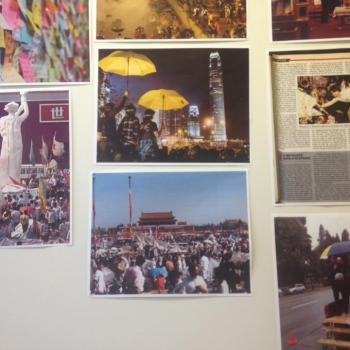
Tiananmen is my first childhood memory: reflections on...

Home is where your food is: a speech...
TRENDING AT PATHEOS Catholic

Creation, Preservation, and Teleology in Catholic Theology
As I write this, it is very early Monday morning. Like millions...

The Parable Of The Sower And The Word...
One of Christ’s most famous parables is that of the sower who...

Rejecting Doom: Christian Hope And Human Action
Christianity is a religion of hope. We are to have hope and...

Why I Choose the Eucharist Over the Sermon
Choose the Eucharist, Not the Sermon What are we supposed to get...

5 Design Elements Found in Spiritually Rooted Homes
Putting Spirituality Into Home Decor Our homes are more than our living...

Credo: A Story of God Told with the...
About 10 years ago, I began to imagine a personal "Credo" that...
view all Catholic blogs
Ad-Free & Subscriber Log-In Subscription Support
- About Us
- 2026 Calendar
- Videos
- Podcasts
- Library of World Religions
- Faith In Media Tracker
- Advertise With Us
- Write for Us
- Privacy Policy
- Terms of Service
- Do Not Sell My Data
- Contact Us
- Radiant Digital
- Manage Newsletter Subscriptions
- Unsubscribe From Notifications
- Sitemap
Copyright 2008-2026, Patheos. All rights reserved.
Subscription Support Ad-Free & Subscriber Log-In
Follow Patheos