
BuddhistCatholicContemplativeEvangelicalGeneral ChristianHinduJewishLatter-day SaintMuslimNew VisionsProgressive Christian
Beliefs
- Buddhist
- Catholic
- Contemplative
- Evangelical
- General Christian
- Hindu
- Jewish
- Latter-day Saint
- More Voices
- Muslim
- New Visions
- Pagan
- Progressive Christian
Topics
- Religion News
- Food and Religion
- Sports and Religion
- Religious Art
- Religious Music and Entertainment
- Religious Events
- History and Religion
- Style and Religion
- Politics and Religion
- Women in Religion
- Recreation Outdoors and Religion
- Business Finance and Religion
- Careers Workplace and Religion
- Education and Religion
- Family Parenting and Religion
- Health Fitness and Religion
- Home and Religion
- Relationships and Religion
- Technology and Religion
- Travel and Religion
Columnists
- Buddhist Columnists
- Business Finance and Religion Columnists
- Careers Workplace and Religion Columnists
- Catholic Columnists
- Contemplative Columnists
- Education and Religion Columnists
- Evangelists Columnists
- Family Parenting and Religion Columnists
- General Christian Columnists
- Health Fitness and Religion Columnists
- Hindu Columnists
- History and Religion Columnists
- Home and Religion Columnists
- Jewish Columnists
- More Voices Columnists
- Latter Day Columnists
- Muslim Columnists
- New Visions Columnists
- Nonreligious Columnists
- Pagan Columnists
- Politics and Religion Columnists
- Progressive Columnists
- Recreation Outdoors and Religion Columnists
- Relationships and Religion Columnists
- Religion News Columnists
- Religious Art Columnists
- Religious Events Columnists
- Religious Music and Entertainment Columnists
- Sports and Religion Columnists
- Style and Religion Columnists
- Technology and Religion Columnists
- Travel and Religion Columnists
- Women in Religion Columnists
Resource Library
- 2026 Calendar
- Library of World Religions
- The 100 Most Holy Places on Earth
- Patheos Answers
- Podcasts
- Videos
- Faith Leaders Database
- Anglican Episcopalian
- Bahai
- Baptist
- Buddhism
- Christianity
- Confucianism
- Eastern Orthodoxy
- Hinduism
- Holiness and Pentecostal
- ISKCON
- Islam
- Judaism
- Lutheran
- Methodist
- The Church of Jesus Christ of Latter-day Saints
- New Age
- Paganism
- Presbytarian and Reformed
- Protestantism
- Religion Behind the Scenes
- Roman Catholic
- Scientology
- Shia Islam
- Sikhism
- Sufism
- Sunni Islam
- Taoism
- Zen
- See all religions
Research Tools
 Ad-Free & Subscriber Log-In Subscription Support
Ad-Free & Subscriber Log-In Subscription Support
Follow Patheos 

- Trending:
- Forgiveness
- |
- Marriage
- |
- Consciousness
- |
- Death Penalty
- |
- Election
- |
- Halloween

- Home
- Progressive Christian
- Politics and Religion
- Preaching about LGBTQIA+ Issues: National Survey Results
Preaching about LGBTQIA+ Issues: National Survey Results
Last updated on: December 30, 2025 at 12:17 pm by Leah D. Schade
Preaching about LGBTQIA+ Issues: National Survey Results 2025-12-30T12:17:50-04:00 Leah D. Schade
Patheos Explore the world's faith through different perspectives on religion and spirituality! Patheos has the views of the prevalent religions and spiritualities of the world.
Preaching about LGBTQIA+ issues was among the top ten priorities for U.S. mainline Protestant ministers in 2024-25. This article explores the connections between queer issues and those of mental health and substance abuse. We suggest appropriate biblical texts and sermon approaches that integrate these themes.

Preaching about LGBTQIA+, mental health, and substance abuse requires compassion and courage. Photo by rawpixel on freepik.com
This is part four in a series on the top ten social issues in mainline Protestant sermons for 2024-25.
[Read part one here: Top 10 Social Issues in Mainline Protestant Sermons, 2024-25.]
[Read part two here: Preaching about Racism, Economics, and Environment.]
[Read part three here: Preaching Immigration, Christian Nationalism, and Democracy.]
By Leah D. Schade, with Amanda Wilson Harper and Wayne Thompson
Eight Years of Research on Ministry, Preaching, and Social Issues
During the first 100 days of the second Trump administration, my team and I conducted a national survey of mainline Protestant clergy to explore their experiences and attitudes toward ministry, preaching, and social issues. This study represents the fourth wave of an ongoing research project that began in 2017 in collaboration with my colleagues Amanda Wilson Harper (Tarleton State University) and Wayne Thompson (Concordia University).*
Over the past eight years, the project has gathered more than 7,000 survey responses from clergy across all fifty states. We recruited participants through denominational channels, email lists, and social media networks. Most respondents identified with mainline denominations, including the Evangelical Lutheran Church in America, United Methodist Church, Presbyterian Church (USA), Christian Church (Disciples of Christ), Episcopal Church, and United Church of Christ.
In each survey wave, the anonymous respondents were asked to indicate which contemporary issues they had addressed in a sermon during the previous twelve months, selecting from a list of 20–30 topics. The 2025 survey included 1,017 respondents who chose from 22 topics ranging from climate change to gun violence to human trafficking to Native American issues. Control variables included gender, racial identity, political affiliation, and perceptions of congregational support—each analyzed as a potential factor shaping clergy engagement with contested issues.
Importantly, we did not analyze the sermons themselves. Our study focuses on clergy perspectives—their attitudes, opinions, and self-reported practices regarding preaching and social engagement. These longitudinal data enable us to track patterns in the issues clergy choose to address or avoid in their sermons from the first Trump administration to the present.
Demographics of Respondents
The 2025 sample included 60% females, 38% males, and 2% identifying as nonbinary, gender fluid, or transgender. Eighty-one percent were heterosexual, 8% gay or lesbian, 7% bisexual, and 4% self-described. Nine of ten identified racially as white, and 88% were primarily English speaking.
Age distribution ranged from early twenties to over age 70 (median age 53) and included those serving in ministry from less than a year to 30+ years (median 18 years). Respondents served congregations with worship attendance from less than 25 to over 1,000, from rural/small town settings to suburban and urban.
Politically, 91% identified as progressive or moderate-lean progressive, 4% moderate, and 5% moderate-lean conservative or conservative.
Preaching about LGBTQIA, Mental Health, and Substance Abuse Were Important Issues for 2024-25
In 2025, nearly six in ten preachers (58%) indicated that they addressed social issues more than ten times a year in their preaching, teaching, or other venues of ministry. Preaching about LGBTQIA, mental health, and substance abuse/addictions were among the top ten.

Top Ten Social Issues for Mainline Preachers, 2024-25
Attention to these topics increased from our 2021 study:
- LGBTQIA+ issues increased from 44% to 56% .
- Mental health increased from 42% to 55%.
- Addictions/substance abuse increased from 45% to 51%.
LGBTQIA+ issues, mental health, and substance abuse are interconnected concerns. LGBTQIA+ individuals face higher risks of mental health disorders due to stigma, discrimination, and stress. These, in turn, are linked to increased substance use and misuse. At the same time, substance use can exacerbate mental health problems, especially as LGBTQIA+ folks face barriers to treatment. In other words, there are numerous intersections among mental health, LGBTQIA+ status, and substance abuse.
For this article, we examine these topics together because of the many ways in which they intersect. LGBTQIA issues, mental health, and substance abuse were clustered in ways that indicated a moderate likelihood that preaching about one correlated with at least one other and sometimes all three. For example, 36% of those who preached about LGBTQIA issues also preached about mental health. Similarly, 36% of those who preached about mental health also address substance abuse. One quarter of all respondents preached on all three issues in 2024-25, though not necessarily in the same sermon.
[What topics are preachers likely to avoid in 2026? Read Taboo Topics Mainline Preachers Will Likely Avoid in 2026.]
Here’s what we learned about the ways in which political divides, demographics, and local contexts factored into the complexities of addressing these issues for preachers.
LGBTQIA+ Issues in Society and the Church
From day one of the second Trump administration, executive orders affected health programs, efforts, or policies that diminished or threatened LGBTQIA+ people. One executive order, “Defending Women from Gender Ideology Extremism,” declared the government will only recognize two sexes – male and female – a blatant erasure of transgender folks. Combined with hostile rhetoric, the executive orders have correlated with increased numbers of calls to suicide helplines from LGBTQIA+ people. Especially vulnerable are transgender individuals as protections are rolled back, federal law is weaponized to override state protections, and conservative states decrease access to gender affirming care.
While many mainline denominations are moving toward greater acceptance and inclusion of LGBTQIA+ people, the issue remains contentious for many churches. According to a 2022 PRRI study, 75% of churchgoers say their church is welcoming and kind to all, including LGBTQIA people. However, only 25% of Republicans, 44% of independents, and 56% of Democrats agree that not welcoming LGBTQIA people could be a negative.
Preaching about LGBTQIA+ Issues
In our 2025 survey, nine in ten of the mainline Protestant respondents were in denominations that allow LGBTQIA+ individuals to be ordained for ministry. Eighty-eight percent indicated that gay, lesbian, bisexual, transgender, or queer people are permitted to marry in their church.
Nearly six in ten respondents addressed LGBTQIA+ topics in their sermons, up from four in ten in 2021. However, this topic ranked very low for conservative preachers (21%) and was the least addressed topic for Trump voters (4%). In addition, numbers were lower for those who indicated they had little support from congregational leaders (45%), those in rural churches (45%), those serving conservative congregations (41%), and those serving congregations of color (29%).
LGBTQIA+ Preachers Frequently Address Social Issues
How often did preachers who identified as LGBTQIA+ address social issues? 65% percent of transgender/nonbinary and LGB preachers indicated they preached about social issues ten times or more, compared to 58.5% of cisgender and heterosexual preachers.
As a whole, queer issues ranked second among this group at 74.5% — much higher than cisgender and heterosexual preachers (56.5%). But frequency was lower for LGBTQIA+ preachers who were new to ministry (60%), in politically divided (61%) or conservative congregations (59%), or serving in rural churches (59%).
Risks for LGBTQIA Preachers
According to an article by John Willis Ward and Amanda Wilson Harper, “Studies have shown that LGBTQ+ folks across the spectrum are vulnerable to acts of violence; the literature has theorized that not only experiencing violent acts but also the fear of violence and stigma lead to negative mental health outcomes, including an increased risk for suicidality.” Their analysis of our 2023 survey wave found “that there was a statistically significant association between preaching on LGBTQ + topics and preaching on gender and sexual identity and receiving threats.”
Our 2025 survey confirmed that for LGBTQIA+ ministers, preaching in response to contemporary topics is not without risk. They sometimes experienced backlash for preaching about social issues, including angry emails (18%), people leaving the church (18%), and calls for their resignation (7%).
Twenty-one percent of LGBTQIA respondents indicated that they felt threatened or feared for their safety or well-being due to a sermon that they preached or because of their engagement with social issues.
- One said they received “hateful comments on social media and a random person showed up to the church while I was there alone to tell me I was going to hell for supporting trans kids.”
- Another said they’ve “received death threats from the Proud Boys. The FBI is monitoring because they did $45,000 in damage to my congregation’s facilities and continue to harass us.”
- Still another said, “I often preach about justice issues for transgender youth. I was doxed and my address and phone number were leaked on the internet. I was receiving threats in the mail at my home. Family members also received mail regarding me. ”
However, this negative pushback did not appear to silence them on preaching about LGBTQIA+ issues. In fact, receiving backlash correlated with increased preaching (80%) about LGBTQIA+ issues.
Mental health, Addictions, and Substance Abuse
Mental health/suicide prevention and addictions/substance abuse rounded out the top ten of social issues for preachers at 56% and 51%, respectively. Gun violence, mental illness, and deaths due to suicide and drug overdose affected more than 61 million adults in the U.S. in 2024, according to a KFF.org report. Clergy often minister to individuals and families dealing with mental health and addiction issues. And they preside at funerals of those who lose their lives to drug overdose and suicide.
Beginning in 2025, the second Trump administration shifted federal mental health and substance use policies. Focus moved away from supporting mental health and substance use services, including dismantling the Department of Education, an agency that helps promote student mental health and well-being. They are also reducing the federal workforce, affecting key efforts to support mental health. At the same time, the administration focused on a heavier law-and-order approach to substance abuse by terminating grants that had supported community-based mental health and substance-abuse programs and diverting funds and personnel to ICE raids and border patrol.
Preaching About Mental Health and Addictions
Clergy ministering in rural, urban, and under-resourced communities are often on the front lines of mental illness and substance abuse problems in their communities. They witness the difficulties that many experience in accessing mental health services and medication. According to KFF, some groups – including communities of color, youth and young adults – experience greater barriers.
This correlates with findings from our survey indicating that addictions/substance abuse was the top issue for preachers serving churches of color (71%). Clergy serving congregations in which 6–21% of members are youth addressed mental health issues in 63% of cases—eight percentage points higher than the overall respondent group. For clergy of color, mental health was the third highest issue to address, tied with immigration at 69%. (Racism, 88%, and environmental issues, 78%, ranked ahead.)

Hands together. Photo by Hannah Busing on Unsplash
Preaching About LGBTQIA+, Mental Health, and Substance Abuse – Ideas for Sermons
When preachers seek to support LGBTQIA+ individuals as well as those dealing with mental health issues and substance abuse, their sermons can draw on biblical texts that assert God’s care for the vulnerable and the inherent worth of all people, regardless of gender or personal challenges.
Bible Passages for Sermons to Support LGBTQIA+ Folks
Jesus recognized the existence of multiple gender expressions in his teaching on eunuchs in Matt. 19:12. For “those who can accept this,” Jesus acknowledged that people have different life situations either from birth, by the actions of others, and by personal choice. This divine recognition and acceptance of the diversity among humans and their circumstances can extend to contemporary discussions about transgender individuals.
Speaking of eunuchs, the Hebrew prophet Isaiah proclaimed that eunuchs who keep the Sabbath, choose what pleases God, and hold fast to the covenant will receive a lasting memorial in the worship space and an everlasting name, “better than sons or daughters” (Is. 56:4-5).
In addition, one of the first recorded baptisms in the New Testament by the apostles was of an Ethiopian eunuch (Acts 8:26-39). This passage suggests that the early church welcomed non-gender-conforming people.
Overall sermon themes should focus on emphasizing love, inclusion, and relational wholeness. As queer homiletician Karyn Wiseman urges us in her book, Queering the Pulpit, “We have the opportunity to craft a new reality of Queer acceptance—not simply to be marginally tolerated. I want to be affirmed for all of who I am. So do my Queer siblings, and I commit myself and my work to help bridge the divide that is still part of way too many faith communities. We can change—our minds, our hearts, and our embodiment of Christ’s Church. We can . . . and we must,” (11).
[For a helpful list of more LGBTQ-affirming scriptures, visit St. Hugh of Lincoln Episcopal Church’s webpage here.]
Bible Passages for Preaching about Mental Health and/or Substance Abuse
Mental health or substance abuse challenges arise from a complex interplay of genetics, family history, trauma, and social systems – much of which is beyond of the control of the individual. But with holistic support and care, people can navigate these challenges in healthier ways. Biblical passages that support compassion and understanding for mental health disorders and addictions include:
- Matthew 11:28–30 – “Come to me, all you that are weary and are carrying heavy burdens, and I will give you rest…for I am gentle and humble in heart, and you will find rest for your souls.” Jesus’s compassion in this verse can be a balm for those exhausted by suffering, anxiety, and addiction.
- John 10:10 – “I came that they may have life, and have it abundantly.” Jesus’s proclamation about his missions speaks to his desire for people’s wholeness. This counters the image of God as a harsh judge of people with mental health or substance abuse struggles.
- Many Psalms speak about God drawing near to one in distress. Psalm 34:17–18 – “The Lord is near to the brokenhearted, and saves the crushed in spirit” – speaks a healing word to those suffering depression, despair, and isolation. Psalm 40:1–3 – “God drew me up from the desolate pit, out of the miry bog…God put a new song in my mouth” — not only resonates with those suffering from cycles of emotional pain but offers hope for a new beginning.
- Galatians 6:2 – “Bear one another’s burdens, and in this way you will fulfill the law of Christ.” In this passage, Paul invites congregations to share the burdens of others rather than blaming or shaming individuals. Applied to contemporary issues of mental health and addiction, it’s a call for the community to create safe, non‑shaming spaces of honesty, intercession, and support for treatment and recovery.
Offer Compassion, Encouragement
In sum, the biblical witness overwhelmingly demonstrates God’s compassion for people who are burdened, ashamed, or struggling with stigma or trauma. As Sarah Travis states in her book, Unspeakable: Preaching and Trauma-Informed Theology, “Trauma-informed preaching requires both courage and boldness” that opens space for honest sharing, waits through unbearable pain, and offers hope for resiliency and repair (10).
Resources for preaching about LGBTQIA issues:
Queering the Pulpit: A Sexegetical Approach to Preaching an Inclusive Word by Karyn Wiseman
Transpreacher blog by Rev. Joelle Henneperson
Worship, Liturgy, and Scripture Resources from Reconciling Works, ELCA
Resources for preaching about trauma, mental health, and/or substance abuse issues:
Unspeakable: Preaching and Trauma-Informed Theology by Sarah Travis
Words that Heal: Preaching Hope to Wounded Souls by Joni Sancken
Best practices for trauma-informed preaching article by Rodney Palmer
*Note: The 2025 study was approved in a human ethics review by the Concordia University Wisconsin-Ann Arbor Institutional Review Board, #IRB-FY25-136. The 2017, 2021, and 2023 studies followed protocols for the study of human subjects.
Read also:
Taboo Topics Mainline Preachers Will Likely Avoid in 2026
Clergy Stress & Resilience in a Divided America: 2025 Survey
Survey Shows More Mainline Clergy Addressing Social Issues
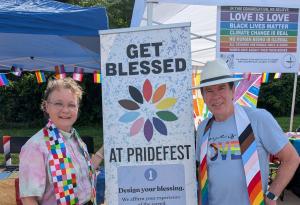
Rev. Dr. Leah D. Schade (2025) offering blessings at PrideFest, 2025
The Rev. Dr. Leah D. Schade is a seminary professor and ordained minister. Her opinions are her own. Leah is the author of Preaching and Social Issues: Tools and Tactics for Empowering Your Prophetic Voice (Rowman & Littlefield, 2024), Preaching in the Purple Zone: Ministry in the Red-Blue Divide (Rowman & Littlefield, 2019) and Creation-Crisis Preaching: Ecology, Theology, and the Pulpit (Chalice Press, 2015). She is the co-editor of Rooted and Rising: Voices of Courage in a Time of Climate Crisis (Rowman & Littlefield, 2019). Her book, Introduction to Preaching: Scripture, Theology, and Sermon Preparation, was co-authored with Jerry L. Sumney and Emily Askew (Rowman & Littlefield, 2023).
General Christian
Politics and Religion
Family, Parenting and Religion
Previous Post

December 23, 2025
Preaching Immigration, Christian Nationalism, and Democracy
Next Post

December 30, 2025 Taboo Topics Mainline Preachers Will Likely Avoid in 2026
Recent Comments
"Or, people could just realize our planet is also a living organism, a 4.5 billion ..."
Love Your Neighbor – Including Earth-Kin: ..."
"Climate change is getting attention but not enough. The study of the issue needs to ..."
Preaching About Climate Change: What Clergy ..."
"Yes! The Season of Creation is a month-long liturgical season to focus on all aspects ..."
Making Space for Eco-Grief—and Hope—in Your ..."
"The new Feast of Creation festival in the liturgical year offers an intentional opportunity for ..."
Making Space for Eco-Grief—and Hope—in Your ..."
Browse Our Archives
Select a Category Academy of Homiletics Addiction Advent AI (Artificial Intelligence) Animals Apocalypse Appalachia Ash Wednesday Baptism Bible Black Lives Matter Blade Runner Book review Children in church Christian Nationalism Christian/Islamic relations Christmas Church Clergy Climate change COVID-19 Creation Data Centers Death penalty Devotional Dialogue Doubt Earth Day Easter Ecofeminism EcoPreacher 1-2-3 ELCA ELCA Youth Gathering Election Environment/ecology Epiphany Faith Faith and Politics Feminism Film review Food Food and Faith Forgiveness Fracking Good Friday Good Omens Grief Gun violence Holy Humor Sunday Holy Week Howard Thurman ICE Immigration Indigenous wisdom Interview Jesus Kentucky Lafayette High School Marching Band Leadership Lent LGBTQIA+ Marching band Martin Luther Martin Luther King Jr. Mary Maundy Thursday Michael Sheen Mother of Jesus Nature New Year's Eve Palm Sunday Parables Pentecost Poem, Poetry Politics Poor People's Campaign Pop culture Prayers Preaching Progressive Christianity Public theology Purple Zone Racism and White Privilege Religion Religion and environment Religion and politics Religion and pop culture Religion and violence Rev. Nelson Rabell Gonzalez Sermons Spanish language resources for preaching Technology Thanksgiving Theological education theology Trees Trump Uncategorized Vegan War Women and religion Workshop Worship
Select a Month October 2026 September 2026 July 2026 June 2026 May 2026 April 2026 March 2026 February 2026 January 2026 December 2025 November 2025 October 2025 September 2025 May 2025 April 2025 March 2025 February 2025 January 2025 December 2024 November 2024 October 2024 September 2024 August 2024 July 2024 June 2024 May 2024 April 2024 March 2024 February 2024 January 2024 December 2023 November 2023 October 2023 September 2023 August 2023 July 2023 June 2023 May 2023 April 2023 March 2023 February 2023 January 2023 December 2022 November 2022 October 2022 August 2022 July 2022 June 2022 May 2022 April 2022 March 2022 February 2022 January 2022 December 2021 November 2021 October 2021 September 2021 August 2021 July 2021 June 2021 May 2021 April 2021 March 2021 January 2021 December 2020 November 2020 October 2020 September 2020 August 2020 July 2020 June 2020 May 2020 April 2020 February 2020 January 2020 December 2019 November 2019 October 2019 September 2019 August 2019 July 2019 June 2019 May 2019 April 2019 March 2019 January 2019 December 2018 November 2018 October 2018 September 2018 August 2018 July 2018 June 2018 May 2018 April 2018 March 2018 February 2018 January 2018 December 2017 November 2017 October 2017 September 2017 August 2017 July 2017 June 2017 May 2017 April 2017
Follow Us!
TAKE THE
Religious Wisdom Quiz
Who said, "I do not know how to speak; I am too young"?
Select your answer to see how you score.
Jeremiah Isaiah Samuel Moses
Books by This Author Books by Leah D. Schade
Related posts from EcoPreacher

Pastoral Wisdom for Responding to Sermon Pushback

"Render Unto Caesar": Faith, Politics, and Elections

What Matt. 21:23-32 Teaches About Integrity In An...

Preaching About Climate Change: What Clergy Need Most
TRENDING AT PATHEOS Progressive Christian

What Being a Modern-Day Apostle Means to Me
In my last column, I discussed the ins and outs of modern-day...

Did Ancient China Once Worship the God of...
Across human history, a common thread weaves through the origins of the...

Love Your Neighbor – Including Earth-Kin: Lev. 19,...
God’s command to love your neighbor means acting in an ethical and...

Lead a Church Study of “Jesus and Lao...
Guest writer Jack Thomas (The Irreverent Reverend) reflects on leading his church...

Pastoral Wisdom for Responding to Sermon Pushback
Getting sermon pushback on your social justice sermon? Learn practical, Proverbs-based strategies...

Principles for Understanding the Apostolic Ministry Today
Whenever people discover that my formal ministry title is "apostle," as in...
view all Progressive Christian blogs
What Are Your Thoughts?leave a comment
Ad-Free & Subscriber Log-In Subscription Support
- About Us
- 2026 Calendar
- Videos
- Podcasts
- Library of World Religions
- Faith In Media Tracker
- Advertise With Us
- Write for Us
- Privacy Policy
- Terms of Service
- Do Not Sell My Data
- Contact Us
- Radiant Digital
- Manage Newsletter Subscriptions
- Unsubscribe From Notifications
- Sitemap
Copyright 2008-2026, Patheos. All rights reserved.
Subscription Support Ad-Free & Subscriber Log-In
Follow Patheos