
BuddhistCatholicContemplativeEvangelicalGeneral ChristianHinduJewishLatter-day SaintMuslimNew VisionsProgressive Christian
Beliefs
- Buddhist
- Catholic
- Contemplative
- Evangelical
- General Christian
- Hindu
- Jewish
- Latter-day Saint
- More Voices
- Muslim
- New Visions
- Pagan
- Progressive Christian
Topics
- Religion News
- Food and Religion
- Sports and Religion
- Religious Art
- Religious Music and Entertainment
- Religious Events
- History and Religion
- Style and Religion
- Politics and Religion
- Women in Religion
- Recreation Outdoors and Religion
- Business Finance and Religion
- Careers Workplace and Religion
- Education and Religion
- Family Parenting and Religion
- Health Fitness and Religion
- Home and Religion
- Relationships and Religion
- Technology and Religion
- Travel and Religion
Columnists
- Buddhist Columnists
- Business Finance and Religion Columnists
- Careers Workplace and Religion Columnists
- Catholic Columnists
- Contemplative Columnists
- Education and Religion Columnists
- Evangelists Columnists
- Family Parenting and Religion Columnists
- General Christian Columnists
- Health Fitness and Religion Columnists
- Hindu Columnists
- History and Religion Columnists
- Home and Religion Columnists
- Jewish Columnists
- More Voices Columnists
- Latter Day Columnists
- Muslim Columnists
- New Visions Columnists
- Nonreligious Columnists
- Pagan Columnists
- Politics and Religion Columnists
- Progressive Columnists
- Recreation Outdoors and Religion Columnists
- Relationships and Religion Columnists
- Religion News Columnists
- Religious Art Columnists
- Religious Events Columnists
- Religious Music and Entertainment Columnists
- Sports and Religion Columnists
- Style and Religion Columnists
- Technology and Religion Columnists
- Travel and Religion Columnists
- Women in Religion Columnists
Resource Library
- 2026 Calendar
- Library of World Religions
- The 100 Most Holy Places on Earth
- Patheos Answers
- Podcasts
- Videos
- Faith Leaders Database
- Anglican Episcopalian
- Bahai
- Baptist
- Buddhism
- Christianity
- Confucianism
- Eastern Orthodoxy
- Hinduism
- Holiness and Pentecostal
- ISKCON
- Islam
- Judaism
- Lutheran
- Methodist
- The Church of Jesus Christ of Latter-day Saints
- New Age
- Paganism
- Presbytarian and Reformed
- Protestantism
- Religion Behind the Scenes
- Roman Catholic
- Scientology
- Shia Islam
- Sikhism
- Sufism
- Sunni Islam
- Taoism
- Zen
- See all religions
Research Tools
 Ad-Free & Subscriber Log-In Subscription Support
Ad-Free & Subscriber Log-In Subscription Support
Follow Patheos 

- Trending:
- Forgiveness
- |
- Marriage
- |
- Consciousness
- |
- Death Penalty
- |
- Election
- |
- Halloween

- Home
- Progressive Christian
- Politics and Religion
- Their God is Their Gullet: Philippians 3:17-4:1
Their God is Their Gullet: Philippians 3:17-4:1
Last updated on: March 11, 2025 at 2:58 pm by Leah D. Schade
Their God is Their Gullet: Philippians 3:17-4:1 2025-03-11T14:58:27-04:00 Leah D. Schade
Patheos Explore the world's faith through different perspectives on religion and spirituality! Patheos has the views of the prevalent religions and spiritualities of the world.
Their god is their gullet and their gullet is their god. What Philippians 3:12-4:1 teaches us about the idolatry of consumption and resisting tyranny.

Nero. Trump. Images in public domain.
Philippians 3:17-4:1
17 Siblings, join in imitating me, and observe those who live according to the example you have in us. 18For many live as enemies of the cross of Christ; I have often told you of them, and now I tell you even with tears. 19Their end is destruction; their god is the belly; and their glory is in their shame; their minds are set on earthly things.
20But our citizenship is in heaven, and it is from there that we are expecting a Saviour, the Lord Jesus Christ. 21He will transform the body of our humiliation so that it may be conformed to the body of his glory, by the power that also enables him to make all things subject to himself. 41Therefore, my siblings, whom I love and long for, my joy and crown, stand firm in the Lord in this way, my beloved.
Their God is Their Gullet
I’m thinking about a tyrant famous for using his autocratic power to gratify his own personal pleasure while carrying out a campaign of brutality against his political enemies and the most vulnerable in society. He quickly learned that he could do whatever he liked without fear of censure or retribution.
The man lived in a prodigious palace and scandalously breached the standards of dignity and decorum.
Everyone hated this megalomaniac, even though they had to pretend to adore him and be obedient to his every whim.
His irresponsible actions threatened a civil war and caused widespread misery. Some even regarded him as the antichrist.
The man I am talking about is . . .
Nero, the emperor of Rome.
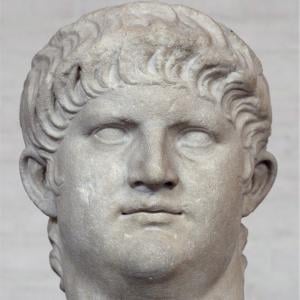
Statue of Nero, Emperor of Rome. Public domain
Nero ruled from 54 – 68 CE. Paul of Tarsus wrote his letter to the church in Philippi sometime between 60-62, just as Nero was embarking on his reign of terror.
So when Paul wrote that “many live as enemies of the cross of Christ,” it may be that Nero was very much on his mind. And not just Nero, but the entire system of senators, the imperial court, and the military that enforced a slave-based economy.
The Roman empire extracted enormous wealth through taxation and tribute from conquered territories. This command-economy controlled trade and resource distribution. It supplied the very rich with extravagant food and luxuries while the poor struggled just to survive.
“Their end is destruction,” Paul wrote. “Their god is the belly, and their glory is in their shame; their minds are set on earthly things.”
Let’s break this down.
Koilia is the word for “belly” in Greek. It means the gullet, from mouth to stomach. It also means “to be given up to the pleasures of the palate, to gluttony.” And it refers to the innermost part of a person, one’s soul, heart, the place from which one makes ethical choices.
So, essentially, Paul is saying that their god is their gullet and their gullet is their God.
What they worship is their own pleasure, their own gluttony. They have no empathy for others, no concern for the pain and suffering they cause.
And it doesn’t matter if you criticize them. In fact, they are so ravenous for attention, they’ll do anything to keep the focus on themselves. This includes things so outrageous, we can barely comprehend just how ridiculously horrible they can be.
Augustine had a phrase for this. He called it:
Homo incurvatus in se
It means “humanity curved in on itself.” Martin Luther said that this level of hubris “wickedly, curvedly, and viciously seeks all things, even God, for its own sake.” (Disputation Against Scholastic Theology [1517]).
Today we have different words like malignant narcissist, megalomaniac, and pathological sociopath. One that I find particularly apt is:
Solipsistic
A solipsist is someone with extreme self-centeredness and selfishness. According to John R. MacArthur, a solipsist’s “only point of reference is himself, so he makes no attempt even at faking interest in other people, since he can’t really see them from his self-centered position.”
When you see a solipsist treat other people with cruelty, emotional blindness, and contempt, it’s difficult to wrap your head around it. It’s a level of malignancy so potent, it’s like a black hole with its own center of gravity that sucks everything into it, destroying it all with no mercy.

A pair of black holes that are about to merge, with the Milky Way visible in the background. Photo credit: Andy Bohn et al
“Their end is destruction.”
If Christians today or in the future were ever to find themselves dealing with rulers such as this, how might they respond?
If they lived in a society of people where their god is the gullet and their gullet is their god, what could Christians do to resist this kind of widespread incurvates in se?
And if there would ever be a time when the very rich, led by an autocratic ruler hellbent on brutality against the most vulnerable, were accelerating the immanent collapse of civilization, how could churches prepare?
In other words, how might Christians “stand firm in the Lord” if the “end is destruction”?
In fact, what does it mean to “stand firm in the Lord” in the midst of an empire that forces the idolatry of consumption, as Rome did in its society and culture?
Paul himself offered advice to early Christians about how they could refuse to cooperate with their own oppression. One thing he told them was to simply refrain from taking part in the idolatry of consumption. For example, in a letter to the Corinthian church, he advised them to refrain from eating meat sacrificed to idols (1 Corinthians 8:4)
In today’s terms, we might call it a boycott. But Paul’s instruction was theological.
It was making a claim about who we worship and what idols we reject.
He wanted Christians to worship the one true God of justice and righteousness and reject the god of the gullet. This instruction comes from a long history of standing against tyranny through subversive nonviolence.
There are, in fact, many examples of biblical boycotts.
Daniel
Recall Daniel’s decision not to eat the king’s food or drink his wine (Daniel 1:8). Nebuchadnezzar was another megalomaniac who demanded that he be worshiped like a god.
But with spiritual discipline, Daniel and his friends refused to bend the knee. They did not obey in advance. Instead, they resisted the temptations of empire. As a result, they strengthened themselves for the trials they would later face – trials that God would see them through.
Egyptian midwives
Noncooperation with evil goes back even earlier to the time when the Hebrew people were slaves in Egypt. When the pharaoh (yet another solipsist who demanded to be worshiped) commanded the midwives to kill the male babies born to the Hebrews, two women, Shiphrah and Puah, cleverly defied his orders (Exodus 1:15-21). They claimed that they always arrived too late because the Hebrew women were so robust.
These Egyptian women engaged in subversive disobedience. They boycotted the genocide and prevented the deaths of innocent children.
Exodus
Later, under a different pharaoh, all the Israelites walked off the job and followed Moses through the Red Sea (Exodus Ch. 14). We might say that this was a massive labor boycott. It was a general strike that resulted in a mass economic and societal rejection of the Egyptian god of the gullet.
What would it take?
Now, understand that if Christians today were ever come to a point where they, too, wanted to take up the mantle of noncooperation with evil, it would require incredible mental, physical, and spiritual discipline and stamina.
Queen Esther
Recall that prior to her appeal to the king to prevent the genocide of her people, Queen Esther led a three-day fast (Esther 4:16-17). Everyone had to participate in a movement of solidarity and resistance in order for it to be effective.
Lent is the ideal time
This being the season of Lent, now might be a good time to flex our fasting muscles just in case we might ever decide we need to engage in noncooperation with an oppressive tyrannical regime. If that were to ever happen in this country.
A boycott can be a strategic tool for justice, and there are examples of faithful people refusing to participate in systems of oppression even in our own country.
Montgomery Bus Boycott
During the Civil Rights Movement, for instance, the Montgomery Bus Boycott lasted for a year from 1955-56. It required incredible sacrifice, stamina, and strategy on the part of African Americans. Churches were key to this movement. Eventually, thanks to effective organization and unrelenting solidarity, their efforts resulted in the Supreme Court ruling that segregation on public buses was unconstitutional.
César Chávez
From 1965-1970, César Chávez, Dolores Huerta, and the United Farm Workers (UFW) urged consumers to stop buying grapes. This was a boycott to support farmworkers fighting for better wages and working conditions. Church activists were part of this effort. Eventually, grape growers signed contracts with the UFW, improving pay and conditions for workers.
South Africa boycott
In the 1980s and 90s, U.S. activists, students, companies, and churches divested from South Africa. The resulting economic pressure helped dismantle apartheid, leading to Nelson Mandela’s release and democratic reforms.
Resistance requires spiritual stamina
Keep in mind, these campaigns against the god of the gullet required people to have spiritual, physical, emotional, and relational stamina.
Learning how to do without and practicing things like delayed gratification are like a sabbath-based abstinence from worshiping the god of the gullet.
Engaging in such practices would help people to move themselves away from the orbit of the gullet-god’s black hole.
Because, if an economic, environmental, or political catastrophe were ever on the horizon, it would be good for congregations to remember the rest of this passage from Paul.
Citizenship in heaven
20But our citizenship is in heaven, and it is from there that we are expecting a Savior, the Lord Jesus Christ. 21He will transform the body of our humiliation so that it may be conformed to the body of his glory, by the power that also enables him to make all things subject to himself.
To be clear, locating our citizenship in heaven is not about waiting for a divine superhero, or giving up until we die while doing nothing in the meantime to address injustice.
No, it means recognizing that our worth is not determined by the god of the gullet. It means our rights are not merely transitional privileges dependent on whoever is in office.
And it means that our solidarity with each other is based on the true God of justice and righteousness.
This is the God who no military can defeat, no corporation can buy out, no billionaire tech bro can hack, and no petty tyrant can cast into the black-hole abyss.
Transformation
No, this transformation that Paul is talking about can happen here and now. It can happen through tactics like boycotts, strikes, nonviolent noncooperation, and noncompliance with tyranny.
Remember, neither Nebuchadnezzar, nor Pharoah, nor Nero, nor any authoritarian regime ever responded to mere persuasion. They respond when their rule becomes monetarily and politically costly.
And whether it’s economic, religious, or political, a boycott by people of faith must be rooted in trust that God will sustain them. We must have faith that God will sustain us through our mutual aid with each other, through careful planning and preparation, and through strategic organizing. This will help us withstand both the short-term inconvenience and the long-term hardships we might endure.
This is why Paul’s words at the beginning of chapter 4 are so important.
Stand firm in the Lord
“Therefore, my siblings, whom I love and long for, my joy and crown, stand firm in the Lord in this way, my beloved.” (Phil 4:1)
Siblings in Christ, if we are ever called upon to claim our heavenly citizenship in order to resist, defy, and stand against the god of the gullet, know that God will bless our efforts with wisdom, unity, and strength. God can use our tactics of nonviolent noncompliance to bring awareness, transformation, and a renewal of commitment to justice. Just as God did for Daniel, for Esther, for Paul.
And for the one who went all the way into the black hole . . . and three days later, came back out!
Therefore, I encourage you: stand firm – together – as citizens of heaven, citizens of God’s Beloved Community.
How is your faith community engaging in resistance against the god of the gullet? Share your ideas in the comments below!
Read also:
20 Things Clergy & Churches Can Do to Prepare for 2025
- Are you a preacher in the U.S.? You can help me with my research studying ministry, preaching, and social issues during this unprecedented time by filling out this 15-minute survey.
- Thinking of addressing social issues in a sermon? Preachers can take this 5-minute assessment of their strengths and vulnerabilities here.
- Are you a clergy person looking to connect with other Christian leaders in the work of resisting and disrupting Christian nationalism? Check out the Clergy Emergency League, a group I co-founded in 2020.

Rev. Dr. Leah D. Schade
The Rev. Dr. Leah D. Schade is the Associate Professor of Preaching and Worship at Lexington Theological Seminary in Kentucky and ordained in the ELCA. Dr. Schade does not speak for LTS or the ELCA; her opinions are her own. She is the author of Preaching and Social Issues: Tools and Tactics for Empowering Your Prophetic Voice (Rowman & Littlefield, 2024), Preaching in the Purple Zone: Ministry in the Red-Blue Divide (Rowman & Littlefield, 2019) and Creation-Crisis Preaching: Ecology, Theology, and the Pulpit (Chalice Press, 2015). She is the co-editor of Rooted and Rising: Voices of Courage in a Time of Climate Crisis (Rowman & Littlefield, 2019). Her book, Introduction to Preaching: Scripture, Theology, and Sermon Preparation, was co-authored with Jerry L. Sumney and Emily Askew (Rowman & Littlefield, 2023).
General Christian
Politics and Religion
History and Religion
Previous Post

March 7, 2025
Trump Comes for the Trees: A Furious, Faithful Lament
Next Post

April 2, 2025 8 Lessons for Preachers from Cory Booker, Historic Speech
Recent Comments
"Or, people could just realize our planet is also a living organism, a 4.5 billion ..."
Love Your Neighbor – Including Earth-Kin: ..."
"Climate change is getting attention but not enough. The study of the issue needs to ..."
Preaching About Climate Change: What Clergy ..."
"Yes! The Season of Creation is a month-long liturgical season to focus on all aspects ..."
Making Space for Eco-Grief—and Hope—in Your ..."
"The new Feast of Creation festival in the liturgical year offers an intentional opportunity for ..."
Making Space for Eco-Grief—and Hope—in Your ..."
Browse Our Archives
Select a Category Academy of Homiletics Addiction Advent AI (Artificial Intelligence) Animals Apocalypse Appalachia Ash Wednesday Baptism Bible Black Lives Matter Blade Runner Book review Children in church Christian Nationalism Christian/Islamic relations Christmas Church Clergy Climate change COVID-19 Creation Data Centers Death penalty Devotional Dialogue Doubt Earth Day Easter Ecofeminism EcoPreacher 1-2-3 ELCA ELCA Youth Gathering Election Environment/ecology Epiphany Faith Faith and Politics Feminism Film review Food Food and Faith Forgiveness Fracking Good Friday Good Omens Grief Gun violence Holy Humor Sunday Holy Week Howard Thurman ICE Immigration Indigenous wisdom Interview Jesus Kentucky Lafayette High School Marching Band Leadership Lent LGBTQIA+ Marching band Martin Luther Martin Luther King Jr. Mary Maundy Thursday Michael Sheen Mother of Jesus Nature New Year's Eve Palm Sunday Parables Pentecost Poem, Poetry Politics Poor People's Campaign Pop culture Prayers Preaching Progressive Christianity Public theology Purple Zone Racism and White Privilege Religion Religion and environment Religion and politics Religion and pop culture Religion and violence Rev. Nelson Rabell Gonzalez Sermons Spanish language resources for preaching Technology Thanksgiving Theological education theology Trees Trump Uncategorized Vegan War Women and religion Workshop Worship
Select a Month October 2026 September 2026 July 2026 June 2026 May 2026 April 2026 March 2026 February 2026 January 2026 December 2025 November 2025 October 2025 September 2025 May 2025 April 2025 March 2025 February 2025 January 2025 December 2024 November 2024 October 2024 September 2024 August 2024 July 2024 June 2024 May 2024 April 2024 March 2024 February 2024 January 2024 December 2023 November 2023 October 2023 September 2023 August 2023 July 2023 June 2023 May 2023 April 2023 March 2023 February 2023 January 2023 December 2022 November 2022 October 2022 August 2022 July 2022 June 2022 May 2022 April 2022 March 2022 February 2022 January 2022 December 2021 November 2021 October 2021 September 2021 August 2021 July 2021 June 2021 May 2021 April 2021 March 2021 January 2021 December 2020 November 2020 October 2020 September 2020 August 2020 July 2020 June 2020 May 2020 April 2020 February 2020 January 2020 December 2019 November 2019 October 2019 September 2019 August 2019 July 2019 June 2019 May 2019 April 2019 March 2019 January 2019 December 2018 November 2018 October 2018 September 2018 August 2018 July 2018 June 2018 May 2018 April 2018 March 2018 February 2018 January 2018 December 2017 November 2017 October 2017 September 2017 August 2017 July 2017 June 2017 May 2017 April 2017
Follow Us!
TAKE THE
Religious Wisdom Quiz
Which prophet's visions include "Gog and Magog"?
Select your answer to see how you score.
Micah Ezekiel Daniel Amos
Books by This Author Books by Leah D. Schade
Related posts from EcoPreacher

"Render Unto Caesar": Faith, Politics, and Elections

What Matt. 21:23-32 Teaches About Integrity In An...

Workers in the Vineyard: Sermon Ideas for Matt....

When The Data Center Wolf Is At Your...
TRENDING AT PATHEOS Progressive Christian

What Being a Modern-Day Apostle Means to Me
In my last column, I discussed the ins and outs of modern-day...

Did Ancient China Once Worship the God of...
Across human history, a common thread weaves through the origins of the...

Love Your Neighbor – Including Earth-Kin: Lev. 19,...
God’s command to love your neighbor means acting in an ethical and...

Lead a Church Study of “Jesus and Lao...
Guest writer Jack Thomas (The Irreverent Reverend) reflects on leading his church...

Pastoral Wisdom for Responding to Sermon Pushback
Getting sermon pushback on your social justice sermon? Learn practical, Proverbs-based strategies...

Principles for Understanding the Apostolic Ministry Today
Whenever people discover that my formal ministry title is "apostle," as in...
view all Progressive Christian blogs
What Are Your Thoughts?leave a comment
Ad-Free & Subscriber Log-In Subscription Support
- About Us
- 2026 Calendar
- Videos
- Podcasts
- Library of World Religions
- Faith In Media Tracker
- Advertise With Us
- Write for Us
- Privacy Policy
- Terms of Service
- Do Not Sell My Data
- Contact Us
- Radiant Digital
- Manage Newsletter Subscriptions
- Unsubscribe From Notifications
- Sitemap
Copyright 2008-2026, Patheos. All rights reserved.
Subscription Support Ad-Free & Subscriber Log-In
Follow Patheos