
BuddhistCatholicContemplativeEvangelicalGeneral ChristianHinduJewishLatter-day SaintMuslimNew VisionsProgressive Christian
Beliefs
- Buddhist
- Catholic
- Contemplative
- Evangelical
- General Christian
- Hindu
- Jewish
- Latter-day Saint
- More Voices
- Muslim
- New Visions
- Pagan
- Progressive Christian
Topics
- Religion News
- Food and Religion
- Sports and Religion
- Religious Art
- Religious Music and Entertainment
- Religious Events
- History and Religion
- Style and Religion
- Politics and Religion
- Women in Religion
- Recreation Outdoors and Religion
- Business Finance and Religion
- Careers Workplace and Religion
- Education and Religion
- Family Parenting and Religion
- Health Fitness and Religion
- Home and Religion
- Relationships and Religion
- Technology and Religion
- Travel and Religion
Columnists
- Buddhist Columnists
- Business Finance and Religion Columnists
- Careers Workplace and Religion Columnists
- Catholic Columnists
- Contemplative Columnists
- Education and Religion Columnists
- Evangelists Columnists
- Family Parenting and Religion Columnists
- General Christian Columnists
- Health Fitness and Religion Columnists
- Hindu Columnists
- History and Religion Columnists
- Home and Religion Columnists
- Jewish Columnists
- More Voices Columnists
- Latter Day Columnists
- Muslim Columnists
- New Visions Columnists
- Nonreligious Columnists
- Pagan Columnists
- Politics and Religion Columnists
- Progressive Columnists
- Recreation Outdoors and Religion Columnists
- Relationships and Religion Columnists
- Religion News Columnists
- Religious Art Columnists
- Religious Events Columnists
- Religious Music and Entertainment Columnists
- Sports and Religion Columnists
- Style and Religion Columnists
- Technology and Religion Columnists
- Travel and Religion Columnists
- Women in Religion Columnists
Resource Library
- 2026 Calendar
- Library of World Religions
- The 100 Most Holy Places on Earth
- Patheos Answers
- Podcasts
- Videos
- Faith Leaders Database
- Anglican Episcopalian
- Bahai
- Baptist
- Buddhism
- Christianity
- Confucianism
- Eastern Orthodoxy
- Hinduism
- Holiness and Pentecostal
- ISKCON
- Islam
- Judaism
- Lutheran
- Methodist
- The Church of Jesus Christ of Latter-day Saints
- New Age
- Paganism
- Presbytarian and Reformed
- Protestantism
- Religion Behind the Scenes
- Roman Catholic
- Scientology
- Shia Islam
- Sikhism
- Sufism
- Sunni Islam
- Taoism
- Zen
- See all religions
Research Tools
 Ad-Free & Subscriber Log-In Subscription Support
Ad-Free & Subscriber Log-In Subscription Support
Follow Patheos 

- Trending:
- Forgiveness
- |
- Marriage
- |
- Consciousness
- |
- Death Penalty
- |
- Election
- |
- Halloween

- Home
- Progressive Christian
- Recreation, Outdoors and Religion
- Purity & Pesticides: Protecting God’s Creation, Human Health
Purity & Pesticides: Protecting God’s Creation, Human Health
Last updated on: August 22, 2024 at 2:02 pm by Leah D. Schade
Purity & Pesticides: Protecting God’s Creation, Human Health 2024-08-22T14:02:29-04:00 Leah D. Schade
Patheos Explore the world's faith through different perspectives on religion and spirituality! Patheos has the views of the prevalent religions and spiritualities of the world.
Protecting nature and human health from the dangers of pesticides is one way that churches can live into their vocation of caring for God’s Creation.
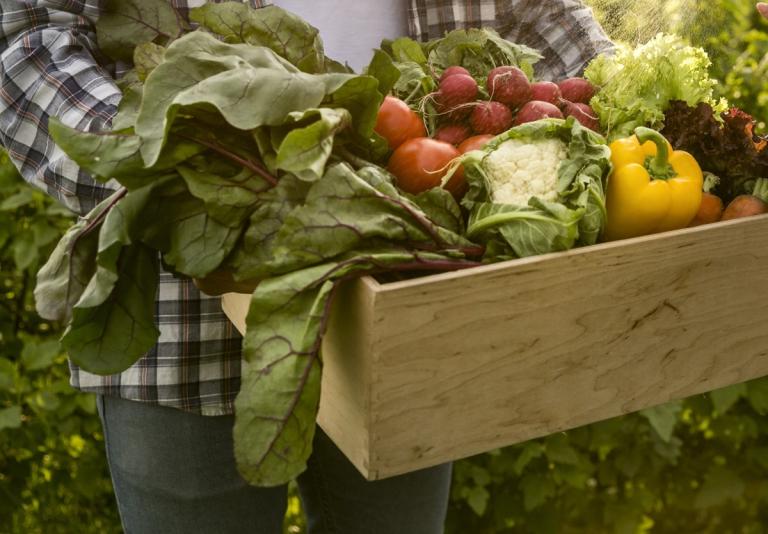
Purity & Pesticides: Protecting God’s Creation, Human Health. Image by freepik
Here are ideas for reading and preaching Deuteronomy 4:1-2 and Mark 7:1-8, 14-23. This is part of the EcoPreacher 1-2-3 series to equip preachers and congregations for engaging the Bible through an ecological lens. These texts are assigned as part of the Revised Common Lectionary for the fifteenth Sunday after Pentecost.
Eco-Exegesis
Eco-exegesis is a method of interpreting the biblical text through a green lens using the principles of ecological theology.
Deut. 4:1
So now, Israel, give heed to the statutes and ordinances that I am teaching you to observe, so that you may live to enter and occupy the land that the Lord, the God of your ancestors, is giving you.
These verses are part of Moses’s final speech to the people of Israel recalling their history from the time they departed Mount Horeb (Sinai) to when they arrived east of the Jordan poised to enter the promised land. Just prior to these verses in chapter 4, God shows Moses the view of the land that his people will enter – “that good hill country” (Deut. 3:25). Moses himself will not be able to enter the land, but God tells him to encourage Joshua who will assume leadership after he has died.
The precautionary principle
God is giving the Israelites a heavy responsibility as they “enter and occupy the land” (Deut. 4:1). They must keep God’s commandments and live in ethical relationship with each other and with the land itself.
A few verses later, God tells them to “take care and watch yourselves closely” (Deut. 4:9). Rabbis across the ages have said that this admonition applies to caring for one’s own body, the health of the community, and the flourishing of the land. Rabbis Yonatan Neril and Leo Dee explain that “This relates closely to the precautionary principle, which involves taking preventive action in the face of uncertainty” (Eco Bible Vol. 2, 133).
Neril and Dee encourage us to apply this ancient teaching to the way we grow our food and the use of pesticides. They point out that pesticides are linked to acute and chronic illnesses, including cancer. They also have negative impacts on biodiversity, notably pollinators such as bees. And when used without appropriate safety protocols, pesticides can be toxic to farm workers applying them (Eco Bible Vol. 2, 133—34).
According to Statista Research Department, “From 1990 to 2021, the worldwide agricultural use of pesticides steadily increased, reaching 3.54 million metric tons in 2021.” We must wonder how this squares with God’s command to take care of the land, our bodies, and communities.
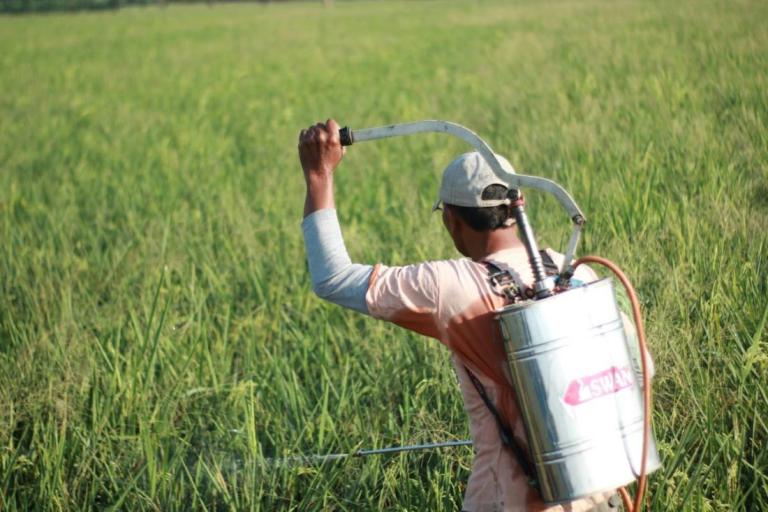
Farm worker using pesticides. Photo by Rosyid Arifin on pexels.com
Mark 7:20-23
“Jesus said, ‘It is what comes out of a person that defiles. For it is from within, from the human heart, that evil intentions come: fornication, theft, murder, adultery, avarice, wickedness, deceit, licentiousness, envy, slander, pride, folly. All these evil things come from within, and they defile a person.’”
It may at first seem shocking that Jesus defended his disciples for eating with unwashed hands. But Jesus’s dispute with the religious leaders had less to do with sanitation practices than with their hypocrisy of insisting that others follow purity laws while they themselves flout the ethics of God’s commands. This leads Jesus to conclude that the evil intentions within a person do more damage than any external factors.
Returning to the use of pesticides, we can make the case that the indiscriminate overuse of these poisons has a direct link to one of the evil intentions Jesus names: avarice. While increased food production is needed for a growing population, the greed for increased crop yields and profits, combined with cost-cutting measures of using cheaper, more dangerous pesticides does more harm than good.
The overuse of pesticides and other chemicals harms helpful insects and leads to soil degradation. Pesticides also contaminate water and poison ecosystems. Pregnant mothers and young children are especially susceptible to the toxicity of pesticides.
So, what can churches and other houses of worship do to address the problem of pesticides?
Education, advocacy, and community engagement are ways to leverage influence. For example, your congregation could promote organic and sustainable farming such as organizing sign-ups for community-supported agriculture (CSA).
Congregations can also support policy changes regarding pesticide use by advocating for local, state, or national regulations that reduce the use of harmful pesticides. Petition drives, letter-writing campaigns, or meetings with policymakers are all ways to get involved.
Also, if your church has enough land, consider starting a community garden that uses organic and sustainable practices. This can serve as a model for the community of what is possible for healthier farming. Or if you don’t have the land, you can partner with another congregation and offer volunteers to help plant, weed, and harvest fresh produce for local food banks or church events.
By working with local leaders and other houses of worship, churches can not only address the problem of pesticides but also promote broader environmental health and community well-being. In this way we can protect the good land that God created.
1 Eco-Idea
The Eco-Idea is one succinct statement that tells us who God is and/or what God does in relation to Creation and how we should respond as people of faith.
Protecting nature and human health from the dangers of pesticides is one way that churches can live into their vocation of caring for God’s Creation.
2 Eco-Questions
Eco-Questions are what we can ask to help a congregation draw out the implications of the Eco-Exegesis and Eco-Idea.
- Did you know there are healthy alternatives to pesticides? Check out these sites with information about integrated pest management and agroecology.
- Can you guess which organizations spend the most money to stop the regulation of pesticides? Tyson Foods and Monsanto are just two of the fifteen powerful pro-agrichemical lobbyists profiled here.
3 Eco-Actions
Eco-Actions are ways that a congregation might respond to the Eco-Idea and Eco-Questions. One of these possibilities may have salience for your ministry context.
1 – Educate.
Organize a series of educational events that inform congregants and the community about the environmental and health risks associated with pesticide use, as well as alternative, sustainable practices.
2 – Buy organic.
Try switching some items in your shopping cart to organic. Consult the Environmental Working Group website, https://www.ewg.org/, to find the “dirty dozen” and “clean fifteen” fruits and vegetables.
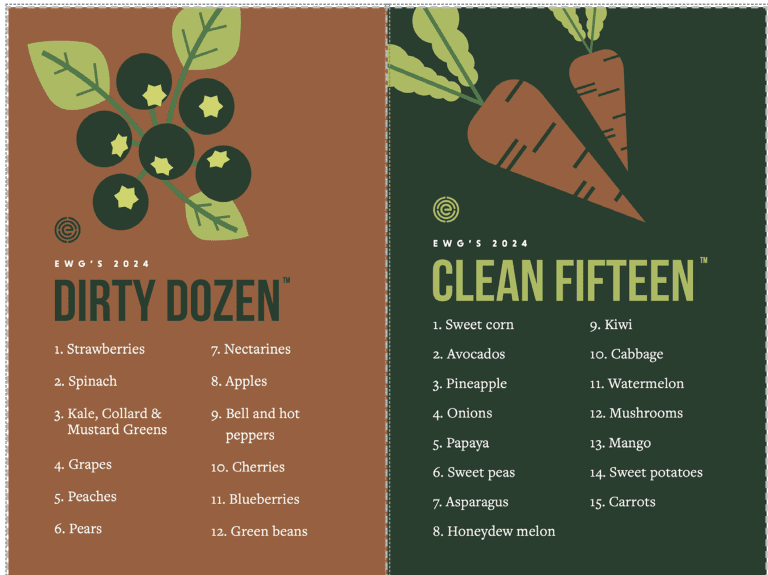
EWG’s 2024 Guide to Pesticides in Produce
3 – Support local organic farmers.
When possible, purchase local, organic foods at farmers markets. Discuss the possibility of your church hosting or tabling at a local farmers market.
Read also:
Gleaning Divine Abundance: Isaiah 55:1-5; Matthew 14:13-21
A Divine Cycle of Reciprocity: Preaching The Parable of the Sower
Food & Faith: Preaching Deuteronomy 4 Through a Green Lens
EcoPreacher 1-2-3 is a partnership between the Rev. Dr. Leah Schade and the Interfaith Center for Sustainable Development, publishers of Eco Bible, a Jewish ecological commentary on the Hebrew Scriptures. EcoPreacher 1-2-3 provides Creation-centered sermon preparation that is short, accessible, and based on a solid biblical foundation. To see other EcoPreacher ideas and to sign up to receive future EcoPreacher 1-2-3 installments, click here.

Leah D. Schade
The Rev. Dr. Leah D. Schade is the Associate Professor of Preaching and Worship at Lexington Theological Seminary in Kentucky and ordained in the ELCA. Dr. Schade does not speak for LTS or the ELCA; her opinions are her own. She is the author of Preaching in the Purple Zone: Ministry in the Red-Blue Divide (Rowman & Littlefield, 2019) and Creation-Crisis Preaching: Ecology, Theology, and the Pulpit (Chalice Press, 2015). She is the co-editor of Rooted and Rising: Voices of Courage in a Time of Climate Crisis (Rowman & Littlefield, 2019). Her newest book is Introduction to Preaching: Scripture, Theology, and Sermon Preparation, co-authored with Jerry L. Sumney and Emily Askew (Rowman & Littlefield, 2023).
General Christian
Recreation, Outdoors and Religion
Food and Religion
Previous Post

August 7, 2024
Walz’s "Mind Your Own Damn Business" is Actually Biblical
Next Post

August 28, 2024 What Clergy Can Say (and Not Say) During the Election Season
Recent Comments
"Or, people could just realize our planet is also a living organism, a 4.5 billion ..."
Love Your Neighbor – Including Earth-Kin: ..."
"Climate change is getting attention but not enough. The study of the issue needs to ..."
Preaching About Climate Change: What Clergy ..."
"Yes! The Season of Creation is a month-long liturgical season to focus on all aspects ..."
Making Space for Eco-Grief—and Hope—in Your ..."
"The new Feast of Creation festival in the liturgical year offers an intentional opportunity for ..."
Making Space for Eco-Grief—and Hope—in Your ..."
Browse Our Archives
Select a Category Academy of Homiletics Addiction Advent AI (Artificial Intelligence) Animals Apocalypse Appalachia Ash Wednesday Baptism Bible Black Lives Matter Blade Runner Book review Children in church Christian Nationalism Christian/Islamic relations Christmas Church Clergy Climate change COVID-19 Creation Data Centers Death penalty Devotional Dialogue Doubt Earth Day Easter Ecofeminism EcoPreacher 1-2-3 ELCA ELCA Youth Gathering Election Environment/ecology Epiphany Faith Faith and Politics Feminism Film review Food Food and Faith Forgiveness Fracking Good Friday Good Omens Grief Gun violence Holy Humor Sunday Holy Week Howard Thurman ICE Immigration Indigenous wisdom Interview Jesus Kentucky Lafayette High School Marching Band Leadership Lent LGBTQIA+ Marching band Martin Luther Martin Luther King Jr. Mary Maundy Thursday Michael Sheen Mother of Jesus Nature New Year's Eve Palm Sunday Parables Pentecost Poem, Poetry Politics Poor People's Campaign Pop culture Prayers Preaching Progressive Christianity Public theology Purple Zone Racism and White Privilege Religion Religion and environment Religion and politics Religion and pop culture Religion and violence Rev. Nelson Rabell Gonzalez Sermons Spanish language resources for preaching Technology Thanksgiving Theological education theology Trees Trump Uncategorized Vegan War Women and religion Workshop Worship
Select a Month October 2026 September 2026 July 2026 June 2026 May 2026 April 2026 March 2026 February 2026 January 2026 December 2025 November 2025 October 2025 September 2025 May 2025 April 2025 March 2025 February 2025 January 2025 December 2024 November 2024 October 2024 September 2024 August 2024 July 2024 June 2024 May 2024 April 2024 March 2024 February 2024 January 2024 December 2023 November 2023 October 2023 September 2023 August 2023 July 2023 June 2023 May 2023 April 2023 March 2023 February 2023 January 2023 December 2022 November 2022 October 2022 August 2022 July 2022 June 2022 May 2022 April 2022 March 2022 February 2022 January 2022 December 2021 November 2021 October 2021 September 2021 August 2021 July 2021 June 2021 May 2021 April 2021 March 2021 January 2021 December 2020 November 2020 October 2020 September 2020 August 2020 July 2020 June 2020 May 2020 April 2020 February 2020 January 2020 December 2019 November 2019 October 2019 September 2019 August 2019 July 2019 June 2019 May 2019 April 2019 March 2019 January 2019 December 2018 November 2018 October 2018 September 2018 August 2018 July 2018 June 2018 May 2018 April 2018 March 2018 February 2018 January 2018 December 2017 November 2017 October 2017 September 2017 August 2017 July 2017 June 2017 May 2017 April 2017
Follow Us!
TAKE THE
Religious Wisdom Quiz
Rejoice in the Lord always. I will say it again: __!
Select your answer to see how you score.
Hope Rejoice Pray Believe
Books by This Author Books by Leah D. Schade
Related posts from EcoPreacher

Love Your Neighbor – Including Earth-Kin: Lev. 19,...

Preaching About Climate Change: What Clergy Need Most

Workers in the Vineyard: Sermon Ideas for Matt....
Recogiendo la abundancia sagrada: Isaías 55, Mateo 14
TRENDING AT PATHEOS Progressive Christian

What Being a Modern-Day Apostle Means to Me
In my last column, I discussed the ins and outs of modern-day...

Did Ancient China Once Worship the God of...
Across human history, a common thread weaves through the origins of the...

Love Your Neighbor – Including Earth-Kin: Lev. 19,...
God’s command to love your neighbor means acting in an ethical and...

Lead a Church Study of “Jesus and Lao...
Guest writer Jack Thomas (The Irreverent Reverend) reflects on leading his church...

Pastoral Wisdom for Responding to Sermon Pushback
Getting sermon pushback on your social justice sermon? Learn practical, Proverbs-based strategies...

Principles for Understanding the Apostolic Ministry Today
Whenever people discover that my formal ministry title is "apostle," as in...
view all Progressive Christian blogs
What Are Your Thoughts?leave a comment
Ad-Free & Subscriber Log-In Subscription Support
- About Us
- 2026 Calendar
- Videos
- Podcasts
- Library of World Religions
- Faith In Media Tracker
- Advertise With Us
- Write for Us
- Privacy Policy
- Terms of Service
- Do Not Sell My Data
- Contact Us
- Radiant Digital
- Manage Newsletter Subscriptions
- Unsubscribe From Notifications
- Sitemap
Copyright 2008-2026, Patheos. All rights reserved.
Subscription Support Ad-Free & Subscriber Log-In
Follow Patheos