
BuddhistCatholicContemplativeEvangelicalGeneral ChristianHinduJewishLatter-day SaintMuslimNew VisionsProgressive Christian
Beliefs
- Buddhist
- Catholic
- Contemplative
- Evangelical
- General Christian
- Hindu
- Jewish
- Latter-day Saint
- More Voices
- Muslim
- New Visions
- Pagan
- Progressive Christian
Topics
- Religion News
- Food and Religion
- Sports and Religion
- Religious Art
- Religious Music and Entertainment
- Religious Events
- History and Religion
- Style and Religion
- Politics and Religion
- Women in Religion
- Recreation Outdoors and Religion
- Business Finance and Religion
- Careers Workplace and Religion
- Education and Religion
- Family Parenting and Religion
- Health Fitness and Religion
- Home and Religion
- Relationships and Religion
- Technology and Religion
- Travel and Religion
Columnists
- Buddhist Columnists
- Business Finance and Religion Columnists
- Careers Workplace and Religion Columnists
- Catholic Columnists
- Contemplative Columnists
- Education and Religion Columnists
- Evangelists Columnists
- Family Parenting and Religion Columnists
- General Christian Columnists
- Health Fitness and Religion Columnists
- Hindu Columnists
- History and Religion Columnists
- Home and Religion Columnists
- Jewish Columnists
- More Voices Columnists
- Latter Day Columnists
- Muslim Columnists
- New Visions Columnists
- Nonreligious Columnists
- Pagan Columnists
- Politics and Religion Columnists
- Progressive Columnists
- Recreation Outdoors and Religion Columnists
- Relationships and Religion Columnists
- Religion News Columnists
- Religious Art Columnists
- Religious Events Columnists
- Religious Music and Entertainment Columnists
- Sports and Religion Columnists
- Style and Religion Columnists
- Technology and Religion Columnists
- Travel and Religion Columnists
- Women in Religion Columnists
Resource Library
- 2026 Calendar
- Library of World Religions
- The 100 Most Holy Places on Earth
- Patheos Answers
- Podcasts
- Videos
- Faith Leaders Database
- Anglican Episcopalian
- Bahai
- Baptist
- Buddhism
- Christianity
- Confucianism
- Eastern Orthodoxy
- Hinduism
- Holiness and Pentecostal
- ISKCON
- Islam
- Judaism
- Lutheran
- Methodist
- The Church of Jesus Christ of Latter-day Saints
- New Age
- Paganism
- Presbytarian and Reformed
- Protestantism
- Religion Behind the Scenes
- Roman Catholic
- Scientology
- Shia Islam
- Sikhism
- Sufism
- Sunni Islam
- Taoism
- Zen
- See all religions
Research Tools
 Ad-Free & Subscriber Log-In Subscription Support
Ad-Free & Subscriber Log-In Subscription Support
Follow Patheos 

- Trending:
- Forgiveness
- |
- Marriage
- |
- Consciousness
- |
- Death Penalty
- |
- Election
- |
- Halloween

- Home
- Progressive Christian
- Recreation, Outdoors and Religion
- Honoring Sabbath Rest for God’s Creation and Our Health
Honoring Sabbath Rest for God’s Creation and Our Health
Last updated on: May 24, 2024 at 12:14 pm by Leah D. Schade
Honoring Sabbath Rest for God’s Creation and Our Health 2024-05-24T12:14:56-04:00 Leah D. Schade
Patheos Explore the world's faith through different perspectives on religion and spirituality! Patheos has the views of the prevalent religions and spiritualities of the world.
Honoring the Sabbath for both people and Creation is an act of faith. It shows that we trust God by releasing our need for productivity and delighting in God’s world.

Sabbath rest in Creation. Photo by Leah D. Schade. All rights reserved.
Here are ideas for teaching and preaching Deuteronomy 5:12-15 and Mark 2:23-3:6. These are readings assigned for the Second Sunday after Pentecost, Year B, in the Revised Common Lectionary, June 2, 2024. This is part of the EcoPreacher 1-2-3 series to equip preachers and congregations for engaging the Bible through an ecological lens.
Eco-Exegesis
Eco-exegesis is a method of interpreting the biblical text through a green lens using the principles of ecological theology. Learn more here.
Deut. 5:14: But the seventh day is a sabbath to the Lord your God; you shall not do any work—you, or your son or your daughter, or your male or female slave, or your ox or your donkey, or any of your livestock, or the resident alien in your towns, so that your male and female slave may rest as well as you.
What is Sabbath?
Sabbath is a day of religious observation and abstinence from work kept by Jews from Friday evening to Saturday evening and by Christians on Sunday. The commandment to rest and worship finds its roots in Genesis 2:2 where God rested from the act of creating the universe. God blessed every seventh day and made it sacred. In Exodus 20:8 and Deut. 5:14, the Sabbath is commanded by God to be kept as a holy day of rest.
Walter Brueggemann points out that Deuteronomy’s invocation of the community’s memory of slavery in Egypt “introduces a new motivation for Sabbath keeping, namely, exodus emancipation.”[i] He explains, “In Sabbath rest, the community publicly asserts that its life is not defined by production, consumption, and possession, but by the economic emancipation made possible by the lord of the exodus.”[ii]
Sabbath for the land and animals
In Eco Bible we learn that an ecotheological reading of expand the commandment’s relationship between humans and God to include humans, God, and the land. As Rabbi Dr. David Seidenberg explains, “For the Torah, our relationship to the land is the primary medium through which we enact our relationship to God.”[iii] Thus, with the Sabbath commandment, the land is given rest when humans refrain from work.
Further, the commandments extend to other creatures as well. One’s ox, donkey, and livestock are also released from work on the Sabbath. This shows that not only does God respect the needs of animals, but humans must do so as well. “How we relate to animals is part and parcel of how we relate to God. Animals are God’s creation, too, so we need to treat them respectfully.”[iv]
Jesus and the Sabbath
Mark 3:4: Then Jesus said to them, ‘Is it lawful to do good or to do harm on the sabbath, to save life or to kill?’ But they were silent.
The Sabbath is about freeing people from the relentless demand for work imposed on them by an extractive and exploitative empire. But when the commandment is used by those in power as a means of control it can result in hunger or physical suffering.
The religious leaders in Jesus’s time were weaponizing the Sabbath commandment so that it became the exact opposite of what God intended it to be. Jesus’s confrontation of the leaders revealed that while the wealthy have no need to secure food for themselves on the Sabbath, those who live hand-to-mouth have no such luxury.
When practices of unfairness are codified, a system of inequity becomes entrenched.
This was what Jesus was challenging – not the idea of the Sabbath, but the way the wealthy leaders had warped its interpretation in order to oppress the poor and sick.
The description of the religious leaders as having “hardness of heart” is a deliberate reference to another passage in Deuteronomy. In 15:7, God tells the Israelites, “Do not be hard-hearted or tight-fisted toward your needy neighbor.” Instead, they are to “give liberally and be ungrudging when you do so” (v. 10).
By allowing his disciples to glean on the Sabbath, and by healing the disfigured hand of the man in the synagogue, Jesus demonstrates the true fulfillment of the Sabbath. This is about relief from suffering and hunger, as well as restoration of community to those who have been ostracized.
Doing nothing is a spiritual practice of resistance.
Today, the challenge is not so much the correct interpretation of the commandment but an economy whose relentless demands make collective rest nearly impossible. Author Jenny Odell makes the case for “doing nothing” in radical resistance to our economy’s “arms race of urgency.”[v] Convenanting together as a congregation to create space for Sabbath is key to cultivating rest, restoration, and resistance to an oppressive economy.
1 Eco-Idea
The Eco-Idea is one succinct statement that tells us who God is and/or what God does in relation to Creation and how we should respond as people of faith.
Honoring the Sabbath for both people and Creation is an act of faith. It shows that we trust God by releasing our need for productivity and delighting in God’s world.
2 Eco-Questions
Eco-Questions are what we can ask to help a congregation draw out the implications of the Eco-Exegesis and Eco-Idea.
- What person do you know who best embodies a Sabbath-honoring life? How do they make you feel when you’re around them? What places in nature allow you to breathe and experience Sabbath moments? What can you learn from those places about healthy rhythms of activity and rest?
- In what ways does the church contribute to the busy-ness of our society? What could we shift so that it becomes a haven of rest for people?
3 Eco-Actions
Eco-Actions are ways that a congregation might respond to the Eco-Idea and Eco-Questions. One of these possibilities may have salience for your ministry context.
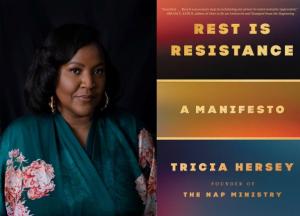
- Set aside times of dormancy, like the farmer allowing an overworked field to lie fallow for a season. Make space and time for sleep, daydreaming, doodling, walking, or listening to music. Think of this like an agricultural practice that allows nutrients to return to the soil, permits new growth to spring up, and shows respect for the land.
- Start a summer book study about the Sabbath. Some suggestions: How to Do Nothing: Resisting the Attention Economy by Jenny Odell (Melville House, 2019). Sabbath as Resistance: Saying No to the Culture of Now by Walter Brueggemann (Westminster John Knox, 2014). Rest is Resistance: A Manifesto by Tricia Hersey (Little, Brown Spark, 2022).
- Practice a “screen-free sabbath” for an hour or more a week (or day!) to give your brain a break from social media and the “arms race of urgency.”
Read also:
When Earth Demands Sabbath: Learning from the Coronavirus Pandemic
The Heart of the Earth: Jesus, Land, and Hope
Looking for ongoing support, resources, and colleagues as you preach about environmental issues?
The new EcoPreacher Cohort begins in September 2024! This is a monthly online gathering of preachers for learning and companionship to preach effectively in a climate-changed world. This is a Lilly Foundation-funded joint project of The BTS Center, Creation Justice Ministries, and Lexington Theological Seminary. To learn more click here.
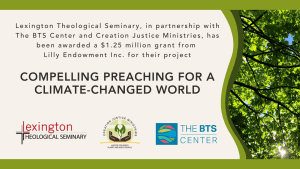
EcoPreacher 1-2-3 is a partnership between the Rev. Dr. Leah Schade and the Interfaith Center for Sustainable Development, publishers of Eco Bible, a Jewish ecological commentary on the Hebrew Scriptures. EcoPreacher 1-2-3 provides Creation-centered sermon preparation that is short, accessible, and based on a solid biblical foundation. To see other EcoPreacher ideas and to sign up to receive future EcoPreacher 1-2-3 installments, click here.
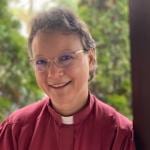
The Rev. Dr. Leah D. Schade is the Associate Professor of Preaching and Worship at Lexington Theological Seminary in Kentucky and ordained in the ELCA. Dr. Schade does not speak for LTS or the ELCA; her opinions are her own. She is the author of Preaching in the Purple Zone: Ministry in the Red-Blue Divide (Rowman & Littlefield, 2019) and Creation-Crisis Preaching: Ecology, Theology, and the Pulpit (Chalice Press, 2015). She is the co-editor of Rooted and Rising: Voices of Courage in a Time of Climate Crisis (Rowman & Littlefield, 2019). Her newest book is Introduction to Preaching: Scripture, Theology, and Sermon Preparation, co-authored with Jerry L. Sumney and Emily Askew (Rowman & Littlefield, 2023).
[i] Walter Brueggeman, Money and Possessions, Interpretation series (Louisville, KY: Westminster John Knox Press, 2016), 51.
[ii] Brueggeman, 51-52.
[iii] David Seidenberg, Kabbala and Ecology (Cambridge: Cambridge University Press, 2015), 166, citing Aldo Leopold, “The Land Ethic,” A Sand Country Almanac, ed. Aldo Leopold (Oxford: Oxford University Press, 1968), 237-261.
[iv] Rabbi Yonatan Neril and Rabbi Leo Dee, Eco Bible, Vol. 2: An Ecological Commentary on Leviticus, Numbers, and Deuteronomy, (The Interfaith Center for Sustainable Development, 2021), 137.
[v] Jenny Odell, How to Do Nothing: Resisting the Attention Economy (Melville House, 2019), 54.
Contemplative
Recreation, Outdoors and Religion
Previous Post

May 10, 2024
An Eco-Pentecost: Churches United in Restoring Creation
Next Post

May 26, 2024 Nye: A Review by an American in Kentucky
Recent Comments
"Or, people could just realize our planet is also a living organism, a 4.5 billion ..."
Love Your Neighbor – Including Earth-Kin: ..."
"Climate change is getting attention but not enough. The study of the issue needs to ..."
Preaching About Climate Change: What Clergy ..."
"Yes! The Season of Creation is a month-long liturgical season to focus on all aspects ..."
Making Space for Eco-Grief—and Hope—in Your ..."
"The new Feast of Creation festival in the liturgical year offers an intentional opportunity for ..."
Making Space for Eco-Grief—and Hope—in Your ..."
Browse Our Archives
Select a Category Academy of Homiletics Addiction Advent AI (Artificial Intelligence) Animals Apocalypse Appalachia Ash Wednesday Baptism Bible Black Lives Matter Blade Runner Book review Children in church Christian Nationalism Christian/Islamic relations Christmas Church Clergy Climate change COVID-19 Creation Data Centers Death penalty Devotional Dialogue Doubt Earth Day Easter Ecofeminism EcoPreacher 1-2-3 ELCA ELCA Youth Gathering Election Environment/ecology Epiphany Faith Faith and Politics Feminism Film review Food Food and Faith Forgiveness Fracking Good Friday Good Omens Grief Gun violence Holy Humor Sunday Holy Week Howard Thurman ICE Immigration Indigenous wisdom Interview Jesus Kentucky Lafayette High School Marching Band Leadership Lent LGBTQIA+ Marching band Martin Luther Martin Luther King Jr. Mary Maundy Thursday Michael Sheen Mother of Jesus Nature New Year's Eve Palm Sunday Parables Pentecost Poem, Poetry Politics Poor People's Campaign Pop culture Prayers Preaching Progressive Christianity Public theology Purple Zone Racism and White Privilege Religion Religion and environment Religion and politics Religion and pop culture Religion and violence Rev. Nelson Rabell Gonzalez Sermons Spanish language resources for preaching Technology Thanksgiving Theological education theology Trees Trump Uncategorized Vegan War Women and religion Workshop Worship
Select a Month October 2026 September 2026 July 2026 June 2026 May 2026 April 2026 March 2026 February 2026 January 2026 December 2025 November 2025 October 2025 September 2025 May 2025 April 2025 March 2025 February 2025 January 2025 December 2024 November 2024 October 2024 September 2024 August 2024 July 2024 June 2024 May 2024 April 2024 March 2024 February 2024 January 2024 December 2023 November 2023 October 2023 September 2023 August 2023 July 2023 June 2023 May 2023 April 2023 March 2023 February 2023 January 2023 December 2022 November 2022 October 2022 August 2022 July 2022 June 2022 May 2022 April 2022 March 2022 February 2022 January 2022 December 2021 November 2021 October 2021 September 2021 August 2021 July 2021 June 2021 May 2021 April 2021 March 2021 January 2021 December 2020 November 2020 October 2020 September 2020 August 2020 July 2020 June 2020 May 2020 April 2020 February 2020 January 2020 December 2019 November 2019 October 2019 September 2019 August 2019 July 2019 June 2019 May 2019 April 2019 March 2019 January 2019 December 2018 November 2018 October 2018 September 2018 August 2018 July 2018 June 2018 May 2018 April 2018 March 2018 February 2018 January 2018 December 2017 November 2017 October 2017 September 2017 August 2017 July 2017 June 2017 May 2017 April 2017
Follow Us!
TAKE THE
Religious Wisdom Quiz
Who was cast into a pit by his brothers?
Select your answer to see how you score.
Daniel Joseph Moses Jacob
Books by This Author Books by Leah D. Schade
Related posts from EcoPreacher

Pastoral Wisdom for Responding to Sermon Pushback

Love Your Neighbor – Including Earth-Kin: Lev. 19,...

Preaching About Climate Change: What Clergy Need Most

Workers in the Vineyard: Sermon Ideas for Matt....
TRENDING AT PATHEOS Progressive Christian

What Being a Modern-Day Apostle Means to Me
In my last column, I discussed the ins and outs of modern-day...

Did Ancient China Once Worship the God of...
Across human history, a common thread weaves through the origins of the...

Love Your Neighbor – Including Earth-Kin: Lev. 19,...
God’s command to love your neighbor means acting in an ethical and...

Lead a Church Study of “Jesus and Lao...
Guest writer Jack Thomas (The Irreverent Reverend) reflects on leading his church...

Pastoral Wisdom for Responding to Sermon Pushback
Getting sermon pushback on your social justice sermon? Learn practical, Proverbs-based strategies...

Principles for Understanding the Apostolic Ministry Today
Whenever people discover that my formal ministry title is "apostle," as in...
view all Progressive Christian blogs
What Are Your Thoughts?leave a comment
Ad-Free & Subscriber Log-In Subscription Support
- About Us
- 2026 Calendar
- Videos
- Podcasts
- Library of World Religions
- Faith In Media Tracker
- Advertise With Us
- Write for Us
- Privacy Policy
- Terms of Service
- Do Not Sell My Data
- Contact Us
- Radiant Digital
- Manage Newsletter Subscriptions
- Unsubscribe From Notifications
- Sitemap
Copyright 2008-2026, Patheos. All rights reserved.
Subscription Support Ad-Free & Subscriber Log-In
Follow Patheos