
BuddhistCatholicContemplativeEvangelicalGeneral ChristianHinduJewishLatter-day SaintMuslimNew VisionsProgressive Christian
Beliefs
- Buddhist
- Catholic
- Contemplative
- Evangelical
- General Christian
- Hindu
- Jewish
- Latter-day Saint
- More Voices
- Muslim
- New Visions
- Pagan
- Progressive Christian
Topics
- Religion News
- Food and Religion
- Sports and Religion
- Religious Art
- Religious Music and Entertainment
- Religious Events
- History and Religion
- Style and Religion
- Politics and Religion
- Women in Religion
- Recreation Outdoors and Religion
- Business Finance and Religion
- Careers Workplace and Religion
- Education and Religion
- Family Parenting and Religion
- Health Fitness and Religion
- Home and Religion
- Relationships and Religion
- Technology and Religion
- Travel and Religion
Columnists
- Buddhist Columnists
- Business Finance and Religion Columnists
- Careers Workplace and Religion Columnists
- Catholic Columnists
- Contemplative Columnists
- Education and Religion Columnists
- Evangelists Columnists
- Family Parenting and Religion Columnists
- General Christian Columnists
- Health Fitness and Religion Columnists
- Hindu Columnists
- History and Religion Columnists
- Home and Religion Columnists
- Jewish Columnists
- More Voices Columnists
- Latter Day Columnists
- Muslim Columnists
- New Visions Columnists
- Nonreligious Columnists
- Pagan Columnists
- Politics and Religion Columnists
- Progressive Columnists
- Recreation Outdoors and Religion Columnists
- Relationships and Religion Columnists
- Religion News Columnists
- Religious Art Columnists
- Religious Events Columnists
- Religious Music and Entertainment Columnists
- Sports and Religion Columnists
- Style and Religion Columnists
- Technology and Religion Columnists
- Travel and Religion Columnists
- Women in Religion Columnists
Resource Library
- 2026 Calendar
- Library of World Religions
- The 100 Most Holy Places on Earth
- Patheos Answers
- Podcasts
- Videos
- Faith Leaders Database
- Anglican Episcopalian
- Bahai
- Baptist
- Buddhism
- Christianity
- Confucianism
- Eastern Orthodoxy
- Hinduism
- Holiness and Pentecostal
- ISKCON
- Islam
- Judaism
- Lutheran
- Methodist
- The Church of Jesus Christ of Latter-day Saints
- New Age
- Paganism
- Presbytarian and Reformed
- Protestantism
- Religion Behind the Scenes
- Roman Catholic
- Scientology
- Shia Islam
- Sikhism
- Sufism
- Sunni Islam
- Taoism
- Zen
- See all religions
Research Tools
 Ad-Free & Subscriber Log-In Subscription Support
Ad-Free & Subscriber Log-In Subscription Support
Follow Patheos 

- Trending:
- Forgiveness
- |
- Marriage
- |
- Consciousness
- |
- Death Penalty
- |
- Election
- |
- Halloween

- Home
- Progressive Christian
- White Fragility in the ELCA: 5 Things We Can Do About It
White Fragility in the ELCA: 5 Things We Can Do About It
Last updated on: March 3, 2023 at 10:14 pm by Leah D. Schade
White Fragility in the ELCA: 5 Things We Can Do About It 2023-03-03T22:14:21-04:00 Leah D. Schade
Patheos Explore the world's faith through different perspectives on religion and spirituality! Patheos has the views of the prevalent religions and spiritualities of the world.
A 2021 clergy survey indicates that White Fragility in the ELCA is muzzling Lutheran preachers. Here are 5 things we can do about it.

White Fragility in the ELCA. Image created by Leah D. Schade using photo by Beth Macdonald on Unsplash. https://unsplash.com/photos/wQ05IXAifd8
In his book, Dear Church: A Love Letter from a Black Preacher to the Whitest Denomination in the US, Lenny Duncan made an important observation. “In a century marked by increased diversity in the United States and increased global awareness, the ELCA remains the whitest denomination in the country,” (6).
According to the most recent report available on the ELCA website, in 2017, the total number of people of color comprising active membership in the denomination was only 10%. This means that the ELCA is 90% white. And this number has remained constant since the 2012 report showing that 8.56% of ELCA membership was comprised of people of color.
How does the ELCA’s racial make-up compare with the demographics of the United States?
According to the 2020 Census report, whites comprised 57.8% of the population. This is a decrease from 63.7% in 2010.
So, while the U.S. has increasingly diversified, the ELCA has remained staunchly homogenous. This, despite lip service from denominational leaders promising efforts to gain new, younger, and racially and ethnically diverse members.
What might account for the ELCA’s stubborn whiteness problem?
As Robert P. Jones observes in White Too Long: The Legacy of White Supremacy in American Christianity, “American Christianity’s theological core has been thoroughly structured by an interest in protecting white supremacy,” (6). Jones’ research indicates that “the genetic imprint of this legacy [of white supremacy] remains present and measurable in contemporary white Christianity, not only among evangelicals in the South but also among mainline Protestants in the Midwest and Catholics in the Northeast,” (20-21).
Duncan concurs with the notion that whiteness is not merely a sociological problem, but a theological problem. “We as a church have declared racism a sin,” he says. “But the demonic system that keeps racist structures in place is where our real work will need to begin. We need to name evil for what it is, and we won’t overcome it until we do” (6).
White Fragility in the ELCA is real
But as Robin DiAngelo has pointed out, “white fragility” is real, and it is a barrier to deconstructing racism in the U.S. (See: White Fragility: Why It’s so Hard for White People to Talk about Racism.) DiAngelo defines white fragility as “a state in which even a minimum amount of racial stress . . . becomes intolerable, triggering a range of defensive moves . . . such as anger, fear, and guilt and behaviors such as argumentation, silence, and leaving the stress-inducing situation. These behaviors, in turn, reinstate white racial equilibrium,” (103).
Robert Jones suggests that all of this is part of white Christianity’s efforts to “maintain an unassailable sense of religious purity that protects white racial innocence,” (20-21). White Christians and their white-dominant society have, in essence, colluded in “deflecting any attempt to trace this ideology to its religious source,” (20-21).
The case of Rev. Nelson Rabell González has highlighted White Fragility in the ELCA.
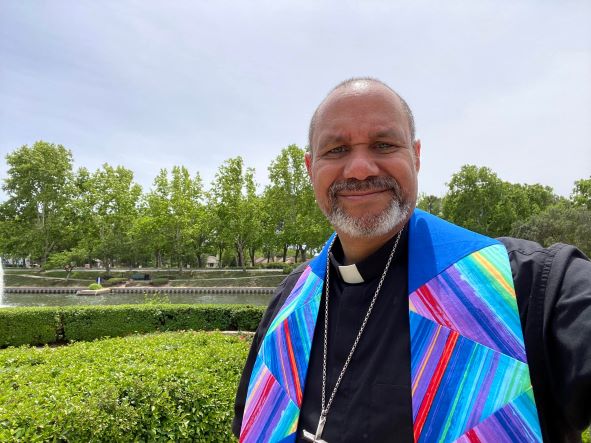
Rev. Nelson Rabell Gonzalez, pastor of Iglesia Luterana Santa María Peregrina
White Fragility in the ELCA has become painfully apparent during the saga of Rev. Nelson Rabell González, an ELCA pastor who was wrongly accused of misconduct and removed from the roster of ordained ministry without due process. (See: The Removal of Rev. Rabell-González: A Case Study in ELCA Corruption and Racism). Both he, his congregation, and the entire Latiné membership in the ELCA have experienced deep pain and betrayal.
As just one example, Presiding Bishop Elizabeth Eaton did not even use the word “racism” to describe this debacle in the Sierra Pacific Synod. In her announcement about the Listening Panel Report, which repeatedly noted racism as an issue impacting the actions of former bishop Megan Rohrer’s handling of Rev. Nelson and Misión Latina Luterana, Eaton’s silence on this issue was deafening.
What about ELCA clergy?
But what about ELCA clergy? Are they also hesitant to name racism for the evil that it is? Are they also reticent to encourage and lead their congregations in the work of antiracism?
My research surveying clergy on ministry, preaching, and social issues may offer some insights into these questions.
Data on ELCA clergy from the survey, “Ministry, Preaching, and Social Issues”
I’ve been conducting longitudinal research* on U.S. clergy since 2017 to assess how preachers are approaching their sermons during this divisive time in our nation’s history. The second survey wave in 2021 garnered more than 2,600 respondents, 416 of whom indicated that they are ELCA clergy. When we drill down on this subset, there are important learnings that shed light on White Fragility in the ELCA and what we can do about it.
First, here’s some basic demographic data. Within the ELCA clergy respondents, the split between male and female clergy was almost even (48% female, 51% male, 1% other). 95% of respondents were white. In terms of political orientation, 22% indicated they were “moderate, lean progressive,” while 68% were either “progressive/liberal” or “very progressive/liberal.” Only 10% indicated they were “moderate/lean conservative” or “conservative.” None marked themselves as “very conservative.”
ELCA clergy are not shrinking violets when it comes to addressing social issues.
As a whole, ELCA Lutheran clergy do not shrink from advocacy, activism, or dialogue about social issues.
- 80% indicated that advocacy and/or activism on social issues is either “high” or “moderate” priority for them.
- 93% either “moderately” or “strongly” believe that “churches should put their faith into action through advocacy and social justice.”
- 95% either “moderately” or “strongly” believe that “churches should host educational dialogues about social issues and faith.”
Along those same lines, 85% “strongly agree” that clergy should “help congregants think about social issues biblically and theologically.” 77% “strongly agree” that clergy should “teach congregants how to engage in healthy dialogue about social issues.” And 73% “strongly agree” that clergy should “help congregants put faith into action on social issues.”
In other words, ELCA Lutheran clergy are no shrinking violets when it comes to engagement with issues of public concern. As one respondent commented, “I think it is important to help people gain the skills to think critically from a Christian perspective about social issues, encouraging a whole-life approach to discipleship.”
Clergy serving white congregations v. diverse congregations
But when we compare clergy who serve in primarily white congregations with their colleagues who serve more diverse congregations, we see marked differences. For this survey, we’re referring to congregations with at least 25% or more other-than-white members. (Note that these demographic assessments were offered by the clergy themselves based on knowledge of their congregations.)
There were 267 respondents who indicated that they serve mostly white congregations and only 37 who serve more diverse churches. (The rest, 112 clergy, fell somewhere in between.) This means that only 9% of ELCA clergy serve congregations with diversity levels over 25%. This is consistent with the ELCA’s own data indicating that around 10% of its membership is other-than-white.
Even though this is a small subset of ELCA clergy, the data from this group shows stark contrasts to their colleagues serving white congregations – especially when it comes to preaching about social issues.
Clergy serving diverse congregations address social issues more frequently than those serving white congregations.
Overall, within the total number of ELCA clergy, 43% said that they “sometimes” address social issues in their sermons, while 50% said they do so “frequently.” Also, 44% reported that they would like to engage social issues but feel inhibited.
These numbers change when accounting for the racial makeup of congregations. 86% of those serving diverse churches said they “frequently” address social issues, and only 19% said they feel inhibited. But only 49% of ELCA clergy serving white congregations said they “frequently” address social issues. And 50% of them say they feel inhibited.
In other words, it appears that White Fragility in the ELCA impinges on preachers’ engagement with social issues.
Further evidence of this is seen in the levels of pushback ELCA clergy receive when addressing social issues. 63% of those serving white congregations said they receive pushback, whereas only 32% of their colleagues serving diverse congregations experience this.
But even when they don’t experience pushback, clergy in white congregations sense less engagement on social issues than their counterparts in diverse congregations. 59% of those serving white congregations said they experience “lack of interest” when addressing social issues compared with 38% of those serving more diverse churches.
Clergy serving white congregations address racism, immigration, and Native American issues less frequently than those serving diverse congregations.

Code of Silence. Photo by engin akyurt on Unsplash. https://unsplash.com/photos/vYqAHQNaOis
In this survey, respondents were given a list of 26 different social issues and asked which ones they had addressed or incorporated into their preaching in 2020. 74% of ELCA clergy serving white congregations said they had addressed racism/white supremacy/Black Lives Matter. But the number increases to 86% for clergy serving diverse congregations, a 12-point increase.
We see an even starker contrast when asking about the topic of immigration. 44% of ELCA clergy serving white congregations said they had addressed immigration in 2020. But for those serving diverse congregations, that number jumps to 70%!
We see a similar trend when it comes to Native American issues. A mere 8% of clergy serving white congregations addressed Native American issues in 2020. But for those serving diverse congregations, that number went up to 24%.
Why we must be honest about White Fragility in the ELCA
As I wrote in a chapter for the anthology, Unmasking White Preaching: Racial Hegemony, Resistance, and Possibilities in Homiletics (p. 80):
As we think of the challenges that clergy face in preaching to unmask, confront, deconstruct, and expel the demon of white supremacy and racism as well as our own homiletical whiteness, [Carolyn] Helsel reminds us that “as people of faith, we are all called to attend to the suffering of one another. In order to attend to this suffering, we need to first acknowledge that it exists. Racism continues to exist, and refusing to name it will not make it go away” (Anxious to Talk About It, 4).
Indeed, preachers have a moral, ethical, and spiritual responsibility to name this suffering so that congregations can begin—or continue—the process of reckoning with the painful and shameful history of the church and its racist legacy. More specifically, clergy in predominantly white congregations are especially obligated to “take responsibility for educating one another. . . We need to do our own work, and we need to do it in our faith communities,” (4).
So what can the ELCA do to better support its pastors in addressing social issues, especially race and ethnicity?
It’s not enough just to diagnose the problem of White Fragility in the ELCA. We also need to identify possible remedies. Based on my research, here are 5 recommendations.
1 – Create clergy groups or networks
When asked where they receive support and encouragement for addressing social issues, respondents named “clergy groups or networks” as number one. 49% of ELCA clergy serving white congregations said they received “significant support” from their peers and networks. But the number was even higher (54%) for clergy serving diverse congregations. From this, we might extrapolate that one of the factors that can lead to more ELCA clergy dismantling the White Fragility in the ELCA is having more peer-learning and support groups for clergy to do this work.

Photo by Aarón Blanco Tejedor on Unsplash
2 – Increase denominational support
Support from the denomination was the second most important source of encouragement for addressing social issues, according to the survey. 27% of clergy serving white congregations said they received “significant” support from their denomination for addressing social issues. But for clergy serving more diverse congregations, it jumped to 35%.
Thus, we might conclude that when bishops and synodical leaders offer continuing education, clergy support groups, educational resources, and one-on-one mentoring, their pastors might feel more supported in deconstructing White Fragility in the ELCA. Using a resource such as Carolyn Helsel’s Anxious to Talk About It: Helping White Christians Talk Faithfully about Racism and its companion volume, Preaching about Racism: A Guide for Faith Leaders is a good place to start.
3 – Build out seminary education
A third of ELCA clergy (30%) indicated that they did not feel that their theological education adequately prepared them to address social issues in preaching and teaching. But this drops to 20% for clergy ages 21 – 40, indicating that seminaries have improved in this regard. Overall, 20% of clergy serving white congregations said seminaries were a source of “significant support” for addressing social issues. But that number was 12 points higher (32%) for those serving diverse congregations.
From this we can surmise that seminaries can contribute to efforts of dismantling White Fragility in the ELCA by offering both courses for current seminarians as well as continuing education for clergy, particularly for those serving white congregations.
4 – Equip more than clergy for the work of addressing anti-racism
When asked how much support they receive from congregational leaders, the responses were mixed. 13% of clergy serving white congregations said they received “significant support.” But that number increases to 24% for clergy serving diverse congregations. From this, we can ascertain that having the backing of congregational leaders can increase the likelihood of pastors willing to address White Fragility in the ELCA.
Thus, denominations and seminaries should make continued efforts to equip lay leaders for this work so that clergy are not taking on this task by themselves.
5 – Empower the deacons
One respondent commented, “I wish there were more Deacons in the ELCA to take the lead or assist pastors in this work.” Deacons are faith leaders who are ordained to the ministry of word and service (as compared to those ordained to word and sacrament ministry). Deacons are equipped for teaching, advocacy, and many other areas of public theology.
Perhaps a cadre of deacons could be trained to help white congregations move out of their white fragility. They could help churches usher in a courageous ministry of cultural competence, antiracism, and advocacy or activism.
Now is the time to right the wrongs
From Aug. 8-12, the ELCA will hold its Churchwide Assembly in Columbus, OH. The Assembly is the primary decision-making body of the church. This assembly’s theme is “Embody the Word.” As bishops, clergy, and laity gather to consider this theme, how much will they account for the bodies of those with varying shades of black and brown skin tones? To what extent will White Fragility in the ELCA impede calls and actions for an antiracist reformation within this denomination?
As a lifelong ELCA Lutheran, an ordained word and sacrament minister for more than two decades, a seminary professor, and a researcher, I call on the church to right the wrongs. We must equip our bishops, synods, clergy, deacons, lay leaders, and congregations to be honest about White Fragility in the ELCA. Naming racism and white supremacy is only the first step. We must dismantle policies that adversely affect clergy and congregations of color. And we have to de-couple our denomination from the Corporate Captivity of the ELCA which relies on a colonialist model of governance and polity.
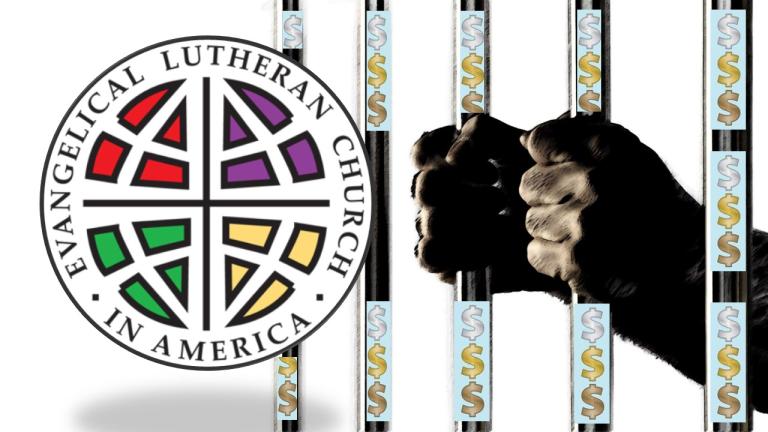
The Corporate Captivity of the ELCA
Now is the time to right the wrongs. Surely, our Lutheran precepts of law and gospel and a theology of the cross are strong enough for this work. The question is, are we?
May God’s will for justice, equity, diversity and inclusion give us the courage for this work.
Read also:
The ELCA’s Whiteness Protection Program: Bishop Eaton and Bishop Rohrer
We’re a Sanctuary Church, ELCA, Now What? An Invitation to Dialogue
The Parable of the Talents Through the Lens of Race, Privilege & Wealth
*Thanks to my research team members
The team members that helped with this research were the Rev. Dr. Amanda Wilson Harper, Associate Professor of Sociology at Tarleton State University, Dr. Wayne Thompson, Professor of Sociology at Carthage College, and the Rev. Dr. Katie Day, Charles A. Scheiren Professor Emerita of Church in Society at United Lutheran Seminary.

The Rev. Dr. Leah D. Schade is ordained in the ELCA. She does not speak for the ELCA; her opinions are her own. She is the author of Preaching in the Purple Zone: Ministry in the Red-Blue Divide (Rowman & Littlefield, 2019) and Creation-Crisis Preaching: Ecology, Theology, and the Pulpit (Chalice Press, 2015). She is the co-editor of Rooted and Rising: Voices of Courage in a Time of Climate Crisis (Rowman & Littlefield, 2019). Her latest book, co-written with Jerry Sumney is Apocalypse When?: A Guide to Interpreting and Preaching Apocalyptic Texts (Wipf & Stock, 2020).
Twitter: @LeahSchade
Facebook: https://www.facebook.com/LeahDSchade/
Previous Post

July 22, 2022
Unraveling Rohrer’s Big Lie: New Report about Rev. Nelson Rabell
Next Post

August 2, 2022 ECO-WEDDING LITURGY: Ideas for a Creation-Centered Wedding
Browse Our Archives
Select a Category Academy of Homiletics Addiction Advent AI (Artificial Intelligence) Animals Apocalypse Appalachia Ash Wednesday Baptism Bible Black Lives Matter Blade Runner Book review Children in church Christian Nationalism Christian/Islamic relations Christmas Church Clergy Climate change COVID-19 Creation Data Centers Death penalty Devotional Dialogue Doubt Earth Day Easter Ecofeminism EcoPreacher 1-2-3 ELCA ELCA Youth Gathering Election Environment/ecology Epiphany Faith Faith and Politics Feminism Film review Food Food and Faith Forgiveness Fracking Good Friday Good Omens Grief Gun violence Holy Humor Sunday Holy Week Howard Thurman ICE Immigration Indigenous wisdom Interview Jesus Kentucky Lafayette High School Marching Band Leadership Lent LGBTQIA+ Marching band Martin Luther Martin Luther King Jr. Mary Maundy Thursday Michael Sheen Mother of Jesus Nature New Year's Eve Palm Sunday Parables Pentecost Poem, Poetry Politics Poor People's Campaign Pop culture Prayers Preaching Progressive Christianity Public theology Purple Zone Racism and White Privilege Religion Religion and environment Religion and politics Religion and pop culture Religion and violence Rev. Nelson Rabell Gonzalez Sermons Spanish language resources for preaching Technology Thanksgiving Theological education theology Trees Trump Uncategorized Vegan War Women and religion Workshop Worship
Select a Month October 2026 September 2026 July 2026 June 2026 May 2026 April 2026 March 2026 February 2026 January 2026 December 2025 November 2025 October 2025 September 2025 May 2025 April 2025 March 2025 February 2025 January 2025 December 2024 November 2024 October 2024 September 2024 August 2024 July 2024 June 2024 May 2024 April 2024 March 2024 February 2024 January 2024 December 2023 November 2023 October 2023 September 2023 August 2023 July 2023 June 2023 May 2023 April 2023 March 2023 February 2023 January 2023 December 2022 November 2022 October 2022 August 2022 July 2022 June 2022 May 2022 April 2022 March 2022 February 2022 January 2022 December 2021 November 2021 October 2021 September 2021 August 2021 July 2021 June 2021 May 2021 April 2021 March 2021 January 2021 December 2020 November 2020 October 2020 September 2020 August 2020 July 2020 June 2020 May 2020 April 2020 February 2020 January 2020 December 2019 November 2019 October 2019 September 2019 August 2019 July 2019 June 2019 May 2019 April 2019 March 2019 January 2019 December 2018 November 2018 October 2018 September 2018 August 2018 July 2018 June 2018 May 2018 April 2018 March 2018 February 2018 January 2018 December 2017 November 2017 October 2017 September 2017 August 2017 July 2017 June 2017 May 2017 April 2017
Follow Us!
TAKE THE
Religious Wisdom Quiz
What is the book of songs and prayers in the Bible called?
Select your answer to see how you score.
Matthew Genesis Psalms Proverbs
Books by This Author Books by Leah D. Schade
Related posts from EcoPreacher

Pastoral Wisdom for Responding to Sermon Pushback

Preaching About Climate Change: What Clergy Need Most

Making Space for Eco-Grief—and Hope—in Your Church

VBS Murder Skit: When a Church Teaches Children...
TRENDING AT PATHEOS Progressive Christian

Why Christians Have a Sacred Duty to Vote:...
The Bible offers strong support for the sacred duty to vote. Here...

What Being a Modern-Day Apostle Means to Me
In my last column, I discussed the ins and outs of modern-day...

Did Ancient China Once Worship the God of...
Across human history, a common thread weaves through the origins of the...

Love Your Neighbor – Including Earth-Kin: Lev. 19,...
God’s command to love your neighbor means acting in an ethical and...

Lead a Church Study of “Jesus and Lao...
Guest writer Jack Thomas (The Irreverent Reverend) reflects on leading his church...

Principles for Understanding the Apostolic Ministry Today
Whenever people discover that my formal ministry title is "apostle," as in...
view all Progressive Christian blogs
Ad-Free & Subscriber Log-In Subscription Support
- About Us
- 2026 Calendar
- Videos
- Podcasts
- Library of World Religions
- Faith In Media Tracker
- Advertise With Us
- Write for Us
- Privacy Policy
- Terms of Service
- Do Not Sell My Data
- Contact Us
- Radiant Digital
- Manage Newsletter Subscriptions
- Unsubscribe From Notifications
- Sitemap
Copyright 2008-2026, Patheos. All rights reserved.
Subscription Support Ad-Free & Subscriber Log-In
Follow Patheos