
BuddhistCatholicContemplativeEvangelicalGeneral ChristianHinduJewishLatter-day SaintMuslimNew VisionsProgressive Christian
Beliefs
- Buddhist
- Catholic
- Contemplative
- Evangelical
- General Christian
- Hindu
- Jewish
- Latter-day Saint
- More Voices
- Muslim
- New Visions
- Pagan
- Progressive Christian
Topics
- Religion News
- Food and Religion
- Sports and Religion
- Religious Art
- Religious Music and Entertainment
- Religious Events
- History and Religion
- Style and Religion
- Politics and Religion
- Women in Religion
- Recreation Outdoors and Religion
- Business Finance and Religion
- Careers Workplace and Religion
- Education and Religion
- Family Parenting and Religion
- Health Fitness and Religion
- Home and Religion
- Relationships and Religion
- Technology and Religion
- Travel and Religion
Columnists
- Buddhist Columnists
- Business Finance and Religion Columnists
- Careers Workplace and Religion Columnists
- Catholic Columnists
- Contemplative Columnists
- Education and Religion Columnists
- Evangelists Columnists
- Family Parenting and Religion Columnists
- General Christian Columnists
- Health Fitness and Religion Columnists
- Hindu Columnists
- History and Religion Columnists
- Home and Religion Columnists
- Jewish Columnists
- More Voices Columnists
- Latter Day Columnists
- Muslim Columnists
- New Visions Columnists
- Nonreligious Columnists
- Pagan Columnists
- Politics and Religion Columnists
- Progressive Columnists
- Recreation Outdoors and Religion Columnists
- Relationships and Religion Columnists
- Religion News Columnists
- Religious Art Columnists
- Religious Events Columnists
- Religious Music and Entertainment Columnists
- Sports and Religion Columnists
- Style and Religion Columnists
- Technology and Religion Columnists
- Travel and Religion Columnists
- Women in Religion Columnists
Resource Library
- 2026 Calendar
- Library of World Religions
- The 100 Most Holy Places on Earth
- Patheos Answers
- Podcasts
- Videos
- Faith Leaders Database
- Anglican Episcopalian
- Bahai
- Baptist
- Buddhism
- Christianity
- Confucianism
- Eastern Orthodoxy
- Hinduism
- Holiness and Pentecostal
- ISKCON
- Islam
- Judaism
- Lutheran
- Methodist
- The Church of Jesus Christ of Latter-day Saints
- New Age
- Paganism
- Presbytarian and Reformed
- Protestantism
- Religion Behind the Scenes
- Roman Catholic
- Scientology
- Shia Islam
- Sikhism
- Sufism
- Sunni Islam
- Taoism
- Zen
- See all religions
Research Tools
 Ad-Free & Subscriber Log-In Subscription Support
Ad-Free & Subscriber Log-In Subscription Support
Follow Patheos 

- Trending:
- Forgiveness
- |
- Marriage
- |
- Consciousness
- |
- Death Penalty
- |
- Election
- |
- Halloween

- Home
- Progressive Christian
- Religious Events
- Peace On Earth and WITH Earth: Christmas, Psalm 96 and 97
Peace On Earth and WITH Earth: Christmas, Psalm 96 and 97
Last updated on: February 19, 2023 at 4:54 pm by Leah D. Schade
Peace On Earth and WITH Earth: Christmas, Psalm 96 and 97 2023-02-19T16:54:29-04:00 Leah D. Schade
Patheos Explore the world's faith through different perspectives on religion and spirituality! Patheos has the views of the prevalent religions and spiritualities of the world.
Here are ideas for reading and preaching Psalm 96 and 97 which are assigned in the Revised Common Lectionary for Christmas Eve and Christmas Day. This is part of the EcoPreacher 1-2-3 series to equip pastors and congregations to engage the Bible through an ecological lens.
Psalm 96 and 97 depict Earth has having agency, voice, and . . . dance. Dance? Yes! The Hebrew word for “tremble” in Psalm 96:9 and 97:4 can also mean dance, sing, and rejoice. This is a wonderful image of Earth rising up in celebration as the angels announce Jesus’s birth!

Peace with Earth. Adapted from Elena Mozhvilo, Unsplash, https://unsplash.com/photos/eA32JIBsSu8.
Focus on Psalm 96:11-13:
11Let the heavens be glad, and let the earth rejoice; let the sea roar, and all that fills it; 12let the field exult, and everything in it. Then shall all the trees of the forest sing for joy 13before the Lord; for he is coming, for he is coming to judge the earth. He will judge the world with righteousness, and the peoples with his truth.
Eco-Exegesis
Eco-exegesis is a method of interpreting the biblical text through a green lens using the principles of ecological theology. For this passage, we turn to Deep Calls to Deep: The Psalms in Dialogue Amid Disruption by William P. Brown (Nashville, TN: Abingdon Press, 2021).
It is stunning to see the Psalmist address Earth directly in Psalm 96 and 97 as an entity that is capable of singing (96:1-2), blessing God (v. 2), and even preaching (v. 2-3). No wonder these Psalms are designated for Christmas Eve and Christmas Day when Christians celebrate the birth of the Christ child. In the Gospel of Matthew, Earth proclaims Jesus’s birth through the rising of a star. In Luke, animals are present in the fields when the angels appear to the shepherds, as well as in the stable where the child is placed in a feed trough. All Creation celebrates Jesus’ birth!
The angels declare, “Glory to God in the highest heaven, and on earth peace among those whom God favors!” (Luke 2:14).
What does it mean for there to be peace on earth?
This peace is hard to imagine as we see evidence all around us that humans have, in fact, done everything but engage in peace.
In his book, Deep Calls to Deep, Rev. Dr. William P. Brown, Professor of Old Testament at Columbia Theological Seminary, explains, “As the earth is populated by the peoples, it is also populated by its natural elements: the sea (and all therein), the lands, and the trees, all of which respond with the raucous ‘roar’ of praise (96:11-12)…With the roar of praise, however, also comes the call for justice and righteousness in Psalm 97 (vv. 2, 6, 8, 11, and 12).” In other words, “As vividly conveyed in [these] enthronement psalms, the scope of divine justice includes all of creation…With the world firmly established, so justice is established. The result is an eruption of creation’s praise” (319).
What would it mean for peace to be not just on Earth, as if it were just a stage for the human salvation drama, but actually with Earth?
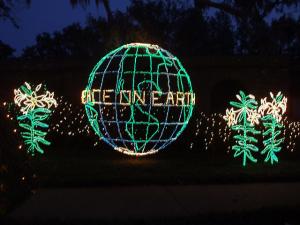
Photo by: Andrea Wright. Some rights reserved. https://www.flickr.com/photos/alwright1/3126543505/
What would it mean for us to be partners with Earth in bringing about this peace?
Can we imagine the heavens being glad because air pollution has ceased?
Can we imagine the seas roaring with life because the plastics and garbage have been removed?
How about fields exulting because they are protected from “development” in the form of shopping malls or oil and gas rigs?
What would it look like for the remaining trees of the Amazon rainforests to sing for joy, knowing that they are being preserved?
For Christians, the birth of Jesus is the revelation of divinity within the earthy, fleshy body of a vulnerable child.
This birth is a sign unto us that the Earth itself is rising up and responding to God’s call for justice and righteousness. Curiously, v. 11 in Psalm 97 the original Hebrew language paints an image not just of light dawning, but of light as a seed planted. This tells us that though we have sinned and broken God’s covenant again and again, God is also working within this flawed humanity for righteousness and justice to be planted like seeds of light within us, shining within a world shadowed by corruption and destruction.
1 Eco-Idea
The Eco-Idea is one succinct statement that tells us who God is and/or what God does in relation to Creation and how we should respond as people of faith. The Eco-Idea for this passage is:
Because God has created the Earth to sing, preach, worship, dance, and rejoice, our efforts to protect and restore this damaged planet fulfill the Christmas angel’s declaration of “peace on Earth.”
2 Eco-Questions
Eco-Questions are what we can ask to help a congregation draw out the implications of the Eco-Exegesis and Eco-Idea.
- What local indigenous communities, environmental groups, and community organizations can your congregation work with to protect existing natural lands and replant clear-cut forests? How can your congregation support these efforts of “planting the light”? Can you designate a special holiday offering to support their efforts? Encourage volunteers to work with them?
- Since Psalm 96 and 97 remind us that justice for people and justice for Creation are integrally related, what are actions your congregation can take to support ecological justice? What environmental problems are most threatening to the children in your community? In what ways can we advocate for clean air, water, and land to protect infants and children who are as precious as the holy child in the manger?
3 Eco-Actions
Eco-Actions are ways that a congregation might respond to the Eco-Idea and Eco-Questions. One of these possibilities may have salience for your ministry context.
- In the Psalmist’s spirit of calling on Earth to rejoice in God the Creator, organize a local outing to a nearby natural area during the holiday break. This can be a multi-generational activity and provide families with a robust engagement with nature while children are out of school.
- Visit ecoAmerica’s Blessed Tomorrow and Climate for Health to learn about ways your congregation can advocate for climate solutions that lift up the Psalmist’s vision of a healthy and sustainable Earth thriving with abundance and equity.
- Create an insert for Christmas Eve and Christmas Day bulletins that includes a list of ideas for “Healthy Earth, Healthy Church” for the coming year. Designate a Creation-care theme for each month, such as protecting the waters of baptism for January, purchasing fair-trade chocolate for February, and trying a meat-free March, for example.
Read also:
The Perfect Christmas for an Imperfect Time
Magnificat: Mary and the Refusal to be Small for Insecure, Fearful Men
EcoPreacher 1-2-3 is a partnership between the Rev. Dr. Leah Schade and the Interfaith Center for Sustainable Development, publishers of Eco Bible, a Jewish ecological commentary on the Hebrew Scriptures. EcoPreacher 1-2-3 provides Creation-centered sermon preparation that is short, accessible, and based on a solid biblical foundation. To see other EcoPreacher ideas and to sign up to receive future EcoPreacher 1-2-3 installments, click here.
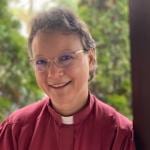
The Rev. Dr. Leah D. Schade is the Associate Professor of Preaching and Worship at Lexington Theological Seminary in Kentucky and ordained in the ELCA. Dr. Schade does not speak for LTS or the ELCA; her opinions are her own. She is the author of Preaching in the Purple Zone: Ministry in the Red-Blue Divide (Rowman & Littlefield, 2019) and Creation-Crisis Preaching: Ecology, Theology, and the Pulpit (Chalice Press, 2015). She is the co-editor of Rooted and Rising: Voices of Courage in a Time of Climate Crisis (Rowman & Littlefield, 2019). Her latest book, co-written with Jerry Sumney is Apocalypse When?: A Guide to Interpreting and Preaching Apocalyptic Texts (Wipf & Stock, 2020).
Twitter: @LeahSchade
Facebook: https://www.facebook.com/LeahDSchade/
General Christian
Religious Events
Previous Post
November 10, 2021
When Our Temples Fall: Mark 13:1-8 Through a Dialogical Lens
Browse Our Archives
Select a Category Academy of Homiletics Addiction Advent AI (Artificial Intelligence) Animals Apocalypse Appalachia Ash Wednesday Baptism Bible Black Lives Matter Blade Runner Book review Children in church Christian Nationalism Christian/Islamic relations Christmas Church Clergy Climate change COVID-19 Creation Data Centers Death penalty Devotional Dialogue Doubt Earth Day Easter Ecofeminism EcoPreacher 1-2-3 ELCA ELCA Youth Gathering Election Environment/ecology Epiphany Faith Faith and Politics Feminism Film review Food Food and Faith Forgiveness Fracking Good Friday Good Omens Grief Gun violence Holy Humor Sunday Holy Week Howard Thurman ICE Immigration Indigenous wisdom Interview Jesus Kentucky Lafayette High School Marching Band Leadership Lent LGBTQIA+ Marching band Martin Luther Martin Luther King Jr. Mary Maundy Thursday Michael Sheen Mother of Jesus Nature New Year's Eve Palm Sunday Parables Pentecost Poem, Poetry Politics Poor People's Campaign Pop culture Prayers Preaching Progressive Christianity Public theology Purple Zone Racism and White Privilege Religion Religion and environment Religion and politics Religion and pop culture Religion and violence Rev. Nelson Rabell Gonzalez Sermons Spanish language resources for preaching Technology Thanksgiving Theological education theology Trees Trump Uncategorized Vegan War Women and religion Workshop Worship
Select a Month October 2026 September 2026 July 2026 June 2026 May 2026 April 2026 March 2026 February 2026 January 2026 December 2025 November 2025 October 2025 September 2025 May 2025 April 2025 March 2025 February 2025 January 2025 December 2024 November 2024 October 2024 September 2024 August 2024 July 2024 June 2024 May 2024 April 2024 March 2024 February 2024 January 2024 December 2023 November 2023 October 2023 September 2023 August 2023 July 2023 June 2023 May 2023 April 2023 March 2023 February 2023 January 2023 December 2022 November 2022 October 2022 August 2022 July 2022 June 2022 May 2022 April 2022 March 2022 February 2022 January 2022 December 2021 November 2021 October 2021 September 2021 August 2021 July 2021 June 2021 May 2021 April 2021 March 2021 January 2021 December 2020 November 2020 October 2020 September 2020 August 2020 July 2020 June 2020 May 2020 April 2020 February 2020 January 2020 December 2019 November 2019 October 2019 September 2019 August 2019 July 2019 June 2019 May 2019 April 2019 March 2019 January 2019 December 2018 November 2018 October 2018 September 2018 August 2018 July 2018 June 2018 May 2018 April 2018 March 2018 February 2018 January 2018 December 2017 November 2017 October 2017 September 2017 August 2017 July 2017 June 2017 May 2017 April 2017
Follow Us!
TAKE THE
Religious Wisdom Quiz
How many brothers did Joseph have?
Select your answer to see how you score.
Eleven Five Two One
Books by This Author Books by Leah D. Schade
Related posts from EcoPreacher

Love Your Neighbor – Including Earth-Kin: Lev. 19,...

Preaching About Climate Change: What Clergy Need Most

Workers in the Vineyard: Sermon Ideas for Matt....
Recogiendo la abundancia sagrada: Isaías 55, Mateo 14
TRENDING AT PATHEOS Progressive Christian

What Being a Modern-Day Apostle Means to Me
In my last column, I discussed the ins and outs of modern-day...

Did Ancient China Once Worship the God of...
Across human history, a common thread weaves through the origins of the...

Love Your Neighbor – Including Earth-Kin: Lev. 19,...
God’s command to love your neighbor means acting in an ethical and...

Lead a Church Study of “Jesus and Lao...
Guest writer Jack Thomas (The Irreverent Reverend) reflects on leading his church...

Pastoral Wisdom for Responding to Sermon Pushback
Getting sermon pushback on your social justice sermon? Learn practical, Proverbs-based strategies...

Principles for Understanding the Apostolic Ministry Today
Whenever people discover that my formal ministry title is "apostle," as in...
view all Progressive Christian blogs
Ad-Free & Subscriber Log-In Subscription Support
- About Us
- 2026 Calendar
- Videos
- Podcasts
- Library of World Religions
- Faith In Media Tracker
- Advertise With Us
- Write for Us
- Privacy Policy
- Terms of Service
- Do Not Sell My Data
- Contact Us
- Radiant Digital
- Manage Newsletter Subscriptions
- Unsubscribe From Notifications
- Sitemap
Copyright 2008-2026, Patheos. All rights reserved.
Subscription Support Ad-Free & Subscriber Log-In
Follow Patheos