
BuddhistCatholicContemplativeEvangelicalGeneral ChristianHinduJewishLatter-day SaintMuslimNew VisionsProgressive Christian
Beliefs
- Buddhist
- Catholic
- Contemplative
- Evangelical
- General Christian
- Hindu
- Jewish
- Latter-day Saint
- More Voices
- Muslim
- New Visions
- Pagan
- Progressive Christian
Topics
- Religion News
- Food and Religion
- Sports and Religion
- Religious Art
- Religious Music and Entertainment
- Religious Events
- History and Religion
- Style and Religion
- Politics and Religion
- Women in Religion
- Recreation Outdoors and Religion
- Business Finance and Religion
- Careers Workplace and Religion
- Education and Religion
- Family Parenting and Religion
- Health Fitness and Religion
- Home and Religion
- Relationships and Religion
- Technology and Religion
- Travel and Religion
Columnists
- Buddhist Columnists
- Business Finance and Religion Columnists
- Careers Workplace and Religion Columnists
- Catholic Columnists
- Contemplative Columnists
- Education and Religion Columnists
- Evangelists Columnists
- Family Parenting and Religion Columnists
- General Christian Columnists
- Health Fitness and Religion Columnists
- Hindu Columnists
- History and Religion Columnists
- Home and Religion Columnists
- Jewish Columnists
- More Voices Columnists
- Latter Day Columnists
- Muslim Columnists
- New Visions Columnists
- Nonreligious Columnists
- Pagan Columnists
- Politics and Religion Columnists
- Progressive Columnists
- Recreation Outdoors and Religion Columnists
- Relationships and Religion Columnists
- Religion News Columnists
- Religious Art Columnists
- Religious Events Columnists
- Religious Music and Entertainment Columnists
- Sports and Religion Columnists
- Style and Religion Columnists
- Technology and Religion Columnists
- Travel and Religion Columnists
- Women in Religion Columnists
Resource Library
- 2026 Calendar
- Library of World Religions
- The 100 Most Holy Places on Earth
- Patheos Answers
- Podcasts
- Videos
- Faith Leaders Database
- Anglican Episcopalian
- Bahai
- Baptist
- Buddhism
- Christianity
- Confucianism
- Eastern Orthodoxy
- Hinduism
- Holiness and Pentecostal
- ISKCON
- Islam
- Judaism
- Lutheran
- Methodist
- The Church of Jesus Christ of Latter-day Saints
- New Age
- Paganism
- Presbytarian and Reformed
- Protestantism
- Religion Behind the Scenes
- Roman Catholic
- Scientology
- Shia Islam
- Sikhism
- Sufism
- Sunni Islam
- Taoism
- Zen
- See all religions
Research Tools
 Ad-Free & Subscriber Log-In Subscription Support
Ad-Free & Subscriber Log-In Subscription Support
Follow Patheos 

- Trending:
- Forgiveness
- |
- Marriage
- |
- Consciousness
- |
- Death Penalty
- |
- Election
- |
- Halloween

- Home
- Progressive Christian
- Politics and Religion
- When Our Temples Fall: Mark 13:1-8 Through a Dialogical Lens
When Our Temples Fall: Mark 13:1-8 Through a Dialogical Lens
Last updated on: March 17, 2024 at 11:47 am by Leah D. Schade
When Our Temples Fall: Mark 13:1-8 Through a Dialogical Lens 2024-03-17T11:47:15-04:00 Leah D. Schade
Patheos Explore the world's faith through different perspectives on religion and spirituality! Patheos has the views of the prevalent religions and spiritualities of the world.
The Bible is filled with stories of people engaging in faithful dialogue about the contemporary issues of their time. These stories can help us engage the difficult conversations of our own time. Mark 13:1-8 which recounts Jesus’s dialogue with his disciples foretelling the fall of the Temple is especially relevant for us today.
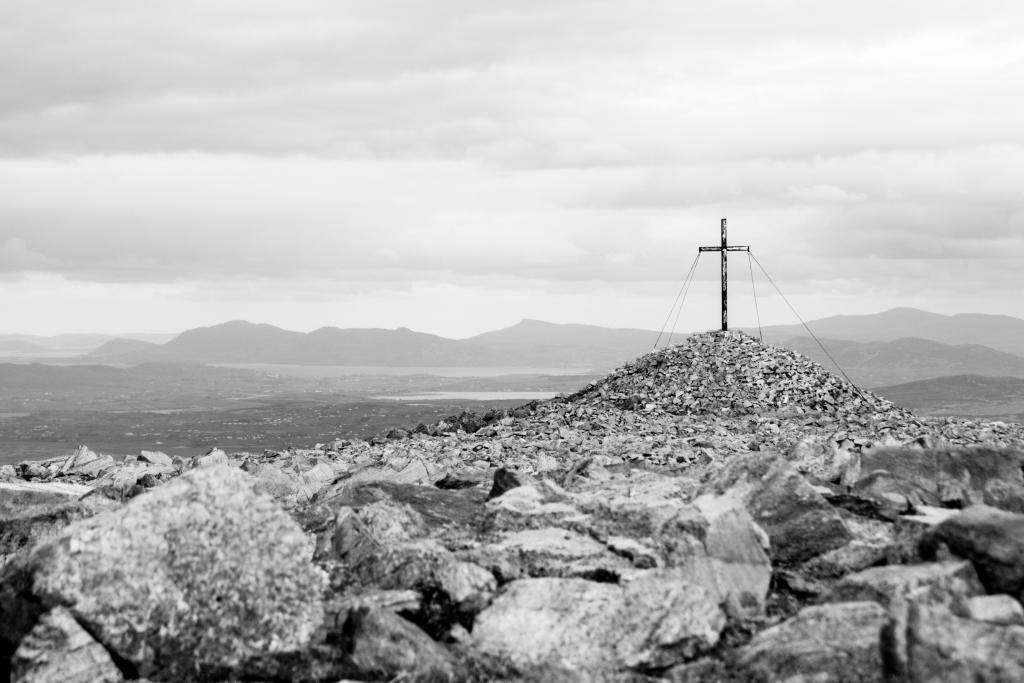
Photo credit: Ben Allan, Unsplash https://unsplash.com/photos/GX0vA0ZfsGc
In Chapter Four of my book Preaching in the Purple Zone: Ministry in the Red-Blue Divide (Rowman & Littlefield, 2019), I suggest 6 steps for using the dialogical lens for reading and preaching scripture [which you can read about here]. The dialogical lens yields important insights about Mark 13:1-8, which I’ll share below.
Six Steps for Using the Dialogical Lens
- Point out the dialogical aspects of the passage.
- Determine what’s at stake.
- Identify the values.
- Explain how God, Jesus, and/or the Holy Spirit is active.
- Recognize what the dialogue is teaching us.
- Suggest possible next steps.
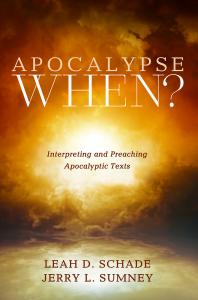
For this text, I’m drawing on the exegetical work of my colleague, Dr. Jerry Sumney, professor of biblical studies at Lexington Theological Seminary. You can read more in the book we co-authored, Apocalypse When: Interpreting and Preaching Apocalyptic Texts. See chapter 4 where we suggest constructive ways to engage the apocalyptic aspects of Mark 13.
Here’s an outline for applying the dialogical lens to Mark 13:1-8, the story of Jesus foretelling the destruction of the temple.
1- Point out the dialogical aspects of the passage.
The author of Mark (specific identity unknown) wrote this Gospel at least 30 years after Jesus’ life, death, and resurrection – a generation after the original events. His original audience was likely a mix of Jewish and Gentile believers living with various degrees of persecution within the Roman Empire. This dialogue between Jesus and his disciples takes place against the backdrop of the Temple. But Mark’s congregation has already seen the Temple fall. (Note, also, that the lectionary pairs this text with Daniel 12:1-3, also an apocalyptic book which refers to “a time of anguish” in v. 1.)
The characters in this story are Jesus and the disciples, specifically Peter, James, John, and Andrew. But it’s likely that Jesus’s words about the Temple were also overheard by the crowd. Perhaps even the religious leaders of the Council were present, since they later falsely accuse him of threatening to destroy the temple (Mark 14:58, 15:29).
2 – Determine what’s at stake.
in Mark 13:1-8, Jesus is preparing his disciples for the upheaval to come. But the disciples are concerned about the occurrence of these predicted events. They are worried about their safety and their ministry with Jesus. Yet for Mark’s congregation, the attack by Rome and the fall of the temple has already happened and was a traumatic event for both Jewish and Gentile church members.
They all have similar questions. What are they to think when this temple is destroyed? Does it mean their God is not as powerful as they thought? What could this mean about use of the Hebrew Scriptures, the only Bible they had? How could the God of the whole cosmos allow the one Temple dedicated to God to be overrun?
3 – Identify the values.
They (disciples and Mark’s church) cherished the sacred space of the Temple and mourn its loss. Also, they honor and venerate Jesus. And they are anticipating the eschaton, the return of Jesus.
Ideally, they could begin to understand that Jesus’s words (coupled with his “cleansing” of the temple) signal the end of the Temple system. As such, they can release their attachment to it. They all want to see a new world emerge, a new paradigm of justice built on the grace and justice of God, not just on stones that can be toppled. But letting go of sacred places is no easy task (ask any congregation dealing with building issues or possible closure!). History, sentimentality, and a theology of place are in tension with a Christ-centered theology independent of the Temple.
4 – Explain how God, Jesus, and/or the Holy Spirit is active.
As Jesus leaves the Temple for the last time, he engages the disciples in dialogue after they marvel at the size of the building. He tells them that this holy edifice will be destroyed. Of course, this causes the disciples consternation. But Mark intends this story to function as a source of encouragement for his readers who have already experienced the Temple’s fall. Why? Read on.

5 – Recognize what the dialogue is teaching us.
Like the church in Mark’s time, the church today is also beset by doubt, consternation, and insecurity. This is especially true given the extended pandemic, social unrest, conspiracy theories and disinformation, the climate crisis, and rising white supremacy. However, it should provide some comfort to us (as it was meant to comfort Mark’s congregation), that even before his death, Jesus knew these things were about to occur. What Mark wants us to understand is that these devastating events do not mean that God is absent or has abandoned us.
What can we learn about being faithful people who engage the conflicts and sin of the world while maintaining the commitment to grace, hope, and love? Even when we are afraid as we enter into highly-charged moments (as many dialogues can be), we can trust Jesus’s presence among us, assuring us not to fear.
How do we hear the voice of Jesus preparing us for upheavals and quelling our panic in the midst of our dialogues, our sacred exchanges, our holy discussions? Faithfulness means remaining steadfast with the teachings of Christ. These are what maintain the community of faith, not the impressive — but temporary — signs of power and strength. Like Jesus with the disciples, we can welcome an open, honest exchange about what truly constitutes our faith and our community. And we can expect to have our assumptions challenged. But we can also trust in the presence of Christ to help us endure in faith.
6 – Suggest possible next steps
Like Jesus and the disciples in Mark 13:1-8, and like Mark and his congregation, we have an opportunity to enter into “holy dialogue.” Can we be a church that engages the difficult but necessary conversations about what it means to listen to Jesus while existing in a moral/ethical paradigm that rewards conflict, war, and “kingdom rising against kingdom”? What does this mean for our society, our families and communities, and our congregation? How might the church function as a place that invites dialogue about these issues – the powers that benefit from stoking fears about “end times,” Armageddon, race wars, civil war, etc.?
Are we learning what not to do based on what we see in this text?
This story about Jesus predicting the temple’s fall admonishes us: don’t become enthralled by overt displays of power and strength. Also, don’t try to predict the time and place of the eschaton. And don’t lose hope when the temples fall.
So, what kind of church shall we be, knowing what the Bible models for us, and knowing what challenges our community is facing?
This text tells us that Jesus engages us in the shadow of our temples, the sites where we believe we encounter the divine. These temples might be our economic system, our churches, our privilege, our temporarily abled bodies, or our status.
So what can the church do to proclaim Jesus as the center and source of our moral ethics, even when temples fall, wars rage, and the earth quakes? How can we model basic decency and compassion? Caring for the vulnerable and protecting the weak? Honoring our neighbors and ministering with honesty in the midst of entities that thrive on chaos, sowing discontent, and “nation rising against nation”?
As you and your congregation wrestle with these questions, know this. Ultimately, there is a power that is greater than our religious systems (symbolized by the Temple). It’s longer lasting than the powers of evil (symbolized by the Roman empire). And it’s more effective than violence (Jesus’s crucifixion). It is the power of truth, honesty, discernment, advocating for and protecting the vulnerable, resisting authoritarian oppression, and casting a vision for the Realm of God.
This is what Jesus tells us standing beneath the towering temple. This is what Jesus’ ministry, life, death, and resurrection were about. And this is who God is, what God does, and what God wants to church to be about.
Read also:
Using a Dialogical Lens for Scripture and Preaching
Breach-Repairers: Preaching Isaiah 58 Using a Dialogical Lens
A Fiery, Divisive Jesus? Luke 12:49-56 Through a Dialogical Lens

Leah D. Schade, co-author of Apocalypse When?: A Guide to Interpreting and Preaching Apocalyptic Texts (Cascade, 2020)
The Rev. Dr. Leah D. Schade is the Assistant Professor of Preaching and Worship at Lexington Theological Seminary in Kentucky and ordained in the ELCA. Dr. Schade does not speak for LTS or the ELCA; her opinions are her own. She is the author of Preaching in the Purple Zone: Ministry in the Red-Blue Divide (Rowman & Littlefield, 2019) and Creation-Crisis Preaching: Ecology, Theology, and the Pulpit (Chalice Press, 2015). She is the co-editor of Rooted and Rising: Voices of Courage in a Time of Climate Crisis (Rowman & Littlefield, 2019). Her latest book, co-written with Jerry Sumney is Apocalypse When?: A Guide to Interpreting and Preaching Apocalyptic Texts (Wipf & Stock, 2020).
Twitter: @LeahSchade
Facebook: https://www.facebook.com/LeahDSchade/
General Christian
Politics and Religion
Previous Post

November 9, 2021
Thanksgiving, Manna, and “Just Enough”: Exodus 16:13-21
Next Post

December 12, 2021 Peace On Earth and WITH Earth: Christmas, Psalm 96 and 97
Browse Our Archives
Select a Category Academy of Homiletics Addiction Advent AI (Artificial Intelligence) Animals Apocalypse Appalachia Ash Wednesday Baptism Bible Black Lives Matter Blade Runner Book review Children in church Christian Nationalism Christian/Islamic relations Christmas Church Clergy Climate change COVID-19 Creation Data Centers Death penalty Devotional Dialogue Doubt Earth Day Easter Ecofeminism EcoPreacher 1-2-3 ELCA ELCA Youth Gathering Election Environment/ecology Epiphany Faith Faith and Politics Feminism Film review Food Food and Faith Forgiveness Fracking Good Friday Good Omens Grief Gun violence Holy Humor Sunday Holy Week Howard Thurman ICE Immigration Indigenous wisdom Interview Jesus Kentucky Lafayette High School Marching Band Leadership Lent LGBTQIA+ Marching band Martin Luther Martin Luther King Jr. Mary Maundy Thursday Michael Sheen Mother of Jesus Nature New Year's Eve Palm Sunday Parables Pentecost Poem, Poetry Politics Poor People's Campaign Pop culture Prayers Preaching Progressive Christianity Public theology Purple Zone Racism and White Privilege Religion Religion and environment Religion and politics Religion and pop culture Religion and violence Rev. Nelson Rabell Gonzalez Sermons Spanish language resources for preaching Technology Thanksgiving Theological education theology Trees Trump Uncategorized Vegan War Women and religion Workshop Worship
Select a Month October 2026 September 2026 July 2026 June 2026 May 2026 April 2026 March 2026 February 2026 January 2026 December 2025 November 2025 October 2025 September 2025 May 2025 April 2025 March 2025 February 2025 January 2025 December 2024 November 2024 October 2024 September 2024 August 2024 July 2024 June 2024 May 2024 April 2024 March 2024 February 2024 January 2024 December 2023 November 2023 October 2023 September 2023 August 2023 July 2023 June 2023 May 2023 April 2023 March 2023 February 2023 January 2023 December 2022 November 2022 October 2022 August 2022 July 2022 June 2022 May 2022 April 2022 March 2022 February 2022 January 2022 December 2021 November 2021 October 2021 September 2021 August 2021 July 2021 June 2021 May 2021 April 2021 March 2021 January 2021 December 2020 November 2020 October 2020 September 2020 August 2020 July 2020 June 2020 May 2020 April 2020 February 2020 January 2020 December 2019 November 2019 October 2019 September 2019 August 2019 July 2019 June 2019 May 2019 April 2019 March 2019 January 2019 December 2018 November 2018 October 2018 September 2018 August 2018 July 2018 June 2018 May 2018 April 2018 March 2018 February 2018 January 2018 December 2017 November 2017 October 2017 September 2017 August 2017 July 2017 June 2017 May 2017 April 2017
Follow Us!
TAKE THE
Religious Wisdom Quiz
What Christian group is known for using incense during worship?
Select your answer to see how you score.
Pentecostals Jehovah’s Witnesses Baptists Orthodox Christians
Books by This Author Books by Leah D. Schade
Related posts from EcoPreacher

Pastoral Wisdom for Responding to Sermon Pushback

Preaching About Climate Change: What Clergy Need Most

Cancer Alley Prophets: Jeremiah 20, Matthew 10

Preaching Ideas, July 4th: Resisting Christian Nationalism
TRENDING AT PATHEOS Progressive Christian

What Being a Modern-Day Apostle Means to Me
In my last column, I discussed the ins and outs of modern-day...

Did Ancient China Once Worship the God of...
Across human history, a common thread weaves through the origins of the...

Love Your Neighbor – Including Earth-Kin: Lev. 19,...
God’s command to love your neighbor means acting in an ethical and...

Lead a Church Study of “Jesus and Lao...
Guest writer Jack Thomas (The Irreverent Reverend) reflects on leading his church...

Pastoral Wisdom for Responding to Sermon Pushback
Getting sermon pushback on your social justice sermon? Learn practical, Proverbs-based strategies...

Principles for Understanding the Apostolic Ministry Today
Whenever people discover that my formal ministry title is "apostle," as in...
view all Progressive Christian blogs
Ad-Free & Subscriber Log-In Subscription Support
- About Us
- 2026 Calendar
- Videos
- Podcasts
- Library of World Religions
- Faith In Media Tracker
- Advertise With Us
- Write for Us
- Privacy Policy
- Terms of Service
- Do Not Sell My Data
- Contact Us
- Radiant Digital
- Manage Newsletter Subscriptions
- Unsubscribe From Notifications
- Sitemap
Copyright 2008-2026, Patheos. All rights reserved.
Subscription Support Ad-Free & Subscriber Log-In
Follow Patheos