
BuddhistCatholicContemplativeEvangelicalGeneral ChristianHinduJewishLatter-day SaintMuslimNew VisionsProgressive Christian
Beliefs
- Buddhist
- Catholic
- Contemplative
- Evangelical
- General Christian
- Hindu
- Jewish
- Latter-day Saint
- More Voices
- Muslim
- New Visions
- Pagan
- Progressive Christian
Topics
- Religion News
- Food and Religion
- Sports and Religion
- Religious Art
- Religious Music and Entertainment
- Religious Events
- History and Religion
- Style and Religion
- Politics and Religion
- Women in Religion
- Recreation Outdoors and Religion
- Business Finance and Religion
- Careers Workplace and Religion
- Education and Religion
- Family Parenting and Religion
- Health Fitness and Religion
- Home and Religion
- Relationships and Religion
- Technology and Religion
- Travel and Religion
Columnists
- Buddhist Columnists
- Business Finance and Religion Columnists
- Careers Workplace and Religion Columnists
- Catholic Columnists
- Contemplative Columnists
- Education and Religion Columnists
- Evangelists Columnists
- Family Parenting and Religion Columnists
- General Christian Columnists
- Health Fitness and Religion Columnists
- Hindu Columnists
- History and Religion Columnists
- Home and Religion Columnists
- Jewish Columnists
- More Voices Columnists
- Latter Day Columnists
- Muslim Columnists
- New Visions Columnists
- Nonreligious Columnists
- Pagan Columnists
- Politics and Religion Columnists
- Progressive Columnists
- Recreation Outdoors and Religion Columnists
- Relationships and Religion Columnists
- Religion News Columnists
- Religious Art Columnists
- Religious Events Columnists
- Religious Music and Entertainment Columnists
- Sports and Religion Columnists
- Style and Religion Columnists
- Technology and Religion Columnists
- Travel and Religion Columnists
- Women in Religion Columnists
Resource Library
- 2026 Calendar
- Library of World Religions
- The 100 Most Holy Places on Earth
- Patheos Answers
- Podcasts
- Videos
- Faith Leaders Database
- Anglican Episcopalian
- Bahai
- Baptist
- Buddhism
- Christianity
- Confucianism
- Eastern Orthodoxy
- Hinduism
- Holiness and Pentecostal
- ISKCON
- Islam
- Judaism
- Lutheran
- Methodist
- The Church of Jesus Christ of Latter-day Saints
- New Age
- Paganism
- Presbytarian and Reformed
- Protestantism
- Religion Behind the Scenes
- Roman Catholic
- Scientology
- Shia Islam
- Sikhism
- Sufism
- Sunni Islam
- Taoism
- Zen
- See all religions
Research Tools
 Ad-Free & Subscriber Log-In Subscription Support
Ad-Free & Subscriber Log-In Subscription Support
Follow Patheos 

- Trending:
- Forgiveness
- |
- Marriage
- |
- Consciousness
- |
- Death Penalty
- |
- Election
- |
- Halloween

- Home
- Progressive Christian
- Food and Religion
- Beware the Mob of Insatiable Appetites: Numbers 11 Through a Green Lens
Beware the Mob of Insatiable Appetites: Numbers 11 Through a Green Lens
Last updated on: February 19, 2023 at 5:00 pm by Leah D. Schade
Beware the Mob of Insatiable Appetites: Numbers 11 Through a Green Lens 2023-02-19T17:00:43-04:00 Leah D. Schade
Patheos Explore the world's faith through different perspectives on religion and spirituality! Patheos has the views of the prevalent religions and spiritualities of the world.
EcoPreacher 1-2-3 sermon helps for preaching Numbers 11:4-35 using a green lens.*
Numbers 11:4-35 is one of the readings for the Eighteenth Sunday after Pentecost in Year A of Revised Common Lectionary, Sept. 26, 2021. The reading is abridged in the RCL to Numbers 11:4-6, 10-16, 24-29. However, I recommend that the missing verses and the rest of the chapter be read both in sermon preparation and in the worship service to hear the full story.
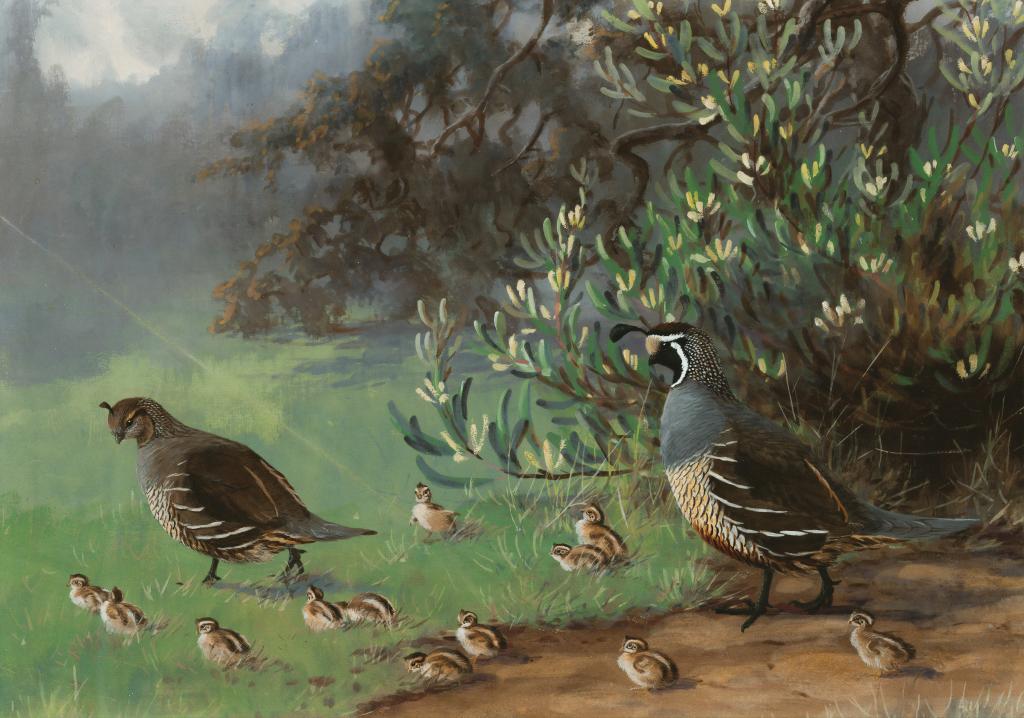
Quail. Photo credit: McGill Library on Unsplash. https://unsplash.com/photos/XDLhJbuNSrM
Focus on Numbers 11:4
“The rabble among them had a strong craving; and the Israelites also wept again, and said, ‘If only we had meat to eat!’”
Eco-Exegesis
Eco-exegesis is a method of interpreting the biblical text through a green lens using the principles of ecological theology. For this passage, we turn to Eco Bible, a Jewish ecological commentary on the Hebrew texts.
This story of insatiable appetites occurs after the Israelites have been liberated from Egypt and during the time they wandered in the wilderness. The word “rabble” in Hebrew indicates that this was a collection of people up to no good. They were instigators. This was a ravenous mob who super-charged and amplified the sin of gluttony – desire without limits. They convinced the people that God’s miraculous manna in the desert was not enough. They wanted more, to the point that they would rather go back to living as slaves just to get a few morsels from their Egyptian slaveowners. Egypt’s culture of sinful overconsumption had followed them into the wilderness.
God responds by sending them more quail than they could ever eat, yet still they are not satisfied (v. 18, 31-32).
According to authors of Eco Bible, “Today, we would call it insatiable consumerism. The Bible tells us that the Israelites collected enormous quantities of quail—more than they could ever consume, decimating the birds. A desire that can never be satisfied consumes resources to the point of destruction.”[i] A good question to ask here is “How do we as Christians steward the non-renewable resources that God entrusts to us?”
At the end of the chapter (vv. 33-34), just as they are biting into the quail meat, those who succumbed to the “craving” died instantly of a plague. The place where they were buried was called Kivrot Ha-ta’avah, Hebrew for “the Graves of Appetite.” Dr. Jon Greenberg explains that to indulge gluttonously without acknowledging the Creator or the limits of creation was an expression of contempt for all that God had done for them. Such behavior leads to disaster.[ii]
Interestingly, the story indicates there are other voices who prophesied on behalf of God – Eldad and Medad.
They are what we might call the “minority report.” Eldad and Medad are the dissenting voices who are neither part of the seething mob nor part of the seventy elders gathered around Moses at the tent of meeting. They stayed in the camp with the people trying to quell the ravenous appetites of their people. But some of the leaders tried to silence their voices because they were not “officially authorized.”
Yet Moses reprimands the snitches and those who jealously guard their power to speak on behalf of God. “‘Would that all the Lord’s people were prophets, and that the Lord would put his spirit on them!’” he says (v. 29).
1 Eco-Idea
The Eco-Idea is one succinct statement that tells us who God is and/or what God does in relation to Creation and how we should respond as people of faith. The Eco-Idea for this sermon is:
God generously provides for our needs, but there are disastrous consequences for indulging our ravenous appetites. Therefore, we must listen to those who call us to humbly and prudently steward our limited resources to ensure a sustainable future for ourselves and our descendants.
2 Eco-Questions
Eco-Questions are what we can ask to help a congregation draw out the implications of the Eco-Exegesis and Eco-Idea.
- The daily consumption of meat was shown to have dire consequences in this story from Numbers 11. Today, the meat industry requires vast amounts of water and land compared to what is needed to grow grain, beans, fruits, and vegetables. In addition, meat production emits more than 15 times the quantity of carbon dioxide to the atmosphere compared to vegetable production.[iii] Eco Bible asks: “How does God view Western meat-eating practices that consume tremendous resources while hundreds of millions of people worldwide face acute hunger?”[iv] What are ways we can cut back on meat and eat plant-based proteins instead? Can we try Meatless Mondays? How about a “Meat Tithe” – cutting back our meat consumption by 10%? Can we experiment with refraining from eating meat for a week as a holy discipline?
- If the advertising industry is like the ravenous instigators in Numbers 11 who super-charged the appetites of the people, who are the Eldads and Medads among us today? Who is prophesying among our “camps” urging us to live sustainably in accordance with God’s provisions? Black-led, Indigenous, and food worker justice organizations can help reshape our relationship between food and faith. How can we connect with them?
3 Eco-Actions
Eco-Actions are ways that a congregation might respond to the Eco-Idea and Eco-Questions. One of these possibilities may have salience for your preaching context.
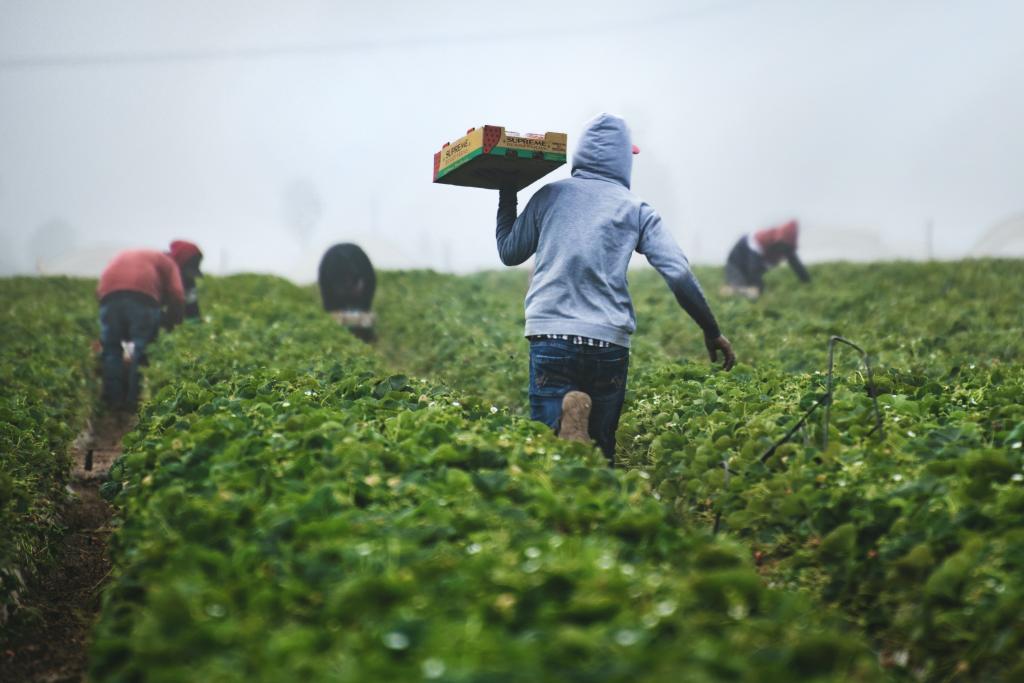
When strawberries are harvested, the pickers are paid by the box, so they run with their filled boxes to ensure they can pick as many as possible and earn enough money during harvest season. Photo credit: Tim Mossholder. https://unsplash.com/photos/xDwEa2kaeJA
- With your youth group or adult forum, visit FoodPrint.org to connect with resources and organizations who advocate for Black, Indigenous, and food worker justice. Take their fun “FoodPrint Quiz” to get a baseline on the impact of your food choices and get tips for reducing the harm that goes into your food. For further study, invite parishioners to explore www.storyofstuff.org as a way of looking at consumption in general.
- Covenant together as a congregation or small group to choose one food justice action a month over the course of a year. Engage in ongoing reflection about how these choices impact your faith.
- Have a Meatless Potluck! Invite people to bring their favorite meat-free dishes. Set up a table with samples of meatless products like chickenless nuggets, plant-based burgers, and fishless filets. Have a meat-free cook-out and let people taste-test different kinds of meatless burgers to vote on their favorites.
** EcoPreacher 1-2-3 is a Creation-centered preaching resource for busy pastors.*
Drawing from Eco Bible, a Jewish ecological commentary on the Hebrew Scriptures, the Rev. Dr. Leah Schade, author of Creation-Crisis Preaching: Ecology, Theology and the Pulpit (Chalice Press, 2015), provides sermon preparation for preaching about caring for God’s Creation that is short, accessible, and based on a solid biblical foundation. Thanks to the Interfaith Center for Sustainable Development for supporting this work.
Read also:
Food & Faith: Preaching Deuteronomy 4 Through a Green Lens
Climate Migration: How Should the Church Respond?
10 Principles for Environmental Preaching: How to Craft Eco-Sermons
[i] Eco Bible: Volume Two: An Ecological Commentary on Leviticus, Numbers, and Deuteronomy, by Rabbi Yonatan Neril and Rabbi Leo Dee, The Interfaith Center for Sustainable Development, 2021. Forthcoming.
[ii] Eco Bible: Volume Two. Adapted from content produced by Canfei Nesharim, a branch of Grow Torah. Original article available at http://canfeinesharim.org/behaaloscha-balancing-natural-forces/.
[iii] “Food’s Carbon Footprint,” Green Eatz, accessed February 18, 2019, http://www.greeneatz.com/foods-carbon-footprint.html.
[iv] Eco Bible, ibid.
The Rev. Dr. Leah D. Schade is the Assistant Professor of Preaching and Worship at Lexington Theological Seminary in Kentucky and ordained in the ELCA. Dr. Schade does not speak for LTS or the ELCA; her opinions are her own. She is the author of Preaching in the Purple Zone: Ministry in the Red-Blue Divide (Rowman & Littlefield, 2019) and Creation-Crisis Preaching: Ecology, Theology, and the Pulpit (Chalice Press, 2015). She is the co-editor of Rooted and Rising: Voices of Courage in a Time of Climate Crisis (Rowman & Littlefield, 2019). Her latest book, co-written with Jerry Sumney is Apocalypse When?: A Guide to Interpreting and Preaching Apocalyptic Texts (Wipf & Stock, 2020).
Twitter: @LeahSchade
Facebook: https://www.facebook.com/LeahDSchade/
General Christian
Food and Religion
Previous Post

September 18, 2021
Covidtown: A Tragic Parody on Billy Joel's "Allentown"
Next Post

September 28, 2021 Blessing Animals Sunday -- Genesis 2:18-24 Sermon Ideas
Browse Our Archives
Select a Category Academy of Homiletics Addiction Advent AI (Artificial Intelligence) Animals Apocalypse Appalachia Ash Wednesday Baptism Bible Black Lives Matter Blade Runner Book review Children in church Christian Nationalism Christian/Islamic relations Christmas Church Clergy Climate change COVID-19 Creation Data Centers Death penalty Devotional Dialogue Doubt Earth Day Easter Ecofeminism EcoPreacher 1-2-3 ELCA ELCA Youth Gathering Election Environment/ecology Epiphany Faith Faith and Politics Feminism Film review Food Food and Faith Forgiveness Fracking Good Friday Good Omens Grief Gun violence Holy Humor Sunday Holy Week Howard Thurman ICE Immigration Indigenous wisdom Interview Jesus Kentucky Lafayette High School Marching Band Leadership Lent LGBTQIA+ Marching band Martin Luther Martin Luther King Jr. Mary Maundy Thursday Michael Sheen Mother of Jesus Nature New Year's Eve Palm Sunday Parables Pentecost Poem, Poetry Politics Poor People's Campaign Pop culture Prayers Preaching Progressive Christianity Public theology Purple Zone Racism and White Privilege Religion Religion and environment Religion and politics Religion and pop culture Religion and violence Rev. Nelson Rabell Gonzalez Sermons Spanish language resources for preaching Technology Thanksgiving Theological education theology Trees Trump Uncategorized Vegan War Women and religion Workshop Worship
Select a Month October 2026 September 2026 July 2026 June 2026 May 2026 April 2026 March 2026 February 2026 January 2026 December 2025 November 2025 October 2025 September 2025 May 2025 April 2025 March 2025 February 2025 January 2025 December 2024 November 2024 October 2024 September 2024 August 2024 July 2024 June 2024 May 2024 April 2024 March 2024 February 2024 January 2024 December 2023 November 2023 October 2023 September 2023 August 2023 July 2023 June 2023 May 2023 April 2023 March 2023 February 2023 January 2023 December 2022 November 2022 October 2022 August 2022 July 2022 June 2022 May 2022 April 2022 March 2022 February 2022 January 2022 December 2021 November 2021 October 2021 September 2021 August 2021 July 2021 June 2021 May 2021 April 2021 March 2021 January 2021 December 2020 November 2020 October 2020 September 2020 August 2020 July 2020 June 2020 May 2020 April 2020 February 2020 January 2020 December 2019 November 2019 October 2019 September 2019 August 2019 July 2019 June 2019 May 2019 April 2019 March 2019 January 2019 December 2018 November 2018 October 2018 September 2018 August 2018 July 2018 June 2018 May 2018 April 2018 March 2018 February 2018 January 2018 December 2017 November 2017 October 2017 September 2017 August 2017 July 2017 June 2017 May 2017 April 2017
Follow Us!
TAKE THE
Religious Wisdom Quiz
Which queen visited Solomon to test his wisdom?
Select your answer to see how you score.
Queen of Sheba Queen Vashti Queen Jezebel Queen Esther
Books by This Author Books by Leah D. Schade
Related posts from EcoPreacher

Pastoral Wisdom for Responding to Sermon Pushback

Love Your Neighbor – Including Earth-Kin: Lev. 19,...

Preaching About Climate Change: What Clergy Need Most

Workers in the Vineyard: Sermon Ideas for Matt....
TRENDING AT PATHEOS Progressive Christian

What Being a Modern-Day Apostle Means to Me
In my last column, I discussed the ins and outs of modern-day...

Did Ancient China Once Worship the God of...
Across human history, a common thread weaves through the origins of the...

Love Your Neighbor – Including Earth-Kin: Lev. 19,...
God’s command to love your neighbor means acting in an ethical and...

Lead a Church Study of “Jesus and Lao...
Guest writer Jack Thomas (The Irreverent Reverend) reflects on leading his church...

Pastoral Wisdom for Responding to Sermon Pushback
Getting sermon pushback on your social justice sermon? Learn practical, Proverbs-based strategies...

Principles for Understanding the Apostolic Ministry Today
Whenever people discover that my formal ministry title is "apostle," as in...
view all Progressive Christian blogs
Ad-Free & Subscriber Log-In Subscription Support
- About Us
- 2026 Calendar
- Videos
- Podcasts
- Library of World Religions
- Faith In Media Tracker
- Advertise With Us
- Write for Us
- Privacy Policy
- Terms of Service
- Do Not Sell My Data
- Contact Us
- Radiant Digital
- Manage Newsletter Subscriptions
- Unsubscribe From Notifications
- Sitemap
Copyright 2008-2026, Patheos. All rights reserved.
Subscription Support Ad-Free & Subscriber Log-In
Follow Patheos