
BuddhistCatholicContemplativeEvangelicalGeneral ChristianHinduJewishLatter-day SaintMuslimNew VisionsProgressive Christian
Beliefs
- Buddhist
- Catholic
- Contemplative
- Evangelical
- General Christian
- Hindu
- Jewish
- Latter-day Saint
- More Voices
- Muslim
- New Visions
- Pagan
- Progressive Christian
Topics
- Religion News
- Food and Religion
- Sports and Religion
- Religious Art
- Religious Music and Entertainment
- Religious Events
- History and Religion
- Style and Religion
- Politics and Religion
- Women in Religion
- Recreation Outdoors and Religion
- Business Finance and Religion
- Careers Workplace and Religion
- Education and Religion
- Family Parenting and Religion
- Health Fitness and Religion
- Home and Religion
- Relationships and Religion
- Technology and Religion
- Travel and Religion
Columnists
- Buddhist Columnists
- Business Finance and Religion Columnists
- Careers Workplace and Religion Columnists
- Catholic Columnists
- Contemplative Columnists
- Education and Religion Columnists
- Evangelists Columnists
- Family Parenting and Religion Columnists
- General Christian Columnists
- Health Fitness and Religion Columnists
- Hindu Columnists
- History and Religion Columnists
- Home and Religion Columnists
- Jewish Columnists
- More Voices Columnists
- Latter Day Columnists
- Muslim Columnists
- New Visions Columnists
- Nonreligious Columnists
- Pagan Columnists
- Politics and Religion Columnists
- Progressive Columnists
- Recreation Outdoors and Religion Columnists
- Relationships and Religion Columnists
- Religion News Columnists
- Religious Art Columnists
- Religious Events Columnists
- Religious Music and Entertainment Columnists
- Sports and Religion Columnists
- Style and Religion Columnists
- Technology and Religion Columnists
- Travel and Religion Columnists
- Women in Religion Columnists
Resource Library
- 2026 Calendar
- Library of World Religions
- The 100 Most Holy Places on Earth
- Patheos Answers
- Podcasts
- Videos
- Faith Leaders Database
- Anglican Episcopalian
- Bahai
- Baptist
- Buddhism
- Christianity
- Confucianism
- Eastern Orthodoxy
- Hinduism
- Holiness and Pentecostal
- ISKCON
- Islam
- Judaism
- Lutheran
- Methodist
- The Church of Jesus Christ of Latter-day Saints
- New Age
- Paganism
- Presbytarian and Reformed
- Protestantism
- Religion Behind the Scenes
- Roman Catholic
- Scientology
- Shia Islam
- Sikhism
- Sufism
- Sunni Islam
- Taoism
- Zen
- See all religions
Research Tools
 Ad-Free & Subscriber Log-In Subscription Support
Ad-Free & Subscriber Log-In Subscription Support
Follow Patheos 

- Trending:
- Forgiveness
- |
- Marriage
- |
- Consciousness
- |
- Death Penalty
- |
- Election
- |
- Halloween

- Home
- Progressive Christian
- Pastoring During (and After) the Coup: Staying Alert, Telling the Truth
Pastoring During (and After) the Coup: Staying Alert, Telling the Truth
Last updated on: December 8, 2020 at 2:32 pm by Leah D. Schade
Pastoring During (and After) the Coup: Staying Alert, Telling the Truth 2020-12-08T14:32:17-04:00 Leah D. Schade
Patheos Explore the world's faith through different perspectives on religion and spirituality! Patheos has the views of the prevalent religions and spiritualities of the world.
President-elect Joe Biden has won the popular vote and the Electoral College victory will soon be official. But that fact has not stopped Trump’s attempted coup.
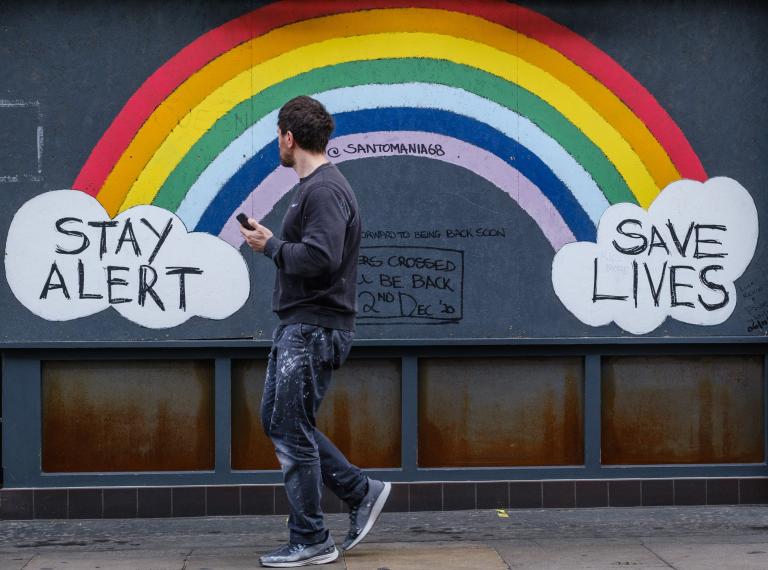
Stay alert, save lives. Photo y Kevin Grieve on Unsplash. https://unsplash.com/photos/R9Qnb8d83vw
Trump has pursued every possible avenue to overturn the results of the election.
Thankfully, Trump’s attempted coup has not gained traction. A coup requires collaborators at multiple levels, which he has been unable to secure. He has lost nearly every court challenge. And notwithstanding a handful of die-hard GOP sycophants, his attempted coercion of elected leaders and election officials has been thwarted at nearly every turn.
But that does not mean his efforts at attempting a coup are not dangerous. They are. And they will have long-lasting effects.
Those effects are already being felt in congregations where clergy are navigating political tensions among their parishioners. As I explain in this piece, when nearly half the country buys into a false narrative, it destabilizes democracy and can lead to violence. This political divisiveness and destabilization can manifest in churches as well.
So how can we pastor during – and after – this coup?
First, we need to be clear that what is happening is, in fact, a coup. We need to tell the truth about that – not in an alarmist way, but as a matter of fact. Because what is happening in this country is doing damage to the foundations of democracy. This weakens our society’s ability to function. And because democracy is what allows churches to practice freedom of religion, we need to be concerned about the fall-out from this coup in the weeks and months ahead.
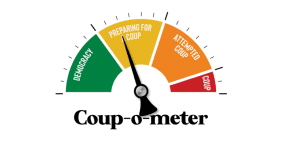
Is this a coup. Coup-o-meter at https://isthisacoup.com/
According to isthisacoup.com, a project of Dissent & Company:
Trump “is doing damage to our country and democracy and putting people’s lives at risk every day that he refuses to participate in the normal transition of power. . . Trump’s continued insistence on pushing the false story that the election was rigged has further eroded American’s faith in our democratic system, a development that could mean long term harm to the country.”
Indi Samarajiva warns about the dangerous fall-out from a failed coup in his essay “I Lived Through A Stupid Coup. America Is Having One Now.” He describes the aftermath of the 2018 attempted coup in Sri Lanka and how it has affected his country.
“I didn’t know it at the time, but we had already lost. No one knew — but oh my God, what we lost. The legitimate government came back but it was divided and weak. We were divided and weak. We were vulnerable.”
In the ensuing months, Sri Lanka suffered multiple attacks by domestic terrorists killing hundreds of people and shaking the foundations of their country.
America, he warns, is on track for the same kind of post-coup scenario.
Samarajiva minces no words. “America’s democracy is a lightly modified enslavement system that black people only wrested universal franchise from in 1965. It’s frankly a terrible democracy, built on voter suppression of 94% of the population, full of racist booby traps and prone to absurd randomness.”
There’s a term for that kind of randomness. It’s called stochastic terrorism.
Stochastic means “random” and terrorism is “violence motivated by ideology.” Thus, the definition of stochastic terrorism is “the public demonization of a person or group resulting in the incitement of a violent act, which is statistically probable but whose specifics cannot be predicted.”

Photo by Marina Kazmirova on Unsplash. https://unsplash.com/photos/CLeKx9-Pg6g
Stochastic violence is when a leader or organization uses rhetoric to demonize a person or group of people, resulting in unpredictable violence from those who buy into the rhetoric and choose to act on it. Kyle Rittenhouse murdering protestors in Kenosha, Wisconsin is one example. The man who opened fire in an El Paso, Texas, Walmart in August 2019 in response to the “Hispanic invasion of Texas” is another.
Clergy and church leaders need to be aware of the threat of stochastic terrorism for two reasons.
One, congregations and clergy may become the target of demonizing rhetoric and violent attacks.
The 2018 murder of 11 congregants at the Tree of Life Synagogue in Pittsburgh is a stark reminder of this tragic reality. And Samarajiva noted that hotels and several churches were attacked on an Easter Sunday four months after his country’s failed coup. 269 were killed. So clergy and church leaders need to be aware that stochastic violence against houses of worship may increase as a result of the Trump’s coup and its aftermath.
Again, this is not to be alarmist. Rather, it means taking the necessary precautions to ensure the safety of parishioners, especially when in-person worship eventually resumes. [The Secure Community Network has excellent resources for securing houses of worship and protecting the safety of a faith community. Visit their website here.]
Two, there may be persons in a congregation who are susceptible to violent ideology and rhetoric – enough to act on it.
Recall the self-proclaimed white supremacist who murdered nine Emanuel AME Church members in June 2015. That young man was a member of a Lutheran church.
While clergy and congregations may not always know the ideology of their members, clergy can help counter disinformation and the rhetoric of violent ideology that can lead to dangerous stochastic terrorism. [Stay tuned for the next in this series, “How Can Clergy Counter Disinformation, Gaslighting, and Manipulation?”]
Studies have shown that one way to combat violent ideology is to try to deprogram and reconstruct the belief system of adherents. Admittedly, this is very difficult and takes time. But clergy can assist with this “deprogramming.” In my next piece, I’ll discuss strategies for pastoral and homiletical approaches to help thwart disinformation and violent rhetoric. In short, education is key. Sermons, Bible studies, and pastoral conversations can help to neutralize the poisonous and treacherous words that destabilize minds and inspire violence.
Also, clergy sometimes do, in fact, know the ideology of their parishioners. It comes out in conversation or shows itself on Facebook. Other members raise concerns, or it comes through in emails. It can even erupt in angry responses to sermons that preach biblical values of love and justice.
If you suspect that one of your members is heading down a dangerous path, or if one of your members reports to you that they are concerned that a friend or family member poses a possible threat, you should report it.
However, understand that radical beliefs are not the same as radical actions.
The FBI clearly notes: “You may know someone in this country who has radical beliefs or agrees with the actions or ideologies of violent extremist groups. That is their right under the U.S. Constitution. However, if a person seriously plans to carry out an act of violence or is strongly pushing you or someone else to do so, that is illegal.”
How can you tell if someone is moving beyond sympathizing with extremist beliefs to acting on them?
There are signs that someone is moving beyond mere sympathy with violent ideology to acting on that ideology.

The FBI lists the following signs that indicate that someone may carry out violence.
Spending a lot of time reading violent extremist information online, including in chat rooms and password-protected websites
Using several different cell phones and private messaging apps
Talking about traveling to places that sound suspicious
Researching or training with weapons or explosives
Studying or taking pictures of potential targets (like a government building)
Using code words or unusual language
Looking for ways to disrupt computers or other technology
Staying away from friends or family while becoming very interested in violent extremist beliefs and propaganda
Posting comments encouraging violence on social media sites or online forums.
(Visit this site to learn more.)
Stay connected, get support
Ministry during and after a coup is not something we ever imagined when we answered our call to serve the church. Not to mention ministry during a time of pandemic. Nor were we trained in seminary for this kind of ministry. So it’s important to learn as much as we can to respond as best we can. Staying grounded in scripture and prayer, tending to self-care, and being connected to networks of trusted colleagues for support are all vital.
As you navigate these difficult times, know that your faithfulness, your proclamation of the gospel, and your pastoral heart are making a difference.
Read also:
Trumpism is a Starfish, not a Spider. How should churches respond?
How to Preach When You Are Afraid
Clergy: Prepare for Post-Election Season in Mind, Body & Spirit
Fill Your Lamps, Church – Let’s Be Ready! Post-election Sermon
5 Steps for a Healthy Pastor, Congregation, and Planet

Leah D. Schade is the Assistant Professor of Preaching and Worship at Lexington Theological Seminary in Kentucky and ordained in the ELCA. Dr. Schade does not speak for LTS or the ELCA; her opinions are her own. She is the author of Preaching in the Purple Zone: Ministry in the Red-Blue Divide (Rowman & Littlefield, 2019) and Creation-Crisis Preaching: Ecology, Theology, and the Pulpit (Chalice Press, 2015). She is the co-editor of Rooted and Rising: Voices of Courage in a Time of Climate Crisis (Rowman & Littlefield, 2019). Her latest book, co-written with Jerry Sumney is Apocalypse When?: A Guide to Interpreting and Preaching Apocalyptic Texts (Wipf & Stock, 2020).
Leah is also co-founder of the Clergy Emergency League, a grassroots network of clergy that provides support, accountability, resources, and networking for clergy to prophetically minister in their congregations and the public square in this time of political upheaval, social unrest, and partisan division.
Twitter: @LeahSchade
Facebook: https://www.facebook.com/LeahDSchade/
election resources for faith leaders
Previous Post

December 6, 2020
Trumpism is a Starfish, not a Spider. How should churches respond?
Next Post
December 13, 2020 That’s “Rev. Dr.” to you, kiddo. A rebuttal to WSJ’s Joseph Epstein
Browse Our Archives
Select a Category Academy of Homiletics Addiction Advent AI (Artificial Intelligence) Animals Apocalypse Appalachia Ash Wednesday Baptism Bible Black Lives Matter Blade Runner Book review Children in church Christian Nationalism Christian/Islamic relations Christmas Church Clergy Climate change COVID-19 Creation Data Centers Death penalty Devotional Dialogue Doubt Earth Day Easter Ecofeminism EcoPreacher 1-2-3 ELCA ELCA Youth Gathering Election Environment/ecology Epiphany Faith Faith and Politics Feminism Film review Food Food and Faith Forgiveness Fracking Good Friday Good Omens Grief Gun violence Holy Humor Sunday Holy Week Howard Thurman ICE Immigration Indigenous wisdom Interview Jesus Kentucky Lafayette High School Marching Band Leadership Lent LGBTQIA+ Marching band Martin Luther Martin Luther King Jr. Mary Maundy Thursday Michael Sheen Mother of Jesus Nature New Year's Eve Palm Sunday Parables Pentecost Poem, Poetry Politics Poor People's Campaign Pop culture Prayers Preaching Progressive Christianity Public theology Purple Zone Racism and White Privilege Religion Religion and environment Religion and politics Religion and pop culture Religion and violence Rev. Nelson Rabell Gonzalez Sermons Spanish language resources for preaching Technology Thanksgiving Theological education theology Trees Trump Uncategorized Vegan War Women and religion Workshop Worship
Select a Month October 2026 September 2026 July 2026 June 2026 May 2026 April 2026 March 2026 February 2026 January 2026 December 2025 November 2025 October 2025 September 2025 May 2025 April 2025 March 2025 February 2025 January 2025 December 2024 November 2024 October 2024 September 2024 August 2024 July 2024 June 2024 May 2024 April 2024 March 2024 February 2024 January 2024 December 2023 November 2023 October 2023 September 2023 August 2023 July 2023 June 2023 May 2023 April 2023 March 2023 February 2023 January 2023 December 2022 November 2022 October 2022 August 2022 July 2022 June 2022 May 2022 April 2022 March 2022 February 2022 January 2022 December 2021 November 2021 October 2021 September 2021 August 2021 July 2021 June 2021 May 2021 April 2021 March 2021 January 2021 December 2020 November 2020 October 2020 September 2020 August 2020 July 2020 June 2020 May 2020 April 2020 February 2020 January 2020 December 2019 November 2019 October 2019 September 2019 August 2019 July 2019 June 2019 May 2019 April 2019 March 2019 January 2019 December 2018 November 2018 October 2018 September 2018 August 2018 July 2018 June 2018 May 2018 April 2018 March 2018 February 2018 January 2018 December 2017 November 2017 October 2017 September 2017 August 2017 July 2017 June 2017 May 2017 April 2017
Follow Us!
TAKE THE
Religious Wisdom Quiz
What is the shortest chapter in the Bible?
Select your answer to see how you score.
John 3 Psalm 117 Psalm 119 Proverbs 31
Books by This Author Books by Leah D. Schade
Related posts from EcoPreacher

Why Christians Have a Sacred Duty to Vote:...

Pastoral Wisdom for Responding to Sermon Pushback

"Render Unto Caesar": Faith, Politics, and Elections

What Matt. 21:23-32 Teaches About Integrity In An...
TRENDING AT PATHEOS Progressive Christian

Why Christians Have a Sacred Duty to Vote:...
The Bible offers strong support for the sacred duty to vote. Here...

What Being a Modern-Day Apostle Means to Me
In my last column, I discussed the ins and outs of modern-day...

Did Ancient China Once Worship the God of...
Across human history, a common thread weaves through the origins of the...

Love Your Neighbor – Including Earth-Kin: Lev. 19,...
God’s command to love your neighbor means acting in an ethical and...

Lead a Church Study of “Jesus and Lao...
Guest writer Jack Thomas (The Irreverent Reverend) reflects on leading his church...

Principles for Understanding the Apostolic Ministry Today
Whenever people discover that my formal ministry title is "apostle," as in...
view all Progressive Christian blogs
Ad-Free & Subscriber Log-In Subscription Support
- About Us
- 2026 Calendar
- Videos
- Podcasts
- Library of World Religions
- Faith In Media Tracker
- Advertise With Us
- Write for Us
- Privacy Policy
- Terms of Service
- Do Not Sell My Data
- Contact Us
- Radiant Digital
- Manage Newsletter Subscriptions
- Unsubscribe From Notifications
- Sitemap
Copyright 2008-2026, Patheos. All rights reserved.
Subscription Support Ad-Free & Subscriber Log-In
Follow Patheos