
BuddhistCatholicContemplativeEvangelicalGeneral ChristianHinduJewishLatter-day SaintMuslimNew VisionsProgressive Christian
Beliefs
- Buddhist
- Catholic
- Contemplative
- Evangelical
- General Christian
- Hindu
- Jewish
- Latter-day Saint
- More Voices
- Muslim
- New Visions
- Pagan
- Progressive Christian
Topics
- Religion News
- Food and Religion
- Sports and Religion
- Religious Art
- Religious Music and Entertainment
- Religious Events
- History and Religion
- Style and Religion
- Politics and Religion
- Women in Religion
- Recreation Outdoors and Religion
- Business Finance and Religion
- Careers Workplace and Religion
- Education and Religion
- Family Parenting and Religion
- Health Fitness and Religion
- Home and Religion
- Relationships and Religion
- Technology and Religion
- Travel and Religion
Columnists
- Buddhist Columnists
- Business Finance and Religion Columnists
- Careers Workplace and Religion Columnists
- Catholic Columnists
- Contemplative Columnists
- Education and Religion Columnists
- Evangelists Columnists
- Family Parenting and Religion Columnists
- General Christian Columnists
- Health Fitness and Religion Columnists
- Hindu Columnists
- History and Religion Columnists
- Home and Religion Columnists
- Jewish Columnists
- More Voices Columnists
- Latter Day Columnists
- Muslim Columnists
- New Visions Columnists
- Nonreligious Columnists
- Pagan Columnists
- Politics and Religion Columnists
- Progressive Columnists
- Recreation Outdoors and Religion Columnists
- Relationships and Religion Columnists
- Religion News Columnists
- Religious Art Columnists
- Religious Events Columnists
- Religious Music and Entertainment Columnists
- Sports and Religion Columnists
- Style and Religion Columnists
- Technology and Religion Columnists
- Travel and Religion Columnists
- Women in Religion Columnists
Resource Library
- 2026 Calendar
- Library of World Religions
- The 100 Most Holy Places on Earth
- Patheos Answers
- Podcasts
- Videos
- Faith Leaders Database
- Anglican Episcopalian
- Bahai
- Baptist
- Buddhism
- Christianity
- Confucianism
- Eastern Orthodoxy
- Hinduism
- Holiness and Pentecostal
- ISKCON
- Islam
- Judaism
- Lutheran
- Methodist
- The Church of Jesus Christ of Latter-day Saints
- New Age
- Paganism
- Presbytarian and Reformed
- Protestantism
- Religion Behind the Scenes
- Roman Catholic
- Scientology
- Shia Islam
- Sikhism
- Sufism
- Sunni Islam
- Taoism
- Zen
- See all religions
Research Tools
 Ad-Free & Subscriber Log-In Subscription Support
Ad-Free & Subscriber Log-In Subscription Support
Follow Patheos 

- Trending:
- Forgiveness
- |
- Marriage
- |
- Consciousness
- |
- Death Penalty
- |
- Election
- |
- Halloween

- Home
- Progressive Christian
- Ideas for Preaching Advent 1 – Mark 13:24–37
Ideas for Preaching Advent 1 – Mark 13:24–37
Last updated on: November 28, 2020 at 6:42 pm by Leah D. Schade
Ideas for Preaching Advent 1 – Mark 13:24–37 2020-11-28T18:42:09-04:00 Leah D. Schade
Patheos Explore the world's faith through different perspectives on religion and spirituality! Patheos has the views of the prevalent religions and spiritualities of the world.
What’s the point of Jesus giving dire warnings about the end-times in Mark 13:24-37? If it doesn’t mean building underground shelters stocked with canned peaches, or going into the woods with guns to train for taking out our enemies, what does it mean? What we learn—and what we must convey in our sermons—is that our focus is to live a life of faithful alertness.
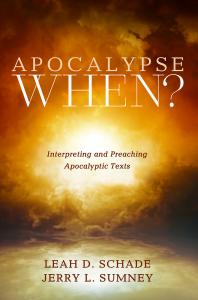
This is an excerpt from my book co-authored with Jerry Sumney, Apocalypse When?: A Guide to Interpreting and Preaching Apocalyptic Texts (Cascade, 2020).
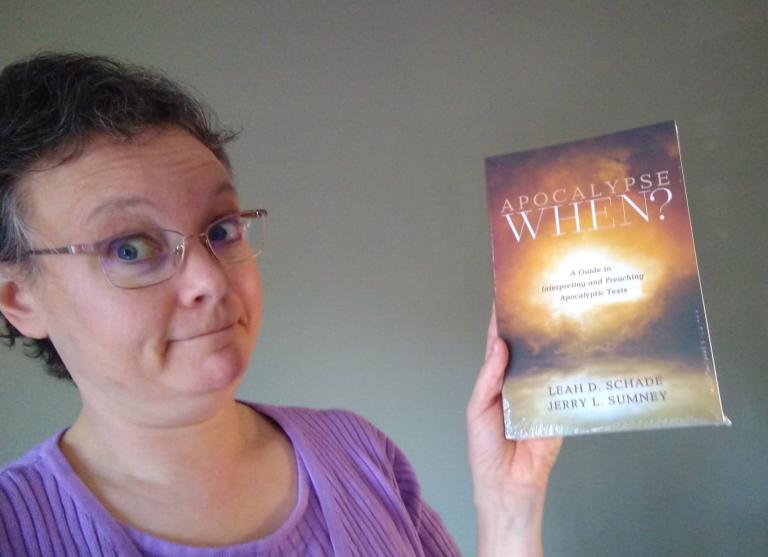
Leah D. Schade, co-author of Apocalypse When?: A Guide to Interpreting and Preaching Apocalyptic Texts (Cascade, 2020)
After laying out exegetical and homiletical principles in Chapters 1 and 2, each chapter is divided into three sections. The first section is an exegesis of a text by Sumney. The second and third sections are ideas for preaching and a sample sermon that I have written.
In this excerpt, I suggest ideas for preaching on Mark 13:24-37, the Gospel reading for the First Sunday in Advent, Year B, in the Revised Common Lectionary. In the next installment, I share a sermon that illustrates these principles in action: “Gathering Up the Fragments.”
Considering ministry context for Mark 13:24-37
But about that day or hour no one knows, neither the angels in heaven, nor the Son, but only the Father. Beware, keep alert; for you do not know when the time will come.’ (Mark 13:32-33)
In the verses prior to this pericope, Jesus describes a period of terrible suffering. So the preacher will want to ask, in what ways has the congregation and/or community experienced suffering? One of the most powerful things we can do as preachers is to name that suffering and then frame it within a biblical and theological context. In this way, those who have suffered will have the experience of being seen, being paid attention to, and being validated as worthy of God’s care.
By speaking forthrightly about suffering, the preacher can exercise what homiletician Dale Andrews called “prophetic care”—a way of understanding prophetic preaching as an expression of pastoral care. Andrews saw pastoral care and prophetic proclamation not as two contrasting aspects of ministry, but as complementary and reinforcing of each other. Caring for one’s congregation necessarily entails naming and calling out sin and suffering (including systemic sin) in a prophetic way. This prophetic voice, then, arises from a pastor’s deep and empathetic—even suffering—love for God’s people.
The preacher will also want to be attentive to social, national, and environmental contexts.
What are current events or environmental news that may feel as if “the powers in the heavens” are being shaken? Because of the nature of instantaneous newsfeeds from around the world, the barrage of headlines can make it seem as if the “stars are falling from heaven.” When natural disasters, wars, the effects of climate disruption, and health pandemics overwhelm us, sometimes biblical language found in passages such as Mark 13:24–37 is the only thing that captures the enormity of what we are experiencing.
This is why understanding the historical context of the passage can be especially helpful. Using Sumney’s exegesis, we learn that the original readers/hearers of Mark’s Gospel were experiencing existential angst with the destruction of the temple. In the sermon, the preacher will want to explore what we can learn from that period of time that can shed light on our own period of upheaval.
Countering apocalyptic panic
The temptation for some who read these texts in light current events is that they may latch onto them as portents of apocalyptic doom that can induce either paralyzing fear or susceptibility to those who profit from manipulating such fear. This manipulation may manifest in any number of ways, including obeisance to militant strongmen and authoritarianism, the stockpiling of guns and ammunition, or attacks on those scapegoated for the current state of desperation. Or one’s fear about end-times may manifest as an unhealthy obsession with apocalyptic fiction and conspiracy theories.
In any case, solid exegesis of Mark 13:24-37 can help counter alarmism and provide a remedying dose of historical context. What we learn from Sumney’s exegesis is that this text was not intended to stoke apocalyptic panic, but actually quell it by keeping a broader perspective on what is happening. Just as the Roman War in the first century was not a portent of the second coming of Jesus, neither are the calamitous events of our own time necessarily pointing to Jesus “coming in the clouds.”
Preaching faithful alertness
If we understand that “there are no events in world history one can point to as clear evidence that the End is near,” as Sumney notes in his exegesis (see Chapter 4, p. 53), what is the point of Jesus giving such dire warnings about the end-times? If it doesn’t mean building underground shelters stocked with canned peaches, or going into the woods with guns to train for taking out our enemies, what does it mean?
What we learn—and what we must convey in our sermons—is that a more important focus is to live a life of faithful alertness.
The preacher can develop this idea of faithful alertness by discussing the two parables in this passage about the fig tree and household keeping awake.
Just as Jesus points to the fig tree, an illustration from nature, the sermon can also draw on images from Creation to illustrate the ways in which nature conveys important information—if we only pay attention. Congregations whose members live close to the land, water, and other elements of nature will understand this intuitively. Those whose connections to nature are more tenuous, or who live in settings where they are not as exposed to the rhythms of nature, will need robust descriptions to help the images come alive. In either case, it’s worth noting that nature becomes Jesus’ teaching partner; likewise, preachers can draw on nature in their own sermons.
The preacher can also offer a contemporary illustration of the parable of the household servants awaiting their master’s return.
What are examples of expectant waiting in Mark 13:24-37 that will resonate with your congregation?
You might tell two contrasting stories—one of “falling asleep” and being caught unprepared; and one of “keeping awake,” alert to the signs of Jesus’ imminent return. In this way, the preacher might employ a more realized eschatology to help the congregation prepare for Christ’s appearance in the here-and-now, even as his ultimate arrival has not yet been fulfilled.
Read also:
Gathering Up the Fragments: A Sermon on Mark 13:24-37
Learning to Welcome the Dark: Advent 1
Rooted and Rising in Advent: 28 Days for Connecting with Earth
Jesus, Apocalyptic Discourse, and the Climate Crisis: Ideas for Preaching Matthew 24:36-44

Leah D. Schade is the Assistant Professor of Preaching and Worship at Lexington Theological Seminary in Kentucky and ordained in the ELCA. Dr. Schade does not speak for LTS or the ELCA; her opinions are her own. She is the author of Preaching in the Purple Zone: Ministry in the Red-Blue Divide (Rowman & Littlefield, 2019) and Creation-Crisis Preaching: Ecology, Theology, and the Pulpit (Chalice Press, 2015). She is the co-editor of Rooted and Rising: Voices of Courage in a Time of Climate Crisis (Rowman & Littlefield, 2019). Her latest book, co-written with Jerry Sumney is Apocalypse When?: A Guide to Interpreting and Preaching Apocalyptic Texts (Wipf & Stock, 2020).
Leah is also co-founder of the Clergy Emergency League, a grassroots network of clergy that provides support, accountability, resources, and networking for clergy to prophetically minister in their congregations and the public square in this time of political upheaval, social unrest, and partisan division.
Twitter: @LeahSchade
Facebook: https://www.facebook.com/LeahDSchade/

Next Post

November 28, 2020 Gathering Up the Fragments: Sermon on Mark 13:24–37
Browse Our Archives
Select a Category Academy of Homiletics Addiction Advent AI (Artificial Intelligence) Animals Apocalypse Appalachia Ash Wednesday Baptism Bible Black Lives Matter Blade Runner Book review Children in church Christian Nationalism Christian/Islamic relations Christmas Church Clergy Climate change COVID-19 Creation Data Centers Death penalty Devotional Dialogue Doubt Earth Day Easter Ecofeminism EcoPreacher 1-2-3 ELCA ELCA Youth Gathering Election Environment/ecology Epiphany Faith Faith and Politics Feminism Film review Food Food and Faith Forgiveness Fracking Good Friday Good Omens Grief Gun violence Holy Humor Sunday Holy Week Howard Thurman ICE Immigration Indigenous wisdom Interview Jesus Kentucky Lafayette High School Marching Band Leadership Lent LGBTQIA+ Marching band Martin Luther Martin Luther King Jr. Mary Maundy Thursday Michael Sheen Mother of Jesus Nature New Year's Eve Palm Sunday Parables Pentecost Poem, Poetry Politics Poor People's Campaign Pop culture Prayers Preaching Progressive Christianity Public theology Purple Zone Racism and White Privilege Religion Religion and environment Religion and politics Religion and pop culture Religion and violence Rev. Nelson Rabell Gonzalez Sermons Spanish language resources for preaching Technology Thanksgiving Theological education theology Trees Trump Uncategorized Vegan War Women and religion Workshop Worship
Select a Month October 2026 September 2026 July 2026 June 2026 May 2026 April 2026 March 2026 February 2026 January 2026 December 2025 November 2025 October 2025 September 2025 May 2025 April 2025 March 2025 February 2025 January 2025 December 2024 November 2024 October 2024 September 2024 August 2024 July 2024 June 2024 May 2024 April 2024 March 2024 February 2024 January 2024 December 2023 November 2023 October 2023 September 2023 August 2023 July 2023 June 2023 May 2023 April 2023 March 2023 February 2023 January 2023 December 2022 November 2022 October 2022 August 2022 July 2022 June 2022 May 2022 April 2022 March 2022 February 2022 January 2022 December 2021 November 2021 October 2021 September 2021 August 2021 July 2021 June 2021 May 2021 April 2021 March 2021 January 2021 December 2020 November 2020 October 2020 September 2020 August 2020 July 2020 June 2020 May 2020 April 2020 February 2020 January 2020 December 2019 November 2019 October 2019 September 2019 August 2019 July 2019 June 2019 May 2019 April 2019 March 2019 January 2019 December 2018 November 2018 October 2018 September 2018 August 2018 July 2018 June 2018 May 2018 April 2018 March 2018 February 2018 January 2018 December 2017 November 2017 October 2017 September 2017 August 2017 July 2017 June 2017 May 2017 April 2017
Follow Us!
TAKE THE
Religious Wisdom Quiz
True or False: Peter raised Tabitha (Dorcas) from the dead in Lydda.
Select your answer to see how you score.
TRUE FALSE
Books by This Author Books by Leah D. Schade
Related posts from EcoPreacher

Pastoral Wisdom for Responding to Sermon Pushback

Preaching About Climate Change: What Clergy Need Most

Cancer Alley Prophets: Jeremiah 20, Matthew 10

Preaching Ideas, July 4th: Resisting Christian Nationalism
TRENDING AT PATHEOS Progressive Christian

What Being a Modern-Day Apostle Means to Me
In my last column, I discussed the ins and outs of modern-day...

Did Ancient China Once Worship the God of...
Across human history, a common thread weaves through the origins of the...

Love Your Neighbor – Including Earth-Kin: Lev. 19,...
God’s command to love your neighbor means acting in an ethical and...

Lead a Church Study of “Jesus and Lao...
Guest writer Jack Thomas (The Irreverent Reverend) reflects on leading his church...

Pastoral Wisdom for Responding to Sermon Pushback
Getting sermon pushback on your social justice sermon? Learn practical, Proverbs-based strategies...

Principles for Understanding the Apostolic Ministry Today
Whenever people discover that my formal ministry title is "apostle," as in...
view all Progressive Christian blogs
Ad-Free & Subscriber Log-In Subscription Support
- About Us
- 2026 Calendar
- Videos
- Podcasts
- Library of World Religions
- Faith In Media Tracker
- Advertise With Us
- Write for Us
- Privacy Policy
- Terms of Service
- Do Not Sell My Data
- Contact Us
- Radiant Digital
- Manage Newsletter Subscriptions
- Unsubscribe From Notifications
- Sitemap
Copyright 2008-2026, Patheos. All rights reserved.
Subscription Support Ad-Free & Subscriber Log-In
Follow Patheos