
BuddhistCatholicContemplativeEvangelicalGeneral ChristianHinduJewishLatter-day SaintMuslimNew VisionsProgressive Christian
Beliefs
- Buddhist
- Catholic
- Contemplative
- Evangelical
- General Christian
- Hindu
- Jewish
- Latter-day Saint
- More Voices
- Muslim
- New Visions
- Pagan
- Progressive Christian
Topics
- Religion News
- Food and Religion
- Sports and Religion
- Religious Art
- Religious Music and Entertainment
- Religious Events
- History and Religion
- Style and Religion
- Politics and Religion
- Women in Religion
- Recreation Outdoors and Religion
- Business Finance and Religion
- Careers Workplace and Religion
- Education and Religion
- Family Parenting and Religion
- Health Fitness and Religion
- Home and Religion
- Relationships and Religion
- Technology and Religion
- Travel and Religion
Columnists
- Buddhist Columnists
- Business Finance and Religion Columnists
- Careers Workplace and Religion Columnists
- Catholic Columnists
- Contemplative Columnists
- Education and Religion Columnists
- Evangelists Columnists
- Family Parenting and Religion Columnists
- General Christian Columnists
- Health Fitness and Religion Columnists
- Hindu Columnists
- History and Religion Columnists
- Home and Religion Columnists
- Jewish Columnists
- More Voices Columnists
- Latter Day Columnists
- Muslim Columnists
- New Visions Columnists
- Nonreligious Columnists
- Pagan Columnists
- Politics and Religion Columnists
- Progressive Columnists
- Recreation Outdoors and Religion Columnists
- Relationships and Religion Columnists
- Religion News Columnists
- Religious Art Columnists
- Religious Events Columnists
- Religious Music and Entertainment Columnists
- Sports and Religion Columnists
- Style and Religion Columnists
- Technology and Religion Columnists
- Travel and Religion Columnists
- Women in Religion Columnists
Resource Library
- 2026 Calendar
- Library of World Religions
- The 100 Most Holy Places on Earth
- Patheos Answers
- Podcasts
- Videos
- Faith Leaders Database
- Anglican Episcopalian
- Bahai
- Baptist
- Buddhism
- Christianity
- Confucianism
- Eastern Orthodoxy
- Hinduism
- Holiness and Pentecostal
- ISKCON
- Islam
- Judaism
- Lutheran
- Methodist
- The Church of Jesus Christ of Latter-day Saints
- New Age
- Paganism
- Presbytarian and Reformed
- Protestantism
- Religion Behind the Scenes
- Roman Catholic
- Scientology
- Shia Islam
- Sikhism
- Sufism
- Sunni Islam
- Taoism
- Zen
- See all religions
Research Tools
 Ad-Free & Subscriber Log-In Subscription Support
Ad-Free & Subscriber Log-In Subscription Support
Follow Patheos 

- Trending:
- Forgiveness
- |
- Marriage
- |
- Consciousness
- |
- Death Penalty
- |
- Election
- |
- Halloween

- Home
- Progressive Christian
- The Gospel People Don’t Want to Hear: Book Review
The Gospel People Don’t Want to Hear: Book Review
Last updated on: October 10, 2020 at 8:12 am by Leah D. Schade
The Gospel People Don’t Want to Hear: Book Review 2020-10-10T08:12:52-04:00 Leah D. Schade
Patheos Explore the world's faith through different perspectives on religion and spirituality! Patheos has the views of the prevalent religions and spiritualities of the world.
Preaching in the age of Covid-19, Black Lives Matter, a deteriorating planet, and the most contentious political season of our lifetimes is a risky proposition. Congregations are weary, wary, and wondering if there is truly any good news when news cycles pummel us with bad, even horrific news hour upon hour. As a professor of preaching and worship and co-founder of the Clergy Emergency League working with student and pastors across the U.S., I am always on the look-out for resources that can equip preachers in this perilous time. Lisa Cressman’s book, The Gospel People Don’t Want to Hear: Preaching Challenging Messages, is one I highly recommend.
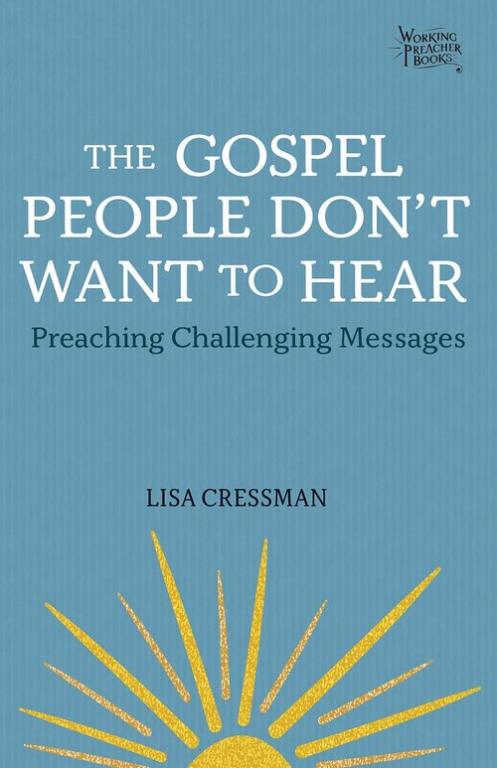
Lisa Cressman is an Episcopal priest and the Founding Steward of Backstory Preaching (BsP). BsP is an online community supporting preachers in their task of crafting sermons, with practical tips, mentoring, and continuing education programs. Since founding BsP in 2016, Cressman has worked with more than a thousand clergy through the Mentorship, Sermon Camps, and Collective/+ programs. BsP participants join from across the United States, Canada, Great Britain, Scotland, Australia, New Zealand, South Africa, and Madagascar to work with mentors on honing their craft. BsP has partnered with or offered programs to many dioceses, synods, and religious organizations like Faith+Lead, the Craft of Preaching, the Damascus Project (UCC), and numerous seminaries. Their ecumenical reach spans from Episcopal to Mennonite, including at least ten denominations.
All this to say that Cressman has her finger on the pulse of preaching and congregational life.
She hears the concerns preachers raise about struggling to preach within politically mixed or polarized congregations. Churches are under unrelenting societal pressures that strain even the strongest pastoral relationships. Her goal in The Gospel People Don’t Want to Hear is to equip preachers with tools to navigate these fraught waters and find ways to assure listeners that God is not only present, but actively involved in “creating a new sky.”
“The sky is falling. Let it!” That’s the gospel people don’t want to hear.
Cressman’s primary metaphor for the book is “falling skies”—but this is no Chicken Little squawking. This is the existential angst felt when loss, world-shattering change, and death either threaten or overtake us. The challenge for preachers is how to help their listeners think theologically about this very real fear, pain, and suffering that accompanies the vicissitudes of our lives. As Jesus said to his disciples, “For those who want to save their life will lose it, and those who lose their life for my sake, and for the sake of the gospel, will save it” (Mark 8:35). This is the gospel people don’t want to hear.
So how do we coax listeners to lower their arms from holding up this sky so that they can trust that “God is already painting a new sky, and we’re all invited to grab a brush” (xviii)?
Cressman notes that “a challenging sermon is determined by the relationship the listener has to their sky . . . something we say reminds listeners they’re holding up a sky they’re not yet ready to let go of” (13). The backlash to such a sermon can range from outrage to dismissiveness to attempts to silence the preacher. So the key is to find ways to proclaim the word of God so that people will actually listen instead of stopping their ears, stomping out the door, or clicking the little x in the corner of the screen.
Cressman’s book offers several tools to help preachers gauge the “brittleness” of their congregations. She explains that congregants only have so much bandwidth for hearing challenging sermons depending on how much conflict they are dealing with in their families, workplaces, communities, and the church itself. With prudence, preachers can assess how much force they can apply so that listeners bend but do not break from a prophetic sermon. Rather than seeing the prophetic task as concentrated in a single sermon, Cressman offers an approach that guides a congregation over time with varying degrees of strength depending on the experiences and circumstances of the listeners.
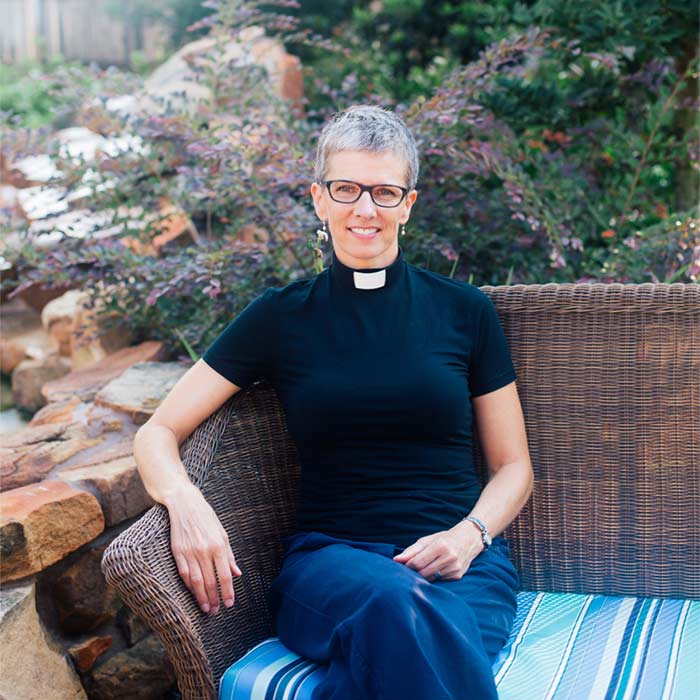
Lisa Cressman, Episcopal priest, author, and founder of Backstory Preaching
The key is building trust.
On page 39, Cressman suggests that preachers ask themselves what price their sermon is asking parishioners to pay, in terms of the “trust tax.” She uses radial maps to help preachers visualize the ripple effects of what the sermon is asking of listeners. The six areas of systems, well-being, livelihood, identity, role, and relationships can be impacted by the change we invite our listeners to undergo. If they trust the preacher, however, they will be more willing to be led where the Spirit is guiding them. In chapter 6, Cressman offers ten suggestions for preaching challenging messages that maintain these bonds of trust. Through empathy, authenticity, and rhetorical tactics that engage different perspectives, preachers can help listeners encounter the gospel people don’t want to hear that will, paradoxically, be life-giving and transformative.
For me as a white person, pages 77-79 were among the most important in the book.
Cressman asks the question that leads where preachers fear to tread: “how do we help white people through their feelings of loss?” (77). She acknowledges the necessity of dismantling white privilege that has become a “false god of superiority.” “White people’s fear for their safety is a deep-seated, emotional, irrational response . . . White people are not telling themselves a true story about their fears, but they believe the story they’re telling themselves nonetheless” (78). Yet, as she points out, “if we say their losses don’t matter, that it’s high time they lost power and should get over it, they’ll feel shamed, isolated, and backed into a corner – and, I fear, act out accordingly, as we see a growing number doing now” (78).
At the same time, she suggests that we need a “Truth and Lamentation Commission for people of color and all oppressed people to speak their truth, lament, and, because reconciliation demands it, tell their oppressors what ‘amendment of life’ requires” (79). Cressman insists, and I agree, that “we belong to a church that, on its holiest days, exhibits holy courage for hard conversations, tears, and divine courage to begin again” (79).
On Tuesday, Oct. 13 at 7:00 p.m. Eastern, I will be talking with Lisa Cressman in a live-streamed interview hosted by the Clergy Emergency League (https://www.facebook.com/ClergyEmergencyLeague).
We will discuss the challenges of preaching during this divisive election when many are concerned that democracy itself is on the line. We’ll consider how preachers can lend their voices and moral authority to the defense of democracy while navigating the minefields of politics in the pulpit.
In the meantime, I strongly encourage preachers to read The Gospel People Don’t Want to Hear as well as her other book, Backstory Preaching: Integrating Life, Spirituality, and Craft (2018). Cressman’s passion for the craft of preaching, her pastoral heart for the parishioners we serve, and her skills of leadership and writing are a timely and practical gift for the church!
If you’d like to purchase any of Lisa’s books, here’s a link with black-owned bookstores from which you can order online:
Read also:
What to Do When Parishioners Leave – Because of Politics
How to be a Christian (and a Pastor) After the Midterm Elections
Preaching Across Divides: Purple Zone Strategies for Pulpit and Public Square
Leah D. Schade is the Assistant Professor of Preaching and Worship at Lexington Theological Seminary in Kentucky and ordained in the ELCA. Dr. Schade does not speak for LTS or the ELCA; her opinions are her own. She is the author of Preaching in the Purple Zone: Ministry in the Red-Blue Divide (Rowman & Littlefield, 2019) and Creation-Crisis Preaching: Ecology, Theology, and the Pulpit (Chalice Press, 2015). She is also the co-editor of Rooted and Rising: Voices of Courage in a Time of Climate Crisis (Rowman & Littlefield, 2019). Her latest book, co-written with Jerry Sumney is Apocalypse When?: A Guide to Interpreting and Preaching Apocalyptic Texts (Wipf & Stock, 2020).
Twitter: @LeahSchade
Facebook: https://www.facebook.com/LeahDSchade/
Previous Post

September 27, 2020
Turn, then, and live! Ruth Bader Ginsburg and the choice for life
Next Post
October 20, 2020 Will Our ‘Night on Bald Mountain’ Ever End? Election 2020
Browse Our Archives
Select a Category Academy of Homiletics Addiction Advent AI (Artificial Intelligence) Animals Apocalypse Appalachia Ash Wednesday Baptism Bible Black Lives Matter Blade Runner Book review Children in church Christian Nationalism Christian/Islamic relations Christmas Church Clergy Climate change COVID-19 Creation Data Centers Death penalty Devotional Dialogue Doubt Earth Day Easter Ecofeminism EcoPreacher 1-2-3 ELCA ELCA Youth Gathering Election Environment/ecology Epiphany Faith Faith and Politics Feminism Film review Food Food and Faith Forgiveness Fracking Good Friday Good Omens Grief Gun violence Holy Humor Sunday Holy Week Howard Thurman ICE Immigration Indigenous wisdom Interview Jesus Kentucky Lafayette High School Marching Band Leadership Lent LGBTQIA+ Marching band Martin Luther Martin Luther King Jr. Mary Maundy Thursday Michael Sheen Mother of Jesus Nature New Year's Eve Palm Sunday Parables Pentecost Poem, Poetry Politics Poor People's Campaign Pop culture Prayers Preaching Progressive Christianity Public theology Purple Zone Racism and White Privilege Religion Religion and environment Religion and politics Religion and pop culture Religion and violence Rev. Nelson Rabell Gonzalez Sermons Spanish language resources for preaching Technology Thanksgiving Theological education theology Trees Trump Uncategorized Vegan War Women and religion Workshop Worship
Select a Month October 2026 September 2026 July 2026 June 2026 May 2026 April 2026 March 2026 February 2026 January 2026 December 2025 November 2025 October 2025 September 2025 May 2025 April 2025 March 2025 February 2025 January 2025 December 2024 November 2024 October 2024 September 2024 August 2024 July 2024 June 2024 May 2024 April 2024 March 2024 February 2024 January 2024 December 2023 November 2023 October 2023 September 2023 August 2023 July 2023 June 2023 May 2023 April 2023 March 2023 February 2023 January 2023 December 2022 November 2022 October 2022 August 2022 July 2022 June 2022 May 2022 April 2022 March 2022 February 2022 January 2022 December 2021 November 2021 October 2021 September 2021 August 2021 July 2021 June 2021 May 2021 April 2021 March 2021 January 2021 December 2020 November 2020 October 2020 September 2020 August 2020 July 2020 June 2020 May 2020 April 2020 February 2020 January 2020 December 2019 November 2019 October 2019 September 2019 August 2019 July 2019 June 2019 May 2019 April 2019 March 2019 January 2019 December 2018 November 2018 October 2018 September 2018 August 2018 July 2018 June 2018 May 2018 April 2018 March 2018 February 2018 January 2018 December 2017 November 2017 October 2017 September 2017 August 2017 July 2017 June 2017 May 2017 April 2017
Follow Us!
TAKE THE
Religious Wisdom Quiz
What was primary method of debt resolution in Biblical times?
Select your answer to see how you score.
Community service Public trial Fine payment Slavery
Books by This Author Books by Leah D. Schade
Related posts from EcoPreacher

Pastoral Wisdom for Responding to Sermon Pushback

Preaching About Climate Change: What Clergy Need Most

Making Space for Eco-Grief—and Hope—in Your Church
VBS Murder Skit: When a Church Teaches Children...
TRENDING AT PATHEOS Progressive Christian

What Being a Modern-Day Apostle Means to Me
In my last column, I discussed the ins and outs of modern-day...

Did Ancient China Once Worship the God of...
Across human history, a common thread weaves through the origins of the...

Love Your Neighbor – Including Earth-Kin: Lev. 19,...
God’s command to love your neighbor means acting in an ethical and...

Lead a Church Study of “Jesus and Lao...
Guest writer Jack Thomas (The Irreverent Reverend) reflects on leading his church...

Pastoral Wisdom for Responding to Sermon Pushback
Getting sermon pushback on your social justice sermon? Learn practical, Proverbs-based strategies...

Principles for Understanding the Apostolic Ministry Today
Whenever people discover that my formal ministry title is "apostle," as in...
view all Progressive Christian blogs
Ad-Free & Subscriber Log-In Subscription Support
- About Us
- 2026 Calendar
- Videos
- Podcasts
- Library of World Religions
- Faith In Media Tracker
- Advertise With Us
- Write for Us
- Privacy Policy
- Terms of Service
- Do Not Sell My Data
- Contact Us
- Radiant Digital
- Manage Newsletter Subscriptions
- Unsubscribe From Notifications
- Sitemap
Copyright 2008-2026, Patheos. All rights reserved.
Subscription Support Ad-Free & Subscriber Log-In
Follow Patheos