
BuddhistCatholicContemplativeEvangelicalGeneral ChristianHinduJewishLatter-day SaintMuslimNew VisionsProgressive Christian
Beliefs
- Buddhist
- Catholic
- Contemplative
- Evangelical
- General Christian
- Hindu
- Jewish
- Latter-day Saint
- More Voices
- Muslim
- New Visions
- Pagan
- Progressive Christian
Topics
- Religion News
- Food and Religion
- Sports and Religion
- Religious Art
- Religious Music and Entertainment
- Religious Events
- History and Religion
- Style and Religion
- Politics and Religion
- Women in Religion
- Recreation Outdoors and Religion
- Business Finance and Religion
- Careers Workplace and Religion
- Education and Religion
- Family Parenting and Religion
- Health Fitness and Religion
- Home and Religion
- Relationships and Religion
- Technology and Religion
- Travel and Religion
Columnists
- Buddhist Columnists
- Business Finance and Religion Columnists
- Careers Workplace and Religion Columnists
- Catholic Columnists
- Contemplative Columnists
- Education and Religion Columnists
- Evangelists Columnists
- Family Parenting and Religion Columnists
- General Christian Columnists
- Health Fitness and Religion Columnists
- Hindu Columnists
- History and Religion Columnists
- Home and Religion Columnists
- Jewish Columnists
- More Voices Columnists
- Latter Day Columnists
- Muslim Columnists
- New Visions Columnists
- Nonreligious Columnists
- Pagan Columnists
- Politics and Religion Columnists
- Progressive Columnists
- Recreation Outdoors and Religion Columnists
- Relationships and Religion Columnists
- Religion News Columnists
- Religious Art Columnists
- Religious Events Columnists
- Religious Music and Entertainment Columnists
- Sports and Religion Columnists
- Style and Religion Columnists
- Technology and Religion Columnists
- Travel and Religion Columnists
- Women in Religion Columnists
Resource Library
- 2026 Calendar
- Library of World Religions
- The 100 Most Holy Places on Earth
- Patheos Answers
- Podcasts
- Videos
- Faith Leaders Database
- Anglican Episcopalian
- Bahai
- Baptist
- Buddhism
- Christianity
- Confucianism
- Eastern Orthodoxy
- Hinduism
- Holiness and Pentecostal
- ISKCON
- Islam
- Judaism
- Lutheran
- Methodist
- The Church of Jesus Christ of Latter-day Saints
- New Age
- Paganism
- Presbytarian and Reformed
- Protestantism
- Religion Behind the Scenes
- Roman Catholic
- Scientology
- Shia Islam
- Sikhism
- Sufism
- Sunni Islam
- Taoism
- Zen
- See all religions
Research Tools
 Ad-Free & Subscriber Log-In Subscription Support
Ad-Free & Subscriber Log-In Subscription Support
Follow Patheos 

- Trending:
- Forgiveness
- |
- Marriage
- |
- Consciousness
- |
- Death Penalty
- |
- Election
- |
- Halloween

- Home
- Progressive Christian
- 6 Bible Texts for a Sermon on Racism & Why Your Church Needs to Hear It
6 Bible Texts for a Sermon on Racism & Why Your Church Needs to Hear It
Last updated on: August 6, 2020 at 9:00 am by Leah D. Schade
6 Bible Texts for a Sermon on Racism & Why Your Church Needs to Hear It 2020-08-06T09:00:31-04:00 Leah D. Schade
Patheos Explore the world's faith through different perspectives on religion and spirituality! Patheos has the views of the prevalent religions and spiritualities of the world.
So you want to preach a sermon on racism. Where to begin?

Photo by Jessica Da Rosa on Unsplash
“We don’t have a race problem in our church. Because we’re all white. And our community is primarily white. So it’s just not an issue for us.”
This is what a student once said to me in a preaching class I taught some time ago. We were discussing the necessity of addressing the issue of racism in America and how different biblical texts could be helpful in approaching the topic.
It deeply troubled me that this student could not see that the whiteness of his congregation was exactly why he needed to talk about racism in his preaching. Even after a lengthy class discussion, he seemed unconvinced. His privilege-blinders – and those of his congregation – were firmly cemented.
That conversation happened several years ago, before George Floyd’s murder by a policeman was captured on video and witnessed by the world. Perhaps my student’s response would be different today.
But given the fact that whiteness is so firmly embedded in American Christianity, maybe not.
According to Robert P. Jones, CEO and founder of Public Religion Research Institute (PRRI), racism cannot be separated from the cultural bedrock of the white church in America. “A close read of history reveals that we white Christians have not just been complacent or complicit,” he explains. “Rather, as the nation’s dominant cultural power, we have constructed and sustained a project of perpetuating white supremacy that has framed the entire American story.” [Read the full article here.]
Waking up to the reality of a racist church
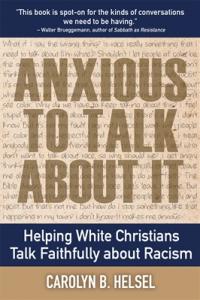
As the country is becoming more “woke” to the realities of racially-targeted police brutality and systemic racism, I’m hearing from many clergy who are leading discussions in their congregations about systemic racism. Fortunately, there are countless books available to help white congregations talk about that which has been taboo for so long – the “original sin” of America and the anti-blackness of American Christianity. Books like Anxious to Talk About It by Carolyn Helsel, Dear Church: A Love Letter from a Black Preacher to the Whitest Denomination in the US by Lenny Duncan, and White Fragility by Robin DeAngelo are just a few. The resources are there. And many clergy are finding the courage to use them in their preaching and teaching.
But I’m also hearing from clergy who are choosing not to open or enter the discussion of whiteness and blackness with their congregations. Either they are not interested, or they think their church is not interested in having discussions about race. Why? The reasons (or excuses) are endless. They think the topic is “too political.” Or they make some lame excuse about the word “race” not being in the Bible, and thus not a scriptural topic.
Or they’re just plain scared. Scared of getting negative push-back. Scared of losing members (or offerings). Even scared they may be forced out of their pulpits.
These fears are not unfounded.
By my count, the number of anecdotes of pastors being angrily confronted, emailed, or brought to task for bringing up racism in their sermons or teaching is increasing. As a seminary professor, researcher, and co-founder of a group called the Clergy Emergency League with more than 1,600 members, I’m hearing stories from students and pastors almost daily. They tell of heated council meetings. Nasty anonymous notes slid under the office door. And both passive aggressive as well as direct efforts to have them ousted.
There are also clergy reporting that they HAVE tried to hold a book study on race . . . but no one showed up. Or just a handful clicked the Zoom link to attend the discussion. “They are voting with their feet,” observed one minister. “The message they’re sending me is clear. We are NOT going to talk about racism in this church.”
Keep trying
Why is it important for white Protestant churches to do book studies and discussions about structural and systemic racism in America? Because the data shows that our churches are part of the problem and most Christians don’t even realize it. (Yes, even supposedly progressive Mainline Protestant denominations!)
Or, we do realize that we’re part of the problem, but are too afraid-ashamed-embarrassed-uncomfortable to talk about it.
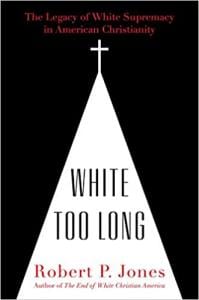
If your church has not yet had this conversation, Jones’s new book can be a resource for your preaching and teaching. White Too Long: The Legacy of White Supremacy in American Christianity (Simon & Schuster, 2020) provides a detailed analysis of the ways in which Christianity and white supremacy have been symbiotically formed in the U.S. Jones is a leading scholar and commentator on religion and politics, and his research drawn from surveys and an interrogation of the church’s racist history is both enlightening and disturbing. In survey after survey, the data shows that racism is higher among white Christians than those who are nonreligious.
This is not by accident, Jones argues. It’s by design. Because, as his data reveals, white Christian identity is dependent on NOT confronting the reality of the church’s racist past and present. Perhaps most alarming is his conclusion that “the relationship between holding racist views and white Christian identity is actually stronger among more frequent church attenders than among less frequent church attenders.”
How do I start the conversation?
Maybe you are convicted by these facts about race and white Christian identity, but you’re not sure how to begin the conversation in your church. Some clergy wonder how they can even attempt to address a systemic issue that is so overwhelming and sensitive.
One way to open the door is by sharing your own story about how you came to understand the issues around race in America.
Tell your story of gradual awakening and awareness.
How old were you when you first realized there was such a thing as race? What were the first conversations about race you remember around the family dinner table? What was it like to realize you were part of a racialized society, a racialized church? If you are white, how did it feel when you began thinking about your own privilege and whiteness?
(One caveat: be careful not to make yourself the hero of this story. The point is to model what it looks like to enter that vulnerable place of racial awakening and how to take the first steps. [Read: Hi, I’m Leah. I’m a Recovering Racist.])
If you are a person of color, sharing your story will be risky. Also, it’s likely that no matter the color of your skin, some will dismiss or want to excuse away what you have to say. But narrative is powerful. And those who have ears to hear will listen. Even those whose ears and minds are closed may yet have their hearts softened in the future, and the seed you planted may begin to sprout.
There are many biblical texts to help frame this narrative of awakening to a painful but necessary truth of the need for racial justice. Here are six possibilities.
6 Bible Texts for a Sermon on Racism
1 – Genesis Chapters 16 and 19. The story of Abraham and Sarah sending away their Egyptian slave-girl, Hagar, and her son Ishmael.
Enslaved to Israelite owners, Hagar was despised by Sarah, even as she was forced to bear Abraham’s son. How might we hear the story told from Hagar or Ishmael’s perspective? Could this open our eyes to the ways the dominant culture treats those of minoritized races and nationalities?
2 – The book of Exodus. The saga of ethnic tension between the Israelites and Egyptians.
The Egyptians built a society on the slave labor of the Israelites. When Moses insisted that “Hebrew Lives Matter,” Pharaoh unleashed his military forces on them. Yet they marched for their freedom, just as protesters across America are marching today. What can we learn from the Exodus story that applies to the American story? What is the “Promised Land” of racial equity to be which are being called?

Photo by Aarón Blanco Tejedor on Unsplash
3 – The book of Ruth. The story of two women from different cultures bound together in desperation and commitment.
When Ruth leaves her own people to go to Israel with her mother-in-law Naomi, she becomes a stranger in a strange land. Yet Naomi advised her daughter-in-law on how to make her way among the dominant culture. In turn, Ruth’s actions ensured their survival. What happens when women of different races and nationalities come together as allies, and what can we learn as we ally with women of color today?
4 – Mark 7:24 – 37, Matthew 15:21-28. The story of Jesus and the Syrophoenician/Canaanite woman whom he calls a “dog.”
This is an uncomfortable story highlighting ethnic tension that existed in Jesus’ day. It’s a tension which he seemed to perpetuate. Yet the woman’s courage and persistence in seeking healing for her child changed his mind. How might Jesus be modeling for us what it looks like to be confronted and changed by those of a different race/ethnicity? [Read: Calling People Dogs: Juxtaposing Jesus and Trump]
5 – John Chapter 9. Jesus chastising the religious leaders for their blindness.
When the religious leaders confront the man healed of his blindness, they accuse him of being “born in sin,” and refuse to learn from him (John 9:34). Later, Jesus rebukes them for their willful blindness. In what ways has the church refused to listen and learn about the systemic sin of racism? Why do we refuse to remove the blinders of our whiteness in order to see the healing power of God?
6 – Acts 9:1-19. Saul’s conversion experience where his eyes are opened to the pain of those he persecutes.
Saul truly believed he was doing God’s work when he presided over the stoning of Stephen. Many white Christians also believe they are doing God’s work, even as their churches have presided over a racist culture. What stories can you share of scales falling from eyes to see the truth of Jesus’s justice-seeking love? What is the conversion we are seeing today?
However you begin the conversation, starting is the most important thing.
The church has had a major role in the establishment and maintenance of racism in America. If we’re not talking about it, we’re perpetuating the problem. We have a moral obligation to find the courage to at least start this discussion in our congregations.
Even if just one person’s heart is convicted and moved to seek change, that is a first step which God can work with. Even if just two or three show up for the book study about racism in the church, Jesus has assured us that he will be with that small gathering. Don’t give up. Because you are doing the work of justice and peacemaking to which Jesus calls us. And in doing that work, Jesus promises that you will be blessed (Matthew 5:3-12).
Read also:
What is a ‘Prophet’s Reward? The Bad, The Ugly, and the Good
The Unbearable Whiteness of Preaching

Leah D. Schade is the Assistant Professor of Preaching and Worship at Lexington Theological Seminary in Kentucky and ordained in the ELCA. Dr. Schade does not speak for LTS or the ELCA; her opinions are her own. She is the author of Preaching in the Purple Zone: Ministry in the Red-Blue Divide (Rowman & Littlefield, 2019) and Creation-Crisis Preaching: Ecology, Theology, and the Pulpit (Chalice Press, 2015). She is also the co-editor of Rooted and Rising: Voices of Courage in a Time of Climate Crisis (Rowman & Littlefield, 2019).
Twitter: @LeahSchade
Facebook: https://www.facebook.com/LeahDSchade/
Previous Post

August 2, 2020
The Butterfly Effect – Harnessing the Wind of Tiny Wings
Next Post

August 12, 2020 The Canaanite Woman Took a Knee (Matt. 15:21-28)
Browse Our Archives
Select a Category Academy of Homiletics Addiction Advent AI (Artificial Intelligence) Animals Apocalypse Appalachia Ash Wednesday Baptism Bible Black Lives Matter Blade Runner Book review Children in church Christian Nationalism Christian/Islamic relations Christmas Church Clergy Climate change COVID-19 Creation Data Centers Death penalty Devotional Dialogue Doubt Earth Day Easter Ecofeminism EcoPreacher 1-2-3 ELCA ELCA Youth Gathering Election Environment/ecology Epiphany Faith Faith and Politics Feminism Film review Food Food and Faith Forgiveness Fracking Good Friday Good Omens Grief Gun violence Holy Humor Sunday Holy Week Howard Thurman ICE Immigration Indigenous wisdom Interview Jesus Kentucky Lafayette High School Marching Band Leadership Lent LGBTQIA+ Marching band Martin Luther Martin Luther King Jr. Mary Maundy Thursday Michael Sheen Mother of Jesus Nature New Year's Eve Palm Sunday Parables Pentecost Poem, Poetry Politics Poor People's Campaign Pop culture Prayers Preaching Progressive Christianity Public theology Purple Zone Racism and White Privilege Religion Religion and environment Religion and politics Religion and pop culture Religion and violence Rev. Nelson Rabell Gonzalez Sermons Spanish language resources for preaching Technology Thanksgiving Theological education theology Trees Trump Uncategorized Vegan War Women and religion Workshop Worship
Select a Month October 2026 September 2026 July 2026 June 2026 May 2026 April 2026 March 2026 February 2026 January 2026 December 2025 November 2025 October 2025 September 2025 May 2025 April 2025 March 2025 February 2025 January 2025 December 2024 November 2024 October 2024 September 2024 August 2024 July 2024 June 2024 May 2024 April 2024 March 2024 February 2024 January 2024 December 2023 November 2023 October 2023 September 2023 August 2023 July 2023 June 2023 May 2023 April 2023 March 2023 February 2023 January 2023 December 2022 November 2022 October 2022 August 2022 July 2022 June 2022 May 2022 April 2022 March 2022 February 2022 January 2022 December 2021 November 2021 October 2021 September 2021 August 2021 July 2021 June 2021 May 2021 April 2021 March 2021 January 2021 December 2020 November 2020 October 2020 September 2020 August 2020 July 2020 June 2020 May 2020 April 2020 February 2020 January 2020 December 2019 November 2019 October 2019 September 2019 August 2019 July 2019 June 2019 May 2019 April 2019 March 2019 January 2019 December 2018 November 2018 October 2018 September 2018 August 2018 July 2018 June 2018 May 2018 April 2018 March 2018 February 2018 January 2018 December 2017 November 2017 October 2017 September 2017 August 2017 July 2017 June 2017 May 2017 April 2017
Follow Us!
TAKE THE
Religious Wisdom Quiz
Who asked Jesus, "Lord, we don’t know where you are going, so how can we know the way?"
Select your answer to see how you score.
Philip Thomas John Peter
Books by This Author Books by Leah D. Schade
Related posts from EcoPreacher

Pastoral Wisdom for Responding to Sermon Pushback

Preaching About Climate Change: What Clergy Need Most

Making Space for Eco-Grief—and Hope—in Your Church
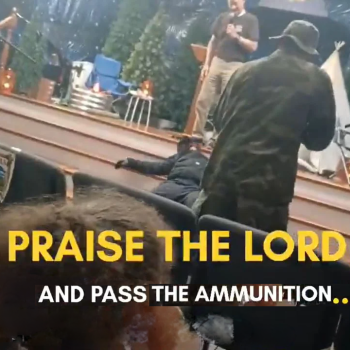
VBS Murder Skit: When a Church Teaches Children...
TRENDING AT PATHEOS Progressive Christian

What Being a Modern-Day Apostle Means to Me
In my last column, I discussed the ins and outs of modern-day...

Did Ancient China Once Worship the God of...
Across human history, a common thread weaves through the origins of the...

Love Your Neighbor – Including Earth-Kin: Lev. 19,...
God’s command to love your neighbor means acting in an ethical and...

Lead a Church Study of “Jesus and Lao...
Guest writer Jack Thomas (The Irreverent Reverend) reflects on leading his church...

Pastoral Wisdom for Responding to Sermon Pushback
Getting sermon pushback on your social justice sermon? Learn practical, Proverbs-based strategies...

Principles for Understanding the Apostolic Ministry Today
Whenever people discover that my formal ministry title is "apostle," as in...
view all Progressive Christian blogs
Ad-Free & Subscriber Log-In Subscription Support
- About Us
- 2026 Calendar
- Videos
- Podcasts
- Library of World Religions
- Faith In Media Tracker
- Advertise With Us
- Write for Us
- Privacy Policy
- Terms of Service
- Do Not Sell My Data
- Contact Us
- Radiant Digital
- Manage Newsletter Subscriptions
- Unsubscribe From Notifications
- Sitemap
Copyright 2008-2026, Patheos. All rights reserved.
Subscription Support Ad-Free & Subscriber Log-In
Follow Patheos