
BuddhistCatholicContemplativeEvangelicalGeneral ChristianHinduJewishLatter-day SaintMuslimNew VisionsProgressive Christian
Beliefs
- Buddhist
- Catholic
- Contemplative
- Evangelical
- General Christian
- Hindu
- Jewish
- Latter-day Saint
- More Voices
- Muslim
- New Visions
- Pagan
- Progressive Christian
Topics
- Religion News
- Food and Religion
- Sports and Religion
- Religious Art
- Religious Music and Entertainment
- Religious Events
- History and Religion
- Style and Religion
- Politics and Religion
- Women in Religion
- Recreation Outdoors and Religion
- Business Finance and Religion
- Careers Workplace and Religion
- Education and Religion
- Family Parenting and Religion
- Health Fitness and Religion
- Home and Religion
- Relationships and Religion
- Technology and Religion
- Travel and Religion
Columnists
- Buddhist Columnists
- Business Finance and Religion Columnists
- Careers Workplace and Religion Columnists
- Catholic Columnists
- Contemplative Columnists
- Education and Religion Columnists
- Evangelists Columnists
- Family Parenting and Religion Columnists
- General Christian Columnists
- Health Fitness and Religion Columnists
- Hindu Columnists
- History and Religion Columnists
- Home and Religion Columnists
- Jewish Columnists
- More Voices Columnists
- Latter Day Columnists
- Muslim Columnists
- New Visions Columnists
- Nonreligious Columnists
- Pagan Columnists
- Politics and Religion Columnists
- Progressive Columnists
- Recreation Outdoors and Religion Columnists
- Relationships and Religion Columnists
- Religion News Columnists
- Religious Art Columnists
- Religious Events Columnists
- Religious Music and Entertainment Columnists
- Sports and Religion Columnists
- Style and Religion Columnists
- Technology and Religion Columnists
- Travel and Religion Columnists
- Women in Religion Columnists
Resource Library
- 2026 Calendar
- Library of World Religions
- The 100 Most Holy Places on Earth
- Patheos Answers
- Podcasts
- Videos
- Faith Leaders Database
- Anglican Episcopalian
- Bahai
- Baptist
- Buddhism
- Christianity
- Confucianism
- Eastern Orthodoxy
- Hinduism
- Holiness and Pentecostal
- ISKCON
- Islam
- Judaism
- Lutheran
- Methodist
- The Church of Jesus Christ of Latter-day Saints
- New Age
- Paganism
- Presbytarian and Reformed
- Protestantism
- Religion Behind the Scenes
- Roman Catholic
- Scientology
- Shia Islam
- Sikhism
- Sufism
- Sunni Islam
- Taoism
- Zen
- See all religions
Research Tools
 Ad-Free & Subscriber Log-In Subscription Support
Ad-Free & Subscriber Log-In Subscription Support
Follow Patheos 

- Trending:
- Forgiveness
- |
- Marriage
- |
- Consciousness
- |
- Death Penalty
- |
- Election
- |
- Halloween

- Home
- Progressive Christian
- Throwing Your Bag on the Train: Heart Follows Treasure
Throwing Your Bag on the Train: Heart Follows Treasure
Last updated on: August 7, 2019 at 8:14 pm by Leah D. Schade
Throwing Your Bag on the Train: Heart Follows Treasure 2019-08-07T20:14:25-04:00 Leah D. Schade
Patheos Explore the world's faith through different perspectives on religion and spirituality! Patheos has the views of the prevalent religions and spiritualities of the world.
Throwing Your Bag on the Train: Heart Follows Treasure
When I was an associate pastor many years ago at Reformation Lutheran Church in Media, Pa., I had an enlightening conversation with the senior pastor, Larry Smoose, about Jesus’ teaching in Luke 12:32-34.
32 “Do not be afraid, little flock, for it is your Father’s good pleasure to give you the kingdom. 33 Sell your possessions, and give alms. Make purses for yourselves that do not wear out, an unfailing treasure in heaven, where no thief comes near and no moth destroys. 34 For where your treasure is, there your heart will be also.
We talked about how most people misread this simple text. What we hear is: your money follows your heart.
But that’s not what Jesus said. He didn’t say, “Where your heart is, there should your treasure is also.”
What’s the difference?
Larry explained with an illustration.

Throw your bag on the train! Heart follows treasure. Photo credit: public domain
Did you ever see a scene in an old-time movie where someone is chasing after a fast-moving train, trying to get on? But they’re carrying a bag and they know they can’t make the jump while holding onto that bag. The bag, of course, contains what they treasure. Maybe it’s money. Or gold. Or something precious to them. What do they do with the bag?
They throw the bag on the train first. Then they jump on the train.
Heart follows treasure.
Cool illustration, right?
I shared this image recently with a group of students in the ELCA’s TEEM program who were taking a class with me on preaching (Theological Education for Emerging Ministries). We were discussing how to use the “dialogical lens” in a sermon in order to open up conversation on difficult topics in a biblical text.
One student, Barb DeBord, is a Lay Minister for Shanesville Lutheran Church and St. John’s Lutheran Baltic in Ohio, and planned to preach on this text. When I shared this story about throwing your bag on the train, a lightbulb went on for her.
“Ah, so what you do with the treasure God has given to you will determine where your heart will end up. Not the reverse,” she said.
Bingo.
Where you spend your treasure, there your heart will follow.
Her challenge, then, was to open the door to a dialogue within her congregation to help them rethink where our treasures lie so that we will consider how our hearts are aligned with the will of God.
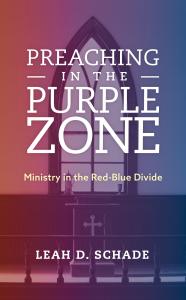
In my book Preaching in the Purple Zone: Ministry in the Red-Blue Divide (Rowman & Littlefield, 2019), I explain how to use the “dialogical lens” for reading and interpreting scripture. [You can also read about the 6 Steps for Using a Dialogical Lens here.] Here’s a quick review of the steps.
Six Steps for Using the Dialogical Lens
Point out the dialogical aspects of the passage.
Determine what’s at stake.
Identify the values.
Explain how God, Jesus, and/or the Holy Spirit is active.
Recognize what the dialogue is teaching us.
Suggest possible next steps.
Like the reading in Luke 12:13-21 in the previous Sunday for this lectionary cycle, we need to understand verses 32-34 in terms of the layers of conversation between Jesus and his listeners that enfold this teaching. This is because Jesus’ teaching means something for our personal lives. It means something for our families, our community, and our society for how we think about money and possessions.
As I explain in my sermon on the Parable of the Rich Fool, reading this text using a dialogical lens shows us there are three other groups of people listening to this conversation. At the beginning of this chapter, we see that there is a crowd of thousands of people who have gathered to hear Jesus (12:1). Within that crowd are his disciples, and he is teaching them as the crowd listens.
But there is a third group – the Pharisees and lawyers whom Jesus has been criticizing in the previous chapter.
In chapter 11, he accuses them of neglecting justice (11:42) and “loading people with burdens hard to bear” while they themselves “do not lift a finger to ease them” (11:46).
So when Jesus is telling his disciples to sell their possessions and give alms, this is aimed at the crowd and especially the Pharisees. The writer of Luke’s Gospel also intends his readers to be part of Jesus’s listeners. By extension, this includes us. And it raises important questions for us as a church as we think about issues around money, possessions, wealth distribution in society, greed, and how to be a Christian community in the midst of it all.
In her sermon, Barb points out that that Jesus’s teaching about heart following treasure isn’t necessarily prescriptive. It’s descriptive.
“It’s a simple, eloquent commentary on human nature. Christ is saying to us — this is how it works, folks. Heart follows treasure.”
She then models self-reflection by describing what she has observed about her own buying patterns and how they influence her heart, particularly her loyalty, when it comes to heart following treasure.
When we give a vendor or product our money, in exchange the vendor or product also lays a claim on our loyalty. For example, let’s say you buy an expensive smart phone. At the point of purchase, you have choices: iPhone, Blackberry, Galaxy, etc.
Once you make your choice, you put down your money – your treasure – and you turn it on.
From that moment on, the company makes a powerful claim on your loyalty.
And unless you have a really bad experience, there is a good chance you will be back for more.
When you spend a significant amount of money on a consumer product you don’t want it to be a bad investment. So, you tell yourself, “I made a good choice. A wise decision.”
In fact, you say, “I would make this choice again if I had it to do all over again. And, in fact, I will do it again. In two years, when my contract is up, I’ll buy another.”
Your friend, who bought a different smart phone, tries to convince you that she made the right choice. Because she is a consumer, too, and her smart phone is claiming her loyalty, also. But at the end of the conversation, you and your friend are still loyal to your respective choices.
Heart follows treasure.

Photo credit: Chris Palmer. https://www.flickr.com/photos/cmpalmer/99806770/
All of this is to say that there are very powerful forces at work around treasure and hearts. And as with all powerful forces in our lives, we need to understand how they work. What’s at stake for them? What’s at stake for us? And what happens when our heart follows something that takes us away from God?
Further, if we do decide to follow Jesus’s teaching to “make purses for ourselves that do not wear out, an unfailing treasure in heaven, where no thief comes near and no moth destroys,” how do we do that?
In his book Money and Possessions, Walter Brueggemann points out that “the dominant economy is grounded in fear. . . The mantra of scarcity tells us that we do not yet have enough. We have not yet done enough. We are not yet enough! Television ads remind us that we do not yet have the product that will make us secure and happy . . . not yet. The antidote to such drivenness is to disengage from such an ideology” (193-194).
That’s why Jesus tells his disciples (within earshot of the crowd and Pharisees): “Sell your possessions, and give alms.”
What?!? Is this really what Jesus wants us to do?
No doubt, this is a difficult teaching. The thing is, it’s going to take a radical reorientation to break free from an ideology that is premised on “not-enoughness.” What might that look like for you? For your church?
These are questions a congregation can wrestle with as we discern what it means to follow Jesus in the midst of a commodifying and accumulating society.
A preacher might invite their congregation to engage in deliberative dialogue using one of the nonpartisan issue guides from the National Issues Forum Institute. Guides like:
A Nation in Debt: How Can We Pay the Bills?
Making Ends Meet: How Should We Spread Prosperity And Improve Opportunity?
Sustaining Ourselves: How Can We Best Meet the Needs of Today and Tomorrow?
Or the preacher may want to offer a study on the relationship between money and faith using materials from their denomination. I know of one church that has started a small group for people wanting to be accountable to each other in living more simply, freeing themselves of their obsession with “stuff,” and finding deeper joy and meaning in their lives in the process. In a sermon by one of my other students, he told the story of a man transitioning to a retirement village and how his family and friends helped him release the things he owned – that were actually owning him.
In her sermon, Barb will be sharing a story of a friend who experienced a transformation by heeding Jesus’ teaching that heart follows treasure.
Her friend decided she want to be a more generous, giving person. So she took Jesus’ teaching to heart (pun intended). She started putting her treasure where she wanted her heart to be.
She started by giving bigger tips to service people in restaurants and hotels. But this led her to ask why many of these people struggle with working two, sometimes three jobs. She started asking questions about the businesses she supported, and whether her heart was following her treasure in a way that aligned with her values. Values like fair and safe working conditions. Protecting the environment. Giving equal pay to females and males. Investing in the communities in which they do business. Now she is thinking about where she should put her money in order to make changes at the systemic level, not just on the restaurant table.
As you can see, there are any number of directions a sermon could take when using the dialogical lens. It all depends on your context.
And, if you noticed, this entire post wove in dialogue at multiple points.
It began with the conversation between me and my pastoral mentor. It then transitioned to the conversation I had with a student preacher. From there, I explained the levels of conversation happening within the biblical text, and, by extension with the readers of the text. After sharing Barb’s internal dialogue about money and loyalty, I engaged with the work of Walter Brueggemann, bringing yet another voice into the conversation. Then, after offering suggestions for how a preacher might open dialogue in their own congregation about this challenging topic, I shared Barb’s story about her friend’s discernment process around heart following treasure.
Thus, form mirrors content. Dialogue was modeled within, through, and by the article itself.
And since this is a blog that allows comments, we can continue the conversation! How are you thinking of preaching on this text of heart following treasure? How have you done so in the past? In what ways have you opened up dialogue within your congregation about money, possessions, and following Jesus? How do you see God working within the text, within your community, and within our dialogue? The conversation is open – you’re welcome to join in!

Leah D. Schade is the Assistant Professor of Preaching and Worship at Lexington Theological Seminary in Kentucky. She is the author of Preaching in the Purple Zone: Ministry in the Red-Blue Divide (Rowman & Littlefield, 2019) and Creation-Crisis Preaching: Ecology, Theology, and the Pulpit (Chalice Press, 2015).
Twitter: @LeahSchade
Facebook: https://www.facebook.com/LeahDSchade/
Read also:
Using a ‘Dialogical Lens’ for Scripture and Preaching
Owning Stuff or Stuff Owning Us? The Rich Fool in Luke Chapter 12
Previous Post

August 6, 2019
What Toni Morrison Taught Me About Racism in Her Book 'Beloved'
Next Post

August 14, 2019 A Fiery, Divisive Jesus? Luke 12:49-56 with Dialogical Lens
Browse Our Archives
Select a Category Academy of Homiletics Addiction Advent AI (Artificial Intelligence) Animals Apocalypse Appalachia Ash Wednesday Baptism Bible Black Lives Matter Blade Runner Book review Children in church Christian Nationalism Christian/Islamic relations Christmas Church Clergy Climate change COVID-19 Creation Data Centers Death penalty Devotional Dialogue Doubt Earth Day Easter Ecofeminism EcoPreacher 1-2-3 ELCA ELCA Youth Gathering Election Environment/ecology Epiphany Faith Faith and Politics Feminism Film review Food Food and Faith Forgiveness Fracking Good Friday Good Omens Grief Gun violence Holy Humor Sunday Holy Week Howard Thurman ICE Immigration Indigenous wisdom Interview Jesus Kentucky Lafayette High School Marching Band Leadership Lent LGBTQIA+ Marching band Martin Luther Martin Luther King Jr. Mary Maundy Thursday Michael Sheen Mother of Jesus Nature New Year's Eve Palm Sunday Parables Pentecost Poem, Poetry Politics Poor People's Campaign Pop culture Prayers Preaching Progressive Christianity Public theology Purple Zone Racism and White Privilege Religion Religion and environment Religion and politics Religion and pop culture Religion and violence Rev. Nelson Rabell Gonzalez Sermons Spanish language resources for preaching Technology Thanksgiving Theological education theology Trees Trump Uncategorized Vegan War Women and religion Workshop Worship
Select a Month October 2026 September 2026 July 2026 June 2026 May 2026 April 2026 March 2026 February 2026 January 2026 December 2025 November 2025 October 2025 September 2025 May 2025 April 2025 March 2025 February 2025 January 2025 December 2024 November 2024 October 2024 September 2024 August 2024 July 2024 June 2024 May 2024 April 2024 March 2024 February 2024 January 2024 December 2023 November 2023 October 2023 September 2023 August 2023 July 2023 June 2023 May 2023 April 2023 March 2023 February 2023 January 2023 December 2022 November 2022 October 2022 August 2022 July 2022 June 2022 May 2022 April 2022 March 2022 February 2022 January 2022 December 2021 November 2021 October 2021 September 2021 August 2021 July 2021 June 2021 May 2021 April 2021 March 2021 January 2021 December 2020 November 2020 October 2020 September 2020 August 2020 July 2020 June 2020 May 2020 April 2020 February 2020 January 2020 December 2019 November 2019 October 2019 September 2019 August 2019 July 2019 June 2019 May 2019 April 2019 March 2019 January 2019 December 2018 November 2018 October 2018 September 2018 August 2018 July 2018 June 2018 May 2018 April 2018 March 2018 February 2018 January 2018 December 2017 November 2017 October 2017 September 2017 August 2017 July 2017 June 2017 May 2017 April 2017
Follow Us!
TAKE THE
Religious Wisdom Quiz
What city was Paul heading to when he encountered Jesus?
Select your answer to see how you score.
Rome Antioch Damascus Jerusalem
Books by This Author Books by Leah D. Schade
Related posts from EcoPreacher

Pastoral Wisdom for Responding to Sermon Pushback

What Matt. 21:23-32 Teaches About Integrity In An...

Preaching About Climate Change: What Clergy Need Most

Cancer Alley Prophets: Jeremiah 20, Matthew 10
TRENDING AT PATHEOS Progressive Christian

What Being a Modern-Day Apostle Means to Me
In my last column, I discussed the ins and outs of modern-day...

Did Ancient China Once Worship the God of...
Across human history, a common thread weaves through the origins of the...

Love Your Neighbor – Including Earth-Kin: Lev. 19,...
God’s command to love your neighbor means acting in an ethical and...

Lead a Church Study of “Jesus and Lao...
Guest writer Jack Thomas (The Irreverent Reverend) reflects on leading his church...

Pastoral Wisdom for Responding to Sermon Pushback
Getting sermon pushback on your social justice sermon? Learn practical, Proverbs-based strategies...

Principles for Understanding the Apostolic Ministry Today
Whenever people discover that my formal ministry title is "apostle," as in...
view all Progressive Christian blogs
Ad-Free & Subscriber Log-In Subscription Support
- About Us
- 2026 Calendar
- Videos
- Podcasts
- Library of World Religions
- Faith In Media Tracker
- Advertise With Us
- Write for Us
- Privacy Policy
- Terms of Service
- Do Not Sell My Data
- Contact Us
- Radiant Digital
- Manage Newsletter Subscriptions
- Unsubscribe From Notifications
- Sitemap
Copyright 2008-2026, Patheos. All rights reserved.
Subscription Support Ad-Free & Subscriber Log-In
Follow Patheos