
BuddhistCatholicContemplativeEvangelicalGeneral ChristianHinduJewishLatter-day SaintMuslimNew VisionsProgressive Christian
Beliefs
- Buddhist
- Catholic
- Contemplative
- Evangelical
- General Christian
- Hindu
- Jewish
- Latter-day Saint
- More Voices
- Muslim
- New Visions
- Pagan
- Progressive Christian
Topics
- Religion News
- Food and Religion
- Sports and Religion
- Religious Art
- Religious Music and Entertainment
- Religious Events
- History and Religion
- Style and Religion
- Politics and Religion
- Women in Religion
- Recreation Outdoors and Religion
- Business Finance and Religion
- Careers Workplace and Religion
- Education and Religion
- Family Parenting and Religion
- Health Fitness and Religion
- Home and Religion
- Relationships and Religion
- Technology and Religion
- Travel and Religion
Columnists
- Buddhist Columnists
- Business Finance and Religion Columnists
- Careers Workplace and Religion Columnists
- Catholic Columnists
- Contemplative Columnists
- Education and Religion Columnists
- Evangelists Columnists
- Family Parenting and Religion Columnists
- General Christian Columnists
- Health Fitness and Religion Columnists
- Hindu Columnists
- History and Religion Columnists
- Home and Religion Columnists
- Jewish Columnists
- More Voices Columnists
- Latter Day Columnists
- Muslim Columnists
- New Visions Columnists
- Nonreligious Columnists
- Pagan Columnists
- Politics and Religion Columnists
- Progressive Columnists
- Recreation Outdoors and Religion Columnists
- Relationships and Religion Columnists
- Religion News Columnists
- Religious Art Columnists
- Religious Events Columnists
- Religious Music and Entertainment Columnists
- Sports and Religion Columnists
- Style and Religion Columnists
- Technology and Religion Columnists
- Travel and Religion Columnists
- Women in Religion Columnists
Resource Library
- 2026 Calendar
- Library of World Religions
- The 100 Most Holy Places on Earth
- Patheos Answers
- Podcasts
- Videos
- Faith Leaders Database
- Anglican Episcopalian
- Bahai
- Baptist
- Buddhism
- Christianity
- Confucianism
- Eastern Orthodoxy
- Hinduism
- Holiness and Pentecostal
- ISKCON
- Islam
- Judaism
- Lutheran
- Methodist
- The Church of Jesus Christ of Latter-day Saints
- New Age
- Paganism
- Presbytarian and Reformed
- Protestantism
- Religion Behind the Scenes
- Roman Catholic
- Scientology
- Shia Islam
- Sikhism
- Sufism
- Sunni Islam
- Taoism
- Zen
- See all religions
Research Tools
 Ad-Free & Subscriber Log-In Subscription Support
Ad-Free & Subscriber Log-In Subscription Support
Follow Patheos 

- Trending:
- Forgiveness
- |
- Marriage
- |
- Consciousness
- |
- Death Penalty
- |
- Election
- |
- Halloween

- Home
- Progressive Christian
- Sometimes Following Jesus Means NOT Being Neutral (Guest Sermon)
Sometimes Following Jesus Means NOT Being Neutral (Guest Sermon)
Last updated on: August 19, 2019 at 8:42 am by Leah D. Schade
Sometimes Following Jesus Means NOT Being Neutral (Guest Sermon) 2019-08-19T08:42:59-04:00 Leah D. Schade
Patheos Explore the world's faith through different perspectives on religion and spirituality! Patheos has the views of the prevalent religions and spiritualities of the world.
Marilyn Matevia is an administrative assistant in the bishop’s office of the Northeastern Ohio Synod of the ELCA and a student in the TEEM program (Theological Education for Emerging Ministries.) She recently took a preaching class with me where she learned to use a “dialogical lens” in reading scripture and sermons. As she prepared this sermon on Luke 12:49-59, she discerned that sometimes following Jesus means NOT being neutral. [You can learn more about the dialogical lens in my book Preaching in the Purple Zone: Ministry in the Red-Blue Divide.]

Notice how her sermon models prophetic self-critique and invites conversation. You can also watch a video of her sermon here. Take note of her delivery style – engaging and disarming; diplomatic yet firm; courageous yet humble. She preached this sermon on August 18, 2019, at Good Soil Lutheran Ministries in Rocky River, Ohio.
Sometimes Following Jesus Means NOT Being Neutral
by Marilyn Matevia
Some of you know that I work for the synod office – the regional outpost of the national ELCA. And maybe you also know that we recently concluded the annual synod assembly, our yearly gathering of voting members representing many of the congregations of our synod. One of my post-assembly chores is to summarize the feedback survey results and share them with the synod staff. Without fail, we get a handful of complaints from people when we have workshops or speakers who talk about justice. Of course, this being the church, and our guiding document being the Bible, most of our workshops and speakers will eventually mention justice in some form.
We probably each have a different interpretation of what “justice” means (it’s kind of an inkblot indicator of our own beliefs). But our assembly speakers and workshop leaders get specific. They might talk about our Christian duty to treat refugees with dignity. Or maybe they’ll talk about the millions of people in the United States (and the billions around the world) who are not getting enough to eat. Perhaps they talk about how sources of air and water pollution tend to concentrate near our lower-income communities.
All of these topics have something in common, which is… injustice.
They share in common a systemic failure to treat all human beings fairly, and with compassion and dignity. (Sometimes speakers get extra-radical and talk about how we treat other animals and the environment, too, but let’s just concentrate on the human element for now.)
What do you think our survey respondents say when they complain about these topics? Maybe some of you are thinking it right now, your very selves.
They complain that the speakers, or topics, are … “too political.” Or that they are showing a “political bias.”
I’m going to go out on a limb here and ask a question. Should Christians not have a “bias” about hunger? Is it possible to be neutral about starvation? For that matter, is it possible to be neutral about – say – lead pollution in public housing, or race- or sex-based wage differences, or indefinite detentions in overcrowded cages?
Staking a “neutral” stance on these issues ironically reveals a different kind of bias. One that is uncomfortable to admit. It’s a bias that assumes some people are more valuable than others, and some are more deserving of misfortune and mistreatment than others.
I thought about my own biases when I read our Gospel lesson this week.
One in particular came to mind: my image of Jesus as kind of a peacenik. I have a tendency to picture Jesus as a peace-loving, soft-spoken teacher with a sheen of hallowed light around him bathing everyone in his gentle, loving presence. That’s not what we see in this passage.
For a little background on this text, it’s good to call to mind the state of the world when Jesus was walking it. The vast majority of the Palestinian population – his people – were poor or working class. 70 percent, according to one study.[1] 1 in 10 people were in constant danger of starvation. Slavery was rampant. Some slaves were prisoners of war, others were prisoners of debt, who sold themselves to work off what they owed.
This was the world in which Jesus launched his ministry – bringing good news to the poor, freedom to captives, sight to the blind, and proclaiming the year of the Lord’s favor.[2]
Those aren’t my words, of course – those are Luke’s, from earlier in the book – chapter 4. And importantly the phrase “year of the Lord’s favor” typically refers to the jubilee – when (every 50 years) debts are forgiven, prisoners are freed, farm fields and animals are allowed to rest, and the fruits of labor are shared.
Here comes Jesus, promising RELIEF from all these forms of oppression – once in a lifetime relief, once for ALL time relief.
But that new world won’t come easily. As Jesus says in Luke’s account: “I have come to bring fire on the earth… Do you think I came to bring peace…? No, I tell you, but division.” That kind of dramatic change will take a refining, purifying fire. Luke said so earlier in his gospel, putting the words in the mouth of John the Baptist.
Jesus brings a refining, purifying fire that burns away the social orders and habits and practices that create permanent injustice, permanent unfairness.

Wildfire. Public domain.
And it will cause divisions: pitting a new vision against an old, fossilized one. Dividing those who cling to and benefit from the old power structures from those who want to usher in the new order, the kingdom of God. Pitting – as Jesus says – father against son, mother against daughter…
Heavens to mergatroid, as my grandmother would say. Why would Jesus say something so contentious? So divisive?
Where is my patient, gentle, peacenik Jesus?
This text challenges my bias about Jesus, and about what it means to “go and do likewise!”[3] – as Luke says elsewhere in this gospel.
Well, if we sat together and studied the gospel of Luke, start to finish, we would be reminded that Luke sees Jesus as the agent of God’s justice.[4] And that Luke understands justice in tangibles, like how society treats the vulnerable and handles money. And how society awards status and access. No murky inkblot prints here; he’s very specific.
We would also see that Luke believes certain things get in the way of following Jesus: wealth, status, fear. And, I would add, an unwillingness to wrestle with these difficult issues.[5] So he very clearly links following Jesus with doing justice.
And sometimes – maybe most of the time – following Jesus means not being neutral.
The Benedictine sister Joan Chittister has a new book out, called The Time is Now. In it she writes powerful words.
Yes, the Christian ideal is personal goodness, of course, but personal goodness requires that we be more than pious, more than faithful to the system, more than mere card-carrying members of the Christian community. (Our faith demands), as well, that we each be so much a prophetic presence / that our corner of the world becomes a better place because we have been there.[6]
Well, that’s kind of intimidating. She’s asking for prophets and there’s nobody here but us chickens. (Pun intended.)
But Jesus brought the hammer down in those last few verses of our text. I’m paraphrasing, but he basically says, “You know how to read the clouds to predict weather. You do it all the time. You’re smart and observant. Yet you act like you don’t know what is just and what is unjust, or how to DO justice. Do what you know is right.”
This means that I have to let go of my bias. I have to NOT be neutral.
There is only one sense in which a topic like this is “political.” The word comes from the Greek term, polis, which is basically a gathering of people. It’s a community – a city and its citizens. As the Catholic priest Father Michael Marsh wrote in a sermon several years ago, the “most basic concern (of politics) is …the ordering of relationships. It’s about the way we live together and how we get along. It’s about people. (And) Those concerns are central to the practice of Christianity.” He says, “We believe that God has something to say about how we live and the way we relate to one another. …
“In that regard, the incarnation (itself), the embodiment of God in humanity, is a deeply profound political statement.”
What might it look like for us to wrestle with these questions? To release our bias? To let go of our quiet, gentle Jesus and follow the Jesus of justice?
In churchwide workshops they often teach a group exercise called “asset mapping.” This involves figuring out what resources and talents or skill sets an organization has and how they might address some congregational or community need. Our church can do this together. We can read the signs of the times, read the clouds, read and watch the news. We can talk to neighbors to figure out what’s needed, and what we can bring to fill the need. Maybe you already have your own suggestions for how we might address these needs. We could talk about them today, over coffee, after the service.
But if you’re like me, you may also squirm a little when you think about our little church addressing these needs.
So we should ask ourselves: what makes us uncomfortable? What are we UNWILLING to do or be? And why are we unwilling? We need to really needle ourselves about the “why.” Are the reasons practical? Logistical? Financial? Emotional? I’m talking to myself right now.
A friend of mine from grad school was arrested a few weeks ago. She was NOT being neutral! She was one of 70 Catholic peace activists arrested in the Senate building in Washington DC for “unlawfully demonstrating” against the mistreatment of migrants and asylum-seekers in immigration detention centers. I’m asking myself: would I be willing to go that far? And if not, WHY not? What could be more important than insisting on compassion and dignity for my fellow human beings?
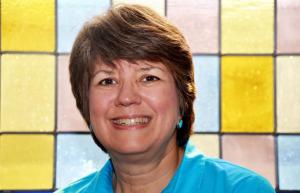
Marilyn Matevia, TEEM student, Ohio
The gospel of Luke makes this point clear, through his account of Jesus’s ministry:
No one is outside the scope of God’s justice.[8]
But it will take work – sometimes difficult and disruptive work – to get everybody in. Jesus empowers his followers – then and now – to envision a different reality. This new reality is what we call the kingdom of God. And when we envision it, when we can see it, then we can build it, right here in our corner of the world.
So be it. Amen.

Leah D. Schade is the Assistant Professor of Preaching and Worship at Lexington Theological Seminary in Kentucky. She is the author of Preaching in the Purple Zone: Ministry in the Red-Blue Divide (Rowman & Littlefield, 2019) and Creation-Crisis Preaching: Ecology, Theology, and the Pulpit (Chalice Press, 2015).
Twitter: @LeahSchade
Facebook: https://www.facebook.com/LeahDSchade/
Read also:
A Fiery, Divisive Jesus? Luke 12:49-56 Through a Dialogical Lens
Using a Dialogical Lens for Scripture and Preaching
[1] “Introducing Luke,” by Babu Immanuel Vankataraman, God’s Justice: the Flourishing of Creation and the Destruction of Evil (NIV Study Bible, Zondervan, 2016), 1441.
[2] Luke 4:18-21
[3] Luke 10:37, NRSV
[4] Vankataraman, 1442.
[5] Shoot… I think this insight comes from Matt Skinner’s column on the text; I will try to relocate.
[6] Joan Chittister, The Time is Now: A Call to Uncommon Courage (Convergent, 2019), 27. She used the phrase “Christianity requires.” I Lutheranized it.
[7] https://interruptingthesilence.com/2016/01/25/the-politics-of-jesus-a-sermon-on-luke-414-21/; parenthetical additions mine.
[8] NIV God’s Justice, 1441.
Previous Post

August 14, 2019
A Fiery, Divisive Jesus? Luke 12:49-56 with Dialogical Lens
Next Post

August 22, 2019 Breach-Repairers: Preaching Isaiah 58 Using Dialogical Lens
Browse Our Archives
Select a Category Academy of Homiletics Addiction Advent AI (Artificial Intelligence) Animals Apocalypse Appalachia Ash Wednesday Baptism Bible Black Lives Matter Blade Runner Book review Children in church Christian Nationalism Christian/Islamic relations Christmas Church Clergy Climate change COVID-19 Creation Data Centers Death penalty Devotional Dialogue Doubt Earth Day Easter Ecofeminism EcoPreacher 1-2-3 ELCA ELCA Youth Gathering Election Environment/ecology Epiphany Faith Faith and Politics Feminism Film review Food Food and Faith Forgiveness Fracking Good Friday Good Omens Grief Gun violence Holy Humor Sunday Holy Week Howard Thurman ICE Immigration Indigenous wisdom Interview Jesus Kentucky Lafayette High School Marching Band Leadership Lent LGBTQIA+ Marching band Martin Luther Martin Luther King Jr. Mary Maundy Thursday Michael Sheen Mother of Jesus Nature New Year's Eve Palm Sunday Parables Pentecost Poem, Poetry Politics Poor People's Campaign Pop culture Prayers Preaching Progressive Christianity Public theology Purple Zone Racism and White Privilege Religion Religion and environment Religion and politics Religion and pop culture Religion and violence Rev. Nelson Rabell Gonzalez Sermons Spanish language resources for preaching Technology Thanksgiving Theological education theology Trees Trump Uncategorized Vegan War Women and religion Workshop Worship
Select a Month October 2026 September 2026 July 2026 June 2026 May 2026 April 2026 March 2026 February 2026 January 2026 December 2025 November 2025 October 2025 September 2025 May 2025 April 2025 March 2025 February 2025 January 2025 December 2024 November 2024 October 2024 September 2024 August 2024 July 2024 June 2024 May 2024 April 2024 March 2024 February 2024 January 2024 December 2023 November 2023 October 2023 September 2023 August 2023 July 2023 June 2023 May 2023 April 2023 March 2023 February 2023 January 2023 December 2022 November 2022 October 2022 August 2022 July 2022 June 2022 May 2022 April 2022 March 2022 February 2022 January 2022 December 2021 November 2021 October 2021 September 2021 August 2021 July 2021 June 2021 May 2021 April 2021 March 2021 January 2021 December 2020 November 2020 October 2020 September 2020 August 2020 July 2020 June 2020 May 2020 April 2020 February 2020 January 2020 December 2019 November 2019 October 2019 September 2019 August 2019 July 2019 June 2019 May 2019 April 2019 March 2019 January 2019 December 2018 November 2018 October 2018 September 2018 August 2018 July 2018 June 2018 May 2018 April 2018 March 2018 February 2018 January 2018 December 2017 November 2017 October 2017 September 2017 August 2017 July 2017 June 2017 May 2017 April 2017
Follow Us!
TAKE THE
Religious Wisdom Quiz
True or False: God created the world in seven days.
Select your answer to see how you score.
TRUE FALSE
Books by This Author Books by Leah D. Schade
Related posts from EcoPreacher

Why Christians Have a Sacred Duty to Vote:...

Pastoral Wisdom for Responding to Sermon Pushback

"Render Unto Caesar": Faith, Politics, and Elections

What Matt. 21:23-32 Teaches About Integrity In An...
TRENDING AT PATHEOS Progressive Christian

Why Christians Have a Sacred Duty to Vote:...
The Bible offers strong support for the sacred duty to vote. Here...

What Being a Modern-Day Apostle Means to Me
In my last column, I discussed the ins and outs of modern-day...

Did Ancient China Once Worship the God of...
Across human history, a common thread weaves through the origins of the...

Love Your Neighbor – Including Earth-Kin: Lev. 19,...
God’s command to love your neighbor means acting in an ethical and...

Lead a Church Study of “Jesus and Lao...
Guest writer Jack Thomas (The Irreverent Reverend) reflects on leading his church...

Principles for Understanding the Apostolic Ministry Today
Whenever people discover that my formal ministry title is "apostle," as in...
view all Progressive Christian blogs
Ad-Free & Subscriber Log-In Subscription Support
- About Us
- 2026 Calendar
- Videos
- Podcasts
- Library of World Religions
- Faith In Media Tracker
- Advertise With Us
- Write for Us
- Privacy Policy
- Terms of Service
- Do Not Sell My Data
- Contact Us
- Radiant Digital
- Manage Newsletter Subscriptions
- Unsubscribe From Notifications
- Sitemap
Copyright 2008-2026, Patheos. All rights reserved.
Subscription Support Ad-Free & Subscriber Log-In
Follow Patheos