
BuddhistCatholicContemplativeEvangelicalGeneral ChristianHinduJewishLatter-day SaintMuslimNew VisionsProgressive Christian
Beliefs
- Buddhist
- Catholic
- Contemplative
- Evangelical
- General Christian
- Hindu
- Jewish
- Latter-day Saint
- More Voices
- Muslim
- New Visions
- Pagan
- Progressive Christian
Topics
- Religion News
- Food and Religion
- Sports and Religion
- Religious Art
- Religious Music and Entertainment
- Religious Events
- History and Religion
- Style and Religion
- Politics and Religion
- Women in Religion
- Recreation Outdoors and Religion
- Business Finance and Religion
- Careers Workplace and Religion
- Education and Religion
- Family Parenting and Religion
- Health Fitness and Religion
- Home and Religion
- Relationships and Religion
- Technology and Religion
- Travel and Religion
Columnists
- Buddhist Columnists
- Business Finance and Religion Columnists
- Careers Workplace and Religion Columnists
- Catholic Columnists
- Contemplative Columnists
- Education and Religion Columnists
- Evangelists Columnists
- Family Parenting and Religion Columnists
- General Christian Columnists
- Health Fitness and Religion Columnists
- Hindu Columnists
- History and Religion Columnists
- Home and Religion Columnists
- Jewish Columnists
- More Voices Columnists
- Latter Day Columnists
- Muslim Columnists
- New Visions Columnists
- Nonreligious Columnists
- Pagan Columnists
- Politics and Religion Columnists
- Progressive Columnists
- Recreation Outdoors and Religion Columnists
- Relationships and Religion Columnists
- Religion News Columnists
- Religious Art Columnists
- Religious Events Columnists
- Religious Music and Entertainment Columnists
- Sports and Religion Columnists
- Style and Religion Columnists
- Technology and Religion Columnists
- Travel and Religion Columnists
- Women in Religion Columnists
Resource Library
- 2026 Calendar
- Library of World Religions
- The 100 Most Holy Places on Earth
- Patheos Answers
- Podcasts
- Videos
- Faith Leaders Database
- Anglican Episcopalian
- Bahai
- Baptist
- Buddhism
- Christianity
- Confucianism
- Eastern Orthodoxy
- Hinduism
- Holiness and Pentecostal
- ISKCON
- Islam
- Judaism
- Lutheran
- Methodist
- The Church of Jesus Christ of Latter-day Saints
- New Age
- Paganism
- Presbytarian and Reformed
- Protestantism
- Religion Behind the Scenes
- Roman Catholic
- Scientology
- Shia Islam
- Sikhism
- Sufism
- Sunni Islam
- Taoism
- Zen
- See all religions
Research Tools
 Ad-Free & Subscriber Log-In Subscription Support
Ad-Free & Subscriber Log-In Subscription Support
Follow Patheos 

- Trending:
- Forgiveness
- |
- Marriage
- |
- Consciousness
- |
- Death Penalty
- |
- Election
- |
- Halloween

- Home
- Progressive Christian
- Politics and Religion
- Using a ‘Dialogical Lens’ for Scripture and Preaching
Using a ‘Dialogical Lens’ for Scripture and Preaching
Last updated on: March 17, 2024 at 11:28 am by Leah D. Schade
Using a ‘Dialogical Lens’ for Scripture and Preaching 2024-03-17T11:28:11-04:00 Leah D. Schade
Patheos Explore the world's faith through different perspectives on religion and spirituality! Patheos has the views of the prevalent religions and spiritualities of the world.
Using a ‘dialogical lens’ for scripture and preaching can open new options for “Purple Zone” sermons in the red-blue divide.
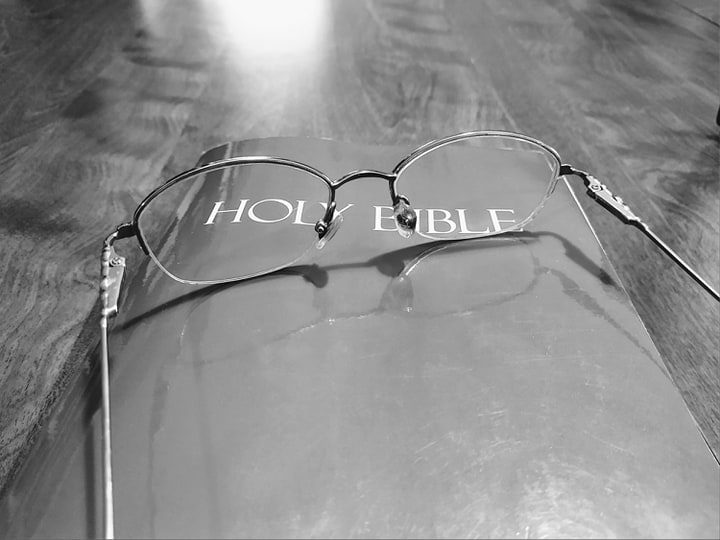
Photo credit: Leah D. Schade. All rights reserved.
Immigration. Healthcare. Money and possessions. Environmental issues. The list of topics of public concern is long and complex. Some say preachers should’t address contemporary issues. But the fact is that Jesus, the prophets, and the Bible itself all have something to say about a myriad of topics that relate to issues we’re facing today. Thus, clergy and the church are authorized to speak to these topics from a biblical perspective.
But how can we preach about these issues in a way that invites dialogue rather than driving a wedge into the red-blue divides of our congregations?
For Christians, all of these contemporary issues must be brought into conversation with our understanding of a God who continues to be active in Creation and human history. That’s exactly why rooting our preaching in the Bible is useful for these “pollinating” conversations. The Bible shows us what it looks like for faithful people to disagree while discerning how to be the people of God.
So we need to spend some time thinking about the ways in which conversations happen in the stories of the Bible, how the books of the Bible are themselves in dialogue, and how the Bible converses with us today.
In other words, we need a dialogical lens for reading scripture.
This lens enables us to see how God works in and through our complicated, messy, conflicted, and yet faithful conversations in order to bring about discernment, justice, healing, and reconciliation. In this post I’ll show you how to employ this dialogical lens. In subsequent posts, we’ll look at how the dialogical lens can be applied to different scriptural texts.
Exegetical Tools for Interpreting Scripture Through a Dialogical Lens[1]
Utilizing the dialogical lens requires us to draw from different exegetical methods. The historical-critical method is useful for determining the author of the work, its original audience, other intertextual sources, and the social, historical, or cultural influences with which the author may be implicitly or explicitly in conversation. Literary analysis will be helpful as we determine the characters and their roles in the story and the rhetorical techniques being used in the text. But the dialogical lens will also require some interpretive imagination, since the text sometimes only hints at the motivations and emotions of the characters and authors.
At the same time, we need to consider the reader-response method because of the way in which the text will be heard and interpreted by readers in our contemporary contexts. Finally, the dialogical lens benefits from feminist interpretation, liberation theology, and John McClure’s “other-wise” homiletic.[2] Each of these enables us to ascertain the voices in the conversation that are not heard or acknowledged, but who nevertheless have a stake in the outcome. With these critical methods in mind, here are six steps for using the dialogical lens.
Six Steps for Using the Dialogical Lens
1. Point out the dialogical aspects of the passage.
In broad terms, describe how this passage of the Bible is an instance of conversation, dialogue, or some other kind of interchange. Who is the (presumed) author, and who was the intended audience? What were the social, cultural, and political forces either in the background or directly present in the passage? What other books or authors in the Bible are implicitly in conversation with this text or author? If the story is a narrative, who are the characters? Who speaks? Who’s in the background? Who is in the scene but silent?
2. Determine what’s at stake.
What is the presenting issue? Can you identify the fears or concerns of the author, the audience, or the characters? What are they afraid of losing? Who or what is threatening to them? What are the overt or underlying tensions or conflicts?
3. Identify the values.
This gets at the deeper ideals and principles that underlie a character’s actions or writer’s intentions. What is important to them, and what do they cherish or hold dear? What is their “best self” that could emerge? Find the overlap – and the gaps. What desires, fears, and values do the characters or figures share? In other words, where are points of commonality among or between them? At the same time, where are there vast differences? What are the things the dialogue partners are unlikely to agree upon?
4. Explain how God, Jesus, and/or the Holy Spirit is active.
What is God doing in the midst of this interchange? Is God’s action explicit, implicit, or apparently absent? How is the larger community wrestling with or expressing their faith in God?
5. Recognize what the dialogue is teaching us.
What is this exchange, dialogue, or conversation teaching us about what it means to be the church and faithful Christians in the midst of contentious public issues? In what way can we learn about being God’s people who engage the conflicts and sin of the world, while maintaining the commitment to grace, hope, and love? What can we determine about who God is, what God does, and what God intends for us based on this interchange and dialogue in the passage?
6. Suggest possible next steps.
What are next steps we might take based on what this biblical passage models for us? Are we sensing God’s invitation to engage public concerns? Are we being invited into dialogue with each other, with this passage, and with God about specific justice issues? Can we learn what not to do based on what we see in this text? Are there common values we share that can be the basis for our response to a societal matter? What kind of church shall we be, knowing what the Bible models for us, and knowing what challenges our community is facing?
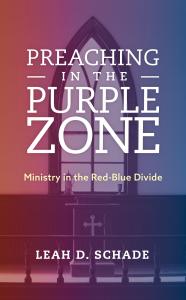
To read more about the dialogical lens and how it fits within the “Five Paths of Prophetic Preaching,” check out my book, Preaching in the Purple Zone: Ministry in the Red-Blue Divide.
These steps and the questions therein will come into play when we craft sermons about specific issues we want to address in our sermons, as well as in the deliberative dialogue forums we facilitate in our congregations. Preaching using a dialogical lens shows listeners that the church is permitted, authorized, encouraged, and even urged to preach about public issues precisely because Scripture has already opened the conversation for us. We need only to step into that conversation.
What would it look like to apply this dialogical lens and then develop a sermon from it?
You may be wondering how to use a dialogical lens for exegeting scripture and then crafting Purple Zone sermons. In the future posts, we’ll look at examples of biblical passages to see how these steps can be put into practice. You can read the first two examples here:
Applying the Dialogical Lens to the Parable of the Rich Fool
Owning Stuff or Stuff Owning Us? The Rich Fool in Luke Chapter 12

Leah D. Schade is the Assistant Professor of Preaching and Worship at Lexington Theological Seminary in Kentucky. She is the author of Preaching in the Purple Zone: Ministry in the Red-Blue Divide (Rowman & Littlefield, 2019) and Creation-Crisis Preaching: Ecology, Theology, and the Pulpit (Chalice Press, 2015).
Twitter: @LeahSchade
Facebook: https://www.facebook.com/LeahDSchade/
Read more:
Preaching Across Divides: Purple Zone Strategies for Pulpit and Public Square
Top 10 Taboo Topics for Preachers
[1] The dialogical lens is not to be confused with Martin Buber’s dialogical hermeneutic. See: The Text as Thou: Martin Buber’s Dialogical Hermeneutics and Narrative Theology by Steven Kepnes (Bloomington, IN: Indiana University Press, 1992).
[2] Other-wise Preaching: A Postmodern Ethic for Homiletics, John S. McClure, (St. Louis, MO: Chalice Press, 2001).
General Christian
Politics and Religion
Relationships and Religion
Previous Post

July 28, 2019
Ask, Seek, Knock: Seeking the Goods or The Good?
Next Post

July 31, 2019 Applying the Dialogical Lens to the Parable of the Rich Fool
Browse Our Archives
Select a Category Academy of Homiletics Addiction Advent AI (Artificial Intelligence) Animals Apocalypse Appalachia Ash Wednesday Baptism Bible Black Lives Matter Blade Runner Book review Children in church Christian Nationalism Christian/Islamic relations Christmas Church Clergy Climate change COVID-19 Creation Data Centers Death penalty Devotional Dialogue Doubt Earth Day Easter Ecofeminism EcoPreacher 1-2-3 ELCA ELCA Youth Gathering Election Environment/ecology Epiphany Faith Faith and Politics Feminism Film review Food Food and Faith Forgiveness Fracking Good Friday Good Omens Grief Gun violence Holy Humor Sunday Holy Week Howard Thurman ICE Immigration Indigenous wisdom Interview Jesus Kentucky Lafayette High School Marching Band Leadership Lent LGBTQIA+ Marching band Martin Luther Martin Luther King Jr. Mary Maundy Thursday Michael Sheen Mother of Jesus Nature New Year's Eve Palm Sunday Parables Pentecost Poem, Poetry Politics Poor People's Campaign Pop culture Prayers Preaching Progressive Christianity Public theology Purple Zone Racism and White Privilege Religion Religion and environment Religion and politics Religion and pop culture Religion and violence Rev. Nelson Rabell Gonzalez Sermons Spanish language resources for preaching Technology Thanksgiving Theological education theology Trees Trump Uncategorized Vegan War Women and religion Workshop Worship
Select a Month October 2026 September 2026 July 2026 June 2026 May 2026 April 2026 March 2026 February 2026 January 2026 December 2025 November 2025 October 2025 September 2025 May 2025 April 2025 March 2025 February 2025 January 2025 December 2024 November 2024 October 2024 September 2024 August 2024 July 2024 June 2024 May 2024 April 2024 March 2024 February 2024 January 2024 December 2023 November 2023 October 2023 September 2023 August 2023 July 2023 June 2023 May 2023 April 2023 March 2023 February 2023 January 2023 December 2022 November 2022 October 2022 August 2022 July 2022 June 2022 May 2022 April 2022 March 2022 February 2022 January 2022 December 2021 November 2021 October 2021 September 2021 August 2021 July 2021 June 2021 May 2021 April 2021 March 2021 January 2021 December 2020 November 2020 October 2020 September 2020 August 2020 July 2020 June 2020 May 2020 April 2020 February 2020 January 2020 December 2019 November 2019 October 2019 September 2019 August 2019 July 2019 June 2019 May 2019 April 2019 March 2019 January 2019 December 2018 November 2018 October 2018 September 2018 August 2018 July 2018 June 2018 May 2018 April 2018 March 2018 February 2018 January 2018 December 2017 November 2017 October 2017 September 2017 August 2017 July 2017 June 2017 May 2017 April 2017
Follow Us!
TAKE THE
Religious Wisdom Quiz
Who told Saul, "To obey is better than sacrifice"?
Select your answer to see how you score.
David Nathan Samuel Eli
Books by This Author Books by Leah D. Schade
Related posts from EcoPreacher

Pastoral Wisdom for Responding to Sermon Pushback

Preaching About Climate Change: What Clergy Need Most

Cancer Alley Prophets: Jeremiah 20, Matthew 10

Preaching Ideas, July 4th: Resisting Christian Nationalism
TRENDING AT PATHEOS Progressive Christian

What Being a Modern-Day Apostle Means to Me
In my last column, I discussed the ins and outs of modern-day...

Did Ancient China Once Worship the God of...
Across human history, a common thread weaves through the origins of the...

Love Your Neighbor – Including Earth-Kin: Lev. 19,...
God’s command to love your neighbor means acting in an ethical and...

Lead a Church Study of “Jesus and Lao...
Guest writer Jack Thomas (The Irreverent Reverend) reflects on leading his church...

Pastoral Wisdom for Responding to Sermon Pushback
Getting sermon pushback on your social justice sermon? Learn practical, Proverbs-based strategies...

Principles for Understanding the Apostolic Ministry Today
Whenever people discover that my formal ministry title is "apostle," as in...
view all Progressive Christian blogs
Ad-Free & Subscriber Log-In Subscription Support
- About Us
- 2026 Calendar
- Videos
- Podcasts
- Library of World Religions
- Faith In Media Tracker
- Advertise With Us
- Write for Us
- Privacy Policy
- Terms of Service
- Do Not Sell My Data
- Contact Us
- Radiant Digital
- Manage Newsletter Subscriptions
- Unsubscribe From Notifications
- Sitemap
Copyright 2008-2026, Patheos. All rights reserved.
Subscription Support Ad-Free & Subscriber Log-In
Follow Patheos