
BuddhistCatholicContemplativeEvangelicalGeneral ChristianHinduJewishLatter-day SaintMuslimNew VisionsProgressive Christian
Beliefs
- Buddhist
- Catholic
- Contemplative
- Evangelical
- General Christian
- Hindu
- Jewish
- Latter-day Saint
- More Voices
- Muslim
- New Visions
- Pagan
- Progressive Christian
Topics
- Religion News
- Food and Religion
- Sports and Religion
- Religious Art
- Religious Music and Entertainment
- Religious Events
- History and Religion
- Style and Religion
- Politics and Religion
- Women in Religion
- Recreation Outdoors and Religion
- Business Finance and Religion
- Careers Workplace and Religion
- Education and Religion
- Family Parenting and Religion
- Health Fitness and Religion
- Home and Religion
- Relationships and Religion
- Technology and Religion
- Travel and Religion
Columnists
- Buddhist Columnists
- Business Finance and Religion Columnists
- Careers Workplace and Religion Columnists
- Catholic Columnists
- Contemplative Columnists
- Education and Religion Columnists
- Evangelists Columnists
- Family Parenting and Religion Columnists
- General Christian Columnists
- Health Fitness and Religion Columnists
- Hindu Columnists
- History and Religion Columnists
- Home and Religion Columnists
- Jewish Columnists
- More Voices Columnists
- Latter Day Columnists
- Muslim Columnists
- New Visions Columnists
- Nonreligious Columnists
- Pagan Columnists
- Politics and Religion Columnists
- Progressive Columnists
- Recreation Outdoors and Religion Columnists
- Relationships and Religion Columnists
- Religion News Columnists
- Religious Art Columnists
- Religious Events Columnists
- Religious Music and Entertainment Columnists
- Sports and Religion Columnists
- Style and Religion Columnists
- Technology and Religion Columnists
- Travel and Religion Columnists
- Women in Religion Columnists
Resource Library
- 2026 Calendar
- Library of World Religions
- The 100 Most Holy Places on Earth
- Patheos Answers
- Podcasts
- Videos
- Faith Leaders Database
- Anglican Episcopalian
- Bahai
- Baptist
- Buddhism
- Christianity
- Confucianism
- Eastern Orthodoxy
- Hinduism
- Holiness and Pentecostal
- ISKCON
- Islam
- Judaism
- Lutheran
- Methodist
- The Church of Jesus Christ of Latter-day Saints
- New Age
- Paganism
- Presbytarian and Reformed
- Protestantism
- Religion Behind the Scenes
- Roman Catholic
- Scientology
- Shia Islam
- Sikhism
- Sufism
- Sunni Islam
- Taoism
- Zen
- See all religions
Research Tools
 Ad-Free & Subscriber Log-In Subscription Support
Ad-Free & Subscriber Log-In Subscription Support
Follow Patheos 

- Trending:
- Forgiveness
- |
- Marriage
- |
- Consciousness
- |
- Death Penalty
- |
- Election
- |
- Halloween

- Home
- Progressive Christian
- When God Breaks the Law: Immigration, Asylum & Pastor Betty Rendón
When God Breaks the Law: Immigration, Asylum & Pastor Betty Rendón
Last updated on: September 9, 2019 at 9:05 am by Leah D. Schade
When God Breaks the Law: Immigration, Asylum & Pastor Betty Rendón 2019-09-09T09:05:29-04:00 Leah D. Schade
Patheos Explore the world's faith through different perspectives on religion and spirituality! Patheos has the views of the prevalent religions and spiritualities of the world.
When God breaks the law – and what it means for immigrants, refugees, and Pastor Betty Rendón.

Photo credit: David Drexler, https://www.flickr.com/photos/drexler/1152450766/ Some rights reserved.
“No one is above the law. She should be deported.”
“If I break the law, I have consequences. How come she is better than me that she does not have to face her consequences?”
“Just because she is a pastor does not make her above the law.”
“I only have compassion for those who follow the law.”
These are all comments I have heard about the case of Pastor Betty Rendón.
Rendón is a Lutheran minister whose home was raided by ICE agents who took her and her family into custody on May 8. She had applied for asylum in 2004 after fleeing the violence of Colombia, but her petition was denied. She decided to stay in this country and risk arrest rather than return to Colombia and face the guerilla fighters who had threatened her life.
Over these past ten years, Rendón discerned a call to ministry and is now a candidate for ordination in the Evangelical Lutheran Church in America. She is serving as a Synodically Authorized Minister at Emaus Church in Racine, Wisconsin. She was beginning doctoral studies at the Lutheran School of Theology at Chicago when she, her husband, a cousin, Betty’s daughter, and her 5-year-old granddaughter were ambushed in their home by ICE agents at gunpoint. After taking the adults into custody, the officers failed to secure the house. They left the door open and the house was ransacked and robbed.
Faith leaders and concerned citizens across this nation have been calling for this family’s immediate release.
Fortunately, Betty’s daughter, protected under DACA, has been released. But advocates for Betty and her husband are asking for asylum to be granted so that they can be put on the path to citizenship. In this way, the family can stay together, Pastor Rendón and her husband can be safe, and she can resume her ministry.
Voices in opposition
As awareness about Pastor Rendón’s case has gained national attention, however, there is also a rising pitch of voices insisting that because she “broke the law,” she should be deported. “We are a nation of laws,” said one commenter. “Only the citizens of this country can change those laws.”
In response, many have insisted that because our immigration laws themselves are unjust and immoral, we sometimes have no choice but to break the law. Bishop Paul Erickson of the ELCA Greater Milwaukee Synod said: “We’ve got a broken system, and the sharp edges of that brokenness are now being felt by those who are most vulnerable among us.”
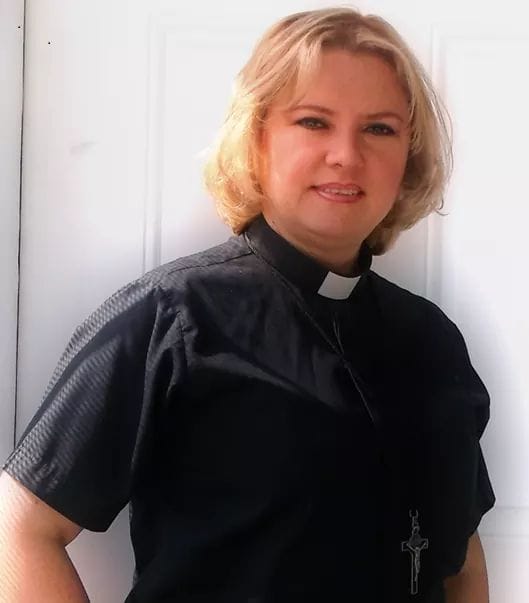
Pastor Betty Rendón, Lutheran minister and refugee arrested by ICE.
To that point, many are insisting that the laws regarding immigrants and refugees in this country are unethical. Those on the side of Pastor Rendón insist that arresting a pastor – a woman of faith who has demonstrated care for her parishioners and surrounding community – is the real crime.
But those on the other side are unswayed. “I am a law-abiding citizen; she is not,” was one comment. “She broke the law. She needs to go.”
It seems we are at a standstill. Neither side will budge. We’re stuck.
So where can we turn to get un-stuck? As Christians, we turn to Scripture for guidance. And when we look at Act 11:1-18, when find something surprising.
God breaks the law!
The situation is that the Acts church is discerning whether or not to allow uncircumcised Gentiles into the community. Remember that Jesus’ original followers were Jewish. They had very strict laws given to them by God about what they could eat, wear, who they could associate with, and how they could worship (and with whom). Those laws forbid them from breaking bread with Gentiles or fellowshipping with them, much less worshipping with them.
But when Gentiles began to hear the gospel of Jesus Christ and wanted to join the newly-formed church, there was heated debate about whether this was allowed. And even if Gentiles were allowed, there were fierce arguments about whether the men needed to be circumcised. Following the law in this case would involve incredible pain. Was it really necessary?
Some said: absolutely!
“No one is above the law. These Gentiles should be kept out of the church.”
“If I break the law, I have consequences. How come the Gentiles are better than us that they don’t have to face circumcision?”
“Just because they want to join the church does not make them above the law.”
“I only have compassion for those who follow the law.”
Peter was caught in the middle of this debate.

Photo credit: Rebecca Dongallo. https://www.flickr.com/photos/rebdon/8638184013/. Some rights reserved.
He knew the power of the good news of Jesus’ death and resurrection to set people free. He watched Jesus break all kinds of purity laws in order to minister to people with compassion and healing. Yet Peter was a good, law-abiding Jew. He knew how important these laws were for his people. He was stuck.
But then something happened to Peter that gave him new insight into God’s law.
He was praying on a rooftop when he saw a vision of a table of foods descending from heaven. The foods were considered unclean according to Jewish purity laws. So when Peter heard a voice saying he could eat the foods, he was aghast! Of course not! He shouldn’t, he couldn’t! He wouldn’t break the law!
Again he saw the vision and heard the voice. Same response – no way am I going to break the law.
But the third time, the voice tells Peter: “What God has made clean, you cannot call unclean.”
What’s this? God was breaking the law! How can this be?
When a group of Gentiles suddenly showed up at his door, Peter understood what the vision meant. God was telling him that he needed a different understanding of the law.
You see, there are penultimate laws and then there is the ultimate law.
Penultimate laws are intended to structure the life of the community and help form their identity. These laws are important, especially since Israel was a tiny embattled nation for most of its history. They needed to distinguish themselves from their oppressors. They needed to set themselves apart from those who wanted to conquer them.
But when the dynamic shifted and they were the ones in power, they needed to be gracious in opening themselves and their community to those on the outside. The penultimate laws cannot supersede God’s ultimate law.
And what is God’s ultimate law? Love.
Love is what needs to guide the application and interpretation of the penultimate laws. So God is telling Peter that the penultimate laws cannot be used to exclude people from the grace of God. It’s okay to welcome the Gentiles, says God. And it’s not necessary for them to be circumcised in order to become part of the community.
This blew Peter’s mind. It broke open a new understanding of grace for him. So he did something he had not done before. He shared a meal with them and fellowshipped with the Gentiles. He baptized them. Peter brought them into the community.
And that’s when the law hit the fan.

Photo credit: Jason Jacobs. https://www.flickr.com/photos/jijake1977/37292083012/ Some rights reserved.
His fellow Jewish believers criticized him for eating with the uncircumcised, the outsiders, the foreigners, the “illegal aliens,” we might say. But with great courage, Peter shared with them the vision that he had from God, explaining it to them step-by-step. And that changed everything.
Imagine if we substitute “immigrants and refugees” for Gentiles in this passage? How might it apply to Pastor Betty Rendón’s case?
Now the apostles and the believers who were in the UNITED STATES heard that the IMMIGRANTS AND REFUGEES had also accepted the word of God.
[Notice – we’re not talking about “murderers and rapists” here. If someone has accepted the word of God, this means that they accept the moral and ethical teachings of Scripture – including the Ten Commandments. This means that they are already not criminals.]
2So when Peter went up to Jerusalem, the CITIZEN believers criticized him, 3saying, ‘Why did you go to IMMIGRANTS AND REFUGEES and eat with them?’
[Or worship with them, or hire them, or work with them, or teach them, or let them become pastors . . .]
After Peter shared with them the vision, he said:
16”And I remembered the word of the Lord, how he had said, “John baptized with water, but you will be baptized with the Holy Spirit.” 17If then God gave IMMIGRANTS AND REFUGEES the same gift that he gave us when we believed in the Lord Jesus Christ, who was I that I could hinder God?’
18When they heard this, they were silenced. And they praised God, saying, ‘Then God has given even to the IMMIGRANTS AND REFUGEES the repentance that leads to life.’
Do you see how God’s ultimate law must trump the penultimate laws?
When it comes to Pastor Rendón and her family, who are we that we should hinder God? Shouldn’t we find a way to welcome those who come to our country, our churches, our communities who are escaping violence, extreme poverty, and threats to their lives?
Isn’t this why Jesus gave us his ultimate commandment just before he was crucified?
I give you a new commandment, that you love one another. Just as I have loved you, you also should love one another. By this everyone will know that you are my disciples, if you have love for one another. (John 13:34-35)
Love is God’s ultimate law.
And the baptism of Jesus washes away all the distinctions that we use to hurt people and leave them out. We could substitute any number of labels we place on people that are used to justify excluding them, discriminating against them, bullying them, depriving them of their rights, and even killing them. Labels like “black,” “gay,” “nerd,” “fat,” “pregnant,” “crippled,” “old.” God’s ultimate law of love means that we are called to tear off the labels and extend welcome to those who are on the outside, those whose lives and rights are threatened, those who are seeking to be a contributing member of the community.

Baptism washes away the labels. Photo credit: Leah D. Schade. All rights reserved.
This does not mean that we just throw out the penultimate laws – far from it. When they serve their purpose of protecting the vulnerable and providing good order, they are useful in a positive way. But when they are used to harm the vulnerable and create abuse and chaos, God’s ultimate law of love means that we must challenge and change the penultimate laws.
What does this look like for us? How can we live out God’s ultimate law of love? How can we do this when it comes to immigrants and refugees? When we are caught in these polarized debates?
I don’t have the answers to these questions. But I’m very interested in how congregations discuss them, especially in the context of God’s ultimate law of love.
In my book, Preaching in the Purple Zone: Ministry in the Red-Blue Divide, I share stories about churches that have participated in deliberative dialogue about all kinds of contentious issues – including immigration. In fact, there’s a whole chapter devoted to that topic.
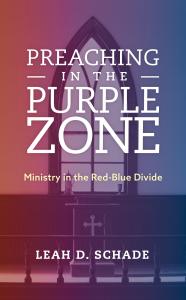
Each of the pastors and their congregations that took part in the dialogue did so with respect and shared their stories of how the immigration issue has touched their lives personally. They looked at three different approaches to the issue of immigration using nonpartisan materials from the National Issues Forum Institute. They weighed the pros and cons of each approach and then discerned what values they have in common – even as they’re coming from different points along the political spectrum. Through that process they were able to come up with ways they could move forward on the issue of immigration that were in alignment with their values. It looked different for each church, but one thing was the same for all the congregations.
God’s ultimate law of love guided their dialogue.
This enabled them to find a way through the stuck-ness, through the bitterness, through the stalemate. (See Chapter 9 of Preaching in the Purple Zone for the case studies about congregations engaging in deliberative dialogue on immigration.)
The church has an opportunity to engage the issue of immigration in a substantive, faithful, and Christ-like way. We can learn a great deal from Peter and the Acts church about how to dialogue about these issues together in healthy, life-giving ways. When we do this, Pastor Rendón, other immigrants and refugees, and even ICE agents and government leaders will know that we are Christ’s disciples. They’ll know us because we follow God’s ultimate law of love.
UPDATE: Pastor Betty and her husband Carlos Hincapie were deported on May 28. You can read about it here: https://www.patheos.com/blogs/ecopreacher/2019/05/pastor-betty-rendon-deportation-crossing-line/
Financial support is still needed for Rendón’s family. Visit: https://www.gofundme.com/f/68tfv-10000 to make a donation.

Leah D. Schade is the Assistant Professor of Preaching and Worship at Lexington Theological Seminary in Kentucky. She is the author of Preaching in the Purple Zone: Ministry in the Red-Blue Divide (Rowman & Littlefield, 2019) and Creation-Crisis Preaching: Ecology, Theology, and the Pulpit (Chalice Press, 2015).
Twitter: @LeahSchade
Facebook: https://www.facebook.com/LeahDSchade/
Read also:
Trump’s ICE Targets Lutheran Minister, Betty Rendón
Preaching Across Divides: Purple Zone Strategies for Pulpit and Public Square
Shoes in the Vineyard: Immigration and Jesus’ Parable
What Child Would Jesus Cage? Christians Join Rally for Protecting Immigrant Families
Previous Post
May 16, 2019
Trump’s ICE Targets Lutheran Minister, Betty Rendón
Next Post

May 26, 2019 Pastor Betty Rendón is Slated for Deportation – Why This is Crossing a Line
Browse Our Archives
Select a Category Academy of Homiletics Addiction Advent AI (Artificial Intelligence) Animals Apocalypse Appalachia Ash Wednesday Baptism Bible Black Lives Matter Blade Runner Book review Children in church Christian Nationalism Christian/Islamic relations Christmas Church Clergy Climate change COVID-19 Creation Data Centers Death penalty Devotional Dialogue Doubt Earth Day Easter Ecofeminism EcoPreacher 1-2-3 ELCA ELCA Youth Gathering Election Environment/ecology Epiphany Faith Faith and Politics Feminism Film review Food Food and Faith Forgiveness Fracking Good Friday Good Omens Grief Gun violence Holy Humor Sunday Holy Week Howard Thurman ICE Immigration Indigenous wisdom Interview Jesus Kentucky Lafayette High School Marching Band Leadership Lent LGBTQIA+ Marching band Martin Luther Martin Luther King Jr. Mary Maundy Thursday Michael Sheen Mother of Jesus Nature New Year's Eve Palm Sunday Parables Pentecost Poem, Poetry Politics Poor People's Campaign Pop culture Prayers Preaching Progressive Christianity Public theology Purple Zone Racism and White Privilege Religion Religion and environment Religion and politics Religion and pop culture Religion and violence Rev. Nelson Rabell Gonzalez Sermons Spanish language resources for preaching Technology Thanksgiving Theological education theology Trees Trump Uncategorized Vegan War Women and religion Workshop Worship
Select a Month October 2026 September 2026 July 2026 June 2026 May 2026 April 2026 March 2026 February 2026 January 2026 December 2025 November 2025 October 2025 September 2025 May 2025 April 2025 March 2025 February 2025 January 2025 December 2024 November 2024 October 2024 September 2024 August 2024 July 2024 June 2024 May 2024 April 2024 March 2024 February 2024 January 2024 December 2023 November 2023 October 2023 September 2023 August 2023 July 2023 June 2023 May 2023 April 2023 March 2023 February 2023 January 2023 December 2022 November 2022 October 2022 August 2022 July 2022 June 2022 May 2022 April 2022 March 2022 February 2022 January 2022 December 2021 November 2021 October 2021 September 2021 August 2021 July 2021 June 2021 May 2021 April 2021 March 2021 January 2021 December 2020 November 2020 October 2020 September 2020 August 2020 July 2020 June 2020 May 2020 April 2020 February 2020 January 2020 December 2019 November 2019 October 2019 September 2019 August 2019 July 2019 June 2019 May 2019 April 2019 March 2019 January 2019 December 2018 November 2018 October 2018 September 2018 August 2018 July 2018 June 2018 May 2018 April 2018 March 2018 February 2018 January 2018 December 2017 November 2017 October 2017 September 2017 August 2017 July 2017 June 2017 May 2017 April 2017
Follow Us!
TAKE THE
Religious Wisdom Quiz
What book of the Bible tells about Jesus’ birth?
Select your answer to see how you score.
Revelation Luke Hebrews Acts
Books by This Author Books by Leah D. Schade
Related posts from EcoPreacher

Pastoral Wisdom for Responding to Sermon Pushback

Preaching About Climate Change: What Clergy Need Most

Workers in the Vineyard: Sermon Ideas for Matt....

Cancer Alley Prophets: Jeremiah 20, Matthew 10
TRENDING AT PATHEOS Progressive Christian

What Being a Modern-Day Apostle Means to Me
In my last column, I discussed the ins and outs of modern-day...

Did Ancient China Once Worship the God of...
Across human history, a common thread weaves through the origins of the...

Love Your Neighbor – Including Earth-Kin: Lev. 19,...
God’s command to love your neighbor means acting in an ethical and...

Lead a Church Study of “Jesus and Lao...
Guest writer Jack Thomas (The Irreverent Reverend) reflects on leading his church...

Pastoral Wisdom for Responding to Sermon Pushback
Getting sermon pushback on your social justice sermon? Learn practical, Proverbs-based strategies...

Principles for Understanding the Apostolic Ministry Today
Whenever people discover that my formal ministry title is "apostle," as in...
view all Progressive Christian blogs
Ad-Free & Subscriber Log-In Subscription Support
- About Us
- 2026 Calendar
- Videos
- Podcasts
- Library of World Religions
- Faith In Media Tracker
- Advertise With Us
- Write for Us
- Privacy Policy
- Terms of Service
- Do Not Sell My Data
- Contact Us
- Radiant Digital
- Manage Newsletter Subscriptions
- Unsubscribe From Notifications
- Sitemap
Copyright 2008-2026, Patheos. All rights reserved.
Subscription Support Ad-Free & Subscriber Log-In
Follow Patheos