
BuddhistCatholicContemplativeEvangelicalGeneral ChristianHinduJewishLatter-day SaintMuslimNew VisionsProgressive Christian
Beliefs
- Buddhist
- Catholic
- Contemplative
- Evangelical
- General Christian
- Hindu
- Jewish
- Latter-day Saint
- More Voices
- Muslim
- New Visions
- Pagan
- Progressive Christian
Topics
- Religion News
- Food and Religion
- Sports and Religion
- Religious Art
- Religious Music and Entertainment
- Religious Events
- History and Religion
- Style and Religion
- Politics and Religion
- Women in Religion
- Recreation Outdoors and Religion
- Business Finance and Religion
- Careers Workplace and Religion
- Education and Religion
- Family Parenting and Religion
- Health Fitness and Religion
- Home and Religion
- Relationships and Religion
- Technology and Religion
- Travel and Religion
Columnists
- Buddhist Columnists
- Business Finance and Religion Columnists
- Careers Workplace and Religion Columnists
- Catholic Columnists
- Contemplative Columnists
- Education and Religion Columnists
- Evangelists Columnists
- Family Parenting and Religion Columnists
- General Christian Columnists
- Health Fitness and Religion Columnists
- Hindu Columnists
- History and Religion Columnists
- Home and Religion Columnists
- Jewish Columnists
- More Voices Columnists
- Latter Day Columnists
- Muslim Columnists
- New Visions Columnists
- Nonreligious Columnists
- Pagan Columnists
- Politics and Religion Columnists
- Progressive Columnists
- Recreation Outdoors and Religion Columnists
- Relationships and Religion Columnists
- Religion News Columnists
- Religious Art Columnists
- Religious Events Columnists
- Religious Music and Entertainment Columnists
- Sports and Religion Columnists
- Style and Religion Columnists
- Technology and Religion Columnists
- Travel and Religion Columnists
- Women in Religion Columnists
Resource Library
- 2026 Calendar
- Library of World Religions
- The 100 Most Holy Places on Earth
- Patheos Answers
- Podcasts
- Videos
- Faith Leaders Database
- Anglican Episcopalian
- Bahai
- Baptist
- Buddhism
- Christianity
- Confucianism
- Eastern Orthodoxy
- Hinduism
- Holiness and Pentecostal
- ISKCON
- Islam
- Judaism
- Lutheran
- Methodist
- The Church of Jesus Christ of Latter-day Saints
- New Age
- Paganism
- Presbytarian and Reformed
- Protestantism
- Religion Behind the Scenes
- Roman Catholic
- Scientology
- Shia Islam
- Sikhism
- Sufism
- Sunni Islam
- Taoism
- Zen
- See all religions
Research Tools
 Ad-Free & Subscriber Log-In Subscription Support
Ad-Free & Subscriber Log-In Subscription Support
Follow Patheos 

- Trending:
- Forgiveness
- |
- Marriage
- |
- Consciousness
- |
- Death Penalty
- |
- Election
- |
- Halloween

- Home
- Progressive Christian
- #MeToo, #ChurchToo: The Church is Facing the Truth About Its Sexism
#MeToo, #ChurchToo: The Church is Facing the Truth About Its Sexism
Last updated on: February 26, 2018 at 1:45 pm by Leah D. Schade
#MeToo, #ChurchToo: The Church is Facing the Truth About Its Sexism 2018-02-26T13:45:33-04:00 Leah D. Schade
Patheos Explore the world's faith through different perspectives on religion and spirituality! Patheos has the views of the prevalent religions and spiritualities of the world.
#MeToo, #ChurchToo: The #MeToo movement is beginning to well up within the Christian Church. We’re starting to realize that sexism is rampant in #ChurchToo. #HerTruth
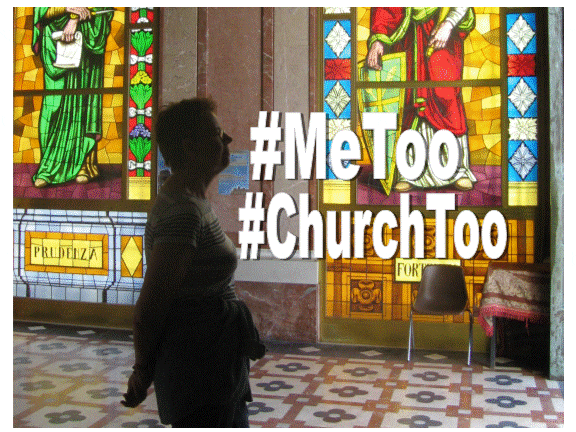
Image created by Leah D. Schade. Photo: public domain.
Women in congregations are peering out from stained glass windows watching the secular world finally confront sexism, discrimination, and abuse.
And we’re wondering – what about us?
What about the institution in which we have committed our faith, our hearts, minds, and bodies? Only to have those bodies objectified. Our minds stymied by the church’s entrenched and unrelenting patriarchy. Hearts broken by people we trusted who have betrayed us with their sexist words and actions. Faith shackled by a system that refuses to hear, believe, or respond to reports of sexual misconduct.
The almost-daily revelations of sexual discrimination and abuse allegations against men in Hollywood, newsrooms, and government (including President Donald Trump himself) has prompted a social media campaign by women across the political spectrum. Thousands of women are sharing personal stories of experiencing sexual harassment under the hashtag or title “MeToo.” This movement is revealing how pervasive sexism is in our society.
Now women in congregations are beginning to ask – when will the truth come out about sexual misconduct in the church?
A Lutheran clergy friend of mine, Christine Merkel, is inviting women (and men) in the church to share their stories of how they have experienced or witnessed instances of sexual harassment, misconduct or abuse from men in power. In a Facebook post she writes: “My personal story and the stories I’ve heard from so many other women is of the church’s failure to take accountability for sexism, sexual harassment/assault, domestic violence, etc., that has taken place far, far, more than anyone can imagine.” [Read: The Church’s Casting Couch. Reach Christine at: https://www.facebook.com/cats333].
Patheos “Irreverin” blogger, Erin Wathen, a Disciples of Christ-Christian Church pastor, is also offering a public forum for women in the church to safely share the truth about the discrimination and harm they have suffered as a result of men in power. [Contact Erin at: https://www.facebook.com/irreverin/.] Whether those men are senior pastors, associate ministers, youth ministers, Sunday School teachers, council presidents, bishop assistants or bishops themselves – it’s time to tell the truth and stop keeping secrets. [See the 18-minute video, #HerTruth.] As Erin writes:
It is especially important right now that the Church (read: universal Church) recognize its own culpability in upholding the culture of misogyny, and then commit to being part of the solution . . . We can watch the fire in terror, wondering what part of our safe and familiar lives will catch next… or we can fan the flames. We can remember those are flames of justice, flames of truth-telling, flames of #metoo and ‘no more.’
The Protestant Church recently celebrated the 500th anniversary of the Reformation, so this a good time to ask what needs reforming in Christianity today.
One area desperately in need of reforming is the church’s attitude toward women.
As Martin Luther boldly nailed his 95 Theses (indictments against the church’s abuse of power) to the church door in Wittenberg, it’s time for women in the church to grab the proverbial hammer and nail. We need to be up front with the truth about the way in which the church abuses, mistreats, maligns, ignores, disregards, undercuts, undermines, and damages women who answer the call to ministry.
A must-have manual for this process of truth-telling
To aid us in this truth-telling, Luther Seminary professor Karoline Lewis has written a book that is a must-read for women in the church. It’s called She: Five Keys to Unlock the Power of Women in Ministry (Abingdon, 2016). In this book, Lewis forthrightly and effectively addresses nearly every issue faced by women who inhabit any kind of church leadership position. From ordained ministers to music directors, Sunday School teachers to denominational heads – I believe all women in ministry will find this book to be helpful for navigating leadership in the church.
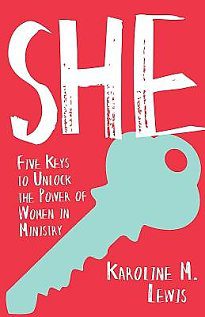
Coming out of her experience teaching a course entitled Women in Ministry, Lewis frankly discusses everything from how to handle sexist comments from parishioners to the perennial question: “To robe or not to robe?” Women in ministry face the ongoing dilemma of how to feel comfortable in their own bodies when every aspect of their clothing, curves, voice, hair, make-up, and even shoes are subjected to scrutiny. We must constantly ask ourselves: “How do I feel about my weight, my sexuality, and the changes my body undergoes as it ages – especially in the context of ministry?”
These are questions male ministers are rarely forced to ask.
And some may wonder, “Why do we need to talk about our bodies so much as women in ministry?” Lewis’ blunt answer is: “Because everyone else does and everyone else will,” (60). So it’s better to get out ahead of the external talk by having prayerful internal conversations, as well as discussions with trusted female colleagues and mentors about these challenges.
Lewis explains that the way each female in ministry navigates the tension of their position in a patriarchal institution is shaped by how she exercises her authority and voice. How she understands her theology and style of leadership. How she feels about her gender, sexuality, and body. Lewis’ book is a must-have manual for all women who answer God’s call to ministry. This is a book I am recommending to all my female seminary students and clergy colleagues.
It’s a book I wish I would have had when I first started out in ministry.
In the church which I have loved and served for over 17 years, I repeatedly fielded sexist comments from parishioners and male clergy alike. This happened in all three congregations I pastored. My competency to pastor was questioned once I became pregnant. (“You’ll have ‘baby-brain.’”) My competency was questioned when I worked to protect my community from fracking. (“Does she want to be a pastor, a parent, or an activist? She needs to get her priorities straight.”) My choice of shoes was more important than my choice of sermon topics. (“Oh baby, you know I love it when you wear those shoes!”)
And as a young female pastor trying to support my family, I found my efforts to ask for a decent salary obstructed by the male senior pastor. Repeatedly. On all other aspects of our ministry, I felt respected. But when it came to being paid what I was worth – what I worked 60+ hours a week to earn – I was constantly told there was not enough money in the budget. Even though my salary fell below synod guidelines. Finally, I had to make my case directly to the lay leaders in hopes of finding a sympathetic ear. The negligible raise eventually came with great “sacrifice” from that wealthy congregation.
It’s difficult for me to share that truth about my experience.
I risk bringing on disapproval, disappointment, and even anger from people with whom I had wonderful pastoral and collegial relationships. But I’m coming to realize that my silence about these kinds of issues is what enables them to perpetuate for female pastors who come after me.
I’m not alone in my reticence to share my story.
As she’s been collecting stories from women in the church, Christine Merkel shared what she’s been finding. “It’s overwhelming and heartbreaking and infuriating what I’ve heard from women in ministry who are sharing their stories. And the one common factor is that every woman I’ve heard from is afraid to have their name made public.” [But not all – read: “Highpoint Church – How You Know Jesus Has Left Your Church.”
I am fortunate that I no longer rely on employment by a congregation. I no longer run the risk of rupturing the relationships upon which my family’s income depends. But now I am a seminary professor instructing female students to enter the field of ministry. So I have an obligation to be honest about my own experiences.
The truth is that even the best people are still caught up in a system that does not fully respect women, understand their challenges, honor their gifts, or treat them with equity.
[See: Words of Advice for Good Men: #MeToo Meet #YouToo.]
Patriarchy and anti-female bias are so baked into our scriptures, our history, our society, and much of our theology. They shape the thoughts, words and deeds of even good and faithful people. That’s why we must talk about this in the church. Our words can usher in the light of God’s truth and the breath of the Holy Spirit to begin the process of healing.
Through her own experiences and those of her students, Lewis has dealt with nearly every scenario women face in ministry. Especially helpful is the “glossary of sexism” in Chapter Four that explains important terms and gives language to describe what women in ministry experience.
And while Lewis is sympathetic to the double standards and biases women must deal with, she does not wallow in the unfairness. Instead, she accepts it as reality. And she urges prudence and discretion, while assuring us that the very act of being our authentic selves as servants of God will help to bring about the changes the church needs. She encourages women in ministry to be in solidarity with each other, while also realizing that “each woman has to be responsible for her own successes and failures in ministry” (55).
If you are a female in ministry – whether clergy or youth leader, deacon or teacher, board member or bishop – I encourage you to speak your truth to yourself. Then to your trusted colleagues. And, when you feel ready – to the larger church.
There is a great deal at stake in how females in church leadership positions handle the complexity of their roles. Not only are their own positions in the balance, but also those of other female leaders in other fields as well. While this may feel overwhelming, there is also tremendous opportunity. We have the chance to lift up not just future female pastors, but all women – and men. They will see what is possible when their minister utters her truth, inhabits her role with authenticity, and proclaims the God who empowers women and men alike.
A theology of hospitality
Lewis urges a theology of hospitality that will enable the church to welcome women’s gifts and allow itself to change. But that hospitality cannot be a one-sided transaction. “It is not just about letting people in, but imagining how you must change as a result. It is anticipation that you will be changed in this encounter, in this relationship” (179). In this way, She reveals one of the keys for the church to unlock its own power. We need to embrace the change that comes with ordaining women. Allow them full access to all leadership positions. Nurture and honor their gifts. Treat them with respect. Confront sexism and discrimination. And engage in a process of repentance and reconciliation.
The #MeToo movement outside our stained glass windows is holding a mirror up to the church. May God help us to see that the #ChurchToo is, once again, in need of reform.
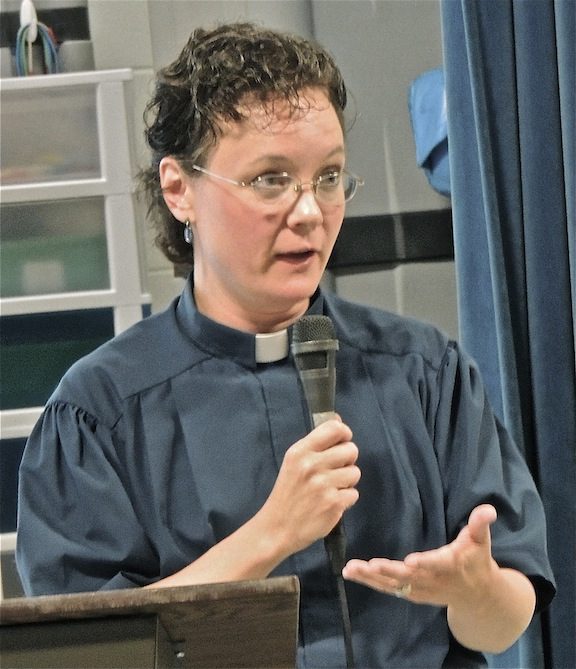
Leah D. Schade is the Assistant Professor of Preaching and Worship at Lexington Theological Seminary (Kentucky) and author of the book Creation-Crisis Preaching: Ecology, Theology, and the Pulpit (Chalice Press, 2015). She is an ordained minister in the Lutheran Church (ELCA).
Twitter: @LeahSchade
Facebook: https://www.facebook.com/LeahDSchade/.
Also read:
Top 10 Things Never to Say to Your Female Pastor
7 Ways Your Church Can Support Your Female Pastor
Book Review: Preaching the Women of the Old Testament
Jesus, Mother Hen: This is the God I Want to Worship
Previous Post

December 1, 2017
Words of Advice for Good Men: #MeToo Meet #YouToo
Next Post

December 10, 2017 Conspiracy of the Christian Kind: Advent 3
Browse Our Archives
Select a Category Academy of Homiletics Addiction Advent AI (Artificial Intelligence) Animals Apocalypse Appalachia Ash Wednesday Baptism Bible Black Lives Matter Blade Runner Book review Children in church Christian Nationalism Christian/Islamic relations Christmas Church Clergy Climate change COVID-19 Creation Data Centers Death penalty Devotional Dialogue Doubt Earth Day Easter Ecofeminism EcoPreacher 1-2-3 ELCA ELCA Youth Gathering Election Environment/ecology Epiphany Faith Faith and Politics Feminism Film review Food Food and Faith Forgiveness Fracking Good Friday Good Omens Grief Gun violence Holy Humor Sunday Holy Week Howard Thurman ICE Immigration Indigenous wisdom Interview Jesus Kentucky Lafayette High School Marching Band Leadership Lent LGBTQIA+ Marching band Martin Luther Martin Luther King Jr. Mary Maundy Thursday Michael Sheen Mother of Jesus Nature New Year's Eve Palm Sunday Parables Pentecost Poem, Poetry Politics Poor People's Campaign Pop culture Prayers Preaching Progressive Christianity Public theology Purple Zone Racism and White Privilege Religion Religion and environment Religion and politics Religion and pop culture Religion and violence Rev. Nelson Rabell Gonzalez Sermons Spanish language resources for preaching Technology Thanksgiving Theological education theology Trees Trump Uncategorized Vegan War Women and religion Workshop Worship
Select a Month October 2026 September 2026 July 2026 June 2026 May 2026 April 2026 March 2026 February 2026 January 2026 December 2025 November 2025 October 2025 September 2025 May 2025 April 2025 March 2025 February 2025 January 2025 December 2024 November 2024 October 2024 September 2024 August 2024 July 2024 June 2024 May 2024 April 2024 March 2024 February 2024 January 2024 December 2023 November 2023 October 2023 September 2023 August 2023 July 2023 June 2023 May 2023 April 2023 March 2023 February 2023 January 2023 December 2022 November 2022 October 2022 August 2022 July 2022 June 2022 May 2022 April 2022 March 2022 February 2022 January 2022 December 2021 November 2021 October 2021 September 2021 August 2021 July 2021 June 2021 May 2021 April 2021 March 2021 January 2021 December 2020 November 2020 October 2020 September 2020 August 2020 July 2020 June 2020 May 2020 April 2020 February 2020 January 2020 December 2019 November 2019 October 2019 September 2019 August 2019 July 2019 June 2019 May 2019 April 2019 March 2019 January 2019 December 2018 November 2018 October 2018 September 2018 August 2018 July 2018 June 2018 May 2018 April 2018 March 2018 February 2018 January 2018 December 2017 November 2017 October 2017 September 2017 August 2017 July 2017 June 2017 May 2017 April 2017
Follow Us!
TAKE THE
Religious Wisdom Quiz
What does 1 John say God is, and in Him is no darkness at all?
Select your answer to see how you score.
Spirit Light Love Truth
Books by This Author Books by Leah D. Schade
Related posts from EcoPreacher

Pastoral Wisdom for Responding to Sermon Pushback

Preaching About Climate Change: What Clergy Need Most

Making Space for Eco-Grief—and Hope—in Your Church
VBS Murder Skit: When a Church Teaches Children...
TRENDING AT PATHEOS Progressive Christian

What Being a Modern-Day Apostle Means to Me
In my last column, I discussed the ins and outs of modern-day...

Did Ancient China Once Worship the God of...
Across human history, a common thread weaves through the origins of the...

Love Your Neighbor – Including Earth-Kin: Lev. 19,...
God’s command to love your neighbor means acting in an ethical and...

Lead a Church Study of “Jesus and Lao...
Guest writer Jack Thomas (The Irreverent Reverend) reflects on leading his church...

Pastoral Wisdom for Responding to Sermon Pushback
Getting sermon pushback on your social justice sermon? Learn practical, Proverbs-based strategies...

Principles for Understanding the Apostolic Ministry Today
Whenever people discover that my formal ministry title is "apostle," as in...
view all Progressive Christian blogs
Ad-Free & Subscriber Log-In Subscription Support
- About Us
- 2026 Calendar
- Videos
- Podcasts
- Library of World Religions
- Faith In Media Tracker
- Advertise With Us
- Write for Us
- Privacy Policy
- Terms of Service
- Do Not Sell My Data
- Contact Us
- Radiant Digital
- Manage Newsletter Subscriptions
- Unsubscribe From Notifications
- Sitemap
Copyright 2008-2026, Patheos. All rights reserved.
Subscription Support Ad-Free & Subscriber Log-In
Follow Patheos